
Table of Contents
- What to Expect on Mid-Century Modern Architecture Tours
- Key Architectural Features and Design Elements
- Guided vs. Self-Guided Architecture Tour Maps
- Architecture Tour Duration and Logistics
- Best Time of Year for Architecture Tours
- Interior Access vs. Exterior Viewing and Accessibility
- Budget-Friendly Alternatives and Tour Options
- Planning Your Architecture Tour Experience
Last Updated: August 28, 2026
What to Expect on Mid-Century Modern Architecture Tours
Stepping into a mid-century modern architecture tour is like walking through a living museum of design innovation. These guided experiences take you through iconic residential and commercial structures built between the 1940s and 1970s, when architects reimagined desert living. You’ll encounter bold geometric forms, sweeping rooflines, and seamless connections between indoor and outdoor spaces that still feel new today.
Most tours begin with an overview of the architectural movement’s philosophy, then visit 3-8 homes or buildings depending on tour type (aia.org). Expect to walk 1-3 miles with comfortable shoes and sun protection essential, especially during warmer months. Many guides share stories about original owners and how these buildings influenced contemporary architecture. Photography is usually permitted on exteriors, though interior access varies by property.
The experience combines physical activity with intellectual engagement. You’re learning how post-and-beam construction works, why butterfly rooflines became iconic, and how floor-to-ceiling glass transformed residential living.
Key Architectural Features and Design Elements
Mid-century modern design is defined by specific structural and aesthetic choices that remain distinctive today.
Butterfly Rooflines are perhaps the most recognizable element. These peaked roofs with a characteristic dip in the middle create dramatic silhouettes against the desert sky. They serve both aesthetic and practical purposes, channeling water runoff while creating striking visual interest.
Post-and-Beam Construction replaces unnecessary walls with strong vertical supports and horizontal beams. This technique allows for open floor plans and eliminates load-bearing walls between rooms, creating flexible interior spaces. This construction method also makes floor-to-ceiling glass walls possible.
Floor-to-Ceiling Glass dissolves boundaries between indoors and outdoors. Architects used expansive glazing to frame desert views, flood interiors with natural light, and create the sense of living within the landscape rather than isolated from it.
Indoor-Outdoor Living spaces blur the distinction between house and environment. Patios, courtyards, and covered loggias become extensions of the home. Sliding glass doors, deep overhangs, and strategic landscaping create transitional zones that made sense in a desert climate where outdoor time was desirable year-round.
Geometric Forms dominate the aesthetic. Circles, triangles, and clean angles replace ornate details. Walls often feature bold colors, terracotta, turquoise, mustard, that complement the natural landscape. These shapes are integral to the structural logic of each building.
Guided vs. Self-Guided Architecture Tour Maps
Choosing between guided and self-guided tours depends on your learning style, budget, and time availability.
Guided Walking Tours and Private Excursions
Guided tours provide expert commentary that transforms observation into education. A knowledgeable guide explains architectural history, points out design details you might miss, and shares stories about the homes and their inhabitants.
Group walking tours typically accommodate 10-20 people and last 1.5 to 2.5 hours. The advantage is affordability and social experience; the trade-off is less flexibility as you move at the group’s pace.
Private excursions offer customization. You can request focus on specific architectural styles, neighborhoods, or architects. Small groups move at your preferred pace and spend extra time at properties that interest you most. Some tours include interior access to select homes, while others focus exclusively on exterior viewing.
Self-Guided Options and Navigation Tools
Self-guided tours offer maximum flexibility and independence. You can start and stop whenever you want and return to neighborhoods that captivate you. Many self-guided architecture tour maps are available online through local visitor resources.
A good self-guided map identifies 15-30 significant structures with brief descriptions of each building’s architectural features and historical context. Digital maps with GPS functionality help you navigate between stops.
The challenge with self-guided tours is context. Without an expert explaining design choices and historical significance, you’re interpreting what you see independently. However, many people prefer this approach and find independent exploration rewarding.
Hybrid approaches work well too. Start with a guided tour to build foundational knowledge, then explore independently using maps and your newfound understanding.
Architecture Tour Duration and Logistics
Planning your mid-century modern architecture tours requires understanding how long different tour types take and what logistical considerations affect the experience.
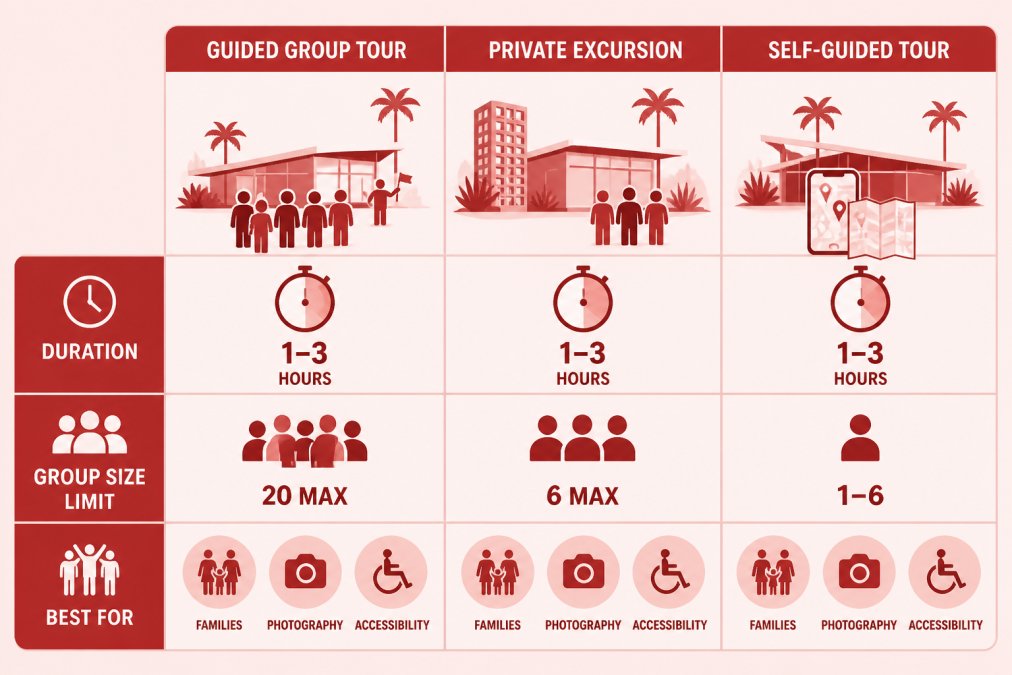
Guided group tours typically run 1.5 to 2.5 hours, allowing the guide to cover 4-8 properties with sufficient time at each stop for explanation and questions. The pace is moderate and suitable for most fitness levels. modern backyard design.
Private excursions are more flexible, running 2-4 hours depending on group preferences. Smaller groups move more quickly between stops but spend more time at each location.
Self-guided exploration has no time limit. Most people spend 1-3 hours on a self-guided route, though enthusiasts may spend an entire day.
Transportation logistics matter significantly. Most mid-century modern architecture tours operate in neighborhoods within walking distance of downtown areas. Parking is typically available on residential streets or in public lots. Some visitors prefer driving between stops rather than walking the full route, which works well for people with mobility limitations.
Weather affects logistics substantially. Tours operate year-round, but temperature and sun exposure vary significantly by season. Morning tours are preferable during warmer months; afternoon tours work better in cooler seasons.
Best Time of Year for Architecture Tours
The desert’s seasonal variations dramatically affect your mid-century modern architecture tours experience.
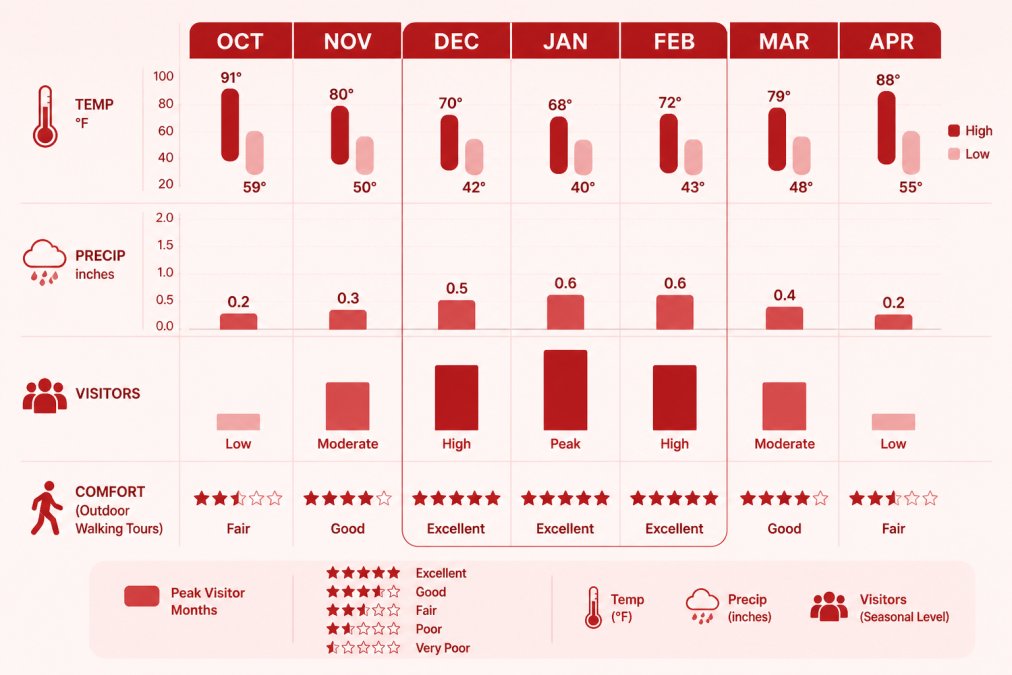
October through April represents peak season for architecture tours. Temperatures range from the 70s to mid-80s Fahrenheit, ideal for extended outdoor walking (noaa.gov). Humidity is low, skies are typically clear, and the desert landscape is at its most appealing.
November through March offers the most comfortable conditions. Average daytime temperatures hover in the 70s, and evening temperatures drop to the 50s. This is when architecture tours feel most pleasant.
April through September presents challenges. Temperatures climb into the 90s by April and exceed 110°F by June (weather.gov). Most tour operators reduce schedules during summer months. If you visit during these months, early morning tours are essential.
December through February represents the absolute peak. Holiday visitors, winter residents, and architecture enthusiasts converge during this period. Tour availability is excellent, but you’ll share the experience with larger crowds. Booking in advance is essential.
Consider your tolerance for heat, schedule flexibility, and preference for crowds when choosing your timing. Early season (October-November) and late season (March-April) offer a sweet spot with pleasant weather and slightly smaller crowds than peak winter months.
Interior Access vs. Exterior Viewing and Accessibility
Understanding the difference between interior access and exterior-only tours helps you choose the right experience.
Exterior viewing focuses on street-level observation and neighborhood walks. You’ll see building facades, rooflines, landscaping, and how structures relate to their surroundings. This approach works well for understanding overall design and architectural styles.
Interior access provides rare opportunities to see how mid-century modern design functions in actual living spaces. You’ll observe original or restored interiors, understand spatial flow, and appreciate design details invisible from the street. Interior tours are typically limited to homes whose owners participate in tour programs.
Accessibility considerations vary significantly between tour types. Guided group tours often include some hills or uneven pavement. Ask tour operators about specific accessibility features before booking. Self-guided tours let you choose routes based on your mobility needs.
Many mid-century modern neighborhoods have sidewalks and relatively flat terrain. However, some historic neighborhoods have uneven surfaces or lack sidewalks. Private tours can be customized for accessibility, with operators suggesting routes with minimal elevation changes and adequate rest stops.
If you have accessibility requirements, discuss these with tour operators when booking. They can accommodate requests or suggest specific routes that work best for your needs.
Budget-Friendly Alternatives and Tour Options
Experiencing mid-century modern architecture doesn’t require expensive guided tours.
Free self-guided exploration is the most affordable option. Download maps from visitor websites or use GPS-enabled apps to navigate historic neighborhoods independently. You’ll invest only your time and can explore at your own pace.
Neighborhood walking costs nothing beyond your time. Simply stroll through areas known for mid-century modern architecture and observe buildings from public streets.
Architectural photography walks organized by local photography groups sometimes offer free or low-cost participation, combining guided tours with photography instruction.
Combination approaches mix paid and free elements. Take one guided tour to build foundational knowledge, then explore independently.
Off-season timing reduces tour costs. Tours operating during shoulder seasons often offer discounted rates due to lower demand.
Group discounts apply when you organize tours for 8+ people. Ask about group rates, as many tour operators offer reduced per-person pricing for larger parties.
Hotel and vacation rental partnerships sometimes include tour discounts or recommendations. Ask your accommodation whether they offer tour packages or partner discounts.
Planning Your Architecture Tour Experience
Successfully planning your mid-century modern architecture tours requires considering several factors before you book.
Define your interests. Are you interested in specific architects, particular architectural styles, photography opportunities, or interior design? Your interests should guide which tours you choose.
Assess your physical capabilities. Be honest about walking distance and pace. Ask tour operators about terrain, elevation changes, and rest opportunities.
Consider timing within your trip. Schedule architecture tours when you’re fresh and energized. Many visitors prefer morning tours to avoid afternoon heat and take advantage of better lighting for photography.
Book in advance during peak season. November through March sees high demand for popular tours. Booking a week or more ahead ensures availability.
Prepare appropriately. Wear comfortable walking shoes with good support. Bring sunscreen, a hat, and water. Dress in layers; mornings can be cool while afternoons warm up significantly.
Bring a camera if interested in photography. Most tours allow photography from public streets and exterior viewpoints. Ask whether your chosen tour permits interior photography.
Ask questions during tours. Good guides encourage questions and enjoy sharing expertise. This interaction enriches your experience.
Plan follow-up exploration. After a guided tour, many visitors return to neighborhoods they enjoyed for deeper exploration or photography.
Planning mid-century modern architecture tours requires balancing expert guidance with personal exploration, choosing between guided group experiences and self-directed discovery, and timing your visit to match weather conditions and your interests. The architectural heritage of this region represents a pivotal moment in design history, when architects embraced modernism, adapted it to desert conditions, and created homes that remain inspiring today.
Whether you choose a guided walking tour, a private excursion, or self-guided exploration, you’ll discover why this architectural style continues to captivate designers, photographers, and history enthusiasts. The combination of bold design, functional innovation, and stunning desert landscapes creates an experience that connects you to a transformative era in American residential design.
For your complete trip planning, explore our Vacation Rental Homes to find the perfect home base for your architecture tour adventure, and visit our Palm Desert and Coachella Valley Hotels and Resorts page for accommodation options that suit your preferences and budget.
Frequently Asked Questions
What makes mid-century modern architecture tours unique compared to other sightseeing experiences?
Mid-century modern architecture tours showcase the distinctive design movement that defined the region’s residential and commercial landscape from the 1950s through 1970s. These tours highlight iconic facades, butterfly rooflines, post-and-beam construction, and floor-to-ceiling glass walls that emphasize indoor-outdoor living. Unlike general city tours, architecture tours focus on design heritage and the historical significance of how modernist principles transformed urban planning and residential design in the desert.
Are there self-guided architecture tour maps available, and how do they compare to guided experiences?
Yes, self-guided architecture tour maps are available through local tourism resources and online platforms. Self-guided options offer flexibility in pacing and allow you to spend extra time photographing or sketching specific buildings. However, guided walking tours provide expert commentary on design history, architectural preservation efforts, and the stories behind iconic homes. Many visitors find that a self-guided map works best for repeat visitors or photography enthusiasts, while first-time visitors benefit from a curated experience with professional insight.
What is the typical architecture tour duration, and how much walking is involved?
Most architecture tours last between 1.5 to 3 hours, depending on whether you choose a focused neighborhood tour or a comprehensive excursion. Group walking tours typically cover 1 to 2 miles at a moderate pace with frequent stops for photography opportunities and expert commentary. Private tours may be shorter or longer based on your preferences. If mobility is a concern, ask tour operators about climate-controlled vehicle options or routes with minimal walking distance between stops.
When is the best time of year to take an architecture tour in the region?
October through April offers the most comfortable conditions for outdoor walking tours, with daytime temperatures between 70-85°F and minimal rainfall. November through March represents peak season for visitor experience and tour availability. Summer months (June-September) present extreme heat challenges, making outdoor walking difficult. Spring (March-April) and early fall (October) provide a good balance of pleasant weather and fewer crowds than winter months.
Do architecture tours include interior access to private homes, or is it exterior viewing only?
Most standard architecture tours focus on exterior viewing and architectural facades due to private ownership restrictions. Some specialized private excursions or exclusive curated experiences may include interior access to select homes or museums. Before booking, clarify with the tour operator whether the itinerary includes interior access or is limited to street-level observation. This distinction affects both the tour experience and the ability to photograph interior design elements.
Hotels, Resorts and Vacation Home Booking
If you’re planning an upcoming trip, feel free to browse our directory of Palm Springs and Palm Desert hotels and resorts.
If you prefer extra privacy and a private pool? You can browse Palm Springs and Palm Desert vacation rental homes for your stay.
This article was written using GrandRanker and edited by Collins Omaghe.