Table of Contents
- How to Plan a Desert Trip Efficiently: Start With the Basics
- How Many Days for a Coachella Valley Trip: Finding Your Ideal Length
- Coachella Valley Packing List: What You Actually Need
- Desert Hiking Safety Tips and Precautions
- Timing Your Visit: Best Seasons and Weather Planning
- Building Your Itinerary: Navigation and Activity Scheduling
- Vehicle Preparation and Transportation Logistics
- Frequently Asked Questions
Last Updated: August 23, 2026
How to Plan a Desert Trip Efficiently: Start With the Basics
Planning a desert trip requires a fundamentally different approach than typical vacation planning. The environment’s extreme heat, isolation, and limited resources demand careful preparation that many first-time visitors underestimate. Desert travel isn’t just booking a hotel and hoping for the best, it’s orchestrating logistics that keep you safe, comfortable, and able to enjoy the landscape.
At the Visitor Center for Palm Desert & Palm Springs, we provide comprehensive, AI-powered guidance for travelers through desert preparation. The difference between those who have an exceptional experience and those who struggle often comes down to one thing: they started planning with the right priorities.
Desert travel isn’t about packing more stuff. It’s about understanding which decisions create cascading benefits across your entire trip. Your vehicle choice affects your itinerary options. Your packing decisions affect your comfort and safety. Your timing affects what you can actually do. Get these foundations right, and everything else falls into place.
Desert travel works with hard constraints: daylight hours, water availability, vehicle range, and heat thresholds for human activity. Unlike city trips where you can improvise, desert travel punishes improvisation. But that same structure makes planning straightforward once you know what to prioritize.
How Many Days for a Coachella Valley Trip: Finding Your Ideal Length
The ideal length for a desert trip depends on what you actually want to do. For a first-time visitor focused on scenic drives, hiking, and exploration, four to five days provides genuine breathing room (nps.gov). You get a full day to acclimate to the heat, two to three days for activities without rushing, and buffer time for adjustments.
The real consideration is activity density versus recovery time. Desert hiking demands more from your body than equivalent activities elsewhere. Heat exhaustion creeps up gradually, and dehydration affects decision-making before you notice thirst. A common mistake is scheduling activities back-to-back without rest periods.
For a Coachella Valley trip specifically, five to seven days is the practical sweet spot. This gives you time to explore multiple distinct areas, the valley floor, surrounding mountains, different towns and attractions, without constant pressure.
Build in one completely unscheduled day. Use it for recovery, [spontaneous exploration](/how-to-book-curated-desert-tours/), or adjusting plans based on how your body responds to the heat and elevation. This single decision eliminates most trip stress.
Coachella Valley Packing List: What You Actually Need
The difference between a functional packing list and a complete one comes down to understanding what the desert actually demands. Most lists tell you to bring sunscreen and water but miss the specific items that prevent problems in extreme heat and isolation.
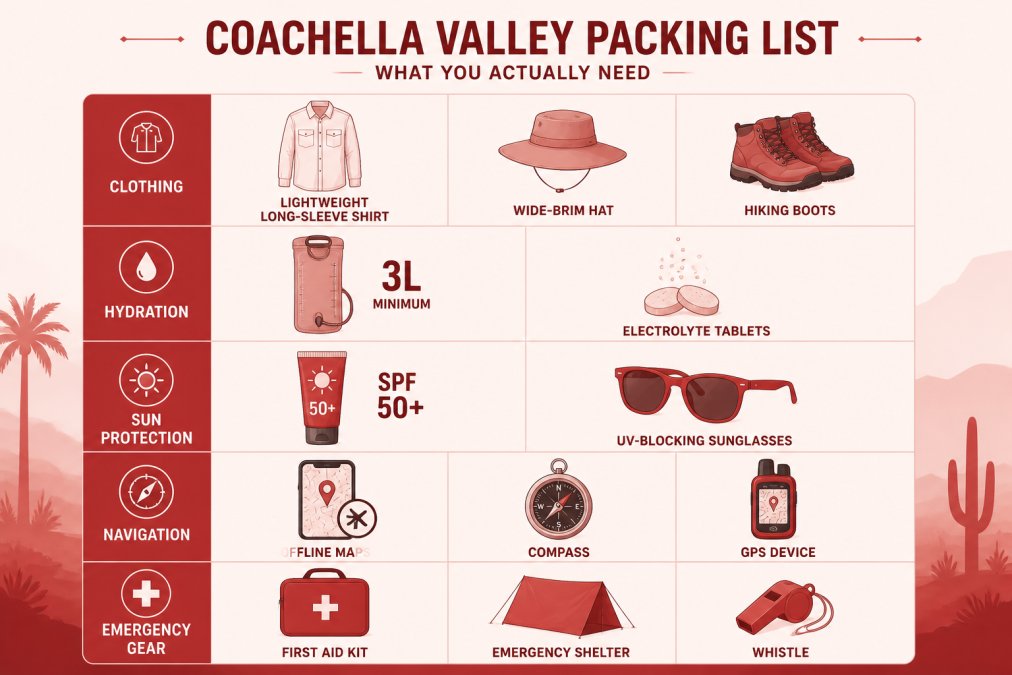
Clothing and Sun Protection
Your clothing strategy in the desert isn’t about staying cool, it’s about managing UV exposure while preventing heat stress. Covered skin stays cooler because the fabric creates an air gap and protects your body’s ability to regulate temperature.
Lightweight, loose-fitting long-sleeve shirts and pants are non-negotiable. Look for UPF-rated fabrics designed for sun protection. Synthetic blends dry faster and maintain protective qualities when wet, unlike cotton.
A wide-brimmed hat with at least three inches of brim all around is essential. Baseball caps leave your ears and neck exposed. The back of your neck is particularly vulnerable because you won’t notice burning until it’s severe.
Hiking boots with ankle support prevent twisted ankles on rocky slopes. Sandals or trail runners leave you vulnerable to injury and provide no protection from sharp rocks. Bring a lightweight long-sleeve jacket or hoodie for evening, desert temperatures drop dramatically after sunset, from 95 degrees to 55 degrees.
Hydration and Heat Management Essentials
Water storage is the single most important logistical decision for desert travel. The minimum is three liters per person per day for moderate activity (the CDC). For hiking, plan for four to five liters. Carry water in multiple containers rather than one large jug. A hydration pack lets you drink while moving, and additional bottles provide backup.
Electrolyte replacement matters more in the desert than in temperate climates. Sweating removes salt and minerals, not just water. Bring electrolyte tablets or powder that dissolve in water. These are lightweight and solve a real problem.
Plan your water refill points before you leave. Know where water sources are located and carry a water filter if using natural sources. Many desert locations have no reliable water access.
Heat exhaustion doesn’t announce itself with sudden collapse. It arrives as irritability, poor decision-making, and fatigue that feels normal. Prevention is consistent hydration and regular breaks in shade, not powering through.
Desert Hiking Safety Tips and Precautions
Desert hiking demands specific precautions that don’t apply to temperate environments. Start hikes early, ideally before 8 a.m. Afternoon heat in the desert isn’t just uncomfortable, it’s dangerous. A moderate hike that’s pleasant in the morning becomes risky by early afternoon.
Bring a first aid kit specifically assembled for desert conditions: blister treatment, pain relief, antihistamines for insect stings, and treatments for minor cuts. Desert plants often have sharp edges, and small injuries can become problematic if infected in a hot, dusty environment.
Tell someone your planned route and expected return time. If something happens, an injury, vehicle problem, or getting lost, someone needs to know where to look. This is particularly important in remote areas with no cell service.
Carry a whistle and a bright-colored emergency shelter or space blanket. A whistle can be heard from much farther away than you can shout. A space blanket provides protection if you’re stuck overnight.
Use offline maps, not just GPS. Download maps to your phone before you leave and carry a paper map as backup. GPS devices can fail or run out of battery. Take breaks in shade every 30-45 minutes during physical activity. Don’t wait until you’re exhausted.
Timing Your Visit: Best Seasons and Weather Planning
The desert’s seasonal variation is more extreme than most climates. October through April is the practical window for comfortable desert travel, with daytime temperatures ranging from 70-85 degrees in winter to 85-95 degrees in spring (noaa.gov). You can hike in midday without the heat becoming the limiting factor.
May through September presents serious challenges. Summer temperatures regularly exceed 110 degrees, making physical activity dangerous. Many desert attractions close or reduce operations during summer.
Spring (March-April) and fall (October-November) are peak seasons with ideal weather. If you’re flexible on timing, these shoulder months offer the best balance of comfortable conditions and fewer visitors than peak winter.
Check weather forecasts before you leave, but understand their limitations. Desert weather can change rapidly. Plan for conditions slightly more extreme than the forecast suggests.
Plan your trip for October through April if possible. This single decision determines whether you’re managing comfort or managing survival. Every other planning decision becomes easier when the weather is on your side.
Building Your Itinerary: Navigation and Activity Scheduling
An efficient desert itinerary clusters activities geographically and sequences them by intensity. Start with a map showing your base location and all activities you’re considering. Identify natural clusters and group them into days. This eliminates hours of driving and reduces mental load.
Sequence activities by difficulty and heat impact. Do more strenuous hikes early in your trip when you’re fresh and acclimatized. Schedule easier activities or indoor attractions for later days.
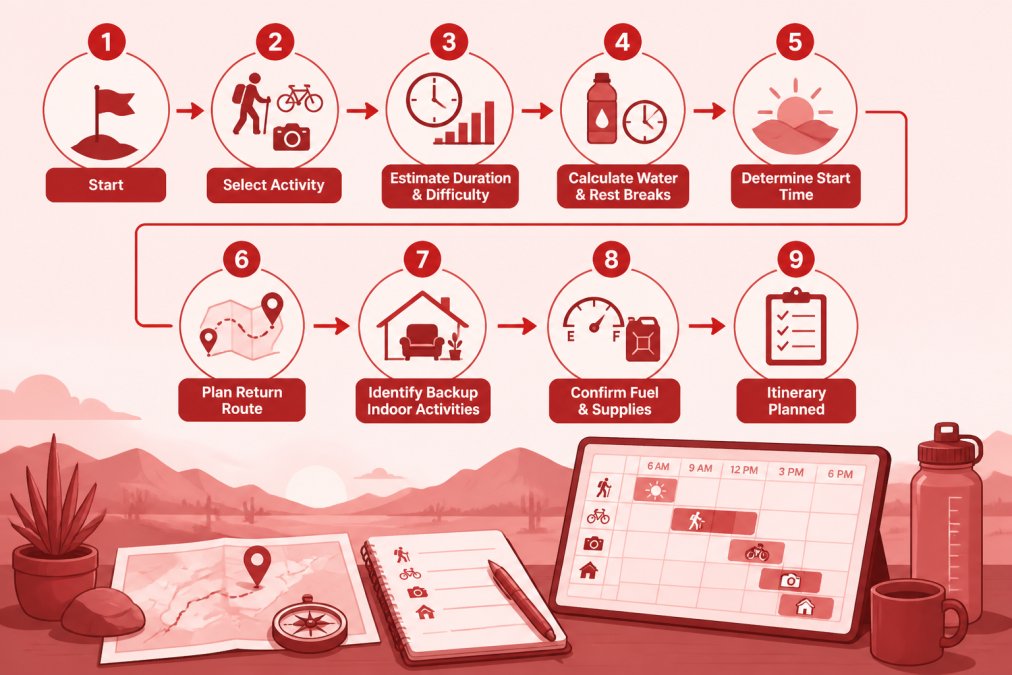
Build in buffer time between activities. Don’t schedule back-to-back hikes or drives. A buffer of 30-45 minutes between activities absorbs variations without derailing your day.
Use offline maps for all navigation. Download maps covering your entire trip area before you leave. Mark your planned routes, water sources, and emergency services. Plan your daily schedule around daylight and know what time sunset occurs each day. Plan to be back at your vehicle before dark.
Vehicle Preparation and Transportation Logistics
Your vehicle is your lifeline in the desert. Check tire pressure and tread before you leave. Carry a spare tire, jack, and tire repair tools. Know how to use them.
Top off your fuel tank before entering remote areas. Know your vehicle’s fuel range and plan refuel stops accordingly. Bring extra water for your vehicle’s cooling system, overheating is a real risk in extreme heat.
Check your battery and electrical system. Heat stresses batteries more than cold does. Replace it if it’s more than three years old. Carry jumper cables, a basic tool kit, and spare belts and hoses. Include a spare alternator belt specifically.
Test your air conditioning before you leave. This isn’t a luxury in the desert, it’s essential for managing heat stress during driving. Pack an emergency kit in your vehicle: blankets or space blankets, flares or reflectors, a flashlight with extra batteries, and a first aid kit.
Planning a desert trip efficiently comes down to respecting the environment’s constraints and preparing accordingly. You’re not fighting the desert, you’re working with it. The heat, isolation, and limited resources aren’t obstacles to overcome through willpower. They’re conditions to plan around through preparation.
Start with timing and duration. Choose the right season and allocate enough days. Move to vehicle and packing preparation. These decisions create the foundation for everything else. Finally, build your itinerary with geography and daylight in mind.
The travelers who struggle in the desert usually underestimated preparation. The ones who thrive started planning with the right priorities. Your desert trip can be exceptional, it just requires planning that matches the environment’s actual demands.
Explore our vacation rentals to find the perfect base for your desert adventure, or browse our hotel options for convenient accommodations throughout the Coachella Valley.
Frequently Asked Questions
What’s the best time of year to visit the Coachella Valley?
October through April offers the most comfortable temperatures for desert exploration, with daytime highs between 70-85°F. May through September brings extreme heat (100-120°F) that requires specialized preparation and limits outdoor activities to early morning or evening. Winter months (December-February) are peak season with the most pleasant weather but also the most crowded conditions. Plan your desert trip efficiently by choosing based on your heat tolerance and crowd preference.
How many days should I spend in the Coachella Valley?
A 3-4 day trip lets you experience major attractions, hiking, dining, and relaxation without rushing. Weeklong visits work well for those wanting deeper exploration, acclimatization to the desert climate, and a mix of outdoor activities with resort time. Even 2 days provides a solid introduction to the region’s natural beauty and local culture. How many days for a Coachella Valley trip depends on your activity level, fitness, and tolerance for heat exposure, longer stays reduce the intensity of daily schedules.
What are the most critical items in a Coachella Valley packing list?
Water (at least 3-4 liters per person daily), high-SPF sunscreen (SPF 50+), wide-brimmed hat, sunglasses with UV protection, lightweight long-sleeved clothing for sun protection, electrolyte replacement drinks, a first aid kit, and offline maps are non-negotiable. Add a headlamp or flashlight, spare phone battery, and emergency communication device if venturing into remote areas. Your Coachella Valley packing list should prioritize heat management and UV exposure prevention above all else.
What safety precautions should I take when hiking in the desert?
Start hikes early to finish before peak heat (usually 10 AM-4 PM). Bring more water than you think necessary, aim for 1 liter per hour of hiking. Tell someone your planned route and expected return time. Wear proper footwear with ankle support and stay on marked trails to avoid getting lost. Watch for signs of heat exhaustion (dizziness, nausea, rapid heartbeat) and turn back immediately if symptoms appear. Desert hiking safety tips also include carrying a satellite communication device in remote areas and checking weather conditions before departing.
How should I prepare my vehicle for desert driving?
Check tire pressure (desert heat causes expansion, slightly lower pressure improves traction on sand), ensure all fluids are topped off, verify your spare tire condition, and carry extra fuel if traveling remote routes. Inspect your cooling system, battery, and belts. Bring jumper cables, a basic tool kit, and a spare serpentine belt. For off-road driving, consider a 4×4 vehicle with higher ground clearance. Perform this mechanical preparation before departure to avoid breakdowns in remote areas.
Can I plan an efficient desert trip without guided tours?
Yes, with proper preparation. Download offline maps, research trailheads and attractions in advance, and plan your itinerary with realistic driving times between locations. DIY trips work well for experienced travelers comfortable with navigation and self-rescue. However, guided tours offer expertise on wildlife, geology, and hidden spots while removing navigation stress. For first-time visitors or those unfamiliar with desert environments, a guided experience on at least one major activity makes your overall trip safer and more efficient.
How do I balance outdoor activities with relaxation during my stay?
Structure your itinerary with active mornings (hiking, exploration) and passive afternoons (pool time, dining, rest). This approach respects the desert’s extreme midday heat and prevents burnout. Allocate at least one full rest day for recovery and acclimatization, especially during warmer months. Mix high-exertion activities (multi-hour hikes) with low-intensity ones (scenic drives, dining experiences) on consecutive days. This rhythm keeps your desert trip efficient while preventing heat-related fatigue and maximizing enjoyment.
This article was written using GrandRanker