Table of Contents
- Planning a Weekend in Palm Springs: What You Need to Know
- Best Time to Visit Palm Springs for a Weekend Getaway
- Where to Stay: Hotels, Resorts, and Vacation Rentals
- Palm Springs Weekend Itinerary: Two Days of Must-See Attractions
- Dining and Local Cuisine: Restaurant Recommendations
- Outdoor Activities: Hiking Trails, Joshua Tree Day Trips, and Desert Exploration
- Getting Around: Transportation and Local Logistics
- Accessibility, Safety, and Travel Tips for First-Timers
Last Updated: August 15, 2026
Planning a Weekend in Palm Desert or Palm Springs: What You Need to Know
Planning a weekend in Palm Desert or Palm Springs 2026 is easier than ever with curated resources to navigate the Coachella Valley’s best attractions, dining, and accommodations. Whether you’re seeking desert getaways focused on mid-century modern architecture, outdoor recreation, or poolside relaxation, this guide covers every detail you need for a seamless trip.
The Visitor Center for Palm Desert & Palm Springs serves as your comprehensive, AI-powered guide to the Coachella Valley. The region combines world-class resorts, hiking trails that rival national parks, and a thriving restaurant scene. What separates a rushed weekend from one you’ll remember is advance planning: smart decisions about timing, where to stay, and which experiences genuinely deserve your time.
Best Time to Visit Palm Springs for a Weekend Getaway
The ideal time depends on your priorities: weather, crowds, or specific events. October through April offers the perfect balance of comfortable temperatures and manageable crowds. November through March brings peak season, with daytime temperatures in the 70s and 80s, ideal for outdoor activities and poolside time. 🌞
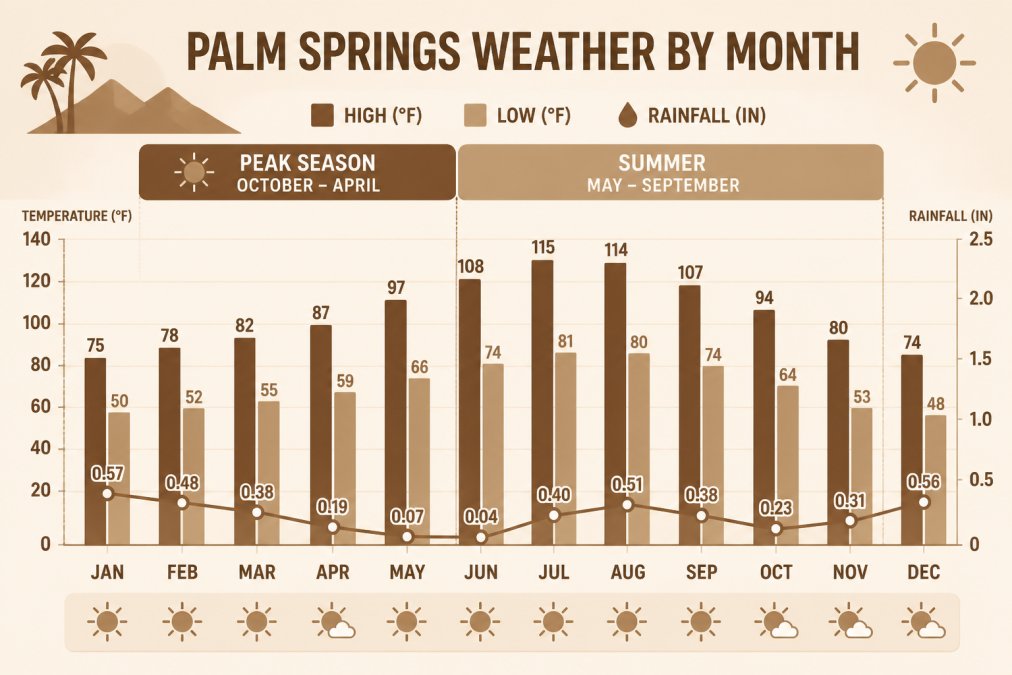
The shoulder seasons of April and September offer fewer tourists and lower rates, though April edges into warmer territory. Summer (June through August) sees temperatures regularly exceed 110°F, making outdoor activities uncomfortable during midday hours. Many resorts close or offer deep discounts.
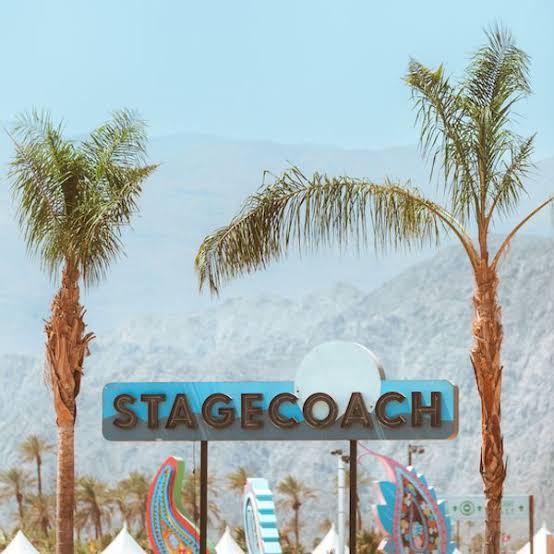
Spring brings the Coachella Valley music festival in April, which floods the region with visitors and drives up prices. Late October or early February work beautifully if you’re avoiding crowds and peak pricing. Winter months (December through February) are the sweet spot for most travelers, offering sun-drenched days perfect for hiking and exploring mid-century modern architecture without summer heat.
Where to Stay: Hotels, Resorts, and Vacation Rentals
Your accommodation choice shapes your entire weekend experience. The Coachella Valley offers everything from ultra-luxury resorts to budget-friendly options, each with distinct advantages.
Boutique Hotels and Desert Resorts
Boutique hotels and desert resorts define the Palm Springs experience, emphasizing distinctive design, personalized service, and iconic mid-century modern architecture. Many feature tiki bars, poolside lounges, and intimate settings that larger chains can’t match. 🏨
A typical boutique resort weekend includes access to resort amenities, pools, spas, fitness facilities, and curated dining options on-site. These properties often sit in prime locations near downtown Palm Springs, making exploration convenient. The trade-off is premium pricing, especially during peak season.
When evaluating boutique properties, look for updated reviews mentioning specific amenities: does the property maintain its pool year-round? Are rooms recently renovated? Does it offer complimentary parking? These details matter more than star ratings alone.
Vacation Rental Homes and Poolside Retreats
Vacation rental homes have transformed the Palm Springs market. These properties, ranging from studio apartments to sprawling multi-bedroom homes with private pools, offer flexibility that hotels can’t match. Families, groups, and travelers seeking longer stays often find vacation rentals more economical and spacious than traditional accommodations.
The Visitor Center for Palm Desert & Palm Springs recommends exploring vacation rental homes in the Coachella Valley for options that fit your specific needs. Many vacation rentals feature their own pools, full kitchens, and separate living areas, ideal if you want to cook some meals or gather with friends.
The advantage is flexibility and space. The consideration is that you’ll handle your own check-in process, and customer service may be less immediate than at a staffed hotel. Read recent guest reviews carefully and confirm cancellation policies before booking.
Palm Springs Weekend Itinerary: Two Days of Must-See Attractions
A well-structured itinerary prevents wasting hours deciding what to do and missing the experiences that make Palm Springs special. Here’s a two-day framework balancing architecture, outdoor recreation, dining, and downtime.
Day One: Mid-Century Modern Architecture and Downtown Exploration
Start your first day prioritizing the architectural heritage that defines the region. Begin with a mid-century modern architecture tour, either self-guided or professional. Downtown Palm Springs concentrates the highest density of iconic mid-century buildings: the Kaufmann House, the Twin Palms estate, and countless residential gems designed by architects like Richard Neutra and William F. Cody.
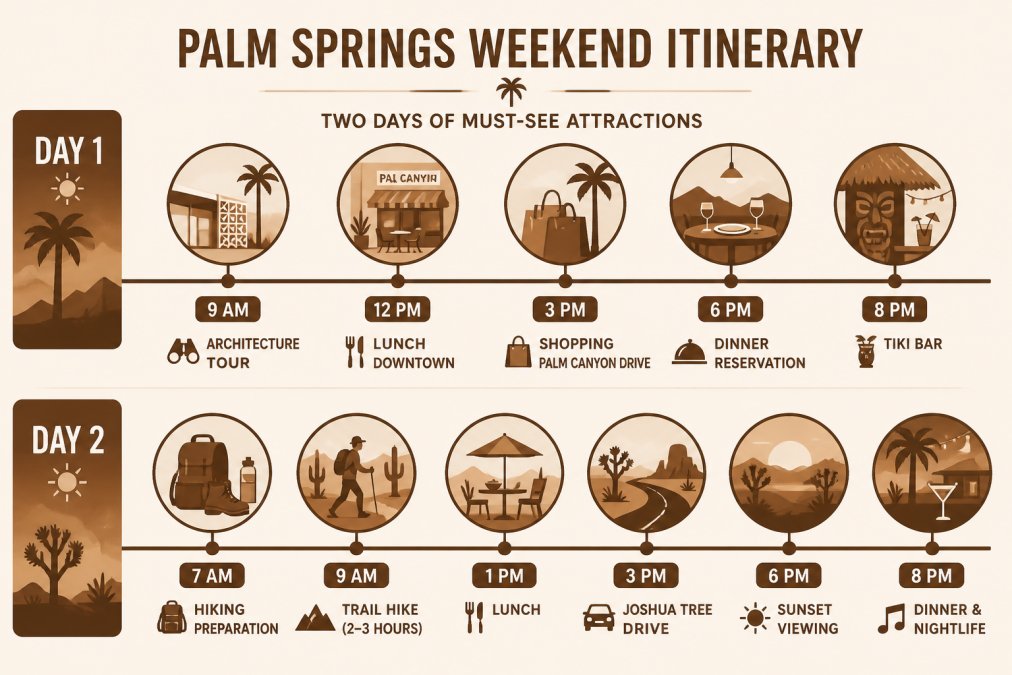
Spend your morning walking or driving through neighborhoods surrounding downtown. The architecture tells the story of mid-century design’s evolution. By midday, head to downtown Palm Springs for lunch. The dining scene has exploded in recent years, with restaurants ranging from casual tacos to elevated farm-to-table concepts. Afternoon exploration of Palm Canyon Drive, the main shopping and dining corridor, gives you a feel for local culture.
Evening is your window for a proper dinner reservation. Book popular restaurants at least two weeks in advance during peak season. This is when you experience the local cuisine and nightlife that separate a tourist visit from an authentic desert experience.
Day Two: Outdoor Recreation and Desert Hiking
Day two shifts focus to the natural landscape. Start early; sunrise hiking beats afternoon heat every time. The region offers trails for every fitness level. Beginners might choose the Palm Canyon Trail (3.5 miles roundtrip, moderate difficulty), which follows a creek through a canyon and ends at a small waterfall. More experienced hikers tackle Mount San Jacinto via the Palm Springs Aerial Tramway, which ascends 8,516 feet in roughly 10 minutes.
The aerial tramway itself is an experience: a rotating cable car that climbs from desert floor to mountain peak, offering views that stretch to the Salton Sea on clear days. At the top, temperatures drop roughly 30 degrees compared to the valley floor.
Many visitors combine hiking with a day trip to Joshua Tree National Park (45 minutes away). The park’s otherworldly landscape of rock formations and twisted Joshua trees justifies the drive. Plan for at least 3-4 hours in the park. The iconic Skull Rock Trail (1.8 miles) or Hidden Valley Trail (1 mile) provide accessible introductions to the park’s unique ecosystem.
Dining and Local Cuisine: Restaurant Recommendations
The Coachella Valley’s restaurant scene reflects its diverse population and influx of seasonal visitors. You’ll find everything from casual Mexican food to Michelin-worthy fine dining, often with creative desert-inspired menus highlighting local ingredients.
For first-timers, the dining strategy should be: book one special dinner in advance, explore casual lunch spots spontaneously, and don’t miss local breakfast culture. Many resorts feature excellent breakfast service; standalone breakfast spots often have lines but deliver authentic local flavor.
The restaurant landscape includes established classics serving the community for decades alongside newer concepts opened by chefs relocating from Los Angeles and San Francisco. Reading recent reviews on independent platforms helps you avoid tourist traps and discover neighborhood gems locals actually frequent.
Mid-century modern design extends to restaurants themselves. Several dining venues occupy iconic buildings or have been designed to complement the architectural aesthetic.
Book dinner reservations 2-3 weeks ahead during peak season (November through March). For casual lunch and breakfast, arrive early (before 11 AM for lunch, before 9 AM for breakfast) to avoid long waits.
Outdoor Activities: Hiking Trails, Joshua Tree Day Trips, and Desert Exploration
Beyond the specific day-two hike, the region offers endless outdoor recreation. The Coachella Valley sits at the intersection of multiple ecosystems: high desert, low desert, and mountain environments, each with distinct hiking experiences.
Popular hiking trails include Barker Dam Trail in Joshua Tree (1.4 miles, easy), which features Native American petroglyphs and desert vistas. The Tahquitz Canyon Trail (2 miles, moderate) near Palm Springs descends into a canyon with a seasonal waterfall and ancient Native American history. For serious hikers, the San Jacinto Peak Trail (10.5 miles roundtrip from the aerial tramway station) reaches the peak at 10,834 feet.
Desert exploration isn’t limited to hiking. Many visitors rent bikes to explore the region’s growing network of bike-friendly paths. Golf courses dot the landscape, over 100 courses in the greater area. Pickleball has exploded in popularity here, with dedicated facilities throughout the valley. Rock climbing, horseback riding, and off-road vehicle tours offer alternative ways to experience the desert landscape.
Getting Around: Transportation and Local Logistics
Planning a weekend in Palm Desert requires understanding how to move around the region. Unlike major cities with strong public transit, the Coachella Valley is car-dependent. Most visitors rent vehicles, though ride-sharing services operate in the area.
If you’re flying in, car rental at the airport makes sense for weekend trips. The region’s layout means you’ll want flexibility to explore different neighborhoods and nearby attractions like Joshua Tree. Ride-sharing works for getting from your accommodation to restaurants and bars, but renting a car for daytime exploration is more practical.
Parking is generally free and abundant. Downtown Palm Desert has metered street parking and several public lots; most restaurants and shops offer complimentary parking. Hiking trailheads have dedicated parking areas, though popular trails can fill up on weekends.
The Palm Springs Aerial Tramway is accessible via a scenic 14-mile drive from downtown. Allow 30-45 minutes for the drive plus parking time. Joshua Tree National Park is a 45-minute drive; allow extra time during peak season when traffic can back up at the park entrance.
Local knowledge: avoid driving downtown Palm Springs during evening hours on weekends if possible. Visit downtown earlier in the day or during weekday evenings for a more relaxed experience.
Accessibility, Safety, and Travel Tips for First-Timers
Planning a weekend in Palm Springs as a first-timer means understanding local conditions and etiquette that guidebooks often overlook.
Accessibility: The region has made significant progress improving accessibility for travelers with disabilities. Many hotels and resorts offer ADA-compliant rooms; popular hiking trails include accessible options. The Palm Springs Aerial Tramway accommodates wheelchairs and mobility devices. Contact specific venues directly to confirm accessibility features before booking.
Desert Safety: The desert environment presents specific hazards. Temperatures can swing 30+ degrees between sun and shade. Dehydration happens faster than in other climates due to low humidity. Always carry water, even for short walks. Sunset occurs around 5 PM in winter and 8 PM in summer; plan activities accordingly to avoid hiking in darkness.
Wildlife encounters are rare but possible. Rattlesnakes, scorpions, and Gila monsters exist in the region but actively avoid humans. Wear closed-toe shoes while hiking and watch where you place your hands on rocks.
Local Etiquette: The region has a strong LGBTQ+ community and culture of inclusivity. Palm Springs is known as one of the most welcoming destinations for LGBTQ+ travelers in the country, with diverse dining, entertainment, and accommodation options.
Packing Essentials: Sunscreen (SPF 50+), hat, sunglasses, and light layers are non-negotiable. Desert sun is intense, and even cloudy days deliver significant UV exposure. Bring layers because temperature swings between day and night can be dramatic, especially in winter months.
Sustainable Travel: The Coachella Valley faces water scarcity challenges. Many resorts have shifted to drought-resistant landscaping and water-efficient practices. Visitors can support sustainability by taking shorter showers, reusing towels, and respecting hiking areas by staying on marked trails.
Planning a weekend in Palm Desert 2026 becomes straightforward when you understand the region’s distinct seasons, accommodation options, and activity landscape. The Visitor Center for Palm Desert & Palm Springs provides updated information on events, dining, and attractions throughout the year.
Ready to book your desert escape? Explore vacation rental homes throughout the region for flexibility and space, or discover Palm Desert and Coachella Valley hotels and resorts to find your perfect base. Your ideal Palm Springs weekend awaits.

Frequently Asked Questions
What is the best time of year to visit for a weekend trip to Palm Desert?
November through April offers ideal weather for a weekend getaway, with temperatures between 70-85°F and minimal rainfall. December and January are peak season with vibrant nightlife and events. March offers slightly lower crowds while maintaining pleasant weather. Summer months (June-August) reach 110°F+, making outdoor activities challenging. Fall (September-October) provides budget-friendly rates and fewer visitors, though daytime temperatures remain warm.
How many days do you need to see the highlights of Palm Desertand Palm Springs?
A weekend (two days) covers the essentials: mid-century modern architecture tours, downtown dining and shopping, and one outdoor activity like hiking or a Joshua Tree day trip. Three days allows time for a wellness retreat experience, additional hiking trails, and exploring nearby neighborhoods. First-timers benefit from at least two full days to avoid feeling rushed between attractions.
What are the must-see architectural landmarks and attractions?
The Aerial Tramway offers panoramic views and hiking access. Downtown Palm Springs features walkable architecture tours showcasing mid-century modern homes and design. Key landmarks include the Visitor Center, art district galleries, and historic boutique hotels. The Kaufmann House and other architectural icons are accessible through guided tours. Many resorts showcase period design with poolside settings that reflect the area’s iconic aesthetic.
Are there specific transportation tips for getting around during a weekend visit?
Rent a car for maximum flexibility exploring hiking trails, Joshua Tree, and surrounding areas. Downtown Palm Springs is walkable for dining and shopping. Rideshare services operate throughout the region. The Aerial Tramway requires a vehicle to reach the base. Bike-friendly routes connect some neighborhoods. Plan transportation before arriving to avoid delays reaching time-sensitive activities like restaurant reservations or guided architecture tours.
What neighborhoods offer the best weekend stay experience?
Downtown Palm Springs offers walkable access to restaurants, galleries, and nightlife. The Movie Colony area features historic mid-century homes and boutique hotels. The Uptown Design District combines shopping with dining. Quieter neighborhoods like Deepwell provide resort living with pool access and relaxation. Choose based on your priority: nightlife and walkability (downtown), architecture and design focus (Movie Colony), or peaceful wellness retreat (resort areas).
What should first-time visitors know about local etiquette and desert safety?
Respect the desert climate by staying hydrated, wearing sunscreen, and avoiding midday hiking during summer. Stick to marked trails and check conditions before hiking. The region receives minimal rainfall; plan accordingly. Respect private property and architecture tour guidelines. Downtown areas are generally safe; avoid isolated areas after dark. Check local event schedules and seasonal closures. Be aware of flash flood risks in canyons during rare rainstorms and follow posted warnings.
How can I find current restaurant reservations and dining recommendations?
Research restaurants online through travel guides and local review platforms to confirm current hours and availability. Many popular establishments require advance reservations, especially during peak season (December-February). Call ahead or use reservation platforms to secure tables at sought-after venues. The Visitor Center for Palm Desert & Palm Springs provides curated dining recommendations and can help identify restaurants matching your preferences, from casual local cuisine to upscale dining experiences.
Hotels, Resorts and Vacation Home Booking
If you’re planning an upcoming trip, feel free to browse our directory of Palm Springs and Palm Desert hotels and resorts.
If you prefer extra privacy and a private pool? You can browse Palm Springs and Palm Desert vacation rental homes for your stay.
This article was written using GrandRanker and edited by Collins Omaghe.