Table of Contents
- What Makes Palm Springs a Winter Snowbird Destination
- Weather Patterns and Best Time to Visit
- Best Neighborhoods for Winter Residents in the Coachella Valley
- Vacation Home Rentals vs. Buying: A Seasonal Resident’s Comparison
- Winter Activities for Retirees and Outdoor Enthusiasts
- Seasonal Rental Market Trends 2026 and What They Mean for You
- Tax, Residency, and Practical Logistics for Snowbirds
- Planning Your Snowbird Season: A Step-by-Step Checklist
Last Updated: August 11, 2026
What Makes Palm Springs a Winter Snowbird Destination
Every November, thousands of travelers discover what winter residents already know: the Coachella Valley transforms into America’s premier snowbird haven. Palm Springs and the surrounding region offer world-class golf courses, hiking trails with mountain views, cultural events, and spa retreats that create a complete lifestyle ecosystem, not just a seasonal escape.
The area was built for seasonal residents. Golf course communities dominate the landscape, resort living infrastructure exists everywhere, and property management services understand the snowbird lifestyle because they’ve managed vacation home rentals for decades. Many seasonal residents find that the desert climate combined with established communities of like-minded people creates something rare: a place where you can actually build a life for three to five months.
The best time to book your seasonal rental is August through September, when inventory is highest and prices haven’t peaked. Most snowbirds who wait until October face limited options and premium rates.
Weather Patterns and Best Time to Visit
November through April delivers the climate that makes this destination work. Average high temperatures range from the mid-70s in November to the low 80s in March and April, with nights cooling to the 50s. This weather window is the sweet spot between summer’s brutal 115-degree heat and spring’s 100-degree temperatures.
High season peaks December through February, offering the most festive events but also the highest rental rates and most crowded golf courses. Shoulder season, November and March through April, delivers nearly identical weather with fewer crowds and lower costs. Many experienced seasonal residents deliberately avoid peak season, choosing November or April instead.
Rainfall is minimal year-round, averaging less than an inch monthly. Clear skies dominate, allowing you to reliably schedule hiking, tennis, golf, and outdoor dining weeks in advance.
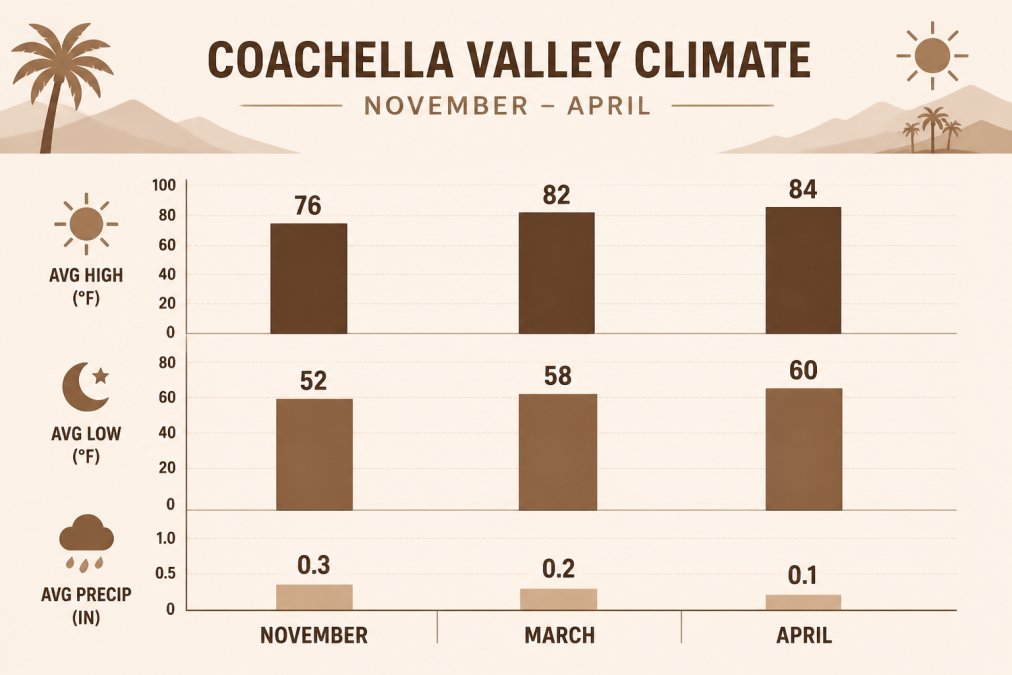
The ideal snowbird window is November through April, with shoulder seasons (November and March-April) offering better value than peak season (December-February).
Best Neighborhoods for Winter Residents in the Coachella Valley
Palm Springs proper attracts a younger, arts-focused crowd. Downtown pulses with galleries, boutique restaurants, and cultural venues. Neighborhoods like the Movie Colony offer mid-century modern homes with character. Winter residents here value walkability and cultural amenities over golf course proximity.
Palm Desert is the golf capital. Neighborhoods like Ironwood Country Club, Monterey Country Club, and Rancho Las Palmas put you steps from championship courses. These communities were designed around golf, with clubhouses and tournament schedules structuring the social calendar. Winter residents here are typically retirees or serious golfers seeking daily course access.
La Quinta offers a quieter alternative with mountain views and excellent hiking access. The community feels less developed than Palm Springs or Palm Desert, and rental prices typically run lower. Indian Wells sits between Palm Desert and La Quinta, offering resort-style living with strong tennis and golf infrastructure.
Choosing your neighborhood determines your daily experience. A golfer in downtown Palm Springs may feel misplaced, while an arts enthusiast in Rancho Las Palmas might find the scene too golf-focused. The Visitor Center for Palm Desert & Palm Springs can help match your preferences to specific communities.
Golf-focused snowbirds: Palm Desert neighborhoods like Monterey or Rancho Las Palmas. Arts and culture seekers: Palm Springs proper. Hikers and nature enthusiasts: La Quinta. Tennis players: Indian Wells.
Vacation Home Rentals vs. Buying: A Seasonal Resident’s Comparison
The decision between renting a vacation home and purchasing property represents the biggest financial choice for seasonal residents. Both approaches work; the right choice depends on your timeline, finances, and commitment level.
Renting offers flexibility that buying cannot match. You’re not locked into a specific property, neighborhood, or community. Property management companies handle maintenance, cleaning, and upkeep. You have no property tax obligations, insurance headaches, or long-term capital tied up in real estate. For first-time snowbirds testing the lifestyle, renting is the obvious choice.
Buying makes sense for committed seasonal residents planning to return year after year. You build equity instead of paying rent to a landlord and have complete control over your space. Long-term rental yields can be strong, with many seasonal properties generating consistent income during months you’re not using them.
The catch: buying requires managing a property remotely. You’re responsible for major repairs, property taxes, insurance, and HOA fees. You’re also committing to a specific neighborhood, which limits flexibility if your preferences change.
| Consideration | Renting | Buying |
|---|---|---|
| Upfront Cost | Seasonal rental rates | Down payment + closing costs |
| Flexibility | Switch locations annually | Locked into property |
| Maintenance | Property manager handles | Your responsibility |
| Tax Implications | Simpler, fewer deductions | Mortgage interest, property tax deductions |
| Income Potential | None (unless subletting) | Rental income during off-season |
| Long-term Wealth | Rent paid to landlord | Equity accumulation |
| Best For | Testing lifestyle, short-term | Committed multi-year residents |
Most first-time snowbirds rent. Many transition to buying after 2-3 seasons once they’ve confirmed they love the lifestyle and chosen their ideal neighborhood. The Visitor Center for Palm Desert & Palm Springs offers curated vacation home rental options that make the rental decision straightforward.
Winter Activities for Retirees and Outdoor Enthusiasts
Golf dominates for obvious reasons. The Coachella Valley has over 125 courses, more per capita than anywhere else in America. Championship courses like TPC Stadium and La Quinta Country Club attract serious players, while public courses offer affordable rounds. Many snowbirds play 3-4 times weekly, something impossible in most winter climates.
Hiking rivals golf for popularity. The area’s proximity to the San Jacinto and Santa Rosa mountains means trails start within 20 minutes of most neighborhoods. Barker Dam Trail, Andreas Canyon, and Tahquitz Canyon offer varying difficulty levels. Retirees particularly appreciate accessible trails with gentle grades and stunning views.
Tennis and pickleball have exploded in popularity among seasonal residents. Dedicated courts exist throughout the valley, with leagues organized by skill level. The social component matters as much as the sport, with many snowbirds building friendships through weekly games.
Spa retreats define the luxury end of the activity spectrum. World-class spas offer treatments, wellness programs, and fitness classes. Cultural amenities keep winter interesting beyond outdoor activities, with galleries, theater productions, classical music performances, farmers markets, and wine tastings running throughout the season.
Hiking in the desert requires preparation that many first-time visitors underestimate. Bring at least 2 liters of water, sun protection, and sturdy footwear. The terrain is rockier than typical hiking areas, and dehydration happens faster in dry desert air.
Seasonal Rental Market Trends 2026 and What They Mean for You
Demand has shifted earlier in the season. November bookings are stronger than in previous years, likely reflecting snowbirds arriving earlier to escape early cold snaps. If you’re flexible on timing, booking November often yields better availability and pricing than waiting for peak season.
Inventory remains tight throughout the season. Professional property management companies now control most seasonal inventory, improving consistency and service but reducing available properties. High-quality rentals book 6-8 months in advance.
Pricing has stabilized after pandemic-era volatility. Rates are no longer skyrocketing annually, though prices remain elevated compared to pre-2020 levels. Shoulder season (November and March-April) offers significant savings compared to peak season.
Long-term seasonal rentals (8+ weeks) are increasingly common. Many snowbirds now book extended stays rather than traditional 4-week visits. Property managers prefer longer bookings, and negotiating long-term rates often yields better value than booking multiple shorter stays.
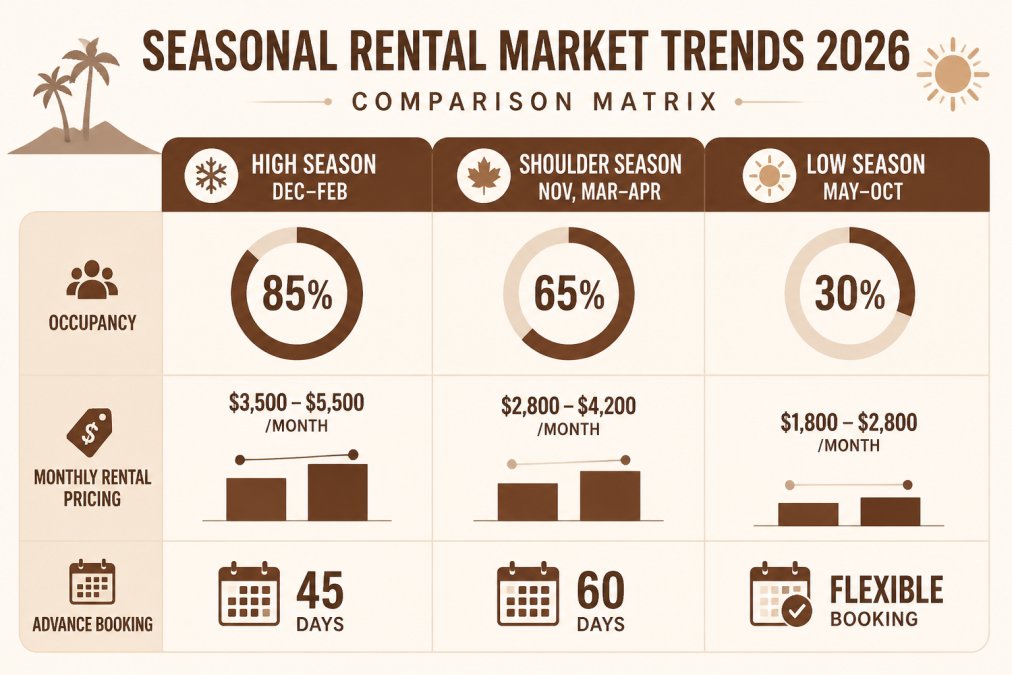
The Visitor Center for Palm Desert & Palm Springs tracks these trends continuously, helping seasonal residents navigate booking decisions strategically.
Tax, Residency, and Practical Logistics for Snowbirds
Residency status matters more than many snowbirds realize. Spending more than 183 days in any state during a calendar year can trigger state income tax obligations. For most snowbirds spending November through April (typically 150-180 days), this isn’t an issue. However, those extending stays into May should track days carefully.
Property tax implications depend on whether you own or rent. Renters have minimal tax considerations. Property owners should understand that California property taxes apply to owned vacation homes, even for non-residents, though California’s property tax rates are lower than many states.
HOA fees are standard in Coachella Valley communities, typically ranging from $200-600 monthly depending on amenities. Insurance requirements differ for owners versus renters. Property owners need homeowners insurance, while renters should consider personal liability coverage.
Practical logistics involve mail forwarding, vehicle registration, and healthcare continuity. Many snowbirds maintain residency in their home state while establishing mail forwarding services. Healthcare continuity requires confirming that your insurance covers treatment in the Coachella Valley or identifying local providers.
Water usage deserves specific mention for environmental and cost reasons. The desert is water-scarce. Responsible snowbirds minimize outdoor watering and understand that excessive water use increases utility costs and strains regional resources.
Tax residency determination is complex and varies by state. If you’re planning extended stays or own property, consult a tax professional familiar with your home state’s residency rules.
Planning Your Snowbird Season: A Step-by-Step Checklist
Three Months Before Arrival (August-September for November arrival):
Decide on rental versus buying and your target neighborhood. Research and book your vacation home rental. Arrange mail forwarding with USPS. Confirm healthcare coverage includes the Coachella Valley. Review vehicle registration and insurance requirements.
One Month Before Arrival (October for November arrival):
Confirm all reservations and receive property access details. Arrange travel and notify banks of travel dates. Set up utilities if needed and research local services.
Upon Arrival:
Inspect rental property and document any issues. Locate essential services and get oriented to your neighborhood. Register for community activities and establish a routine.
During Your Stay:
Engage with the seasonal community and attend events. Try new restaurants and activities. Build relationships with neighbors and activity partners.
Before Departure:
Schedule property walkthrough and arrange mail forwarding back to your home state. Settle outstanding bills and leave feedback with property management. Book next season’s rental if returning.
The Coachella Valley works as a snowbird destination because the infrastructure, community, and climate have evolved to support it. First-time snowbirds often arrive expecting a vacation and discover they’ve found a lifestyle.
Start your planning with the Visitor Center for Palm Desert & Palm Springs vacation rental homes, which offers curated options across neighborhoods and price points. Whether you’re testing the snowbird lifestyle for the first time or returning for your tenth season, having the right home and community makes all the difference.

Frequently Asked Questions
Is Palm Springs a good place to snowbird?
Yes. Palm Springs and the surrounding Coachella Valley offer reliable winter weather, abundant outdoor recreation, cultural events, and established snowbird communities. The desert climate provides mild temperatures from November through April, while golf, hiking, and resort amenities attract retirees and seasonal residents. Many snowbirds return year after year for the combination of lifestyle, community, and accessibility.
What is the typical weather like from November through April?
Winter months in the Coachella Valley are mild and sunny. November and March average 75-85°F during the day and 50-60°F at night. December through February are coolest, with daytime highs around 70-75°F and nighttime lows near 45-55°F. Rainfall is minimal, and sunny days are the norm. Pack layers and light clothing; evenings can be cool, especially in January and February.
What are the best neighborhoods for seasonal visitors and winter residents?
Popular neighborhoods include Indian Wells for golf-focused communities, Rancho Mirage for upscale resort living, and Palm Desert for walkable, family-friendly options. Each offers different amenities: Indian Wells emphasizes championship golf courses, Rancho Mirage provides luxury spas and fine dining, and Palm Desert combines shopping, dining, and cultural events. Your choice depends on your lifestyle priorities and budget. Explore neighborhoods in person or connect with local resources to find your fit.
Is it better to rent or buy as a seasonal resident?
Renting offers flexibility, no maintenance responsibility, and lower upfront costs, ideal if you’re new to the area or unsure about long-term commitment. Buying provides stability, potential rental income if you’re absent, and equity building, but requires property management and carries higher costs. Consider your timeline, budget, and whether you plan to spend multiple winters here. Many first-time snowbirds rent for a season before deciding.
When should I avoid visiting Palm Springs?
Avoid May through September, when temperatures exceed 100°F regularly and can reach 120°F. Summer also brings higher humidity and increased air conditioning costs. If you prefer crowds and events, avoid late April through October, the high season ends in early April. Most seasonal residents depart by mid-April as temperatures rise. The best window is November through March.
What community events and cultural activities happen during the snowbird season?
The Coachella Valley hosts festivals, concerts, and community gatherings throughout winter. Events range from golf tournaments and spa retreats to art fairs and seasonal celebrations. Many neighborhoods organize social clubs, fitness classes, and volunteer opportunities for seasonal residents. Check local event calendars and community boards when you arrive to connect with other snowbirds and discover what’s happening during your stay.
How do snowbirds handle healthcare and local services?
Register with local healthcare providers early in your stay. The Coachella Valley has multiple hospitals, urgent care centers, and specialist offices. If you take prescription medications, arrange refills or transfers before arriving. Many snowbirds use telehealth for routine care. Establish relationships with dentists and eye doctors in advance. Keep copies of medical records and insurance information accessible. Ask your accommodation provider for local service recommendations.
This article was written using GrandRanker and edited by Collins Omaghe.