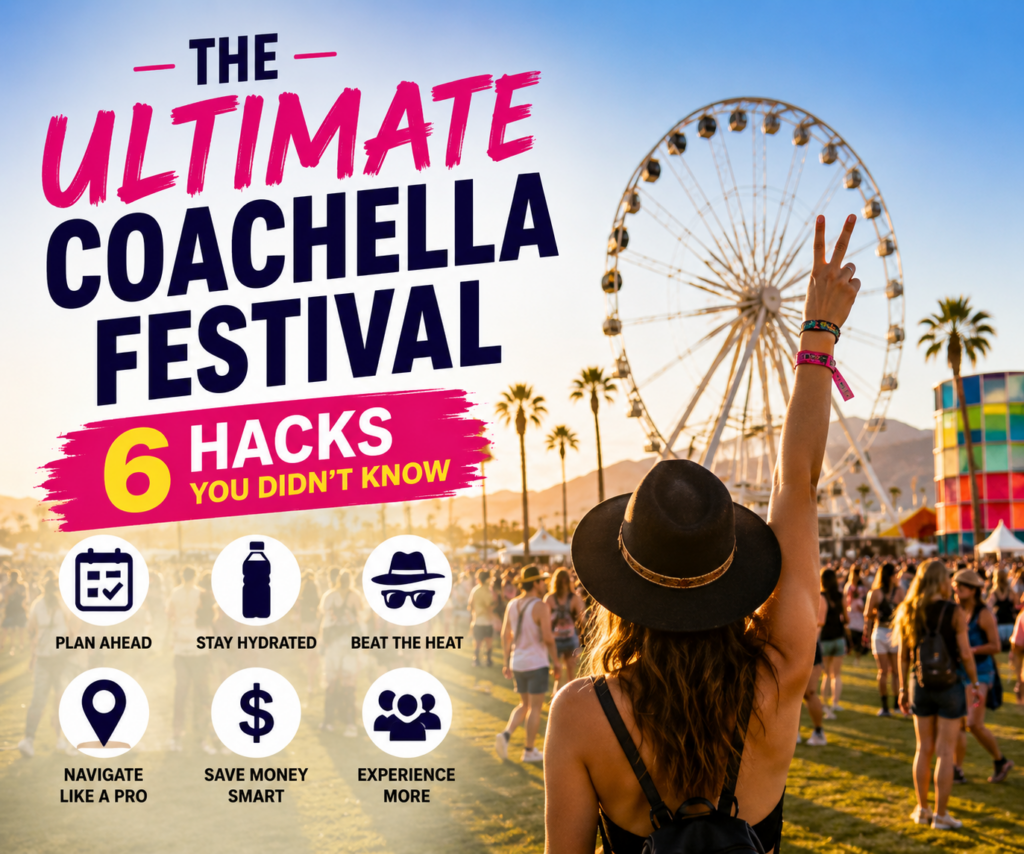
Every spring, the quiet desert landscape of Indio, California transforms into the epicenter of global pop culture as the Coachella Valley Music and Arts Festival takes over the iconic Empire Polo Club. What started as a modest two-day indie gathering in 1999 has evolved into a bucket-list phenomenon that draws over 250,000 attendees across two consecutive three-day weekends.
Navigating Coachella requires more than just showing up; it is an immersive, high-energy event where world-class musical performances, monumental art installations, and trendsetting fashion intersect. Whether you are a first-time festivalgoer researching Coachella tips for beginners or a seasoned veteran searching for what to expect at Coachella, understanding the lay of the land is essential. From tracking down the elusive lineup release to surviving the relentless desert heat, this guide breaks down everything you need to know about the music festival that sets the standard for live entertainment worldwide.
What Is the Festival Really About?
At its core, Coachella is much more than a three-day concert; it is a global cultural engine where live music, fine art, digital influencer trends, and fashion converge. While casual observers see viral social media posts, the actual Coachella experience is an immersive ecosystem built around four distinct pillars:
-
Curated Curation Over Chart Dominance: Unlike festivals that rely solely on top-40 radio hits, Coachella’s identity was built on booking genre-defying acts, rare band reunions, and underground electronic producers right before they explode into mainstream stardom. It is a place where hip-hop icons, indie rockers, pop royalty, and global artists share equal footing across multiple massive stages.
-
Large-Scale Immersive Art: The phrase “Music and Arts” in the festival’s title is not an afterthought. The grounds are dominated by towering, original Coachella art installations—from multi-story architectural sculptures to surreal, interactive light displays—that transform the desert polo fields into a temporary outdoor museum.
-
The Desert Escape Culture: Located against the dramatic backdrop of the Santa Rosa Mountains, the setting provides a surreal sense of escapism. The environment encourages non-stop exploration, whether that means catching a secret set in the air-conditioned Yuma Tent, lounging on the polo grass at sunset, or exploring pop-up food villages featuring culinary creations from top LA chefs.
-
A Cultural Microcosm: Ultimately, Coachella serves as an annual temperature check for pop culture. It is where visual fashion trends are tested, music history moments are made (like historic surprise guest cameos and groundbreaking headliner performances), and half a million fans gather to share a singular, collective moment.
Lineup & Schedule
The heartbeat of Coachella relies entirely on its roster of artists and the logistical art of timing their performances. Anticipation builds for months before the gates ever open, driving heavy online search volume around how, when, and where to catch your favorite acts.
-
Lineup Release Timeline: Goldenvoice typically drops the official Coachella lineup in early January (or late autumn in special release cycles). Searches spike exponentially during this window as fans scrub the poster to identify the headliners, sub-headliners, and genre-specific stage takeovers.
-
Decoding the Schedule & Set Conflicts: Detailed daily schedules and exact set times are kept secret until just a few days before Weekend 1. Once released, attendees face the inevitable “set conflicts”—where two must-see artists perform at the exact same time across different stages. Strategic planning becomes crucial to map out walking routes between the main Coachella Stage, Outdoor Theatre, Sahara Tent, and the Yuma Tent.
-
The Official Coachella App: Essential for navigating the festival grounds, the Coachella app is the primary tool for building personalized schedules, receiving real-time push notifications about unscheduled guest appearances, and managing wristband activation.
-
Surprise Sets & Secret Guests: Beyond the official roster, Coachella is famous for surprise cameos—from unexpected guest singers popping up during headlining sets to unannounced DJ performances in the Do LaB or Heineken House stages.
Tickets & Logistics
Securing passes and planning entry into the Empire Polo Club is often the most stressful part of the festival experience. High demand, strict purchasing windows, and complex transportation options mean attendees must plan months in advance.
-
Pass Types & Cost Structure: Coachella pass pricing varies depending on tier releases and chosen inclusions:
-
General Admission (GA): Grants access to all three days of the festival, venue grounds, and standard food/craft beverage areas. Passes generally range from $549 to $649 depending on tier level and chosen weekend.
-
GA + Shuttle Combo: Includes standard 3-day venue access along with unlimited rides on the official Valley Shuttle system. Typically priced between $679 and $779.
-
VIP Passes: Ranging from $1,199 to $1,399, VIP grants access to dedicated entry lanes, air-conditioned restrooms, shaded seating, and exclusive food/beverage gardens near the main stages (though it does not offer special front-of-stage viewing access).
-
-
On-Sale Windows & Payment Plans: Goldenvoice runs a Coachella presale during the June prior to the festival, allowing fans to lock in passes with flexible monthly payment plans starting at $49 down. The main general sale takes place in January following the official lineup drop.
-
Wristband Activation & Rules: Festival passes arrive as RFID-chipped wristbands in early spring. Attendees must activate their specific wristband via the official mobile app prior to arrival, as passes are non-transferable once applied to a wristband.
-
No Single-Day Passes: A universal policy that catches first-timers off guard: Coachella single-day passes do not exist. All official ticket sales are exclusively for 3-day admission.
Accommodations & Travel
Finding a place to stay and securing reliable transportation around the Coachella Valley are critical factors that can make or break your festival weekend. Because over 100,000 visitors descend upon the desert each weekend, lodging and transit must be booked as far in advance as possible.
-
On-Site Festival Camping: For many, camping is the ultimate Coachella experience, offering continuous energy and immediate proximity to the venue gates without commuting.
-
Car Camping: The most popular and budget-friendly option. Attendees park a single vehicle in a designated 10×30 spot and pitch tents directly behind or above it.
-
Preferred Car Camping: Guarantees a spot in the closest lots to the festival entrance, regardless of what time you arrive on Thursday.
-
Lake Eldorado & Safari Camping: Premium, high-end options offering pre-erected teepees, air-conditioned tents, private showers, golf cart transit, and concierge service.
-
-
Hotels, Resorts & Vacation Rentals: Off-site lodging options range from luxury resorts in Palm Springs, Rancho Mirage, and La Quinta to private Airbnb and VRBO properties in Indio and Palm Desert. Demand drives prices up significantly, so booking 6 to 10 months ahead is standard.
-
Official Valley Shuttle System: The Coachella shuttle service is widely considered the safest, most reliable way to travel between off-site lodging and the grounds. Shuttles run continuously throughout the day and night to designated hotel hubs across the valley, allowing fans to avoid gridlock and high parking fees.
-
Rideshare vs. Driving:
-
Uber / Lyft: Dedicated rideshare zones are located on-site, but wait times can exceed two hours post-headliner, accompanied by steep surge pricing.
-
Day Parking: Free general parking lots are available on-site, but leaving the venue after midnight requires navigating bottleneck traffic exit routes.
-

Packing & Survival Strategies
Thriving during a three-day weekend at the Empire Polo Club requires balancing extreme desert environmental factors with strict venue security policies. Preparing a well-curated Coachella packing list ensures you stay safe, comfortable, and energized from afternoon set times through late-night afterparties.
-
Managing Desert Temperature Swings: The Coachella Valley experiences severe thermal shifts. Daytime temperatures frequently exceed 95°F (35°C), while nighttime temperatures can plunge into the 50s°F (10s°C).
-
Daytime Essentials: Non-aerosol sunscreen, UV-blocking sunglasses, wide-brimmed hats, lip balm with SPF, and cooling neck wraps or handheld fans.
-
Nighttime Layers: A lightweight jacket, sweater, or long-sleeve layer stored in a locker or backpack for when the sun drops behind the mountains.
-
-
Hydration & Dust Protection:
-
Water Strategy: The desert heat accelerates dehydration rapidly. Bring a refillable non-glass water bottle or an empty hydration pack (such as a CamelBak) to utilize free water refill stations located throughout the grounds. Packing electrolyte powder packets to mix into your water is a proven strategy for sustaining energy.
-
The “Coachella Cough”: As thousands of feet kick up dry dirt on the polo fields—especially by Weekend 2—dust fills the air. A bandana, neck gaiter, or face mask is essential for protecting your lungs when walking between stages or returning to the camping lots at night.
-
-
Venue Rules & Prohibited Items: Festival security enforces venue policies strictly.
-
Allowed: Hydration packs (must be empty upon entry), small backpacks/fanny packs within size limits, sealed gum/lip balm, power banks, and non-aerosol sunblock.
-
Prohibited: Aerosol cans (including spray sunscreen), selfie sticks, professional cameras with detachable lenses, drones, outside food/beverages, glass containers, and lawn chairs.
-
-
Comfort & Utility Gear: Comfortable, broken-in footwear is non-negotiable—attendees average 15,000 to 25,000 steps per day. Additionally, bring a high-capacity portable phone charger, high-fidelity earplugs (to protect your hearing without muffling audio quality), and hand sanitizer or wet wipes for port-a-potty stations.
Fashion & Aesthetic
Over the past two decades, Coachella fashion has evolved from practical festival attire into an international style showcase. The grounds serve as a living runway where high-street trends are tested, music subcultures intersect, and street style influences spring fashion lines worldwide.
-
Evolving Style Aesthetics: While early Coachella style was defined almost exclusively by bohemian chic—think suede fringe, crochet dresses, floral crowns, and denim cutoffs—today’s aesthetic is far more diverse. Current festival trends lean heavily into Y2K nostalgia, desert rave aesthetics, utility streetwear, metallic textiles, sheer layers, and bold Western wear (like statement cowboy boots and embroidered hats).
-
Functionality vs. Fashion: The ultimate challenge of planning a Coachella outfit is balancing high-fashion looks with extreme desert conditions.
-
Footwear First: While heels and platform boots look striking in photos, walking over ten miles a day on grass, gravel, and dirt makes comfortable shoes essential. Broken-in sneakers, Western boots with proper arch support, or cushioned combat boots are the top choices for experienced festivalgoers.
-
Day-to-Night Transitions: Outfits must adapt to the 40-degree temperature drop from day to night. Breathable, lightweight fabrics (like mesh, linen, and sheer knits) work best for the afternoon heat, paired with stylish outerwear (like oversized leather jackets, denim shackets, or windbreakers) tied around the waist or stored in a locker for after dark.
-
-
Beauty, Accessories & Hair: Statement accessories elevate even simple outfits. Chunky body jewelry, face gems, futuristic sunglasses, and temporary body art are festival staples. Long, heat-resistant hairstyles like space buns, braided pigtails, and bandanas serve a dual purpose: keeping hair off your neck during hot afternoons while protecting scalp and hair from fine desert dust.
-
Sustainable & Secondhand Style: As festival fashion faces scrutiny for promoting fast fashion, a growing trend among attendees involves thrifted, vintage, and upcycled pieces. Sourcing archival Y2K designer items or re-styling wardrobe staples ensures a unique look while minimizing environmental impact on the desert.
Frequently Asked Questions (FAQ)
1. Where and when does Coachella take place every year?
Coachella is held annually across two consecutive three-day weekends in April. The festival takes place at the Empire Polo Club in Indio, California, located in the Coachella Valley about 20 miles east of Palm Springs.
2. How much does it cost to attend Coachella in total?
While general admission passes typically cost between $549 and $649, total expenses—including lodging, shuttle passes, food, merch, and travel—usually range from $1,500 to $3,000+ per person depending on whether you camp or stay in a hotel/Airbnb.
3. Is Coachella an all-ages event, and can kids attend for free?
Yes, Coachella is an all-ages festival. Children 5 years old and under can enter for free with a ticketed adult (General Admission areas only). However, on-site campgrounds require attendees to be at least 18 years old unless accompanied by a parent or legal guardian.
4. What is the difference between Weekend 1 and Weekend 2?
The lineup, art, and stage setups are identical across both weekends. Weekend 1 is famous for celebrity appearances, PR activations, influencer style, and fresh grass fields. Weekend 2 tends to have a more relaxed fan environment, fewer technical audio glitches, and smoother festival operations.
5. How far in advance do set times get released?
Exact daily performance times and stage schedules are kept under wraps until just 2 to 3 days before Weekend 1 begins. Set times are published exclusively via the official Coachella mobile app and social media channels.
6. Can I sleep in my car in the day parking lots?
No. Overnight parking or sleeping in your vehicle in general day parking lots is strictly prohibited and enforced. Vehicles left overnight in day parking lots after 2:00 AM will be towed at the owner’s expense. Car camping requires a specific Car Camping Pass.
7. Can I bring a professional camera, GoPro, or selfie stick?
Cameras with detachable lenses (DSLRs/35mm), professional recording equipment, tripods, drones, and selfie sticks are strictly banned from entering the venue. Small point-and-shoot non-professional digital cameras and smartphones are allowed.
8. Are credit cards, cash, or mobile payments accepted inside?
Coachella is a 100% cashless venue. All food vendors, merch booths, and bars only accept credit cards, debit cards, and contactless mobile pay (Apple Pay, Google Pay).
9. What happens if I cut, lose, or damage my wristband?
Wristbands are non-transferable once secured onto your wrist. If a wristband is damaged or lost, original purchasers can visit the off-site Box Office with a valid ID and order confirmation to get a replacement band for a nominal replacement fee.
10. How do people get around if they aren’t camping on-site?
The most popular transportation method is the official Coachella Any Line Shuttle, which loops continuously between designated local hotel hubs and the festival site. Rideshares (Uber/Lyft) are available but often experience severe post-headliner surge pricing and long wait times.
Hotels, Resorts and Vacation Home Booking
If you’re planning an upcoming trip, feel free to browse our directory of Palm Springs and Palm Desert hotels and resorts.
If you prefer extra privacy and a private pool? You can browse Palm Springs and Palm Desert vacation rental homes for your stay.