Table of Contents
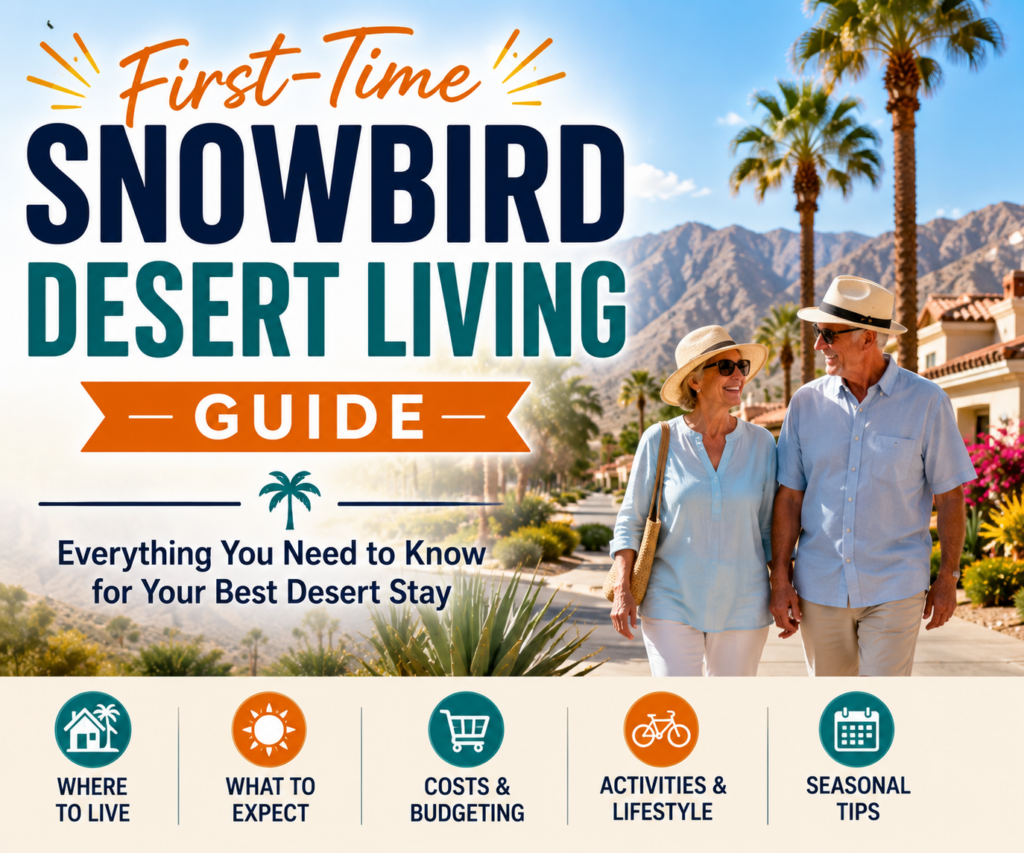
- Understanding the Snowbird Lifestyle
- Choosing Your Desert Destination and Housing Options
- Seasonal Rental Tips for Snowbirds
- How to Prepare Your Home for Winter Absence
- Snowbird Guide to Palm Springs Fitness and Community
- Managing Healthcare, Mail, and Legal Residency
- Budgeting and Preparing for Desert Living
- Getting Started: Your First Season Checklist
Last Updated: August 17, 2026
Understanding the Snowbird Lifestyle
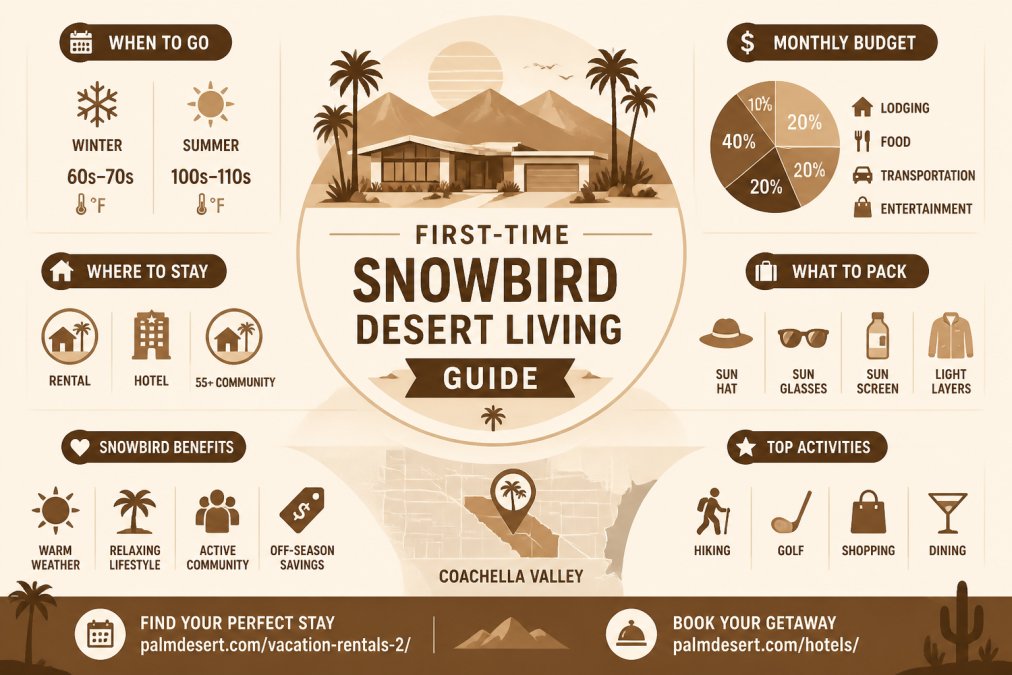
A snowbird spends winters in a warmer climate, typically the desert Southwest, and returns to their northern home when spring arrives. This lifestyle offers freedom from harsh winters, access to year-round outdoor activities, and vibrant community. The Coachella Valley attracts snowbirds with 300+ days of sunshine annually and established seasonal communities.
However, snowbird desert living requires more than packing a bag. It involves housing decisions, healthcare coordination, mail management, and tax planning. Get these elements right, and your season flows effortlessly. This guide walks you through every essential step, from selecting your destination to preparing your northern home for your absence.
Choosing Your Desert Destination and Housing Options
The Coachella Valley offers distinct advantages: consistently warm temperatures, established snowbird communities, world-class golf and fitness facilities, and vibrant cultural calendars. Your priorities, whether active adult communities, quiet neighborhoods, or proximity to entertainment, will shape where you land.
The extended stay nature of snowbird desert living means you’re temporarily relocating your life. Spend time researching different areas before committing. Many snowbirds recommend visiting in the fall to experience the shoulder season before peak winter crowds arrive.
RV Parks vs. Seasonal Rentals vs. Second Homes
RV Parks offer maximum flexibility and mobility. You maintain your own living space, can relocate if needed, and avoid long-term lease commitments. RV parks in the Coachella Valley range from basic facilities to luxury communities with golf courses and fitness centers. Many snowbirds use RV parks for their first season to test the lifestyle before investing in permanent housing.
Seasonal Rentals represent the middle ground. You rent a furnished home, condo, or apartment for three to six months without ownership responsibilities. This approach lets you experience different neighborhoods and maintain flexibility. The Visitor Center for Palm Desert & Palm Springs can connect you with vacation rental homes that cater specifically to seasonal snowbirds.
Second Homes provide permanence and investment potential. Owning property means you control your environment, build equity, and avoid annual housing negotiations. However, ownership brings property taxes, maintenance obligations, HOA fees, and winterization responsibilities.
First-timers typically start with seasonal rentals or RV parks, then move toward ownership if they commit to returning annually.
Seasonal Rental Tips for Snowbirds
Start your search 4-6 months before your intended arrival. Popular neighborhoods fill quickly, and early booking yields better pricing and selection. Work with local property managers who understand snowbird needs.
Verify what’s included in your lease: utilities, WiFi, furnishings, parking, pet policies, and community amenities. Request references from previous seasonal tenants and ask about neighborhood safety and community vibe.
Negotiate lease terms. Many property managers offer discounts for longer stays or repeat bookings. Document the property condition before moving in with photos and videos to protect your security deposit.
How to Prepare Your Home for Winter Absence
Failing to winterize properly can lead to frozen pipes, pest infestations, mold growth, and security vulnerabilities.
Plumbing and Heating: Have your heating system serviced before you leave. Set the thermostat to maintain at least 55°F to prevent pipe freezing. Drain outdoor faucets and irrigation systems.
Pest Prevention: Seal gaps around pipes, vents, and foundation cracks. Remove food sources by emptying pantries. Consider having a pest control professional treat your home before departure.
Electrical and Appliances: Unplug devices to reduce fire risk and energy consumption. Leave one light on a timer to simulate occupancy and deter burglars.
Roof and Gutters: Clear gutters and downspouts so water drains properly. Inspect the roof for loose shingles or damage that winter weather could worsen.
Lawn and Landscaping: Mow your lawn one final time. Trim tree branches hanging over the roof. Drain gas from lawn equipment.
Security Measures: Install motion-sensor lights outside. Ask neighbors to collect mail and packages or arrange for mail forwarding. Notify local police that your home will be vacant. Consider a security system or video doorbell.
Many snowbirds hire a property management company to handle these tasks and check on their home monthly. 🏠
Snowbird Guide to Palm Springs Fitness and Community
One of the greatest appeals of snowbird desert living is the opportunity to stay active and connected. The Coachella Valley offers exceptional fitness facilities, outdoor recreation, and organized social communities.
Fitness Facilities: Most neighborhoods have gyms, yoga studios, pickleball courts, and swimming pools. Many active adult communities include these amenities as part of HOA fees.
Pickleball and Tennis: Pickleball has exploded in popularity among snowbirds. Courts are abundant throughout the valley, and leagues organize tournaments and social play. Tennis remains popular with public courts and private clubs offering various membership levels.
Golf: The region has over 125 golf courses ranging from championship layouts to executive courses. Many offer seasonal memberships or reduced rates for multi-month stays.
Hiking and Outdoor Recreation: The desert offers stunning hiking trails with varying difficulty levels. Indian Canyons, Tahquitz Canyon, and Barker Dam Trail are popular destinations. Early morning hikes are ideal to avoid midday heat.
Social Organizations: Snowbird-specific clubs organize dinners, game nights, travel excursions, and volunteer opportunities. The key to thriving is intentional community building. Join clubs, attend events, and participate in group activities.
Managing Healthcare, Mail, and Legal Residency
Tax Domicile and Residency Status
Your residency status has significant tax implications. Your domicile is generally the state where you maintain your permanent home and intend to return. However, states examine factors like where you spend the majority of days, where you’re registered to vote, and where your driver’s license is issued.
Consult a tax professional before your first season. They can advise whether you should change your domicile, file taxes in multiple states, or claim specific residency exemptions. Document your residency decisions carefully with records of days spent in each location, utility bills, voter registration, and driver’s license information.
Healthcare Access and Medical Planning
Establish relationships with healthcare providers in both locations before you need emergency care. Research hospitals and urgent care clinics near your winter home. Identify primary care physicians who accept your insurance.
If you take regular medications, arrange prescriptions that can be filled in both locations or transferred between pharmacies. Notify your existing healthcare providers that you’ll be away for extended periods and request copies of recent medical records.
Medicare recipients should verify that their coverage applies in their winter location. Some Medicare Advantage plans have geographic restrictions. Consider purchasing supplemental travel insurance if you have existing health conditions.
Mail Forwarding and Utility Management
Submit a change-of-address form with the U.S. Postal Service 2-3 weeks before departure. You can do this online, by mail, or in person. Specify whether you want mail forwarded temporarily or permanently.
Alternatively, arrange for a trusted neighbor or family member to collect mail and forward important documents.
Contact your utility providers before departure to arrange reduced service or seasonal billing. Many companies offer special rates for vacant homes. Set up automatic bill payments for utilities, insurance, and other recurring expenses at both locations. Review statements monthly to catch billing errors.
Budgeting and Preparing for Desert Living
Snowbird desert living requires careful budgeting across multiple categories.
Housing represents your largest expense. Seasonal rental costs vary based on location, property quality, and season. Peak winter months command higher rates than shoulder seasons.
Transportation includes fuel for your journey, vehicle maintenance, and potential storage fees.
Healthcare costs depend on your insurance coverage and any ongoing medical needs.
Activities and Entertainment include gym memberships, golf passes, dining, and entertainment. Many snowbirds find that activity costs are lower in the desert than in their northern homes.
Home Maintenance at your northern residence continues while you’re away.
Create a detailed spreadsheet tracking all anticipated expenses. Many snowbirds find that their total winter costs are comparable to staying home.
Track your actual spending during your first season. You’ll discover which categories surprised you and which cost less than expected. Most snowbirds report that their second season is significantly less stressful financially because they understand their true costs.
Getting Started: Your First Season Checklist
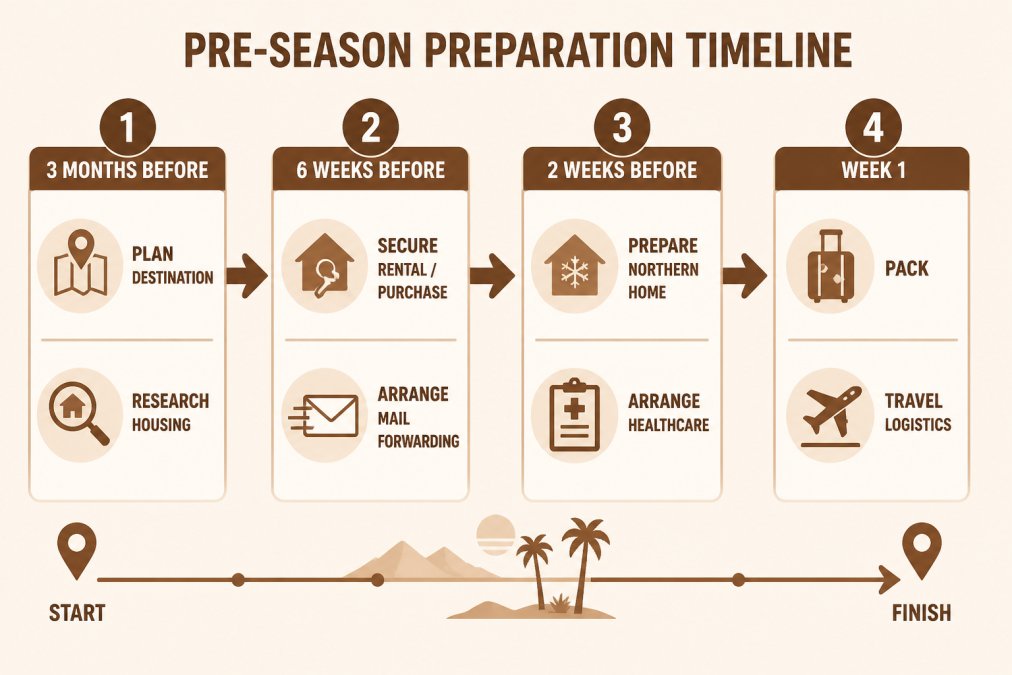
Three Months Before Departure:
- Research and select your winter destination
- Decide on housing type (RV, rental, second home)
- Begin researching specific properties or RV parks
- Consult a tax professional about residency implications
- Start collecting medical records from your northern healthcare providers
- Review your insurance coverage for your winter location
Six Weeks Before Departure:
- Secure your housing arrangement
- Submit mail forwarding request to the postal service
- Notify utility companies of your departure date
- Schedule furnace inspection and maintenance
- Have your vehicle serviced for the journey
- Research healthcare providers in your winter location
- Set up automatic bill payments
Two Weeks Before Departure:
- Winterize your northern home (drain pipes, seal gaps, adjust thermostat)
- Clear gutters and trim tree branches
- Arrange for neighbors to monitor your home
- Unplug appliances and electronics
- Notify local police of your absence
- Confirm your rental lease or RV park reservation
- Pack essential documents (insurance cards, medical records, identification)
Week One Before Departure:
- Perform final home walkthrough
- Adjust thermostat to 55°F minimum
- Leave emergency contact information with neighbors
- Confirm travel plans and lodging en route
- Notify your bank of your travel dates to prevent fraud alerts
Upon Arrival in Winter Location:
- Register to vote if you’ve changed domicile
- Locate nearest hospital and urgent care clinic
- Schedule appointment with winter healthcare provider
- Join fitness facilities or activity groups
- Introduce yourself to neighbors
- Test all utilities and appliances in your rental or home
- Document your arrival date for tax records
During Your Season:
- Maintain regular contact with someone monitoring your northern home
- Review monthly utility and credit card statements
- Participate in community activities and social groups
- Document days spent in each location for tax purposes
Snowbird desert living transforms how you experience winter. The combination of ideal weather, active communities, and established infrastructure makes the Coachella Valley an exceptional choice for seasonal migration. Your first season sets the tone for all future seasons, invest time in planning, connecting with community, and establishing routines that work for your lifestyle.
Ready to explore your winter home options? Browse our vacation rental homes to discover seasonal properties that match your needs, or explore our hotel reservation page if you’d like to experience the area before committing to a longer stay.
Frequently Asked Questions
What should I look for when renting a seasonal home in the desert?
Prioritize proximity to community amenities, healthcare facilities, and social activities. Check that utilities are included or clearly outlined, verify the lease terms match your intended stay length, and confirm pet policies if applicable. Look for properties with desert-appropriate features like shade structures, pool access, and AC reliability. Request recent photos and speak with previous seasonal tenants about their experience to ensure the property meets your lifestyle expectations.
How do I prepare my primary residence for a long winter absence?
Winterize your northern home by draining outdoor water systems, shutting off the main water valve, and protecting pipes in unheated areas. Set your heating to a low temperature to prevent frozen pipes, arrange for regular mail collection or forwarding, and notify your utility companies of your absence. Have someone check the property periodically, secure windows and doors, and consider installing a security system. Arrange for lawn care or snow removal if needed, and leave emergency contact information with a trusted neighbor.
What are the best ways to meet other snowbirds and build community in the desert?
Join active adult communities, fitness classes, and recreational clubs that cater to seasonal residents. Attend local events and social gatherings through community centers and retirement organizations. Participate in activities like golf, pickleball, hiking, and water aerobics where snowbirds regularly connect. Volunteer with local nonprofits or attend religious services to meet people with shared interests. Many communities host snowbird welcome events and orientation programs specifically designed to help new seasonal residents integrate socially.
How do I manage healthcare and prescriptions while living as a snowbird?
Before leaving, request 90-day prescriptions or mail-order pharmacy services from your primary care physician. Research healthcare providers and hospitals in your desert destination and establish relationships early in your stay. Bring copies of medical records, insurance cards, and a list of current medications. Verify that your health insurance covers out-of-state care or consider supplemental coverage. Schedule routine checkups before departure and plan any necessary procedures for your home season to avoid gaps in care during your extended absence.
What tax and residency implications should I understand as a snowbird?
Your tax domicile depends on where you establish residency, which typically requires spending more than 183 days in a state. Consult a tax professional to determine your legal residency status and potential tax obligations in both states. Some states don’t tax retirement income, which can benefit snowbirds. Document your time in each location and maintain proof of residency where you claim domicile. Understand vehicle registration, driver’s license, and voter registration requirements, as these vary by state and affect your legal status.
What desert-specific maintenance should I plan for my seasonal home?
Desert properties require attention to landscaping, AC systems, and water management. Monitor air conditioning units regularly, as they work harder in extreme heat. Protect exterior surfaces from UV damage and dust by using appropriate sealants. Check plumbing for mineral buildup from hard water, and maintain pool equipment if your rental includes one. Inspect weatherstripping and seals to prevent dust infiltration. If you own a property, budget for desert-specific repairs and maintenance that differ from northern climates, including foundation monitoring in areas prone to shifting.
How do I handle pet logistics as a snowbird?
Confirm pet policies with your seasonal rental well in advance, as many properties have restrictions. Arrange veterinary care in both locations and transfer medical records ahead of time. Update microchip information and ID tags with your desert contact details. Consider pet transportation logistics and any quarantine or health certificate requirements for extended stays. Research pet-friendly activities and communities in your destination. If traveling by car, plan for pet comfort during the drive and ensure proper hydration and cooling, especially in desert heat.
Hotels, Resorts and Vacation Home Booking
If you’re planning an upcoming trip, feel free to browse our directory of Palm Springs and Palm Desert hotels and resorts.
If you prefer extra privacy and a private pool? You can browse Palm Springs and Palm Desert vacation rental homes for your stay.
This article was written using GrandRanker and edited by Collins Omaghe.