Table of Contents
- Why Consider Alternatives to Greater Palm Springs
- Best Desert Getaways in California Beyond Palm Springs
- Southwest Desert Alternatives with Unique Character
- Adventure-Focused Desert Alternatives
- Weekend Trips from Los Angeles: Mountain and Lake Escapes
- Comparison Framework: Which Alternative Fits Your Travel Style
- Plan Your Desert Getaway with Local Expertise
- Conclusion
Last Updated: August 9, 2026
Why Consider Alternatives to Greater Palm Springs
You’re planning a desert getaway, and Palm Springs comes to mind first. It’s the obvious choice, world-class resorts, championship golf courses, mid-century modern architecture, and guaranteed sunshine. But the Coachella Valley isn’t the only desert oasis worth exploring. 🏜️
Alternatives to Palm Springs offer something different. Maybe you want cooler temperatures, fewer crowds, dramatic red rock formations, or a more bohemian vibe. Maybe your budget leans toward adventure over luxury, or you’re seeking cultural immersion instead of resort relaxation.
This guide breaks down the best alternatives to Palm Springs across California, Arizona, Utah, and New Mexico. We’ll show you what each destination excels at, what to expect seasonally, and how to decide which fits your travel style. Whether you’re seeking a weekend escape from Los Angeles or a longer desert exploration, you’ll find options that rival what Greater Palm Springs delivers.
Best Desert Getaways in California Beyond Palm Springs
California’s high desert and low desert regions offer stunning alternatives without leaving the state. These destinations deliver dramatic landscapes, outdoor adventure, and often more affordable lodging than the Coachella Valley. 🏔️
Joshua Tree National Park
Joshua Tree sits about 45 minutes northeast of Palm Springs and feels like a completely different world. This national park straddles two distinct desert ecosystems, the Mojave and the Colorado, creating landscapes that shift dramatically as you move through the park. The iconic Joshua trees, with their twisted, alien silhouettes, dominate the high desert terrain.
The park encompasses nearly 800,000 acres where rock climbing, hiking, and stargazing are the main attractions. Unlike Palm Springs, which caters to resort lounging and golf, Joshua Tree demands active engagement. You’re hiking slot canyons, scrambling over granite boulders, or standing under impossibly dense star fields at night. The park is an International Dark Sky Park, meaning nighttime visibility rivals anywhere in North America.
Practical considerations: There’s no lodging inside the park, so most visitors stay in nearby Yucca Valley or the town of Joshua Tree. Spring (March-April) and fall (October-November) are ideal seasons. Water is scarce; bring more than you think you’ll need.
Best for: Rock climbers, hikers, photographers, and stargazers willing to trade comfort for otherworldly scenery.
Anza-Borrego Desert State Park
Anza-Borrego is California’s largest state park and one of the state’s best-kept secrets. The park covers 600,000 acres of badlands, slot canyons, palm oases, and wildflower-covered plains, all with a fraction of the crowds you’ll encounter at Joshua Tree or Death Valley.
Spring wildflower blooms (typically February through April) transform the desert into a carpet of color. Slot canyons offer dramatic hiking experiences. Font’s Point provides stunning vistas without requiring technical skill. The park excels at solitude, you can spend an entire day hiking and encounter only a handful of people. The night sky rivals Joshua Tree for stargazing.
Seasonal note: Winter (December-February) offers perfect hiking weather. By May, temperatures climb above 95°F.
Best for: Nature lovers seeking tranquility, spring wildflower photographers, and hikers who value solitude over amenities.
Yucca Valley
This location often gets overlooked as “the town near Joshua Tree,” but it deserves recognition as a destination in its own right. Sitting at 2,000 feet elevation, Yucca Valley runs about 5-10°F cooler than Palm Springs year-round. The town has developed a bohemian, artistic community vibe with vintage shops, local galleries, and quirky eateries.
Accommodation here costs significantly less than Palm Springs. The high desert climate means cooler summers and mild winters. Spring and fall are ideal. The town’s proximity to Joshua Tree (15 minutes) makes it practical for day trips into the park.
Best for: Budget-conscious travelers, artists, and those seeking a laid-back desert town experience with easy national park access.
Southwest Desert Alternatives with Unique Character
Moving beyond California, Arizona and New Mexico offer desert experiences with entirely different geological and cultural flavors. These destinations emphasize landscape drama, wellness retreats, and cultural immersion. 🎨
Sedona, Arizona
Sedona sits about 120 miles north of Phoenix and represents the opposite aesthetic from Palm Springs. Where Palm Springs embraces modernist architecture and resort culture, Sedona centers on dramatic red rock buttes, spiritual retreats, and outdoor adventure.
The town sits at 4,300 feet elevation, meaning summers are genuinely pleasant (80-85°F) compared to Phoenix’s brutal heat. The red rock scenery is unmatched in the Southwest. Sedona’s arts community rivals Santa Fe, with galleries, studios, and cultural venues filling the downtown. The culinary scene emphasizes farm-to-table and Southwestern cuisine. Mountain biking trails range from beginner-friendly to expert-only.
Trade-offs: Sedona has become increasingly crowded, especially October through April. Accommodation and dining prices rival or exceed Palm Springs.
Best for: Wellness seekers, hikers, mountain bikers, and those wanting cooler desert temperatures with strong arts and culture scenes.
Scottsdale, Arizona
Here represents the luxury desert alternative to Palm Springs. The city sits just northeast of Phoenix and has evolved into a high-end resort and golf destination that arguably surpasses Palm Springs in sheer amenities and sophistication.
Scottsdale Old Town offers shopping, dining, and galleries in a walkable downtown setting. The city hosts dozens of championship golf courses. The McDowell Sonoran Preserve offers 30,000 acres of hiking trails with desert views. Unlike Palm Springs’ manicured golf-course landscape, Scottsdale maintains significant natural desert character.
Seasonal reality: Summers are scorching, making November through April the viable season.
Best for: Luxury travelers, golf enthusiasts, and those seeking sophisticated desert amenities with genuine natural desert access.

Santa Fe, New Mexico
Santa Fe is fundamentally different from other desert destinations on this list. The city sits at 7,000 feet elevation in the Sangre de Cristo mountains, making it genuinely cool even in summer (highs around 80°F). The architecture is distinctive, Pueblo Revival adobe buildings with earth-toned exteriors and wooden vigas (ceiling beams).
The city’s cultural identity centers on art, history, and Native American heritage. The Plaza hosts galleries, museums, and cultural institutions. The culinary scene emphasizes New Mexican cuisine, chile-based dishes, and authentic regional flavors. Santa Fe attracts artists, writers, and cultural seekers rather than resort vacationers. The surrounding landscape offers high-altitude hiking and access to national forests.
Best for: Culture enthusiasts, art lovers, history buffs, and those seeking cooler temperatures with authentic Southwestern heritage and cuisine.
Adventure-Focused Desert Alternatives
If your desert getaway means rock climbing, mountain biking, whitewater rafting, or extreme hiking, these destinations deliver world-class adventure infrastructure. 🚴
Moab, Utah
Moab has become the adventure capital of the American West. The town sits on the edge of two major national parks, Arches and Canyonlands, and functions as the gateway to some of North America’s most dramatic landscapes.
Mountain biking dominates Moab’s identity. The Slickrock Trail is legendary among riders, a 10-mile loop on smooth, petrified sand that offers technical challenge without requiring traditional singletrack. Hiking options include iconic trails like Delicate Arch (Arches National Park), which rewards a 3-mile hike with one of the Southwest’s most photographed natural monuments. The Colorado River runs through Moab, making whitewater rafting another major activity.
Practical note: Moab gets crowded March through October. The town has limited accommodation, so booking ahead is essential. Spring and fall are ideal.
Best for: Mountain bikers, hikers, off-road enthusiasts, and adventure seekers wanting access to world-class outdoor recreation and iconic national parks.
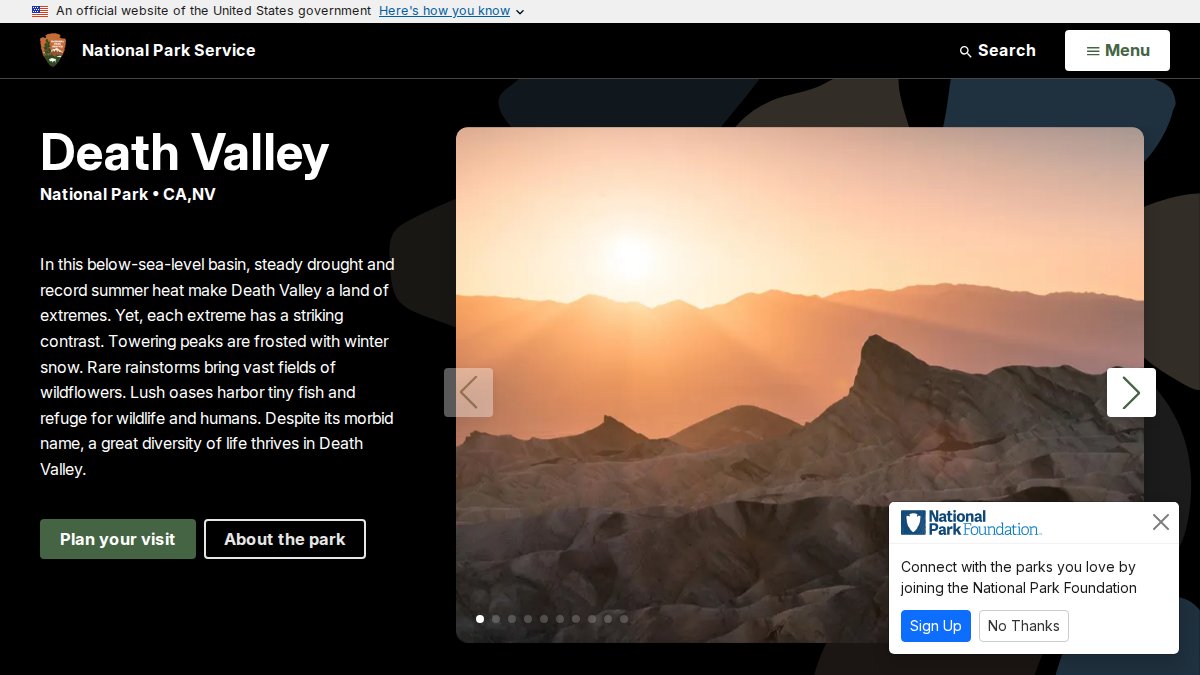
Death Valley National Park
Death Valley holds records: the lowest point in North America (Badwater Basin at 282 feet below sea level) and some of the most alien landscapes in the continent. This is desert at its most extreme.
The park encompasses 3.4 million acres of diverse terrain, sand dunes, colorful badlands, salt flats, and narrow canyons. The landscape photography opportunities are unmatched. The night sky is pristine; Death Valley is an International Dark Sky Park.
Visiting requires serious planning. Winter and early spring (November through March) are the viable seasons. The park has limited services, no restaurants, minimal lodging, and long distances between attractions. Bring water, supplies, and a full tank of gas.
Best for: Photographers, extreme adventure seekers, stargazers, and those wanting to experience one of Earth’s most hostile and beautiful environments.
Weekend Trips from Los Angeles: Mountain and Lake Escapes
Not every desert alternative means staying in the desert. Southern California offers mountain and lake escapes within a few hours of LA that provide complete contrast to desert heat. 🏔️
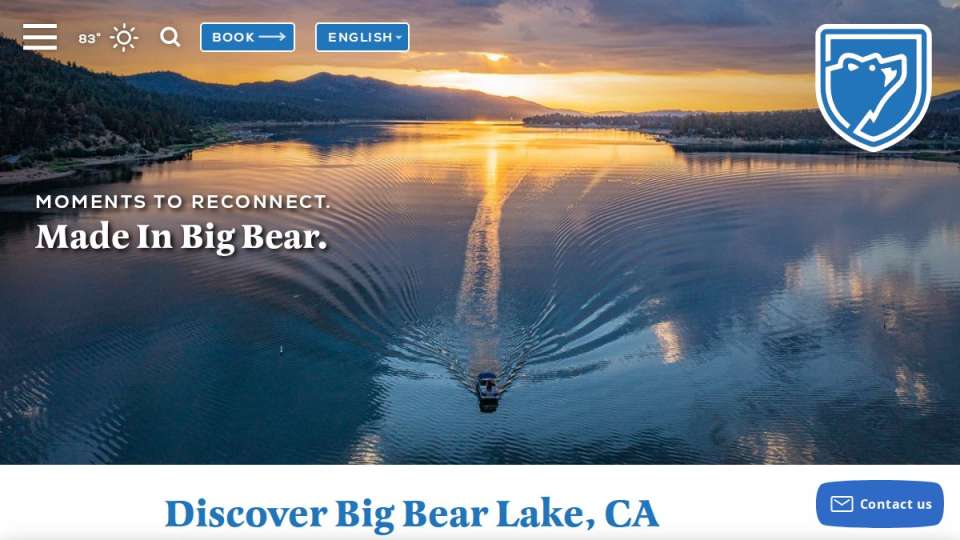
Big Bear Lake, California
Big Bear Lake sits in the San Bernardino Mountains about 2 hours northeast of Los Angeles. At 6,700 feet elevation, the lake offers genuinely cool temperatures, with summer highs around 75°F compared to LA’s inland heat.
The location functions as a four-season destination. Winter brings skiing and snowboarding. Summer offers lake activities (swimming, boating, paddleboarding), hiking, and mountain biking. Fall provides cooler hiking weather and fewer crowds. Spring brings wildflower blooms. The village offers shops, restaurants, and casual lodging.
Best for: Families, those seeking cooler mountain temperatures, and LA residents wanting a quick escape with diverse seasonal activities.
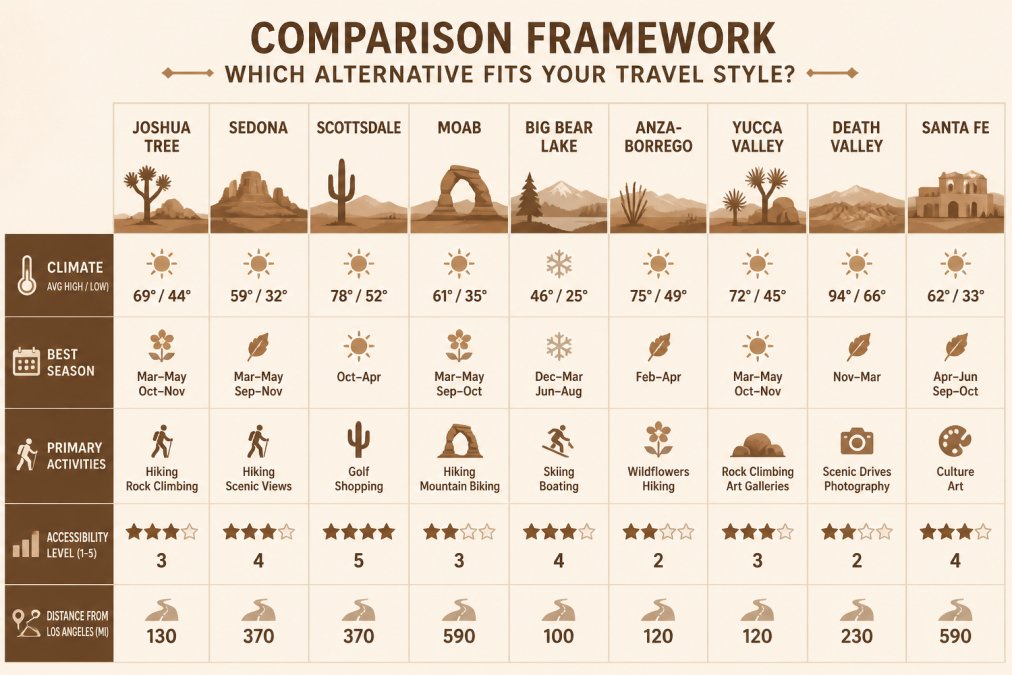
Comparison Framework: Which Alternative Fits Your Travel Style
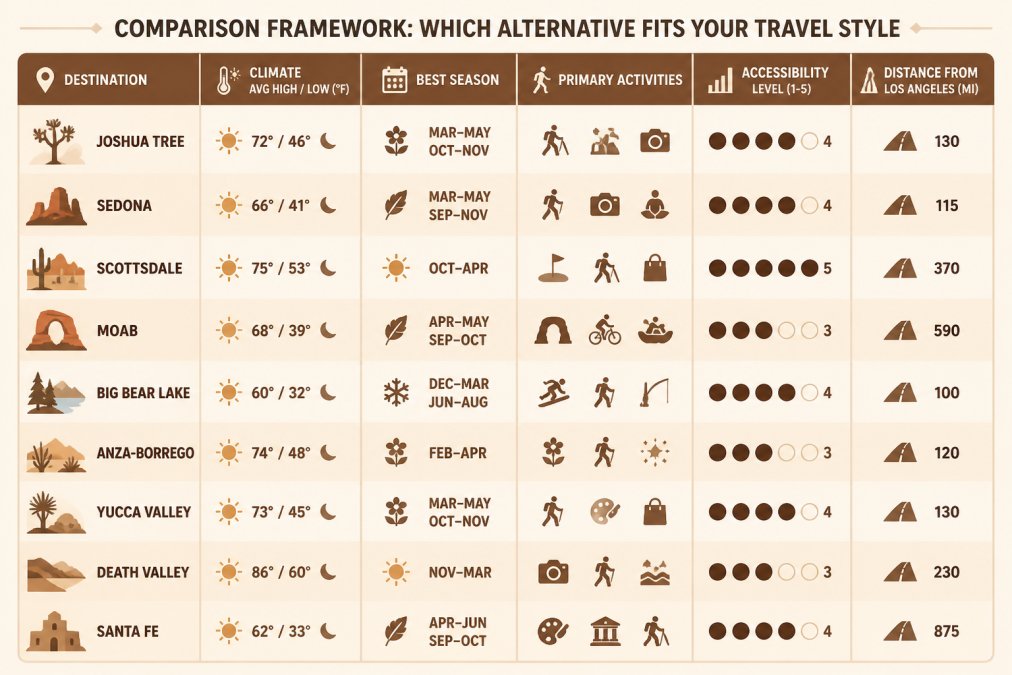
Choosing between these alternatives depends on what you prioritize. Here’s how to think through your decision:
| Destination | Best Season | Primary Appeal | Typical Activities | Vibe | Distance from LA |
|---|---|---|---|---|---|
| Joshua Tree | Mar-Apr, Oct-Nov | Rock formations, stargazing | Hiking, climbing, photography | Rugged, remote | 2.5 hours |
| Anza-Borrego | Feb-Apr, Oct-Nov | Wildflowers, solitude | Hiking, nature viewing | Peaceful, undiscovered | 3 hours |
| Yucca Valley | Year-round | Bohemian town, budget lodging | Joshua Tree access, local culture | Quirky, artistic | 2.5 hours |
| Sedona | Oct-Apr | Red rocks, wellness | Hiking, spas, galleries | Spiritual, upscale | 5.5 hours |
| Scottsdale | Oct-Apr | Luxury amenities, golf | Resort activities, shopping | Sophisticated, refined | 5 hours |
| Santa Fe | May-Oct | Art, culture, cuisine | Museums, galleries, hiking | Bohemian, historic | 12 hours |
| Moab | Mar-May, Sep-Oct | Mountain biking, national parks | Biking, hiking, rafting | Adventure-focused, energetic | 10 hours |
| Death Valley | Nov-Mar | Extreme landscapes, stargazing | Photography, hiking, exploration | Otherworldly, remote | 5.5 hours |
| Big Bear Lake | Year-round | Mountain lake, four seasons | Skiing, hiking, water sports | Family-friendly, casual | 2 hours |
Ask yourself these questions:
What’s your temperature preference? If you hate heat, skip low-desert options in summer. Sedona, Scottsdale, Santa Fe, and Big Bear all offer significantly cooler temperatures. If you love heat and want to avoid crowds, consider visiting alternatives during shoulder seasons.
How much time do you have? Big Bear and Joshua Tree work for weekend trips. Moab, Sedona, and Scottsdale deserve 3-4 days. Santa Fe and Death Valley reward longer visits.
What activities matter most? Adventure seekers should prioritize Moab and Joshua Tree. Wellness and luxury travelers should explore Sedona and Scottsdale. Culture enthusiasts should head to Santa Fe. Families benefit from Big Bear’s diverse seasonal activities.
What’s your budget? Yucca Valley, Anza-Borrego, and Big Bear offer affordable options. Sedona, Scottsdale, and Santa Fe command premium pricing.
Are you seeking solitude or amenities? Anza-Borrego and Death Valley deliver solitude. Moab and Sedona offer adventure with good services. Scottsdale and Santa Fe prioritize amenities and comfort.
Plan Your Desert Getaway with Local Expertise
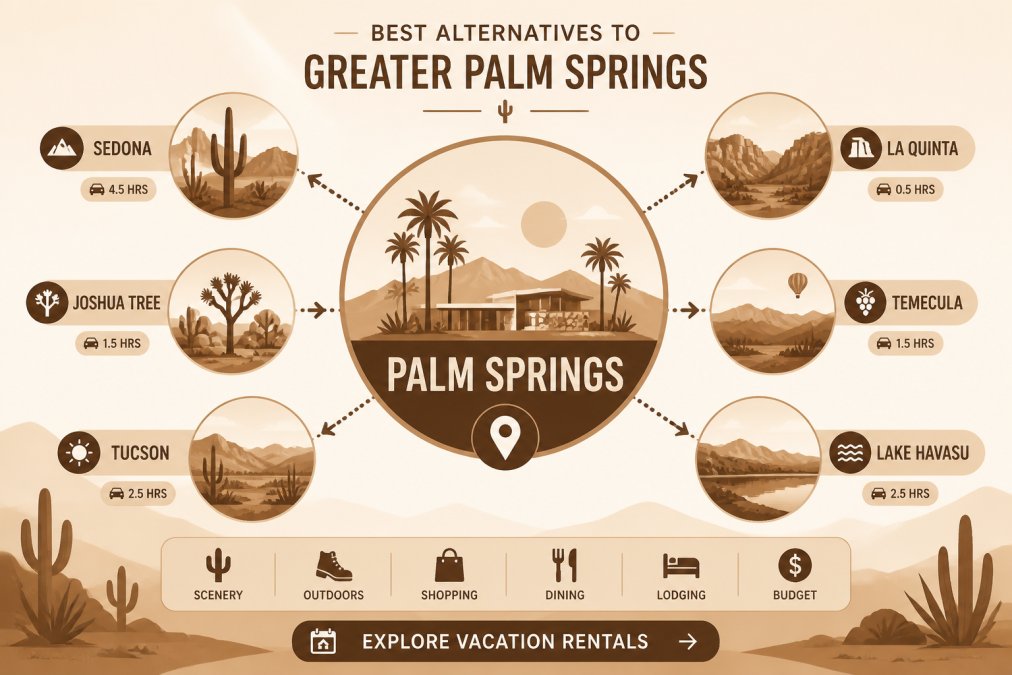
Planning a getaway to any of these alternatives becomes easier with local insights and proper accommodation planning. If you’re considering staying closer to the Coachella Valley while exploring alternatives, the region serves as an excellent base. From Palm Desert and Palm Springs, you can day-trip to Joshua Tree (45 minutes), Anza-Borrego (90 minutes), or Yucca Valley (1 hour). The area offers diverse lodging options, from luxury resorts to Vacation Rental Homes and Palm Desert and Coachella Valley Hotels and Resorts, making it easy to find accommodations that suit your travel style and budget.
Key planning steps:
- Check seasonal conditions before booking. Desert locations vary dramatically by season.
- Book accommodation early for popular destinations during peak seasons.
- Plan activities around your fitness level. Hiking difficulty varies widely.
- Account for driving time. Some alternatives require 5+ hours from LA.
- Bring appropriate gear. Desert hiking requires sun protection, water, and sturdy footwear.
Conclusion
The best alternatives to Palm Springs depend entirely on what you’re seeking. If you want dramatic landscapes and outdoor adventure, Joshua Tree, Moab, and Death Valley deliver. If you prioritize wellness and luxury, Sedona and Scottsdale offer refined experiences. If culture and cuisine matter most, Santa Fe stands alone. For budget-conscious travelers and bohemian vibes, Yucca Valley and Anza-Borrego provide authentic alternatives.
None of these destinations replaces the Coachella Valley’s unique appeal, its world-class resorts, championship golf, and consistent sunshine remain unmatched. But they expand your options with different landscapes, paces, and experiences.
For comprehensive planning of any Greater Palm Springs getaway or regional exploration, explore Vacation Rental Homes and Palm Desert and Coachella Valley Hotels and Resorts for curated accommodation options, dining guides, and activity planning. Whether you choose to stay in the Coachella Valley or venture to one of these alternatives, thoughtful planning ensures you experience the best of desert travel.
Frequently Asked Questions
What are the best alternatives to Palm Springs for a desert getaway?
Several excellent desert alternatives exist depending on your interests. Joshua Tree National Park offers dramatic landscapes and rock climbing 45 minutes away. Sedona, Arizona provides red rock scenery and wellness retreats. Moab, Utah serves adventure seekers with world-class mountain biking and access to Arches National Park. Anza-Borrego Desert State Park offers a quieter California desert experience with wildflower blooms in spring. Each destination provides distinct advantages based on your travel style and preferences.
Which is the best desert getaway in California besides Palm Springs?
Joshua Tree National Park and Anza-Borrego Desert State Park are the premier desert getaways in California outside Palm Springs. Joshua Tree excels for outdoor adventure and rock climbing with dramatic Joshua trees and granite formations. Anza-Borrego offers a more tranquil experience as California’s largest state park, featuring spring wildflower displays, slot canyons, and excellent stargazing. Yucca Valley provides a more affordable, bohemian alternative with cooler temperatures and direct access to Joshua Tree National Park.
Are there good weekend trips from Los Angeles that rival Palm Springs?
Yes, several weekend trips from Los Angeles rival Palm Springs. Big Bear Lake offers a mountain escape with skiing, hiking, and water sports just 3.5 hours away. Joshua Tree National Park sits approximately 2.5 hours away with stunning desert landscapes. Sedona, Arizona, about 4.5 hours away, provides red rock scenery and wellness experiences. Moab, Utah, though farther at 6+ hours, rewards weekend adventurers with access to two national parks and world-class mountain biking.
How does Sedona compare to Palm Springs as a vacation destination?
Sedona and Palm Springs appeal to different travelers. Sedona offers higher elevation (4,000+ feet) providing cooler temperatures, vibrant red rock scenery, spiritual retreats, and a strong arts community. Palm Springs excels in mid-century modern architecture, golf, nightlife, and winter warmth. Sedona attracts wellness and hiking enthusiasts; Palm Springs draws those seeking resort luxury and sunny escapes. Both offer excellent dining and spas but differ significantly in landscape, climate, and overall vibe.
What makes Joshua Tree a good alternative to Palm Springs?
Joshua Tree National Park offers a compelling alternative for outdoor enthusiasts. It provides dramatic desert landscapes with unique Joshua trees, massive granite formations ideal for rock climbing, and exceptional stargazing in a Dark Sky Park. Located just 45 minutes from Palm Springs, it delivers rugged adventure without the resort atmosphere. The park’s 800,000 acres of wilderness suit hikers, photographers, and nature lovers seeking a more remote desert experience than Palm Springs’ developed hospitality scene.
Interested in exploring the Coachella Valley? Discover exceptional vacation rental homes throughout Palm Desert and Palm Springs, offering comfortable bases for your desert adventures and regional exploration.
This article was written using GrandRanker and edited by Collins Omaghe.