Table of Contents
- Best Time to Visit the Desert With Kids
- What to Pack for a Desert Vacation
- Desert Safety Tips for Families
- Family-Friendly Desert Activities
- Planning Your Desert Itinerary
- Preparing Kids Emotionally and Physically
- Budget and Accommodation Planning
- Conclusion
Last Updated: August 30, 2026
Planning a Desert Trip With Kids: A Complete Guide
Planning a desert trip with kids requires thoughtful preparation, but the reward is one of the most memorable family experiences you’ll have. The desert offers wide-open spaces, stunning natural beauty, and the kind of quiet that lets kids disconnect. This guide walks you through every step: choosing when to go, what to pack, how to stay safe, and which activities work best for families.
Best Time to Visit the Desert With Kids
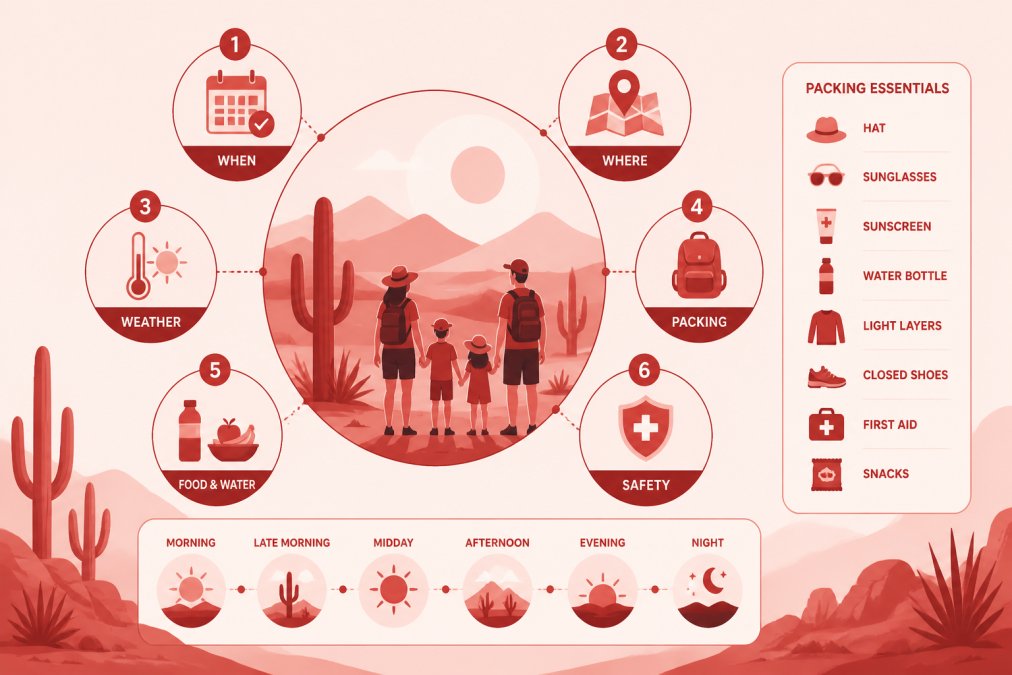
The ideal time for a desert trip with kids is late fall through early spring, roughly October through April. Daytime temperatures stay between 70-85°F, comfortable for outdoor activity without the extreme heat that exhausts children.
Winter months (December-February) bring the most visitors, meaning busier attractions and higher accommodation costs. October and April offer excellent weather with fewer tourists. March gets busy during spring break, so plan accordingly if traveling during school holidays.
Summer (June-August) is genuinely difficult with kids. Temperatures regularly exceed 110°F, making even short outdoor activities risky for young children. Heat exhaustion happens quickly in these conditions. If summer is your only option, plan indoor activities and save outdoor exploration for early morning or late evening.
Spring (March-May) brings wildflower blooms and pleasant weather. Fall (September-November) offers similar advantages with slightly cooler temperatures as the season progresses.
What to Pack for a Desert Vacation
Packing correctly makes the difference between a comfortable desert experience and a miserable one. The desert environment is unforgiving, and underpacking essential items creates problems you can’t easily solve once you’re there.
Clothing and Sun Protection Essentials
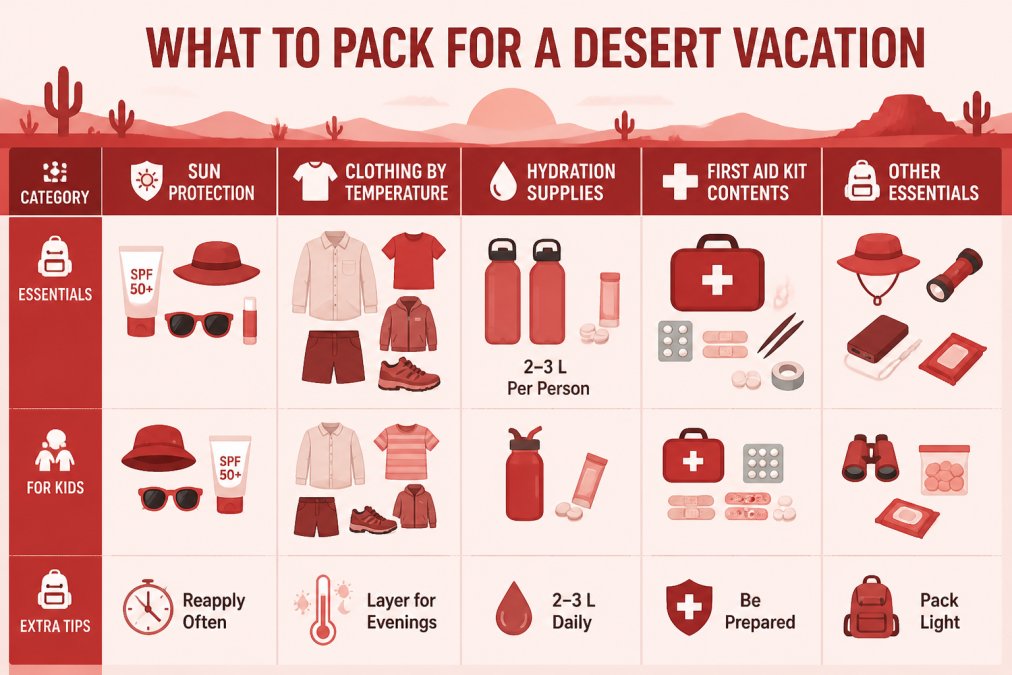
Sun protection is essential in the desert. Pack lightweight, long-sleeved shirts and pants that cover skin while allowing air circulation. Light colors reflect heat better than dark ones. Closed-toe hiking shoes are mandatory; desert ground gets hot enough to burn feet, and protection from cacti and rocks is critical.
Bring wide-brimmed hats for every family member, including toddlers. Sunglasses that block UV rays protect eyes from intense desert sun reflection. Include a lightweight long-sleeve swim shirt for water activities.
Layers matter even in warm months. Desert temperatures drop dramatically at night, sometimes 30-40°F cooler than daytime highs. Pack a fleece or light jacket for evening and early morning. Children regulate body temperature less effectively than adults, so extra layers are especially important.
Hydration and Health Supplies
Dehydration happens faster in the desert than most parents expect. Pack at least 2-3 liters of water per person daily, plus extra for emergencies. Include electrolyte tablets or powders to add to water. Plain water alone doesn’t replace the salts and minerals lost through sweating.
Bring a comprehensive first aid kit including blister treatment, pain reliever, antihistamine for allergic reactions, hydrocortisone cream for minor skin irritation, and bandages. Include any medications your children take regularly, plus extras in case of delays. Pack children’s fever reducer, anti-diarrheal medication, and antacids.
Include aloe vera gel for minor sunburns and insect repellent for evening activities. Tweezers help remove cactus spines.
Desert Safety Tips for Families
Desert safety requires understanding the specific hazards your family will face. The desert has genuine dangers that demand respect and preparation.
Heat Management and Acclimatization
Heat exhaustion in children develops quickly and can escalate to heat stroke. Symptoms include excessive sweating, weakness, dizziness, nausea, and headache. If your child shows these signs, move to shade immediately, apply cool water to skin, and drink water slowly. Seek medical attention if symptoms don’t improve within 30 minutes.
Acclimatization takes 3-5 days. During this period, limit intense outdoor activity. Spend the first day doing lighter activities indoors and in shade. Gradually increase outdoor time as your family adjusts. Children under 5 struggle more with heat adjustment than older kids.
Schedule outdoor activities for early morning (before 10 AM) and late afternoon (after 4 PM). Midday heat is genuinely dangerous. Rest indoors during peak heat hours. This allows more enjoyable outdoor time overall.
Dress children in light colors and ensure they wear hats and sunscreen constantly. Reapply sunscreen every 2 hours and after water activities, even if the bottle says “waterproof.”
Transportation and Travel Logistics
Long-distance desert travel with kids requires strategic planning. Plan driving routes that include rest stops every 1.5-2 hours. Research rest stop locations before you leave; some desert highways have long stretches without facilities.
Ensure car seats are properly installed if traveling with young children. Bring extra car seat padding to make seats more comfortable for long drives.
Pack a car entertainment kit: tablets loaded with shows or movies, audiobooks, travel games, and snacks. Rotate activities every 30-45 minutes to maintain interest.
Keep the car cool. Run air conditioning during peak heat hours. Bring extra water bottles for the car, not just for drinking but for cooling down if the air conditioning fails.
Family-Friendly Desert Activities
Desert activities offer unique experiences kids remember for years. Match activities to your family’s age and fitness level.
Camel Trekking and Desert Safari Options
Camel trekking is iconic and accessible for families with children ages 5 and up. Most operators limit riders to children at least 5 years old and weighing under 150 pounds. Younger or smaller children can ride with an adult. Treks typically last 1-2 hours.
Book through established operators who prioritize safety and animal welfare. Ask about their experience with children and whether guides are trained in child safety.
Desert safari tours in 4×4 vehicles suit families with young children who can’t handle camel riding. These tours cover more ground than walking and offer excellent wildlife viewing. Tours typically last 2-4 hours. Sunset tours are particularly magical for kids.
Kid-Friendly Hiking and Scenic Exploration
Short desert hikes work well for families with elementary-age children. Choose trails rated as easy or moderate, with clear paths and minimal elevation gain. Start with 1-2 mile hikes to gauge your family’s comfort level.
Hike early morning when temperatures are coolest. Bring at least 1 liter of water per child for short hikes. Pack snacks with calories and protein: trail mix, granola bars, sandwiches.
Wear proper footwear. Closed-toe shoes are non-negotiable to protect from cacti and desert creatures. Teach children to stay on marked trails. Desert plants like cacti cause painful injuries if touched.
Bring a field guide or use a nature app to identify plants and animals. Educational engagement makes hikes more interesting and teaches kids about desert ecology.
Glamping and Overnight Desert Experiences
Glamping (glamorous camping) combines outdoor adventure with comfort. Desert glamping typically includes a tent or cabin with real beds, electricity, and sometimes bathrooms. These accommodations suit families who want the desert experience without true camping challenges.
Overnight desert camps offer stargazing opportunities that amaze kids. Far from city lights, desert night skies display thousands of stars. Many camps include stargazing guides who help identify constellations and planets.
Research glamping options carefully. Read reviews specifically mentioning families with children. Confirm amenities like climate control, bathroom facilities, and meal options.
Planning Your Desert Itinerary
A well-structured itinerary prevents chaos while maintaining flexibility for spontaneous discoveries.
3-Day Desert Trip Structure
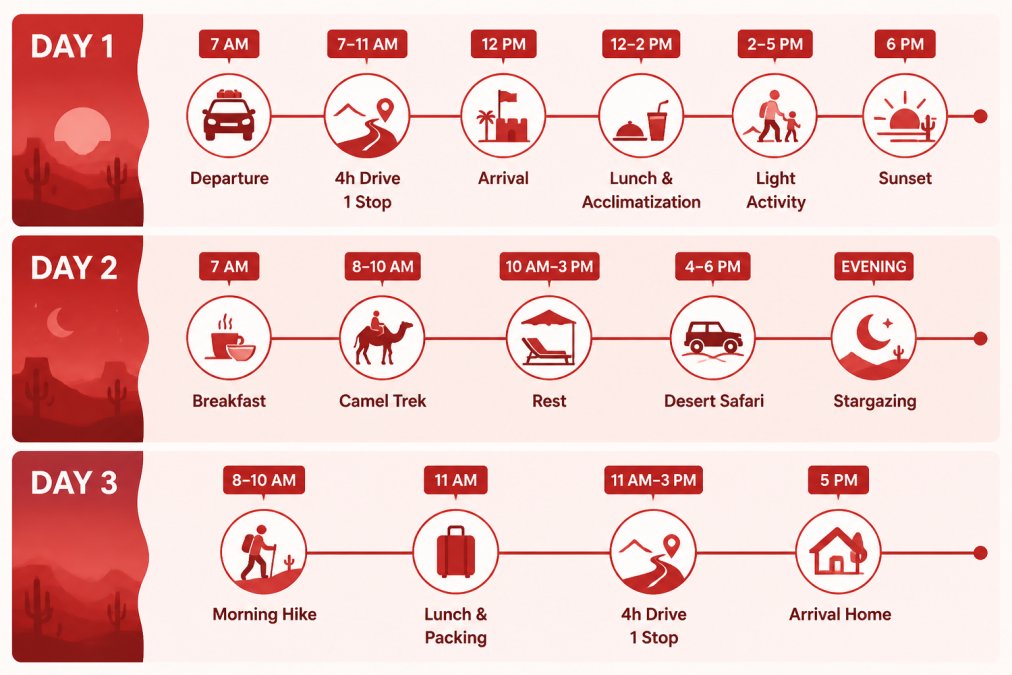
Day 1 focuses on arrival and acclimatization. Plan a morning departure to arrive by early afternoon. Do light activities only, explore your accommodation, have a leisurely lunch, take a short walk to orient yourselves. Watch the sunset together.
Day 2 is your main activity day. Schedule the most demanding activity (camel trekking, longer hike, or desert safari) for morning when everyone is rested and temperatures are coolest. Rest during midday heat. Do a lighter activity in late afternoon. Evening stargazing requires clear skies and minimal light pollution.
Day 3 includes lighter activities and travel home. A morning hike works well if it’s short (under 2 miles). Have lunch, pack, and depart mid-afternoon.
Adjust this structure based on your family’s needs. The key is building in rest periods and not overscheduling.
Rest Stops and Travel Pace
Plan rest stops every 1.5-2 hours during driving. Stop at rest areas with bathrooms, shade, and water. Let kids run around and burn energy. A 10-15 minute break prevents behavioral meltdowns from prolonged sitting.
Pace activities to match your family’s stamina. Young children tire quickly in heat and unfamiliar environments. Space activities with rest periods in between.
Build buffer time into your itinerary. If a hike takes longer than expected or kids need extra rest, you have flexibility rather than rushing to the next scheduled activity.
Preparing Kids Emotionally and Physically
Mental preparation helps kids approach the desert with curiosity rather than anxiety. Talk about what to expect: the heat, the sand, the wide open spaces, the different plants and animals.
Show pictures of desert landscapes and activities you’ll do. Read age-appropriate books about deserts. Watch family-friendly videos about desert wildlife. This preparation reduces the shock of the unfamiliar environment.
Discuss safety rules clearly and calmly. Explain why staying on trails matters, why sun protection is important, and what to do if they feel too hot. Kids who understand the “why” behind rules follow them better.
Start physical conditioning 2-3 weeks before your trip. Take family walks to build stamina. Kids who are physically prepared enjoy activities more and experience less fatigue.
Budget and Accommodation Planning
Desert accommodations range from budget-friendly to luxury. Your choice depends on your family’s preferences and budget.
Hotels and resorts offer full amenities, comfortable beds, and reliable air conditioning. They’re ideal for families with young children or those prioritizing comfort. Many include pools, which kids love after hot desert days. The Visitor Center for Palm Desert & Palm Springs can help you find family-friendly hotel options that suit your needs and budget.
Vacation rental homes offer more space and kitchen facilities than hotels. Families with multiple children or those planning longer stays often prefer rentals. Check reviews specifically mentioning families to ensure the rental is truly kid-friendly. Look for properties with pools, shade structures, and proximity to activities.
Glamping combines adventure with comfort. These accommodations cost more than standard camping but less than luxury resorts.
Budget for activities, food, and transportation. Camel treks, desert safaris, and adventure tours require planning. Meals out add up quickly, especially with multiple children. Plan a realistic budget that includes unexpected expenses.
Consider travel insurance for desert trips. It covers medical emergencies, trip cancellations, and other unexpected events. Desert environments present genuine risks that travel insurance helps mitigate.
Planning a desert trip with kids transforms what seems like a complicated endeavor into an achievable family adventure. The desert offers beauty, wonder, and experiences that create lasting memories. By preparing thoughtfully, packing correctly, understanding safety requirements, and building realistic itineraries, you set your family up for success.
The Visitor Center for Palm Desert & Palm Springs provides comprehensive resources to make your desert planning easier. Start with our hotel reservation page to explore family-friendly accommodations, and visit our vacation rentals page to discover spacious properties perfect for desert getaways. Your family’s desert adventure starts with smart planning, and we’re here to guide every step of the way.
Frequently Asked Questions
What is the best time of year to visit the desert with children?
Late fall through early spring (November through March) offers the most comfortable conditions for families. Daytime temperatures range from 70-80°F, and nights cool significantly, making outdoor activities enjoyable without extreme heat exposure. Summer months exceed 110°F, creating serious heat exhaustion risks for young children. Winter months are ideal for camel trekking, desert safari activities, and extended outdoor exploration without the intensity of summer conditions.
What should I pack for a desert vacation with kids?
Prioritize sun protection: wide-brimmed hats, UV-blocking clothing, and high-SPF sunscreen. Pack lightweight, breathable layers for temperature swings between day and night. Bring twice the water you think you’ll need, dehydration develops quickly in dry climates. Include a first aid kit with blister treatments, electrolyte solutions, and any child-specific medications. Comfortable hiking boots, a headlamp for evening activities, and entertainment for rest periods are essential. Don’t forget car seat safety equipment if renting a vehicle for 4×4 transport.
How do I keep kids safe during a desert trip?
Manage heat exposure by limiting midday outdoor activities and scheduling adventures during cooler morning and late-afternoon hours. Ensure constant access to bottled water and electrolyte drinks to prevent dehydration. Teach kids to recognize heat exhaustion symptoms: excessive fatigue, dizziness, or nausea. Apply sunscreen every two hours and reapply after water activities. Travel with comprehensive travel insurance and know the location of nearest medical facilities.
What family-friendly activities can we do on a desert trip?
Camel trekking offers a unique cultural immersion experience and works well for children ages 4+. Kid-friendly hiking trails provide scenic routes without extreme difficulty. Glamping accommodations combine desert camping with comfort amenities, making overnight stays manageable for families. Sandboarding, star gazing at night, and visiting nomadic culture sites provide educational and sensory-rich experiences. Local desert attractions often offer guided tours designed specifically for families, with rest stops and adjusted travel pace to accommodate younger children.
Hotels, Resorts and Vacation Home Booking
If you’re planning an upcoming trip, feel free to browse our directory of Palm Springs and Palm Desert hotels and resorts.
If you prefer extra privacy and a private pool? You can browse Palm Springs and Palm Desert vacation rental homes for your stay.
This article was written using GrandRanker and edited by Collins Omaghe.