
Table of Contents
- Why Guided Desert Nature Walks Offer the Best Desert Experience
- Trail Difficulty Levels and Scenic Overlooks
- Flora, Fauna, and Desert Ecosystem Education
- Guided Hiking Tours Duration and What to Expect
- What to Pack for a Desert Hike
- Desert Safety Tips for Hikers
- Best Times to Visit and Accessibility for All Visitors
- Booking Your Guided Desert Nature Walk
- Frequently Asked Questions
Last Updated: August 31, 2026
Why Guided Desert Nature Walks Offer the Best Desert Experience
Exploring the desert on foot reveals wonders that no car window can capture. A guided desert nature walk transforms a simple hike into an educational journey where every plant, animal, and geological formation tells a story. When you walk with a knowledgeable guide, you’re learning to read the wilderness.
The Visitor Center for Palm Desert & Palm Springs helps visitors discover these immersive outdoor experiences throughout the Coachella Valley. Our curated guides connect you with naturalist-led excursions that combine physical activity, environmental education, and genuine connection to the desert ecosystem. Whether you’re a first-time visitor or a seasoned hiker, guided walks offer structured access to trails that match your fitness level and interests.
A trained naturalist explains why native vegetation thrives in specific microclimates, points out desert wildlife you’d otherwise miss, and shares geological insights about the landscape’s 80-million-year history. You’ll understand why the desert looks the way it does and why it matters.
Many guides offer early morning walks (6:00 AM start times) to catch wildlife activity and avoid afternoon heat. This timing advantage makes the difference between seeing desert creatures and hiking in silence.
Trail Difficulty Levels and Scenic Overlooks
Desert trails range from gentle nature walks suitable for all ages to strenuous backcountry routes requiring serious fitness. Understanding difficulty classification helps you choose an experience matching your ability and goals.
Beginner-Friendly Walks with Panoramic Views
Beginner-friendly guided walks typically cover 1-3 miles with minimal elevation gain (under 300 feet). These trails focus on accessibility while delivering stunning panoramic views and rich ecosystem education. Loop trails are common, meaning you return to your starting point without retracing the same path.
Popular beginner routes feature interpretive signage explaining desert plants like creosote bush, ocotillo, and palo verde trees. You’ll learn how these species adapted to extreme heat and minimal water. Many beginner walks include stops at scenic overlooks where guides explain the geological formation of nearby canyons and mountains.
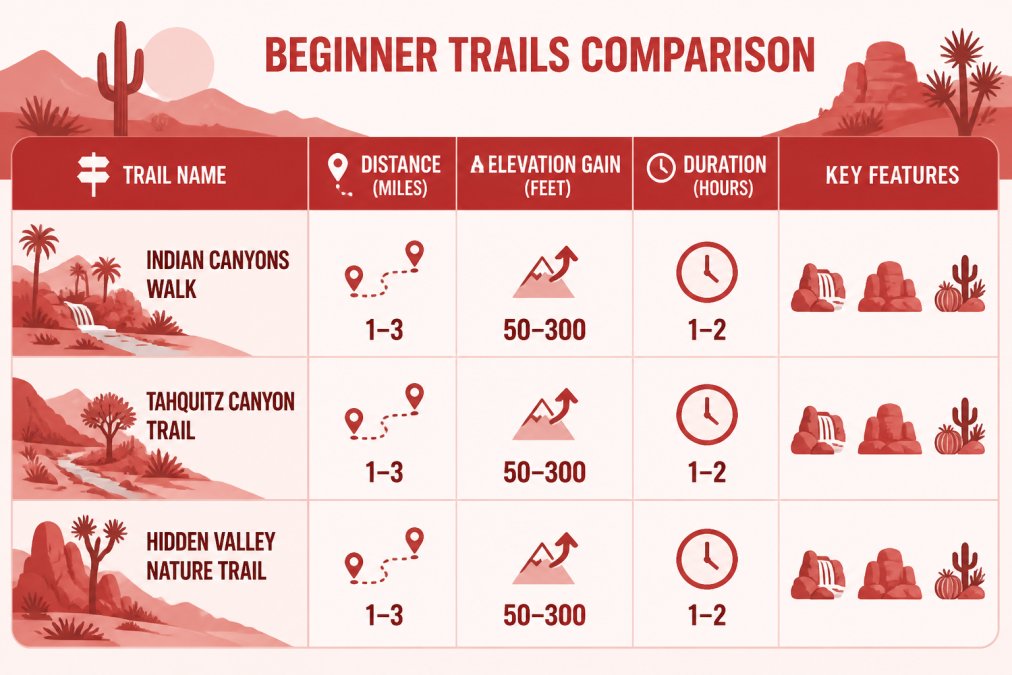
These walks typically last 1.5 to 2 hours, allowing time to move at a conversational pace and absorb the naturalist’s explanations. Most beginner trails are shaded in sections by canyon walls or dense vegetation, providing relief from direct sun.
Moderately Strenuous Trails with Elevation Gain
Moderately strenuous guided tours cover 3-6 miles with elevation gain between 300 and 800 feet. These routes demand reasonable fitness but reward hikers with deeper wilderness immersion and dramatic scenic overlooks. Canyon exploration becomes possible at this level, with trails descending into wash systems where vegetation density increases and temperatures drop noticeably.
Elevation gain is often concentrated in the first half, meaning you climb early and enjoy easier terrain during the return journey. Guides discuss advanced ecological concepts, water cycles in arid environments, and adaptation strategies for extreme desert conditions. Round trip duration typically ranges from 3 to 4 hours, including breaks for hydration and interpretation stops.
Flora, Fauna, and Desert Ecosystem Education
The desert ecosystem is far more biodiverse than most visitors expect. Guided walks introduce you to hundreds of plant and animal species adapted to one of Earth’s harshest environments.
Desert flora includes iconic species like the Joshua tree, saguaro cactus, and creosote bush. Less obvious plants like desert marigold, brittlebush, and desert sunflower provide seasonal color. Guides teach you to recognize these species and understand their ecological roles. The palo verde tree performs photosynthesis through its green bark when leaves drop during drought, an adaptation that seems magical when explained in context.
Desert wildlife includes bighorn sheep, desert mule deer, coyotes, roadrunners, Gila monsters, and countless lizard species. Most animals are nocturnal or crepuscular (active at dawn and dusk), which is why early morning guided excursions offer the best wildlife viewing. Guides teach you to spot animal signs, tracks, scat, burrows, that reveal which creatures inhabit the area.
The desert’s biodiversity is concentrated in riparian zones (areas near water sources). Guided walks that include canyon bottoms or wash systems expose you to the highest density of plant and animal life in the desert.
Guided Hiking Tours Duration and What to Expect
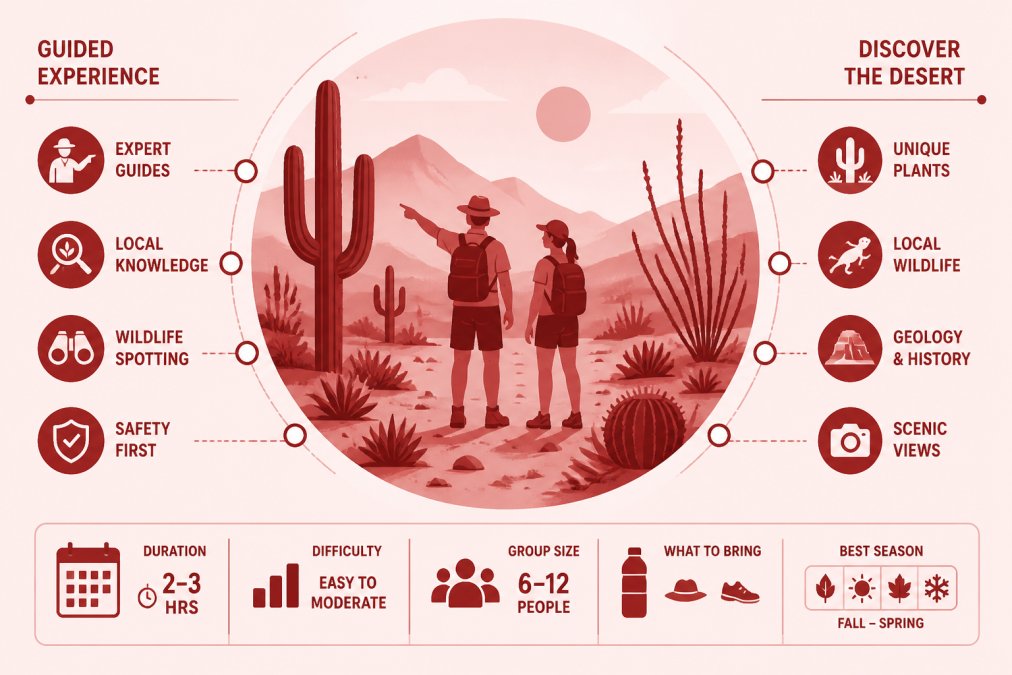
Understanding tour duration helps you plan your day and manage physical expectations. Most guided walks fall into three categories: short walks (1-2 hours), moderate tours (3-4 hours), and full-day expeditions (5-7 hours).
Short guided tours cover 1-3 miles and suit visitors with limited time, young children, or those preferring a gentler pace. These walks focus on a specific ecosystem feature, canyon, or geological formation with high educational density.
Moderate guided tours span 3-4 hours and cover 4-6 miles. This duration allows deeper exploration, multiple interpretation stops, and genuine wilderness immersion. Most visitors find this strikes the ideal balance between physical challenge and educational payoff.
Full-day expeditions (5-7 hours) suit experienced hikers seeking serious wilderness adventure. These tours venture into remote areas and provide comprehensive ecosystem education.
Tour duration estimates assume a moderate pace with frequent stops. If your fitness level is below average for the stated difficulty, add 30-45 minutes to the estimated duration. Underestimating time creates stress and reduces enjoyment.
What to Pack for a Desert Hike
Proper preparation separates enjoyable desert experiences from uncomfortable ordeals. Desert conditions demand specific gear.
Hydration is non-negotiable. Carry at least 2-3 liters of water for a 2-hour beginner walk, scaling up to 4-5 liters for moderate trails. The dry desert air accelerates dehydration; you may not feel thirsty even as your body loses fluids rapidly. Electrolyte supplements help maintain salt balance during extended exertion in heat.
Sun protection includes multiple layers. A wide-brimmed hat (at least 3 inches of brim all around) shields your face and neck. Sunscreen rated SPF 30 or higher should be applied 15 minutes before sun exposure and reapplied every 2 hours. Lightweight, loose-fitting long sleeves and pants protect skin while allowing air circulation.
Footwear matters significantly. Hiking boots with ankle support prevent twisted ankles on uneven terrain. Soles should provide traction on rocky surfaces. Break in new boots before the hike. Moisture-wicking socks prevent blisters by managing sweat.
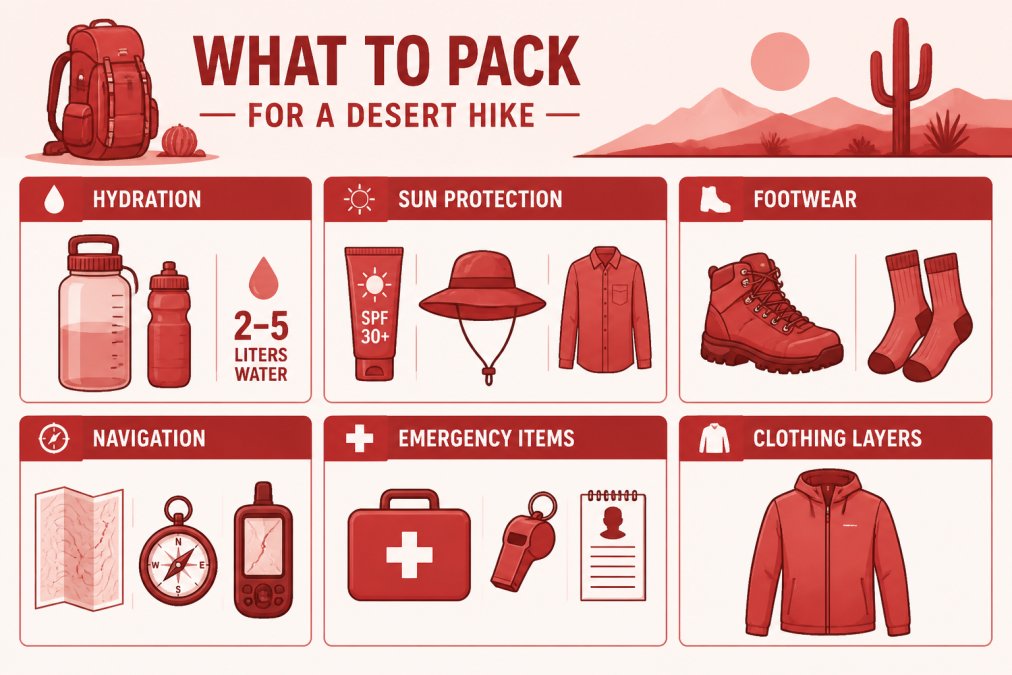
Navigation tools are essential. Carry a physical map and compass even on guided walks. GPS devices or smartphone apps provide backup navigation.
Emergency supplies should include a basic first aid kit with blister treatment, pain relievers, antihistamines for insect stings, and personal medications. A whistle aids rescue efforts if separated from the group.
Clothing layers prevent temperature-related problems. Desert mornings can be cool (50-60°F), midday heat intense (85-100°F), and evenings cool again. A lightweight fleece stuffed in your pack provides crucial warmth during rest stops.
Desert Safety Tips for Hikers
Desert hiking demands respect for environmental hazards that don’t exist in other landscapes. Preparation and awareness prevent most incidents.
Heat management is the primary concern. Desert air temperature can exceed 100°F, with ground temperatures even higher. Dry desert air evaporates sweat so efficiently that you may not realize how much fluid you’re losing. Start hydrating early and drink consistently throughout the walk rather than waiting until thirsty.
Recognize early dehydration symptoms: dry mouth, dizziness, difficulty concentrating, or headache. These warrant immediate rest in shade and fluid intake. Severe dehydration requires stopping the hike and seeking medical attention.
Desert wildlife rarely poses serious danger when you maintain distance and awareness. Rattlesnakes typically retreat when they hear approaching footsteps. Wear boots and long pants to protect against snake bites. Gila monsters are extremely rare and shy. Scorpions hide under rocks, so avoid putting your hands in places you can’t see.
Sun exposure causes cumulative damage. Even on cool days, desert sun intensity is extreme. Sunburn develops faster than in other climates. Reapply sunscreen every 2 hours and consider taking a break in shade during peak sun hours (10 AM to 4 PM).
Terrain hazards include loose rocks, drop-offs, and uneven ground. Watch your footing constantly, especially on descents where twisted ankles are most likely. If weather forecasts mention any possibility of rain, reconsider the hike; flash floods in narrow canyons pose serious danger even when rain falls miles away.
Never hike alone in the desert. Solo hikers who suffer injuries, dehydration, or equipment failure face life-threatening situations. Guided walks provide the safest solo-hiker option since you’re never truly alone.
Best Times to Visit and Accessibility for All Visitors
Timing dramatically affects your desert experience. The Coachella Valley’s climate creates distinct seasonal conditions that influence comfort, safety, and wildlife activity.
October through April represents peak season. Daytime temperatures range from 70-85°F, creating ideal hiking conditions. Nights cool to 45-55°F, making early morning walks especially pleasant. Wildlife activity peaks during these months as animals take advantage of cooler conditions and seasonal plant growth.
May through September brings extreme heat. Daytime temperatures exceed 100°F, with some days reaching 120°F. Most guides reduce tour frequency during summer, and many tours operate only in early morning hours.
Accessibility for mobility-impaired visitors remains limited on traditional desert trails. Most hiking paths involve uneven terrain, elevation change, and rocky surfaces that challenge wheelchairs and walkers. However, some guided walks follow maintained paths with minimal obstacles. The Visitor Center for Palm Desert & Palm Springs can help identify accessible options and connect you with guides experienced in accommodating mobility limitations.
Senior visitors and those with health conditions should communicate limitations to guides before booking. Many guides adjust pace and distance based on participant fitness levels.
Visitors with limited mobility should book guided walks on maintained paths during October-April when temperatures are comfortable. Early morning walks (6:00-8:00 AM) provide the best combination of accessibility and wildlife viewing.
Booking Your Guided Desert Nature Walk
Securing your spot on a guided desert nature walk requires understanding available options and booking procedures. The Visitor Center for Palm Desert & Palm Springs maintains current information about active tour operators, scheduling, and availability.
Most guided walks operate on set schedules with common options including weekday morning walks, weekend full-day expeditions, and seasonal specialty tours. Some operators offer custom group tours for parties of 8 or more.
Booking typically happens online through tour operator websites or by phone. Advance booking (at least 1-2 weeks) ensures availability, especially during peak season. Many operators require minimum group sizes, though solo travelers can often join existing group walks.
When booking, confirm:
- Exact start time and meeting location
- Distance and elevation gain to verify difficulty alignment
- What’s included (water, snacks, interpretation, equipment)
- Cancellation policy
- Guide credentials and specialization
- Group size
The Visitor Center for Palm Desert & Palm Springs provides detailed booking guidance and stays current on guide qualifications, tour quality, and seasonal availability.
For visitors planning extended stays, consider exploring our vacation rentals options that provide convenient home bases for multiple guided walks. Many guests book several walks during their stay, each exploring different ecosystems or difficulty levels. Our hotel reservation page offers accommodations ranging from budget-friendly to luxury options, all positioned for easy access to trailheads throughout the Coachella Valley.
Guided desert nature walks transform your relationship with the landscape. Rather than observing the desert as a visitor passing through, you become a student of its ecology, geology, and wildlife. The knowledge gained during these walks enriches every future desert experience.
Start with a guided walk that matches your current fitness level and interests. The educational foundation you build opens doors to deeper wilderness exploration and genuine appreciation for one of Earth’s most remarkable ecosystems. The Visitor Center for Palm Desert & Palm Springs stands ready to connect you with experienced guides who share this passion for desert education and outdoor adventure.
Frequently Asked Questions
What should I bring on a guided desert nature walk?
Essential items include at least 2-3 liters of water, sunscreen (SPF 30+), a wide-brimmed hat, sunglasses, and lightweight, breathable clothing. Wear sturdy hiking boots with good ankle support. Bring a small backpack, a headlamp or flashlight if walking at dawn, and a basic first-aid kit. Many naturalist-led tours recommend bringing binoculars for wildlife viewing and a camera for photography-focused walks. Check with your tour operator for specific recommendations based on trail length and season.
How long do guided hiking tours typically last in the area?
Guided hiking tours duration varies by trail and difficulty. Beginner-friendly walks typically last 1.5 to 2 hours and cover 2-3 miles with minimal elevation gain. Moderately strenuous trails usually take 2.5 to 3.5 hours and cover 3-5 miles with noticeable elevation gain. Full-day wilderness excursions can last 4-6 hours. Most guided desert nature walks include time for naturalist interpretation of geology, native vegetation, and desert wildlife, so they move at a slower pace than solo hiking.
What are the most important desert safety tips for hikers?
Desert safety tips for hikers include staying hydrated by drinking water regularly, not just when thirsty. Never hike alone; guided walks provide built-in safety. Wear sun protection including sunscreen, hat, and sunglasses to prevent heat exhaustion. Start early to avoid afternoon heat, especially in summer. Stay on marked trails and inform someone of your itinerary. Recognize signs of heat illness: dizziness, nausea, or excessive fatigue. Bring a fully charged phone for emergencies. Respect wildlife by maintaining distance from desert animals. Check weather forecasts before heading out.
Are there guided nature walks that focus on desert wildlife and plants?
Yes, many naturalist-led tours specialize in flora and fauna identification and desert ecosystem education. These interpretive walks highlight native vegetation like desert wildflowers, cacti, and palm groves, as well as wildlife such as desert bighorn sheep, roadrunners, and lizards. Guides explain how plants and animals adapt to the harsh desert climate and topography. Photography-focused guided walks are also available for visitors interested in capturing the biodiversity and geological features of the landscape. Contact tour operators to find walks matching your specific interests.
Hotels, Resorts and Vacation Home Booking
If you’re planning an upcoming trip, feel free to browse our directory of Palm Springs and Palm Desert hotels and resorts.
If you prefer extra privacy and a private pool? You can browse Palm Springs and Palm Desert vacation rental homes for your stay.
This article was written using GrandRanker and edited by Collins Omaghe.