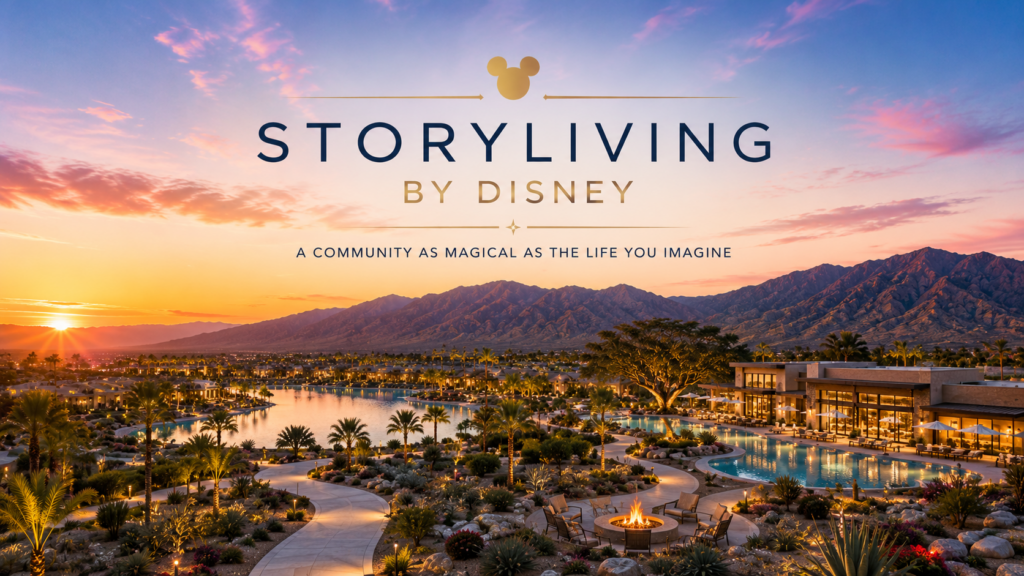
Imagine stepping into a real estate showroom where your dream home comes to life through the magic of Disney storytelling. That is the vision behind Storyliving by Disney, an innovative residential concept that is redefining luxury living and modern real estate. A Storyliving by Disney community is more than a neighborhood. It is an immersive lifestyle designed to inspire connection, creativity, and unforgettable experiences. Located in California’s Greater Palm Springs, the first community, Cotino, blends Disney’s legendary storytelling with exceptional home design, resort-style amenities, and the beauty of the desert landscape. Whether you are searching for a luxury home, a vibrant community, or a unique place to call home, Storyliving by Disney offers a new way to experience everyday living. What Is Storyliving by Disney? Storyliving by Disney is an innovative residential community concept that brings Disney’s legendary storytelling into everyday living. Rather than simply building neighborhoods, Disney creates immersive communities where thoughtfully designed homes, world-class amenities, and engaging experiences come together to inspire residents. The first Storyliving by Disney community, Cotino, is located in Rancho Mirage in California’s Greater Palm Springs region. Designed in collaboration with Disney Imagineers, the community blends luxury real estate with the beauty of the desert landscape. Residents can enjoy resort-style amenities, scenic surroundings, recreational opportunities, and a vibrant social atmosphere that reflects Disney’s commitment to exceptional guest experiences. By combining premium home designs, innovative community planning, and memorable lifestyle experiences, Storyliving by Disney offers a fresh approach to luxury living. It is an ideal destination for homebuyers seeking more than a house—a place where creativity, connection, and everyday moments come together to create a truly unique community. The Allure of Greater Palm Springs The stunning landscapes of Greater Palm Springs provide the perfect setting for Storyliving by Disney. Surrounded by majestic mountains, swaying palm trees, and year-round sunshine, this world-renowned destination is celebrated for its luxury resorts, championship golf courses, vibrant arts scene, and outdoor recreation. The first Storyliving by Disney community, Cotino in Rancho Mirage, embraces the natural beauty and relaxed elegance of the California desert. Residents enjoy convenient access to upscale shopping, fine dining, cultural attractions, hiking trails, and wellness experiences, all while living in a thoughtfully planned community inspired by Disney’s signature storytelling. By combining the charm of Greater Palm Springs with innovative community design, Storyliving by Disney creates a lifestyle that is both luxurious and inspiring. It is a place where residents can enjoy modern comforts, meaningful connections, and unforgettable experiences in one of Southern California’s most desirable destinations. Exploring Dream Destinations While Cotino in Rancho Mirage is the first Storyliving by Disney community, Disney’s vision extends far beyond California’s Greater Palm Springs. Through Storyliving by Disney, the company plans to develop thoughtfully designed residential communities in carefully selected destinations across the United States. Each location is chosen for its natural beauty, vibrant culture, and exceptional quality of life. Rather than creating identical neighborhoods, Disney designs every Storyliving community to reflect the character of its surroundings. From architecture and landscaping to recreational spaces and community events, each development celebrates the local environment while incorporating Disney’s renowned creativity, innovation, and attention to detail. This personalized approach allows every Storyliving by Disney community to offer a unique lifestyle. Whether nestled in a scenic desert landscape, surrounded by picturesque mountains, or located near waterfront destinations, residents can expect premium amenities, meaningful social connections, and immersive experiences inspired by Disney’s legacy of storytelling. As Storyliving by Disney expands to new dream destinations, more homebuyers will have the opportunity to experience a community where everyday life feels extraordinary. Emotional Connection: The Heart of Storyliving by Disney The true appeal of Storyliving by Disney lies in its ability to create meaningful emotional connections. Rather than focusing only on beautiful homes and impressive amenities, the community is designed to foster a sense of belonging, inspiration, and shared experiences. Disney’s long history of storytelling helps transform everyday moments into lasting memories for residents of all ages. Every aspect of the community is thoughtfully planned to encourage interaction and engagement. From beautifully designed gathering spaces and recreational activities to community events and scenic outdoor areas, Storyliving by Disney promotes a lifestyle centered on connection. These experiences help neighbors build relationships while creating cherished memories with family and friends. This emphasis on emotional connection sets Storyliving by Disney apart from traditional residential developments. It is more than a place to own a home—it is a place where people can build meaningful relationships, celebrate life’s milestones, and enjoy an exceptional lifestyle in the heart of Rancho Mirage and Greater Palm Springs. By blending luxury living with Disney’s signature storytelling, Storyliving by Disney creates a community that truly feels like home. Immersive Experiences: Where Dreams Take Shape One of the defining features of Storyliving by Disney is its commitment to creating immersive experiences that help homebuyers envision their future lifestyle. Rather than simply viewing floor plans or model homes, prospective residents can explore thoughtfully designed spaces that showcase the community’s architecture, amenities, and unique atmosphere. Disney’s expertise in storytelling and innovation enhances every stage of the homebuying journey. Through interactive displays, detailed community presentations, and engaging design experiences, visitors gain a deeper understanding of what life at Cotino in Rancho Mirage will be like. These experiences highlight the community’s luxury homes, scenic surroundings, recreational amenities, and vibrant social spaces. By blending creativity with modern technology, Storyliving by Disney makes it easier for homebuyers to picture themselves living in the community. This immersive approach transforms the traditional real estate experience into an inspiring journey, allowing visitors to connect with the lifestyle, envision their future, and discover what makes Storyliving by Disney unlike any other residential community. Personalized Experiences for Every Homebuyer Every homebuyer has unique preferences, lifestyle goals, and expectations. Storyliving by Disney embraces this individuality by creating a personalized homebuying experience that helps each resident find the home and community that best suits their needs. From selecting thoughtfully designed residences to exploring community amenities and recreational opportunities, prospective homeowners can discover