Table of Contents
- Why Desert Heat Hits Harder Than You Expect
- How Much Water to Bring Hiking in Desert Heat
- Desert Hiking Gear Essentials That Actually Matter
- Signs of Heat Stroke in Hikers (And What to Do)
- Timing Your Hike: Acclimatization and Peak Heat Avoidance
- Route Planning, Navigation, and Emergency Preparation
- Post-Hike Recovery and Gear Care in Extreme Heat
- Conclusion: Hike Smart, Hike Safe
- Frequently Asked Questions
Last Updated: September 12, 2026
Why Desert Heat Hits Harder Than You Expect
Desert heat is deceptive because dry air lets sweat evaporate so quickly you may not notice you’re losing fluids until performance drops, which is why knowing how to stay safe hiking in desert heat matters. Learning how to stay safe hiking in desert heat starts with understanding that the danger isn’t just temperature. It’s the combination of radiant sun, low humidity, and terrain that reflects heat back at you.
The National Weather Service heat safety resources notes that heat index values in arid climates can understate actual risk because the body’s cooling mechanism masks fluid loss. This guide covers the practical steps: water math, gear, timing, and the warning signs that mean turn around now.
The most common mistake is judging heat by how you feel at the trailhead. By the time thirst registers in dry heat, you’re already behind on hydration. Drink on a schedule, not on thirst.
How Much Water to Bring Hiking in Desert Heat
The short answer: plan for at least one liter per person per hour of moderate desert hiking, and carry more than you think you need (nps.gov). Most rescues in desert terrain involve hikers who ran out of water, not hikers who carried too much.
The 3-to-1 Water Rule Explained
The 3-to-1 water rule means carry three times the water you expect to drink, and turn back when you’ve consumed one-third of your supply. That final third is your reserve for the return leg, an injury, or a wrong turn. A water rationing mindset keeps you honest about distance.
Electrolytes and Hyponatremia: Getting the Balance Right
Drinking only plain water during heavy sweating can dilute your sodium to dangerous levels, a condition called hyponatremia. Add an electrolyte replacement mix to at least one bottle. Symptoms of hyponatremia (confusion, nausea, headache) look similar to heat exhaustion, which is why balance matters as much as volume.
| Situation | Water Per Hour | Electrolyte Need |
|---|---|---|
| Cool morning hike | 0.5 liter | Light |
| Midday moderate pace | 1 liter | One bottle mixed |
| Intense climb, full sun | 1.5 liters | Every other bottle |
Desert Hiking Gear Essentials That Actually Matter
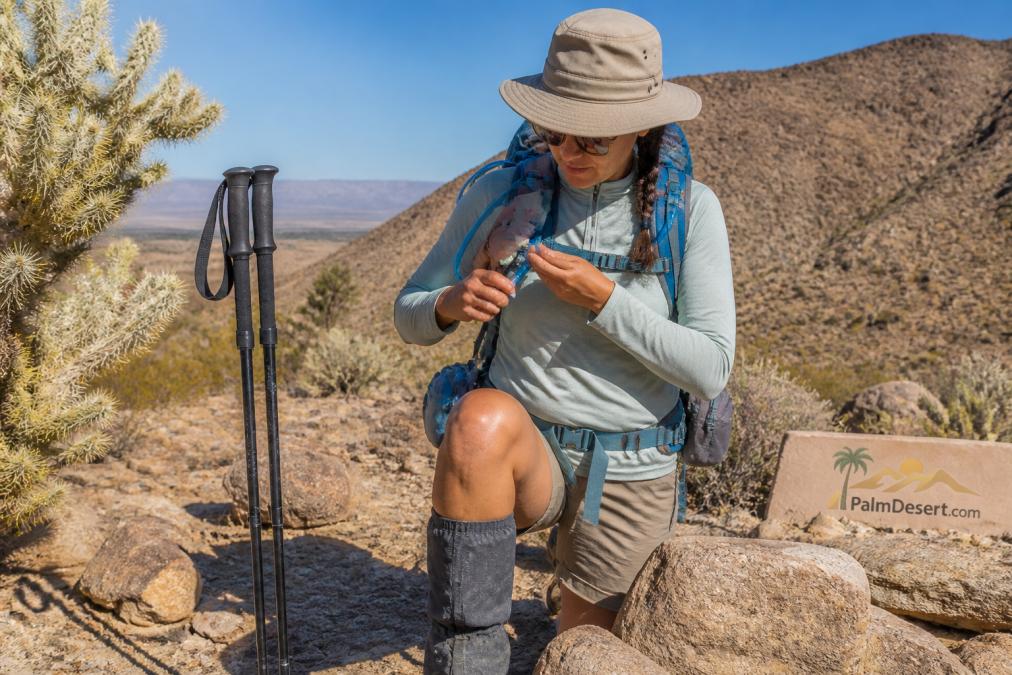
Investing in high-quality hot weather gear ensures that your body remains regulated and protected against the relentless sun, and you can explore the latest advancements in performance athletic gear for hot weather to better understand how modern fabrics manage moisture during strenuous desert treks.
Desert hiking gear essentials come down to three jobs: block ultraviolet radiation, move sweat away from skin, and protect your feet from hot, loose rock. Everything else is optional.
Clothing, Sun Protection, and Footwear
- Moisture-wicking long sleeves beat tank tops. Covered skin stays cooler and blocks sun exposure.
- A broad-brimmed hat shades your neck and ears, where sunburn hits hardest.
- Sunscreen application every two hours, even under clouds.
- Gaiters keep sand and gravel out of your boots on desert terrain.
- Trekking poles reduce physical exertion and improve balance on loose scree.
A hydration bladder encourages steady sipping, which beats stopping to unscrew a bottle. The thing nobody tells you: dark colors absorb heat, so choose light fabrics for daytime desert hiking.
Signs of Heat Stroke in Hikers (And What to Do)
Heat illness in desert hiking rarely appears without warning. It escalates along a continuum, and the window to intervene is widest at the beginning. Knowing the sequence, and the mechanism behind each stage, is what separates a bad afternoon from a life-threatening emergency.
The Progression: From Heat Cramps to Heat Stroke
Heat cramps. Painful muscle spasms, usually in the calves, thighs, or abdomen, after heavy sweating and electrolyte loss. The mechanism is sodium and fluid depletion in working muscle. Response: stop, move to shade, drink an electrolyte mix, and gently stretch the affected muscle. Do not resume at the same pace.
Heat exhaustion. The body is losing the cooling battle. Core temperature rises but stays below the danger threshold. Signs include heavy sweating, cool and clammy skin, weakness, nausea, headache, dizziness, and a fast but weak pulse. Response: get out of the sun, lie down with legs elevated, remove excess clothing, apply cool water to the neck, armpits, and groin, and sip electrolytes. Most people improve within 30 minutes of cooling and rest. If they do not, treat it as heat stroke.
Heat stroke. The body’s thermal regulation has failed. Core temperature climbs rapidly, and the skin may be hot and dry, though in exertional heat stroke during hiking, sweating can still be present, which is why skin condition alone is not a reliable test. The defining sign is altered mental status: confusion, slurred speech, agitation, loss of coordination, or unconsciousness. Response: call 911 immediately, move the person to shade, and begin aggressive cooling, soak clothing, apply ice to the neck, armpits, and groin if available, and fan the skin. Do not give fluids to anyone who is confused or unable to swallow.
Heat Exhaustion vs. Heat Stroke: Know the Difference
The single most useful distinction is mental status. A hiker with heat exhaustion is uncomfortable but oriented, they know where they are and can answer questions. A hiker with heat stroke is not. According to the CDC extreme heat guidance, heat stroke is a medical emergency that requires immediate professional treatment, and cooling should begin before help arrives, not after. Never try to “walk it off” or wait to see if it improves.
If you are unsure which condition you are seeing, treat it as heat stroke. The cost of overreacting is a ruined hike. The cost of underreacting can be a life.
The Decision-Fatigue Trap
One of the least-discussed dangers of desert heat is its effect on judgment. Heat stress impairs cognitive performance before physical symptoms become obvious, hikers make poorer route decisions, underestimate distance, and dismiss early warning signs in themselves and others. This is a leading contributor to accidents, because the person who needs to make the call to turn around is often the person least able to make it well.
A practical countermeasure: build decision rules into your plan before you leave. “If we are not at the saddle by 10 a.m., we turn around.” “If anyone stops sweating, we stop the hike.” Pre-committed rules do not require clear thinking in the moment, which is exactly the point.
Book Hotels with Exclusive Discounted Rates Now →
Watch your hiking partners as closely as you watch yourself. The first person to show signs of heat illness is usually the last person to notice them.
What to Carry for a Heat Emergency
- Electrolyte mix, for cramps and early exhaustion.
- Extra water, reserved for cooling, not just drinking.
- A bandana or small towel, soak it and drape it over the neck.
- A fully charged phone, for the 911 call, kept out of direct sun to preserve battery.
- A written emergency plan, who to call, where the nearest trailhead access is, and what your exact location is.
Timing Your Hike: Acclimatization and Peak Heat Avoidance
Start before sunrise and finish by mid-morning during hot months. Peak heat avoidance is the single most effective safety measure, and it costs nothing but an early alarm. Acclimatization takes roughly one to two weeks of gradual exposure, so visitors should treat their first desert hikes as short and easy.
You cannot out-hydrate bad timing. A well-watered hiker at noon is still at more risk than a moderately prepared hiker at dawn.
Route Planning, Navigation, and Emergency Preparation
In desert heat, route planning is not just about distance, it is about exposure time, shade availability, and how quickly you can get help if something goes wrong. The plan you build at home is the plan that keeps you safe when the heat is affecting your judgment on the trail.
Build the Route Around Heat, Not Mileage
A five-mile loop with no shade is a harder hike than an eight-mile route with canyon cover and reliable water. Before you commit, map the following:
- Shade breaks. Identify them in advance and treat them as mandatory stops, not optional ones.
- Water sources and caches. Note which are reliable and which are seasonal. Do not plan around a source you have not confirmed.
- Escape routes. Know at least one shorter exit from the midpoint of your route in case someone needs to turn back early.
- Terrain type. Loose scree, sand, and slickrock all change how much effort, and therefore heat, the route demands.
Micro-Climates Change the Risk
Desert terrain is not uniform. A high-desert canyon at elevation runs cooler and often holds shade, but it can also trap heat and block radio or satellite line-of-sight. Low-desert flats and sandy washes reflect heat from below and offer almost no shade, so surface temperature, not air temperature, becomes the limiting factor. Plan hydration and turnaround times separately for each segment rather than applying one rule to the whole route.
Navigation Gear That Survives the Heat
Heat degrades electronics faster than most hikers expect. Phone batteries drain quickly when the screen is bright and the device is warm, and lithium batteries can shut down entirely in extreme heat. Carry a paper map and a compass as your primary navigation, and treat the phone as a backup. Keep the phone out of direct sun, inside a pack, not on a hip belt, and consider a small external battery stored in a shaded pocket.
Emergency Signaling and Rescue Awareness
- Tell someone your route and expected return time before you leave, and give them a hard deadline to call for help.
- Carry a personal emergency beacon or satellite messenger on remote terrain. Cell coverage in desert canyons and washes is unreliable even when the map shows signal.
- Know your location precisely. GPS coordinates are far more useful to search and rescue than a trail name.
- Signal in threes. Three whistle blasts, three flashes, or three shouts is a widely recognized distress signal.
- Stay with the person who is injured or ill. Splitting up in desert heat multiplies the risk.
Check Conditions the Night Before
Review the forecast heat index, any heat advisories, and recent trail reports. A route that was safe last week may not be safe after a heat wave. For trip logistics and local conditions, the Visitor Center for Palm Desert & Palm Springs maintains current desert events and advisories.
A route plan is only as good as the turnaround time you actually honor. Set it before you leave, write it down, and treat it as non-negotiable.
Post-Hike Recovery and Gear Care in Extreme Heat
Recovery starts before you reach the car. Rehydrate with electrolytes, not just water, and eat something salty. Get out of the sun and elevate your legs if you feel lightheaded.
Gear maintenance matters too. Heat degrades hydration bladder tubing and seals, so rinse and dry them fully after every desert hike. Inspect boot soles for separation, since adhesive softens in extreme heat. Store trekking pole grips out of direct sun to prevent cracking.
Conclusion: Hike Smart, Hike Safe
Desert heat rewards preparation and punishes improvisation. Carry more water than you need, start early, know the difference between heat exhaustion and heat stroke, and treat every warning sign as a reason to stop.
When you’re ready to plan your next desert outing, the Visitor Center for Palm Desert & Palm Springs can help. Browse curated hotel and resort rates for your stay, explore private vacation rental homes if you prefer a pool and extra privacy, and subscribe to our weekly updates for trail conditions and local events. Get started with the Visitor Center for Palm Desert & Palm Springs and hike the desert with confidence.
Frequently Asked Questions
What temperature is too hot for hiking in the desert?
Most safety experts advise avoiding desert trails when the heat index exceeds 100°F, and canceling hikes above 105°F. The heat index combines air temperature and humidity to reflect how hot it actually feels. Even at 90°F, direct sun exposure and desert terrain can push your core body temperature dangerously high during physical exertion. Plan hikes for early morning or late evening, and check the forecast the night before and again the morning of your hike.
How much water should I bring for a desert hike?
A common guideline is one liter of water per person per hour of hiking in desert heat. For a three-hour hike, that means roughly three liters per person. Carry more than you think you need, since sweat rate varies with fitness, acclimatization, and heat index. Use a hydration bladder for easy sipping, and consider water rationing only in emergencies. Never rely on natural water sources in desert terrain.
What are the early warning signs of heat exhaustion?
Early signs of heat exhaustion include heavy sweating, cool and clammy skin, muscle cramps, fatigue, dizziness, headache, and nausea. If you notice these signs, stop hiking immediately, move to shade, drink water with electrolyte replacement, and cool your body with wet cloths. If symptoms worsen or you stop sweating, that may indicate heat stroke, a medical emergency requiring immediate 911 contact and aggressive cooling while you wait for search and rescue.
What should I include in a desert hiking emergency kit?
Pack an emergency beacon or satellite messenger, a paper map and compass for trail navigation, a headlamp, extra water, electrolyte tablets, a basic first-aid kit, a space blanket, and a fully charged phone. Sunscreen application before you leave and a broad-brimmed hat are also essential. Tell someone your route and expected return time. If you get lost, stay put, find shade, and ration water rather than wandering further in the heat.