Table of Contents
- Why Outdoor Dining in Palm Desert Stands Out
- Palm Desert Restaurants with Patios
- Scenic Dining in Palm Desert
- Palm Desert Restaurants with Outdoor Seating
- Dining Experiences by Atmosphere and Cuisine
- Planning Your Outdoor Dining Visit
- Conclusion
- Frequently Asked Questions
Last Updated: October 10, 2026
Why Outdoor Dining in Palm Desert Stands Out
Outdoor dining in the Coachella Valley offers something most desert destinations struggle to deliver: year-round comfort paired with genuine culinary ambition. At the Visitor Center for Palm Desert & Palm Springs, we’ve tracked dining trends across the region, and one pattern emerges consistently. The best outdoor dining spots in Palm Desert combine stellar food with settings that justify the experience itself.
Winter months (November through March) create near-perfect conditions. Temperatures hover in the 70s and 80s, daytime sunshine is abundant, and evening breezes cool patios without requiring heat lamps. Spring and fall extend the season further. Even summer dining works if you choose venues with shade structures, misters, or strategic tree cover.
What sets Palm Desert apart is the mountain backdrop. Most restaurants position themselves to capture views of the San Jacinto Mountains or the broader desert landscape. Dining becomes theater, conversation flows differently when you’re framed against that vista. The best outdoor dining spots in Palm Desert use this natural advantage deliberately.
Book outdoor tables during sunset hours (roughly 5 to 7 PM) for the optimal combination of light, temperature, and scenery. Servers know this window well and often hold their best patio seating for early diners.
Palm Desert Restaurants with Patios
Several venues in Palm Desert have invested seriously in their patio infrastructure, treating outdoor space as a primary dining area rather than overflow seating. The following represent the strongest patio setups across different price points and cuisine styles.
El Paseo District
El Paseo’s restaurant cluster dominates this category. Multiple establishments along this downtown corridor offer covered patios with heating and cooling systems. The architecture encourages lingering, shade structures are substantial, and many venues incorporate water features or landscaping that softens the desert environment. Restaurants here range from casual to upscale. Many El Paseo venues feature pergolas with integrated misters for summer comfort and overhead heaters for winter evenings, allowing year-round outdoor service.
Standalone Venues with Mature Landscaping
Venues with mature trees (typically palms, acacias, or citrus) create natural canopies that reduce sun exposure while maintaining openness. Pergolas and shade sails appear frequently, offering protection without the enclosed-room feeling of a dining room. These independent restaurants often occupy larger lots and can dedicate more square footage to patio seating than El Paseo’s linear corridor allows.
Patio Comfort Features to Compare
The quality of patio infrastructure matters more than casual diners realize. Better establishments invest in comfortable seating, adequate table spacing, and surfaces that stay cool underfoot. When evaluating a venue, note these practical details:
| Patio Feature | Comfort Impact | What to Verify On-Site |
|---|---|---|
| Shade structure type | Pergolas reduce direct sun 40-60%; umbrellas offer portable coverage; mature trees provide natural cooling | Ask server about afternoon sun exposure; request shaded tables when booking |
| Misting system | Reduces perceived temperature by 5-10°F in dry desert air; critical for summer dining | Confirm system is operational; ask when it runs (typically 11 AM-4 PM) |
| Heating elements | Extends shoulder seasons (March-April, October-November) by 2-3 months | Check for overhead heaters, fire pits, or heat lamps; ask if they’re included or add to bill |
| Table spacing | 3+ feet between tables preserves conversation privacy and air circulation | Observe during your visit; request corner or perimeter tables for more space |
| Flooring surface | Light-colored pavers, tile, or decomposed granite stay cooler than dark asphalt or concrete | Barefoot comfort matters; dark surfaces can exceed 140°F in summer sun |
| Wind barriers | Partial screens or landscaping reduce dust and wind gusts without blocking views | Relevant in spring (March-May) when afternoon winds peak |
Seasonal Patio Usability
Not all patios perform equally across seasons. Winter patios (November-February) with southern exposure and minimal wind exposure are most comfortable. Spring patios (March-April) benefit from shade and misting systems as temperatures climb. Summer patios (June-August) require substantial shade, active misters, and early-evening timing to be usable. Fall patios (September-October) offer the broadest window of comfort, typically 10 AM-10 PM. When booking, ask the restaurant which season their patio performs best and whether they adjust service hours accordingly.
Scenic Dining in Palm Desert
The mountain views that define scenic dining in Palm Desert aren’t incidental, they’re the reason certain venues command premium positioning and pricing.
Restaurants positioned on elevated terrain or with southern exposure capture the San Jacinto Mountains most effectively. Morning light hits differently than evening light; the same view transforms across the day. Sunset dining offers golden-hour photography opportunities, while midday views emphasize the mountain’s geological detail.
Some of the best outdoor dining spots in Palm Desert intentionally minimize visual clutter on the patio itself, fewer umbrellas, simpler furniture, strategic plantings, to preserve sightlines. This restraint separates thoughtfully designed spaces from venues that simply added tables outside.
Water features (fountains, pools, reflecting surfaces) amplify the scenic effect. Moving water catches light and creates visual interest independent of the landscape. Several Palm Desert restaurants have incorporated this principle effectively.
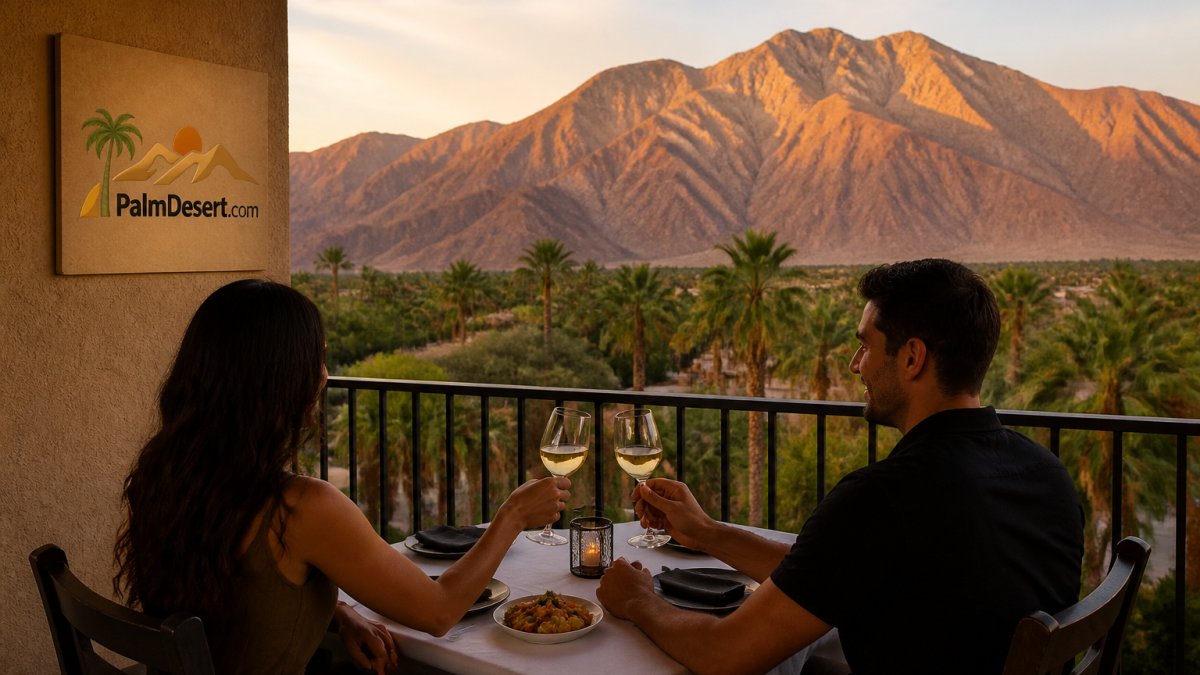
Scenic dining works best during the hour before sunset. The light quality peaks, temperatures drop slightly, and the mountains take on depth and color that midday views lack.
Palm Desert Restaurants with Outdoor Seating
Not every venue with outdoor seating qualifies as a destination in itself. Many restaurants offer patios as a secondary option, practical but unremarkable. The distinction matters when you’re choosing where to spend an evening.
Full-service restaurants with dedicated outdoor menus represent the higher tier. These venues adjust their offerings for outdoor dining: lighter appetizers, drinks designed for warm weather, and dishes that don’t suffer from brief exposure to air or sun. The kitchen and service staff coordinate differently for outdoor tables.
Casual dining establishments often excel at this category. Sports bars, Mexican restaurants, and casual American venues frequently dedicate serious square footage to outdoor areas. The food philosophy, bold flavors, straightforward preparation, comfort-focused, translates well to outdoor settings.
Venue size varies significantly. Intimate patios seat 20-30 guests and create conversation-focused environments. Larger setups accommodate 100+ diners and feel more like events. The best outdoor dining spots in Palm Desert offer both options, allowing guests to choose the social scale that suits their party.
Dining Experiences by Atmosphere and Cuisine
Atmosphere shapes the entire experience far more than most diners acknowledge. Two restaurants serving similar food in different settings create completely different memories. Understanding how cuisine, price point, and patio design interact helps you choose the right venue for your occasion.
Casual and Social Atmospheres
High-energy venues with open patios work best for groups and celebrations. Tables positioned close together (18-24 inches apart) encourage mingling. Background music stays upbeat, often at 70-80 decibels. These spaces buzz, conversation overlaps, laughter carries, and the scene feels alive.
Intimate and Relaxed Settings
Quieter patios with substantial spacing between tables (4+ feet) suit couples and small groups seeking conversation focus. Ambient lighting (string lights, candles, or soft uplighting) replaces bright overhead fixtures. Music, if present, stays soft or absent entirely. These venues prioritize the dinner itself over the surrounding scene.
Cuisine-Specific Patio Performance
Book Hotels with Exclusive Discounted Rates Now →
Different cuisines have distinct advantages and limitations on outdoor patios:
Mediterranean and Italian, These cuisines excel on patios. Fresh ingredients, light preparation, and wine pairings feel natural in outdoor settings. Dishes designed around vegetables, olive oil, and grilled proteins maintain quality through brief service delays. Patio timing is flexible; these venues perform well from lunch through late dinner.
Mexican and Spanish, Bold flavors and lighter proteins suit warm-weather dining. Grilled meats, fresh salsas, and citrus-forward preparations hold up well to outdoor service. These venues often feature high-energy patios with substantial seating, making them ideal for groups. Margaritas and beer pairings are designed for warm-weather consumption.
Steakhouse Patios, These work well when they embrace the outdoor context rather than replicating the dining room outside. Heavy sauces and rich sides feel less natural under open sky, but grilled preparations and fresh vegetable sides align well with patio dining.
Seafood, Fish tastes best served immediately, and outdoor service introduces delays that can affect quality. Venues that acknowledge this, offering ceviches, raw preparations (crudo, tartare), and lighter cooked dishes on their patio menus, perform better than those serving identical preparations inside and out.
Asian Fusion and Contemporary, These cuisines work well on patios when plating is designed for outdoor service. Avoid heavily sauced dishes that separate or cool unevenly. Venues with covered patios and controlled temperatures perform better than fully exposed settings.
Practical Timing by Cuisine and Season
Winter (November-February): All cuisines perform well. Mediterranean, Italian, and steakhouses shine during evening hours when ambient lighting enhances formality. Mexican and casual venues work equally well at lunch and dinner.
Spring (March-April): Mediterranean, Italian, and seafood excel as temperatures warm. Avoid heavy steakhouse preparations at midday; evening dining works well. Mexican venues thrive with their natural affinity for warm-weather service.
Summer (June-August): Limit outdoor dining to early evening (5-7 PM) or venues with substantial shade and active misters. Seafood (cold preparations), Mexican, and casual American work best. Avoid steakhouses and heavy cuisines at midday.
Fall (September-October): All cuisines perform optimally. The broadest window of comfort allows flexible timing from lunch through late dinner.
Planning Your Outdoor Dining Visit
Successful outdoor dining requires more planning than indoor meals. Temperature swings, wind, and sun exposure demand attention.
Timing Your Visit
Winter dining (December through February) offers the most consistent comfort. Daytime temperatures peak in the 75-80°F range, and evenings cool to the 50s-60s. Bring a light jacket for dinner. Spring (March-April) extends this window with slightly warmer days but similar evening conditions.
Summer outdoor dining works best during early evening hours when temperatures have peaked and begun dropping. Many restaurants extend happy hours into the early evening specifically to capture this window. Lunch remains viable in summer if you choose venues with substantial shade.
Fall (October-November) delivers ideal conditions, warm days, cool evenings, and clear skies. Humidity remains low throughout the season.
Reservation Strategy
Call ahead and request outdoor seating. Specify your preference: covered versus uncovered, shaded versus open sun, quiet versus social area. Better restaurants track these preferences and accommodate them when possible. During peak season (January-March), outdoor tables book faster than indoor seating.
Dress and Preparation
Sunscreen applies even on cool days, desert sun reflects intensely off light-colored surfaces and pavement. Bring a light layer for evening. Sunglasses improve comfort during daytime dining. Wind can be stronger in open patios than expected; secure loose items.
Desert wind can arrive suddenly in spring months. If you wear contact lenses, bring backup glasses or solution. Wind-driven dust irritates eyes quickly in outdoor settings.
Conclusion
The best outdoor dining spots in Palm Desert deliver more than food, they offer the full sensory experience that makes desert dining distinctive. Whether you’re seeking mountain views, intimate patio settings, or lively group atmospheres, the region supports genuine variety.
Browse our directory of Palm Desert hotels and resorts to base yourself near your favorite dining venues. If you prefer extra privacy and flexibility, explore our Palm Desert vacation rental homes for your stay. The Visitor Center for Palm Desert & Palm Springs can help you discover more local dining, entertainment, and activity recommendations through our comprehensive Coachella Valley guide. Get started today and plan an unforgettable desert dining experience.
Frequently Asked Questions
Which Palm Desert restaurants have the best outdoor seating?
Many restaurants throughout Palm Desert offer excellent outdoor dining options. Look for venues with shaded patios, misters for warm afternoons, and mountain or garden views. Check restaurant websites or call ahead to confirm outdoor seating availability, as some locations have seasonal outdoor areas or weather-dependent setup.
What’s the difference between dining in Palm Desert versus Palm Springs?
Palm Desert and Palm Springs are neighboring communities in the Coachella Valley with distinct characteristics. Palm Desert features the upscale El Paseo shopping and dining district, known for contemporary restaurants and resort-style patios. Palm Springs offers a different vibe with mid-century modern architecture and a more eclectic dining scene. Both provide excellent outdoor dining, but Palm Desert’s dining venues tend toward polished, resort-oriented experiences.
When is the best time to dine outdoors in Palm Desert?
October through April offers the most comfortable outdoor dining weather, with mild temperatures and low humidity. November through March is peak season when snowbirds visit. Summer outdoor dining is possible with evening hours and venues featuring shade structures or misters. Always check the forecast and call ahead during shoulder seasons to confirm outdoor seating is available.
What should you look for when choosing an outdoor dining spot?
Consider shade availability (pergolas, umbrellas, or trees), proximity to mountains or gardens, cuisine style, reservation policies, and whether the venue offers cocktails or a full bar. Check for amenities like heaters for cooler evenings, misters for hot days, and indoor backup seating. Read recent reviews to confirm outdoor areas are well-maintained and that the restaurant honors reservations consistently.