Table of Contents
- How to Find Hidden Gems in the Desert: Essential Preparation
- Best Time of Year to Visit Desert Hidden Gems
- Unique Things to Do in Palm Desert: Beyond the Main Attractions
- How to Plan a Desert Adventure: Step-by-Step Navigation
- Wildlife Viewing and Desert Ecosystem Awareness
- Leave No Trace: Sustainable Desert Exploration
- Common Mistakes to Avoid When Exploring Remote Desert Areas
- Conclusion
Last Updated: August 29, 2026
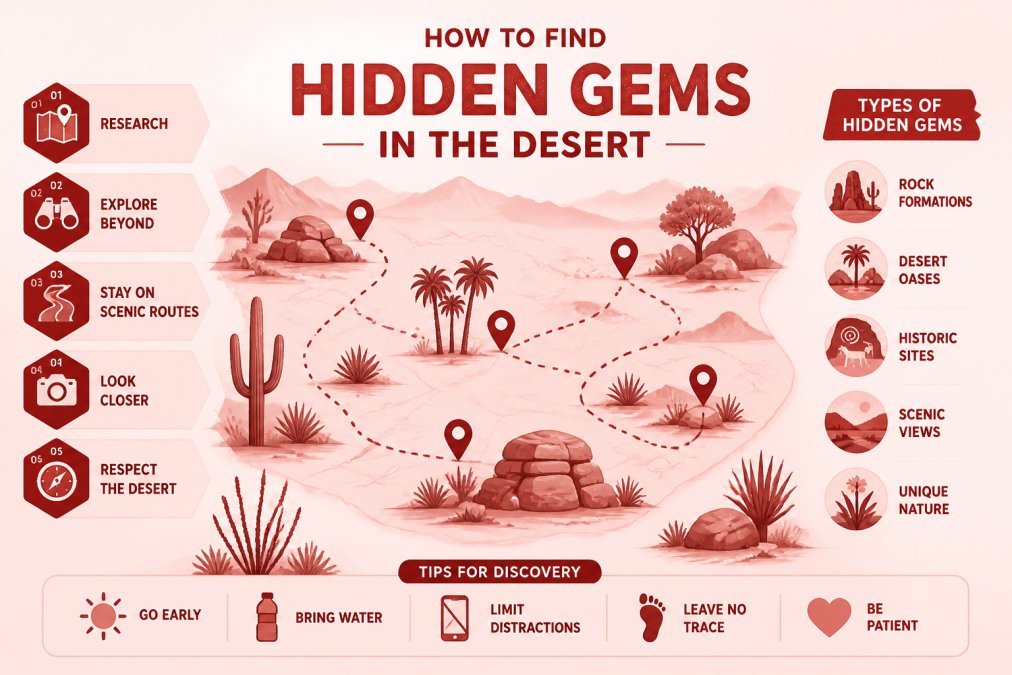
How to Find Hidden Gems in the Desert: Essential Preparation
Finding hidden gems in the desert requires methodical planning, proper equipment, and respect for the landscape’s challenges. Whether you’re seeking remote petroglyphs, geological formations, or secluded trails, preparation separates successful explorers from those who turn back frustrated. The difference between a memorable adventure and a difficult experience often comes down to knowing what to bring and where to look before you leave home.
Gather Offline Maps and GPS Coordinates
Download offline maps to your device before entering remote desert areas. Cell service vanishes quickly in the backcountry, leaving you dependent on traditional navigation. Topographic maps show elevation gain, terrain difficulty, and water sources, critical details that standard mapping apps omit.
GPS coordinates matter more in the desert than anywhere else. Record specific coordinates for your destination, water sources, and emergency exit routes. Many explorers use dedicated GPS devices alongside smartphone apps, creating redundancy if one fails. Store multiple copies, one digital, one printed, in waterproof cases.
Check Vehicle Requirements Before Departure
Desert terrain demands appropriate vehicles. High-clearance SUVs handle rocky washes and sandy approaches that sedans cannot navigate. Confirm your rental vehicle can handle unpaved roads and specify your intended route to the rental company.
Tire pressure, fuel capacity, and spare parts matter intensely in remote areas. Reduce tire pressure slightly on soft sand to increase traction, but carry a portable compressor to reinflate before paved roads. Pack extra water for both drinking and radiator cooling. Check your vehicle’s condition thoroughly: brakes, cooling system, battery, and belts. Carry jumper cables, extra coolant, and basic tools. Many remote areas sit 50+ miles from the nearest mechanic.
Best Time of Year to Visit Desert Hidden Gems
Timing your desert exploration correctly transforms the experience. The wrong season makes hidden gems inaccessible or dangerous; the right season reveals landscapes in their fullest beauty.
Seasonal Micro-climates and Weather Patterns
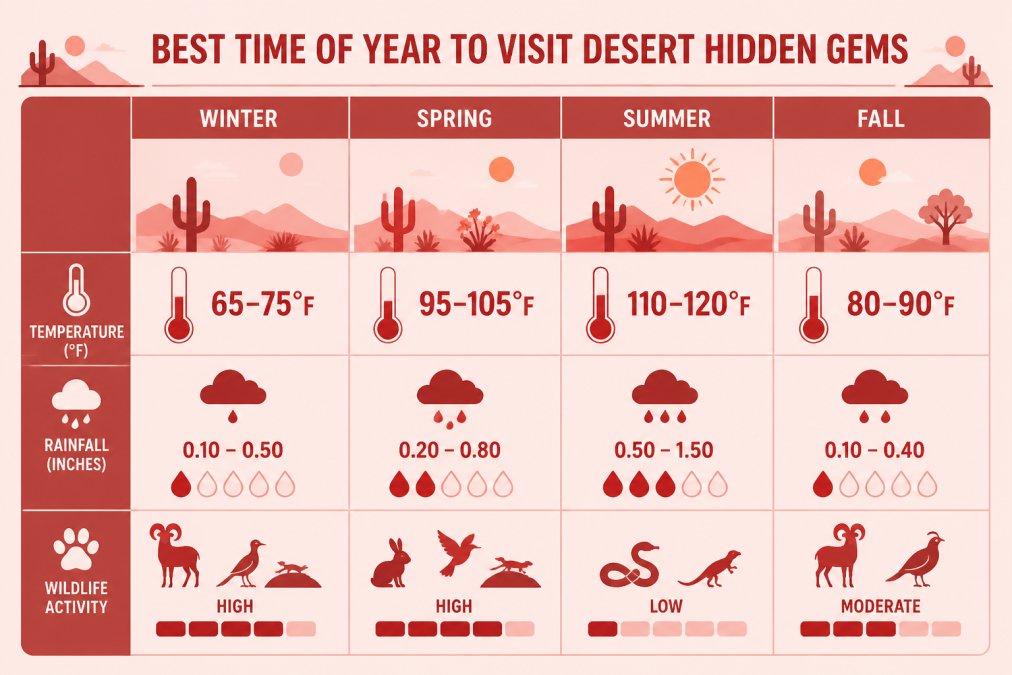
November through March offers the most reliable conditions for exploration. Daytime temperatures range from 65 to 75 degrees Fahrenheit, and nights cool enough for comfortable camping. Wildlife activity peaks during these months as animals emerge to feed in cooler conditions.
April and May bring rapid temperature increases. Morning hikes remain pleasant, but afternoon heat becomes intense. Flash flood risk rises as spring storms move through the region. Summer months (June through September) create genuine hazards, with temperatures exceeding 110 degrees Fahrenheit regularly. October provides a transition month with fewer crowds and recovering vegetation.
Avoiding Flash Flood Risk and Extreme Conditions
Flash floods represent the desert’s most underestimated danger. Narrow canyons and washes fill rapidly during storms, even when rain falls miles away. Never camp in canyon bottoms. Check weather forecasts obsessively during spring and monsoon season (August through September).
Extreme heat kills efficiently. Carry at least three liters of water per person for day hikes, more for longer expeditions. Electrolyte supplements help your body retain water better than plain H₂O alone. Start hikes before dawn, rest during peak afternoon hours (11 AM to 4 PM), and resume in late afternoon. Wear light-colored, loose-fitting clothing that covers skin.
Unique Things to Do in Palm Desert: Beyond the Main Attractions
The most memorable desert experiences happen away from established tourist infrastructure. Hidden gems reward explorers willing to research and plan thoroughly. For inspiration and detailed information about what’s happening in the region, check out Desert Events and Desert Attractions to discover both popular destinations and lesser-known spots worth exploring.
Off-the-Beaten-Path Hiking Trails and Geological Formations
True hidden gems require finding trailheads that few tourists discover. Look for geological formations that create natural landmarks: natural arches, distinctive rock formations, and canyon systems. These features often sit within a few miles of popular areas but remain invisible to casual visitors.
Geological formations tell stories written in stone. Layered rock faces reveal millions of years of climate change. Understanding basic geology deepens your appreciation of what you’re seeing. Elevation gain varies dramatically across the desert. High desert areas above 3,000 feet experience different ecosystems than lower elevations, with cooler temperatures and different vegetation and wildlife.
Petroglyphs, Historical Sites, and Natural Arches
Petroglyphs represent thousands of years of human presence in the desert. Respect these sites absolutely. Do not touch petroglyphs, leave offerings, or remove anything from archaeological areas. Photography is acceptable, but preservation matters more than documentation.
Historical sites range from abandoned mining operations to Native American settlements. Many sites lack official protection or signage. Research carefully before visiting. The Visitor Center for Palm Desert & Palm Springs maintains information on historically significant locations and their current accessibility.
Natural arches and distinctive rock formations create dramatic landscapes. These geological wonders form over millennia as water and wind erode softer rock layers. Photographing these formations becomes easier during golden hour, early morning and late afternoon, when sunlight angles create maximum contrast and shadow.
How to Plan a Desert Adventure: Step-by-Step Navigation
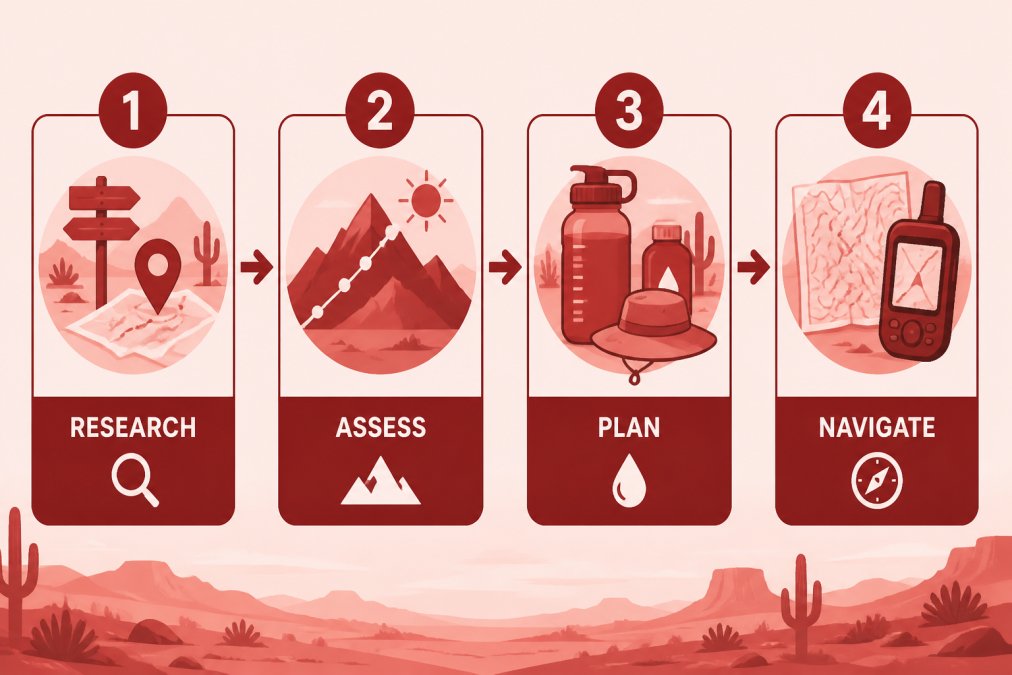
Desert exploration follows a logical sequence. Each step builds on the previous one, creating a comprehensive plan that accounts for terrain, weather, and personal capability.
Step 1: Research Trailheads and Backcountry Access Points
Begin online with topographic maps and satellite imagery. Google Earth lets you examine terrain from above, identifying canyon systems, ridgelines, and potential water sources. Look for access points where vehicles can park and hiking begins.
Local resources matter more than generic travel websites. The Visitor Center for Palm Desert & Palm Springs provides detailed information about specific trailheads, current conditions, and seasonal accessibility. Local hiking groups share firsthand reports about trail conditions, recent wildlife sightings, and hazards that official sources might miss. Document GPS coordinates for multiple access points so alternatives remain viable if your primary route becomes impassable.
Step 2: Assess Terrain, Elevation Gain, and Sun Exposure
Elevation gain determines physical difficulty more accurately than distance. A five-mile hike with 2,000 feet of elevation gain requires different preparation than a five-mile flat walk. Topographic maps show elevation change clearly through contour lines.
Sun exposure varies dramatically based on canyon orientation and time of day. North-facing canyons stay shadier longer; south-facing areas bake in direct sunlight. Terrain type affects difficulty significantly. Rocky technical terrain requires more energy than sandy washes. Examine satellite imagery to identify terrain composition before departure.
Step 3: Plan Hydration and Thermal Regulation
Calculate water needs based on temperature, elevation, and exertion level. A general rule suggests one liter per two hours of hiking in moderate temperatures; double that in summer heat. Carry extra for emergencies.
Light colors reflect sunlight; loose fits allow air circulation. Avoid cotton, which retains moisture and loses insulating properties when wet. Synthetic materials and wool dry quickly and regulate temperature better. Rest strategically during peak heat hours. Find shade under rock overhangs, in canyon bottoms, or beneath desert vegetation. Even 30 minutes of rest significantly reduces heat stress. Eat salty snacks to help your body retain water.
Step 4: Navigate Using Topographic Maps and Offline GPS
Topographic maps show terrain features that GPS alone cannot convey. Contour lines reveal slopes, cliffs, and ridgelines. Water features appear as blue lines. Learning to read these maps transforms them into invaluable navigation tools.
Offline GPS devices provide precise location tracking without cell service. Mark waypoints at trailheads, water sources, and destination points. Combine both tools, topographic maps provide context and show the bigger picture, while GPS provides precise location confirmation. Neither tool alone offers complete navigation security.
Wildlife Viewing and Desert Ecosystem Awareness
Desert ecosystems support remarkable biodiversity despite harsh conditions. Coyotes, bighorn sheep, roadrunners, and desert tortoises inhabit the Coachella Valley’s wild areas. Each species plays a specific ecological role. Bighorn sheep require water sources; observing them reveals hidden springs and water holes.
Respect wildlife viewing distances. Use binoculars and telephoto lenses to observe animals without approaching. Animals stressed by human presence expend critical energy reserves. In extreme heat, this stress can be fatal. Understand seasonal wildlife patterns. Spring brings active feeding as animals emerge from winter dormancy. Summer heat drives animals toward water sources and shade. Avoid camping near water sources to prevent animals from avoiding necessary drinking areas.
Leave No Trace: Sustainable Desert Exploration
Desert ecosystems recover slowly from damage. The arid climate means vegetation grows slowly; disturbed areas remain visible for decades.
Camp on durable surfaces. Established campsites concentrate impact in specific areas. If no established site exists, camp on rock, gravel, or sand rather than vegetation. Pack out every piece of trash, including small items like fruit peels and food scraps. Stay on established trails when they exist. Cutting switchbacks creates erosion channels that persist for years.
Use established fire rings when available. In areas without rings, avoid fire entirely; the desert’s limited vegetation makes fire danger extreme. Use a camp stove instead. Respect archaeological and historical sites absolutely. Don’t touch petroglyphs, remove artifacts, or disturb archaeological features. Report any vandalism or disturbance to local authorities immediately.
Common Mistakes to Avoid When Exploring Remote Desert Areas
Underestimating water needs tops the list of critical errors. Most people carry insufficient water for desert conditions. Dehydration impairs judgment, making poor decisions seem reasonable. Carry more water than calculations suggest.
Starting hikes too late in the day leaves you navigating in darkness. Desert terrain becomes treacherous without daylight. Start early enough to complete your route before darkness falls. Ignoring weather forecasts creates preventable disasters. Check forecasts the night before and morning of your hike. Be willing to cancel or modify plans based on changing conditions.
Relying solely on cell phones for navigation guarantees problems. Always carry physical maps and a dedicated GPS device. Venturing alone in remote areas multiplies risks. Travel with partners whenever possible. At minimum, tell someone your planned route and expected return time.
Exploring hidden gems in the desert rewards careful planning and respect for the landscape. The process demands attention to detail, honest assessment of your capabilities, and willingness to turn back when conditions warrant. The Visitor Center for Palm Desert & Palm Springs offers comprehensive resources for planning desert adventures, including detailed guides to specific locations, current trail conditions, and seasonal recommendations.
Discover your perfect desert getaway by exploring our curated vacation rentals and hotel options throughout the Coachella Valley. Whether you’re planning a multi-day expedition or a weekend escape, we’ll help you find the perfect base for your desert adventure.
Frequently Asked Questions
How do I find hidden gems in the desert that aren't on typical tourist maps?
Use offline topographic maps, GPS coordinates from local hiking communities, and research geological formations specific to your region. Check local visitor resources for curated lists of lesser-known trailheads and backcountry access points. Talk to rangers at visitor centers who know remote areas and can point you toward unspoiled wilderness spots that match your skill level and interests.
What's the best time of year to visit desert hidden gems?
Late fall through early spring offers the most comfortable temperatures and stable weather for exploration. Winter months provide excellent conditions with lower sun exposure and reduced flash flood risk. Summer temperatures can exceed 110°F, making midday exploration dangerous. Research seasonal micro-climates in your specific area, as elevation and topography create varying conditions even within the same desert region.
What vehicle requirements do I need for finding remote desert locations?
High-clearance vehicles are essential for accessing many backcountry trailheads and geological formations. Four-wheel drive is recommended for sandy terrain and washed-out roads. Always carry extra water, a spare tire, a first-aid kit, and offline maps. Check current road conditions before departure, as flash floods and seasonal closures can affect access to remote areas.
How can I explore desert hidden gems sustainably?
Follow leave-no-trace principles: stay on established trails, pack out all waste, and avoid disturbing wildlife habitats and petroglyphs. Respect conservation areas and seasonal closures designed to protect fragile ecosystems and biodiversity. Use established trailheads rather than creating new paths, and report any damage or illegal activity to local authorities. Your responsible exploration helps preserve these remote areas for future visitors.
This article was written using GrandRanker