Table of Contents
- Why Winter Fitness Classes Matter for Seasonal Residents
- Low-Impact Exercise for Seniors: Finding the Right Class
- SilverSneakers Classes and Senior Fitness Programs
- Types of Winter Fitness Classes for Snowbirds
- Group Exercise and Social Engagement for Winter Wellness
- Accessibility and Transportation Considerations
- Indoor Fitness Options vs. Outdoor Winter Activities
- Getting Started: How to Choose Your Winter Fitness Class
Last Updated: August 22, 2026
Why Winter Fitness Classes Matter for Seasonal Residents
Seasonal residents, or snowbirds, face a unique challenge: adapting to a different environment while keeping their health on track. Winter fitness classes offer structure, social connection, and accessible movement options designed specifically for people transitioning between climates. Staying active during your seasonal stay prevents deconditioning, supports cardiovascular health, and builds meaningful connections with other residents. The right winter fitness class can transform your seasonal stay from passive relaxation into an energizing chapter of your year.
Many snowbirds arrive with fitness goals but struggle to find classes that match their schedule, mobility needs, or social preferences. This guide breaks down the winter fitness classes available in the region, helping you find the perfect fit for your needs, timeline, and lifestyle.
Low-Impact Exercise for Seniors: Finding the Right Class
Low-impact exercise is foundational for seniors and anyone prioritizing joint health during winter months. These activities reduce stress on knees, hips, and ankles while building strength, flexibility, and cardiovascular endurance. The key difference: low-impact options keep at least one foot planted at all times, whereas high-impact exercise has both feet leaving the ground.
Finding the right low-impact exercise class requires understanding your current fitness level and any mobility concerns. A beginner-friendly class should include modifications for every movement, allowing participants to work at their own intensity. Experienced instructors understand that one-size-fits-all instruction doesn’t work; they build in options for seated variations, resistance adjustments, and pacing flexibility.
Common low-impact options include water aerobics, chair-based movements, tai chi, and gentle yoga. Each offers distinct benefits: water aerobics provides natural resistance and cooling relief, chair-based classes improve stability and balance, tai chi enhances coordination and mental focus, and yoga builds flexibility and body awareness.
When evaluating a class, ask instructors about their experience with seasonal residents and seniors. Inquire whether they offer modifications and whether the pace accommodates people returning to fitness after time away. A quality program should feel challenging but never painful; soreness the next day is normal, but sharp pain signals a movement that isn’t right for your body.
Many community centers [and resort](/best-luxury-hotels-desert-2026/) fitness facilities offer trial classes. Attend at least two different low-impact classes before committing to a membership. You’ll quickly discover which instructor style, pace, and peer group feels right for you.
SilverSneakers Classes and Senior Fitness Programs
SilverSneakers classes represent one of the most accessible entry points into organized fitness for seniors. This national program, often covered through Medicare Advantage plans, provides free or low-cost fitness memberships at participating facilities. For snowbirds, SilverSneakers eligibility often extends across state lines, meaning your coverage typically follows you to winter destinations.
SilverSneakers classes are specifically designed around the needs of older adults. Instructors receive specialized training in senior fitness principles, including balance development, functional strength, and fall prevention (cms.gov). Classes typically last 45-60 minutes and include a warm-up, main activity phase, cool-down, and flexibility work (the NIH). The program offers multiple class formats: standing aerobics, water aerobics, yoga, and Pilates. Many facilities also provide on-demand video options for days when you prefer exercising in your vacation rental or hotel room.
To access SilverSneakers classes, check whether your Medicare Advantage plan includes the benefit. Once confirmed, visit the SilverSneakers website to locate participating facilities in your winter destination. Call ahead to confirm class schedules and any registration requirements. Many facilities ask you to attend an orientation session before your first class, which takes 15-20 minutes and covers equipment use and safety basics.
SilverSneakers classes eliminate the guesswork around whether a program is appropriate for your fitness level. The entire structure is built around senior wellness, so you can focus on showing up and moving rather than worrying whether the pace or intensity suits you.
Types of Winter Fitness Classes for Snowbirds
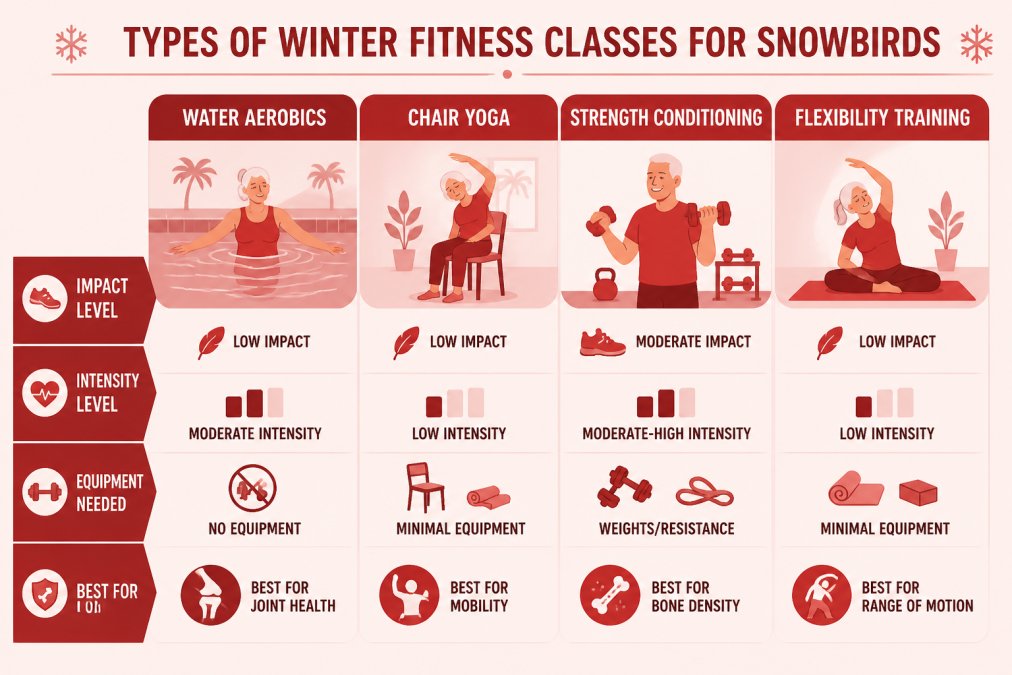
Winter fitness classes for snowbirds span a spectrum of intensities, movement styles, and social settings. Understanding the major categories helps you narrow your search and identify what aligns with your preferences.
Water Aerobics and Pool-Based Activities
Water aerobics stands out as one of the most joint-friendly options available. The water’s natural buoyancy supports your body weight, reducing impact by up to 90 percent (peer-reviewed research). Simultaneously, water resistance strengthens muscles without requiring heavy weights or complex equipment. For snowbirds with arthritis, previous injuries, or simply a preference for cooler movement, water aerobics delivers serious fitness benefits in a comfortable environment.
Most water aerobics classes last 45-60 minutes and combine cardiovascular intervals with strength and flexibility work. The social atmosphere tends to be relaxed and encouraging. Pool-based classes also include water walking, aqua yoga, and shallow-water fitness for people with limited mobility. The temperature-controlled indoor pools found at most resort facilities and community centers make year-round participation comfortable.
Chair Yoga and Mobility Training
Chair yoga adapts traditional yoga poses to seated or chair-supported positions, making it accessible for people with balance concerns, limited mobility, or those returning to fitness after time away. Every pose has a modification, and the chair is a tool, not a limitation. You’re still building flexibility, strength, and body awareness.
A typical chair yoga class includes seated stretches, supported standing poses, breathing exercises, and gentle twists. Many snowbirds report that chair yoga improves their posture, reduces neck and shoulder tension, and helps them sleep better.
Mobility training classes focus specifically on maintaining and improving range of motion. These sessions often incorporate resistance bands, light weights, and bodyweight movements targeting the joints and muscles that tend to tighten with age or inactivity.
Strength Conditioning and Balance Classes
Strength conditioning classes build muscle and bone density, which becomes increasingly important as we age. These classes use light weights, resistance bands, or bodyweight movements to challenge your muscles in controlled ways. Instructors scale intensity by adjusting weight, repetitions, or range of motion, so beginners and experienced exercisers work side by side.
Balance classes specifically target stability and fall prevention, critical concerns for snowbirds who want to enjoy their season without injury. These sessions include standing exercises that challenge your stability, proprioceptive work that improves body awareness, and functional movements that prepare you for real-world activities.
Group Exercise and Social Engagement for Winter Wellness
The social dimension of group fitness often matters as much as the physical benefits. Winter fitness classes serve as built-in community connections, reducing isolation and creating friendships that extend beyond the gym. Many snowbirds report that fitness classes became their primary social outlet during their seasonal stay. manage knee stiffness.
Group exercise provides accountability and motivation that solo workouts often lack. When you commit to a specific class time, you’re more likely to show up consistently. You develop relationships with instructors and fellow participants, creating a sense of belonging and shared purpose. This social engagement supports mental health and emotional wellness alongside physical fitness.
The group setting also normalizes asking questions and trying modifications. When you see others adjusting movements or taking breaks, you feel permission to do the same. Many facilities host social events around fitness, coffee after morning classes, seasonal celebrations, or group outings to local attractions.
Starting a new fitness routine too aggressively is the most common mistake seasonal residents make. The temptation to “make up for” winter months at home leads many people to overdo intensity or frequency in their first week. Start with one or two classes per week, even if you feel capable of more. Build gradually over 3-4 weeks before increasing frequency or intensity.
Accessibility and Transportation Considerations
For seasonal residents without local transportation, accessibility logistics can make or break your fitness routine. Before committing to a class, confirm how you’ll get there. Many snowbirds rely on rideshare services, which work well for scheduled class times. Others arrange carpools with fellow participants, turning transportation into another social connection.
Location matters significantly. Classes within walking distance of your vacation rental or hotel eliminate transportation barriers entirely. Resort fitness facilities often offer convenience, though community centers and dedicated fitness studios sometimes provide more variety. Evaluate whether you prefer the convenience of on-site facilities or whether traveling to a dedicated fitness space feels like a refreshing break.
Parking availability, accessible entrances, and accessible restrooms are practical considerations. Class timing affects accessibility too. Early morning classes often work well for snowbirds who want to exercise before the day’s social activities. Afternoon and evening options suit people with flexible schedules.
Snowbirds staying in resort accommodations or vacation rental homes with on-site fitness facilities benefit from the ultimate convenience factor. If your accommodation offers classes or partnerships with nearby facilities, prioritize those options before exploring independent studios.
Indoor Fitness Options vs. Outdoor Winter Activities
The desert winter climate offers year-round outdoor activity opportunities, but indoor fitness classes provide consistency, structure, and climate control that outdoor activities can’t match. The choice isn’t either-or; combining both creates a comprehensive winter wellness approach.
Indoor fitness classes offer predictable scheduling, professional instruction, and social connection. Weather never cancels class, and the climate-controlled environment suits people with temperature sensitivity or respiratory concerns. Outdoor activities in the desert winter, hiking, walking, pickleball, golf, provide natural light exposure, fresh air, varied terrain, and mental health benefits that indoor movement delivers differently.
Many snowbirds structure their week with 2-3 regular indoor fitness classes and 1-2 outdoor activities, creating rhythm and variety. This combination prevents monotony while maximizing the benefits of both approaches.
Getting Started: How to Choose Your Winter Fitness Class
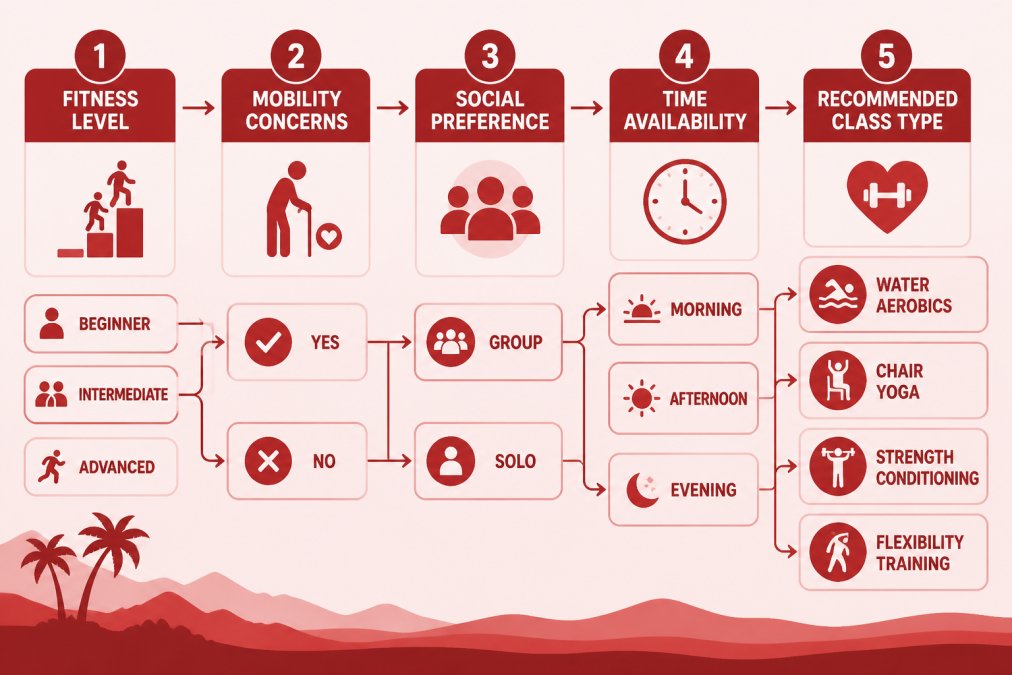
Choosing your winter fitness class involves assessing your fitness level, mobility needs, schedule preferences, and social style. Start by honestly evaluating where you are right now, not where you were before time away from your regular routine.
Step 1: Identify Your Fitness Level
Be honest about your current fitness. If you’ve been sedentary for several months, you’re a beginner regardless of your fitness level last year. Beginners benefit from classes specifically labeled for beginners or seniors.
Step 2: Consider Mobility and Health Factors
Do you have joint concerns, previous injuries, or balance limitations? If yes, prioritize low-impact classes. Have you had recent surgery or ongoing pain? Mention this to instructors and ask whether they can modify movements.
Step 3: Evaluate Time and Schedule Fit
When do you naturally have energy? How many days per week can you realistically commit? Start with 2-3 days weekly; consistency matters more than frequency.
Step 4: Assess Your Social Preference
Do you want community connection and camaraderie? Group classes deliver this. Prefer exercising more independently? On-demand video classes might suit you better.
Step 5: Trial Multiple Classes
Before committing to a membership, attend at least 2-3 different classes. Try different times, instructors, and formats. Pay attention to how you feel during and after class, energized and motivated, or drained and discouraged?
Step 6: Ask Key Questions
When visiting a facility, ask:
- Do you offer trial classes or introductory memberships?
- What modifications are available for beginners or people with mobility limitations?
- Does your membership include access to multiple locations or classes?
- Are there orientation sessions before first classes?
- What’s the instructor’s experience with seasonal residents and seniors?
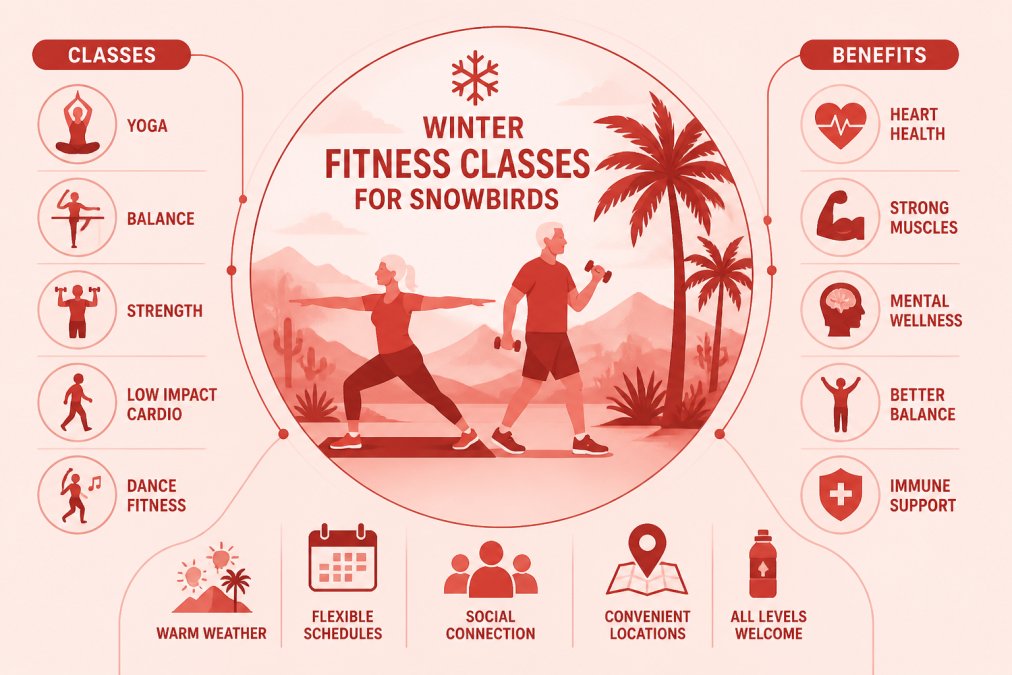
Winter fitness classes for snowbirds transform your seasonal stay from passive relaxation into an active, connected experience. Whether you choose water aerobics for joint-friendly cardio, chair yoga for mobility work, strength conditioning for bone density, or flexibility training for range of motion, the key is finding a class that matches your needs and keeps you coming back.
Ready to book your winter getaway? Explore our vacation rental homes for flexible seasonal accommodations that support an active lifestyle, or browse our hotel and resort options for full-service amenities including on-site fitness facilities.
Frequently Asked Questions
What are the best low-impact fitness classes for seniors visiting for the winter?
Water aerobics, chair yoga, and stability training are ideal for seniors seeking low-impact options. These classes protect your joints while building cardiovascular health and flexibility. Many community centers and recreational facilities offer beginner-friendly modifications, allowing you to adjust intensity based on your fitness level. Group exercise settings also provide social engagement, which enhances the overall wellness routine.
How do SilverSneakers classes help seasonal residents stay active?
SilverSneakers classes are specifically designed for active aging and offer on-demand workouts at partner facilities. Many snowbirds find these programs valuable because they provide structured fitness programs with exercise modifications for different fitness levels. The community-focused approach helps seasonal residents integrate into local wellness routines quickly, making it easier to maintain preventative health during your winter stay.
Are there fitness programs designed specifically for snowbirds in the Coachella Valley?
Yes, many community centers and recreational facilities in the area offer senior fitness programs tailored for seasonal residents. These programs understand the unique needs of snowbirds, including flexible membership options for shorter stays and beginner-friendly classes that don’t require long-term commitment. Look for facilities offering water aerobics, chair yoga, and strength conditioning classes with flexible scheduling.
How can I find accessible indoor exercise options during winter?
Start by contacting local community centers and recreational facilities, which typically list their full class schedules online. Ask about transportation assistance if accessibility is a concern, many facilities offer or can recommend local services. Look for classes that emphasize functional movement and balance improvement, and don’t hesitate to speak with instructors about your fitness level and any physical limitations before joining.
Hotels, Resorts and Vacation Home Booking
If you’re planning an upcoming trip, feel free to browse our directory of Palm Springs and Palm Desert hotels and resorts.
If you prefer extra privacy and a private pool? You can browse Palm Springs and Palm Desert vacation rental homes for your stay.
This article was written using GrandRanker and edited by Collins Omaghe.