Last Updated: November 9, 2026
Quick Summary
Heat exhaustion still happens in winter desert conditions because strong sun and exertion can push the body past its limits even when the air feels cool. Prevent it by drinking water steadily before you feel thirsty, adding salt or an electrolyte source on longer hikes, dressing in vent-friendly layers, and planning hard activity for cooler morning or late afternoon hours.
- Start drinking before you feel thirsty, since thirst is a late signal in dry desert air.
- Use an electrolyte drink or salty snack on hikes longer than an hour to replace lost sodium.
- Remove layers before climbing, because trapped heat can build up even on mild days.
- Plan your hardest activity for early morning or late afternoon, avoiding the strongest midday sun.
- Turn around early if your pace slows or your energy drops, as these are early warning signs.
Table of Contents
- Why Winter Desert Days Still Carry Heat Exhaustion Risk
- Desert Hiking Hydration Tips That Go Beyond Plain Water
- Dressing and Gear to Manage Heat Load in Cool Weather
- Timing Your Activity Around Midday Sun and Microclimates
- Acclimatizing Your Body Before a Desert Trip
- Signs of Heat Exhaustion vs Heat Stroke: How to Tell Them Apart
- Wilderness First Aid for Heat Stress in the Field
- Planning Your Next Desert Outing Safely
- Frequently Asked Questions
Why Winter Desert Days Still Carry Heat Exhaustion Risk
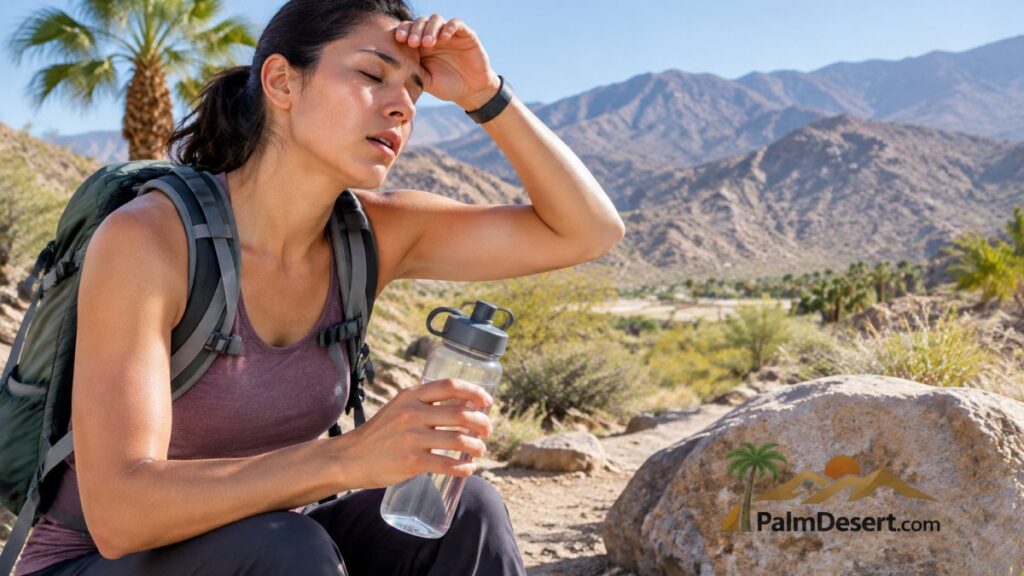
Winter in the desert feels mild, but heat exhaustion still happens. Visitors often underestimate the sun on a clear 70-degree afternoon, especially when they start hiking hard without a plan. Before a trip, many travelers book a stay at one of the Palm Desert and Coachella Valley Exclusive Discounted Rates Hotels and Resorts.
Heat exhaustion occurs when the body loses too much water and salt through sweat and cannot keep its core temperature in check (the CDC). In winter, the warning signs are easy to miss because the air feels cool. Strong sun, dry air, and exertion work together to push the body toward trouble.
The main risk is the gap between how hot it feels and how hard the body is working. A hike uphill in direct sun can raise your body temperature even on a mild day. Plan for that effort, not just the weather report.
Desert Hiking Hydration Tips That Go Beyond Plain Water
Drinking water matters, but water alone does not fully protect you. When you sweat for hours, you lose water and sodium together.
Start drinking before you feel thirsty. Thirst is a late signal, especially in dry desert air where sweat evaporates so fast you may not notice how much you are losing. Sip steadily through the hike instead of gulping large amounts at rest stops. Salty snacks like pretzels, crackers, or a small handful of salted nuts help replace what you lose.
Why Electrolyte Balance Matters More Than Water Alone
Sodium is the main electrolyte lost in sweat, and it helps your body hold on to fluid and keep muscles and nerves working. Heavy sweating removes sodium faster than many people expect, particularly for people who sweat heavily or are not used to dry heat.
Hyponatremia, a dangerous drop in blood sodium, can happen when someone drinks large volumes of plain water over several hours without replacing salt (the CDC). The symptoms, including headache, nausea, confusion, and fatigue, overlap with heat exhaustion, which makes it easy to misread. A common pattern is a hiker who feels worse the more water they drink and never adds salt.
Use an electrolyte drink or a salt-containing snack on longer outings. Pay attention to how you feel. Cramps, headache, and nausea can all signal that your fluid and salt levels need attention.
How Much Water to Carry on a Winter Desert Outing
Your water needs depend on your body size, pace, and how much you sweat. Pack more than you think you need and set a turnaround time so you never run short.
- Carry extra water for emergencies and for sharing.
- Bring an electrolyte source for hikes longer than an hour.
- Drink small amounts on a regular schedule rather than large amounts at once.
- Refill at known water sources only if you have a way to treat the water.
- Track your intake against your planned hours so you notice a shortfall before it becomes a problem.
heat illness prevention guidance
Dressing and Gear to Manage Heat Load in Cool Weather
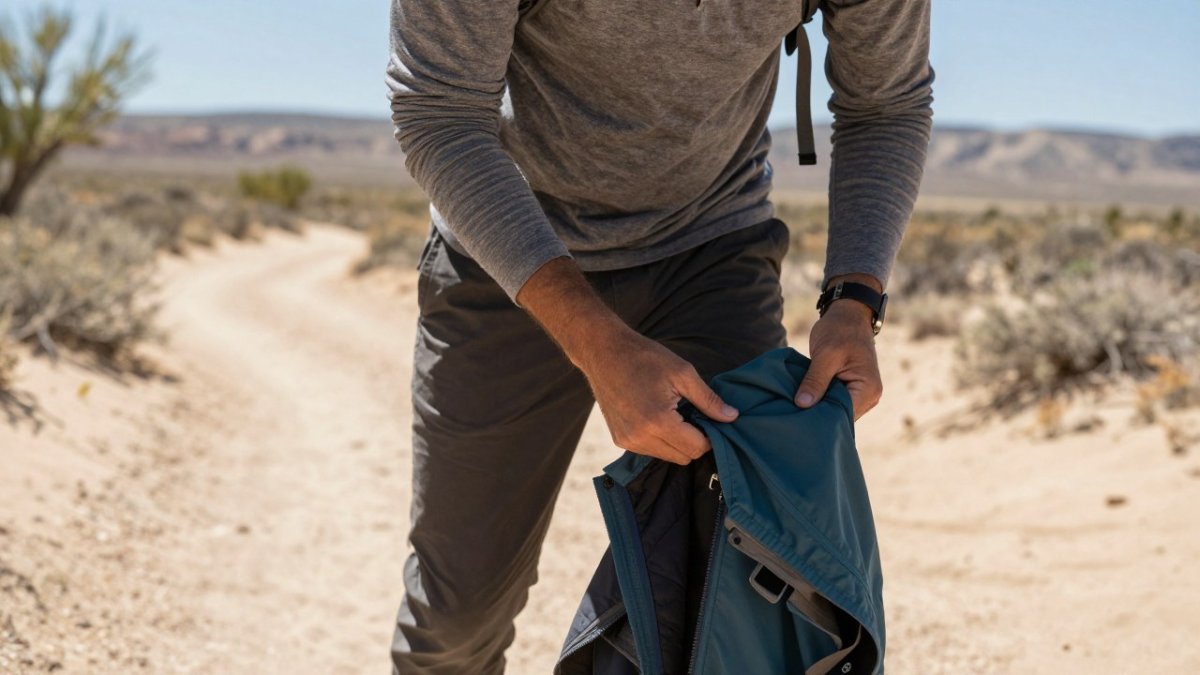
The winter desert creates a layering trap. A trailhead at 7 a.m. can sit near freezing, so most visitors dress for cold and keep every layer on as the sun climbs. By mid-morning the same trail may feel 30 degrees warmer in direct sun, and the insulation that kept you comfortable at dawn now holds heat against your body while you climb.
The fix is to dress for the effort, not the parking lot. Build a system you can vent and shed without stopping for long: a moisture-wicking base layer, a light insulating midlayer, and a thin windproof shell. Avoid cotton next to the skin, because it holds sweat and slows evaporation. Choose light colors on the outer layer to reflect sunlight, and pick fabrics that breathe rather than trap.
How Winter Layers Cause Overheating
Your body cools itself mainly by sweating and letting that sweat evaporate. A heavy jacket, a tight pack against your back, or a hat you never remove all reduce evaporation and trap warm air. On a sustained climb, that trapped heat can push your core temperature up even when the air temperature reads mild.
A common pattern is the stop-start problem: hikers overheat while moving, then chill quickly at rest. Manage it by removing a layer before you start climbing, not after you are already sweating hard. Add layers back at breaks and when the sun drops behind a ridge.
Watch out: a waterproof shell worn on a dry, sunny climb blocks vapor and turns into a sauna. Save it for wind, rain, or the cold descent.
Sun Protection Still Matters in Winter
Ultraviolet intensity in the desert does not drop with the air temperature. A wide-brimmed hat, UV-blocking sunglasses, and broad-spectrum sunscreen protect your face, ears, neck, and hands. A lightweight long-sleeve shirt shields your arms while still letting heat escape, which beats bare skin for both sun and sweat management.
Gear That Helps You Dump Heat
- A ventilated pack with a mesh back panel reduces the hot spot where the pack meets your spine.
- A hydration bladder with a clear tube makes steady sipping easy so you drink before thirst sets in.
- A small cooling towel or bandana soaked in water and worn on the neck speeds cooling at rest stops.
- A lightweight sun umbrella or shade cloth helps when you are waiting in exposed terrain.
- A packable wind shell you can add and remove quickly beats one heavy jacket you are reluctant to take off.
Timing Your Activity Around Midday Sun and Microclimates
Even in winter, the sun is strongest between late morning and mid-afternoon. Plan your hardest activity for early morning or late afternoon when the air and ground are cooler. Learn why early morning hiking is the cooler, safer window in Palm Desert. Peak sun hours are the most dangerous window for heat stress.
Desert microclimates vary. Canyons, rocky slopes, and sheltered washes can trap warm air, while higher elevations may stay cooler. Check conditions at the trailhead and ask about shade along the route. A trail that feels comfortable at dawn can heat up quickly by noon. If you want a planned day without guesswork, Desert Adventure Ticket Sales can help you line up guided outings scheduled for the cooler hours.
Build in shade breaks and rest stops, and choose routes with natural shade where you can. Turn around early if you notice your pace slowing or your energy dropping.
The article’s guidance on timing and conditions can be scanned at a glance, so here is how the risk factors and the safer approach line up.
| Factor | Risk or guidance | Note |
|---|---|---|
| Peak sun window | Late morning to mid-afternoon | Most dangerous heat stress period |
| Best time to hike | Early morning or late afternoon | Air and ground are cooler |
| Canyons and washes | Can trap warm air | Microclimates vary |
| Higher elevations | May stay cooler | Check conditions at trailhead |
| Shade along route | Ask at trailhead | Choose routes with natural shade |
| Turnaround signal | Slowing pace or dropping energy | Turn back early |
Acclimatizing Your Body Before a Desert Trip
Your body adjusts to heat over time. This process, called acclimatization, usually takes about one to two weeks of gradual exposure. Visitors coming from cooler climates often feel the strain more during their first days.
Start with shorter, easier walks and increase distance and intensity slowly. Give yourself a few days to adjust before tackling long hikes or strenuous activity. Drink fluids consistently during these early days to help your body adapt.
Plan a lighter schedule for your first day or two. Rest when you feel tired, and watch for early warning signs like unusual fatigue or dizziness.
Signs of Heat Exhaustion vs Heat Stroke: How to Tell Them Apart
Heat exhaustion is the earlier, less severe stage. Before heading onto desert trails, check Palm Springs trail difficulty, fees, and safety advice. Common signs include heavy sweating, cool or clammy skin, headache, muscle cramps, nausea, dizziness, and fatigue. The person is usually still alert and able to respond.
Heat stroke is a medical emergency. Its signs can include confusion, slurred speech, a very high body temperature, fainting, or seizures. Heat stroke is a serious condition that requires quick treatment.
If someone shows signs of heat stroke, call emergency services right away. Do not wait to see whether symptoms improve. While help is on the way, move the person to shade and start cooling them.
Psychological Signs of Heat Stress People Miss
Heat stress can change how you think, not just how you feel physically. Irritability, poor judgment, and unusual carelessness are early clues that many hikers ignore. You might decide to push on to a viewpoint when you should turn back.
Watch your companions too. If someone seems confused, withdrawn, or stubborn about resting, treat it as a warning sign. A short break with water and shade often helps clear the fog.
Wilderness First Aid for Heat Stress in the Field
For heat exhaustion, move the person to shade or an air-conditioned spot if possible. Loosen tight clothing and remove extra layers. Offer water or an electrolyte drink in small sips. Cool the skin with wet cloths or a cooling towel.
Have them rest and monitor their condition. If symptoms worsen or do not improve with rest, seek medical care. Do not let someone with heat exhaustion keep hiking alone.
For suspected heat stroke, call 911 immediately. Cool the person as quickly as you can while you wait. Focus on the neck, armpits, and groin with cold packs or wet cloths. Stay with them until help arrives.
Trail conditions and access points change, so check current advice before you head out.
Planning Your Next Desert Outing Safely
A safe desert outing starts before you leave home. Choose a route that matches your fitness and the day’s forecast. Compare Palm Desert trail difficulty levels and elevation gain to find the right fit. Share your plan with someone who is not on the trip, and set a turnaround time.
Pack enough water and an electrolyte source, wear light and loose clothing, and carry sun protection. Begin early, take regular breaks, and know the signs of heat exhaustion and heat stroke. Acting early keeps a small problem from becoming an emergency.
Explore Online Trip Travel Planning and Palm Desert News and Blog Posts to help plan your visit.
Frequently Asked Questions
Can you get heat exhaustion in the desert during winter?
Yes. Winter days in the desert can still climb well above what visitors expect, and sun exposure, exertion and dry air all add to fluid loss even when the air feels cool. Many people underestimate the risk because the temperature feels mild, yet the body loses water through sweat and breathing at a steady rate during hiking. Heat exhaustion depends on how hard you work and how much fluid and electrolytes you replace, not only on the thermometer reading. Plan hydration and pacing as you would in warmer months, and check the forecast for midday highs before you leave.
How much water should I carry for winter desert activities?
Carry more than you think you need and adjust your intake to your sweat rate, the trail length and how far you are from help. Dry air causes fluid loss that is easy to miss, so drink before you feel thirsty. Pair water with a source of electrolytes, such as a sports drink or salty snacks, for longer outings. Pack a little extra in case the hike takes longer than planned.
What are the early warning signs of heat exhaustion?
Early signs include heavy sweating, dizziness, headache, nausea, muscle cramps, fatigue and unusual irritability or confusion. Some people also become unusually quiet, clumsy or less focused on decisions, which is easy to dismiss as tiredness. If you notice these symptoms, stop activity, move to shade, sip fluids with electrolytes and cool the skin with cool compresses. Symptoms that worsen or do not improve with rest need prompt medical attention.
What should I do if I suspect heat exhaustion while hiking?
Stop hiking and move to the nearest shade. Loosen clothing, sip water or an electrolyte drink in small amounts, and apply cool, damp cloths to the neck, armpits and groin. Rest until you feel better before continuing, and do not go back to strenuous activity the same day. If symptoms escalate, such as confusion, a very high body temperature or fainting, treat it as a possible heat stroke and call emergency services immediately.