Table of Contents
- Best Hiking Trails in Palm Springs: A Quick Overview
- Easy Hiking Trails in Palm Springs for Families and Beginners
- Indian Canyons Hiking: Palm Springs’ Most Iconic Trails
- Palm Springs Aerial Tramway Hiking and Mountain Trails
- Permits, Entrance Fees, and Parking Availability
- How Much Water to Bring on a Hike in Palm Springs
- Best Time of Year to Hike and Real-Time Trail Conditions
- Photography, Scenic Overlooks, and Post-Hike Amenities
Last Updated: August 1, 2026
Best Hiking Trails in Palm Springs: A Quick Overview
The best hiking trails in Palm Springs span shaded canyon walks lined with California fan palms to high-altitude wilderness terrain above 8,500 feet. This guide from Visitor Center for Palm Desert & Palm Springs covers the trails that consistently deliver the most rewarding experiences, organized by difficulty, logistics, and what makes each one worth your time.
A hike that’s pleasant in January can become genuinely dangerous in July. Getting that context right before you lace up is the difference between a great day out and a medical emergency.
Quick Trail Overview:
| Trail | Difficulty | Distance | Best For |
|---|---|---|---|
| Murray Canyon | Easy | 3.8 miles out-and-back | Families, beginners |
| Tahquitz Canyon Loop | Easy-Moderate | 1.9 miles loop | Cultural history, waterfall |
| Andreas Canyon | Easy | 1.0 mile loop | Quick day hike, wildlife spotting |
| Palm Canyon | Moderate | Up to 15 miles | Serious hikers, native flora |
| San Jacinto Peak (via Tram) | Challenging | 5.5 miles round trip | Summit seekers, panoramic views |
| Desert View Trail (Tram) | Moderate | 1.5 miles loop | Scenic overlooks, accessible |
Easy Hiking Trails in Palm Springs for Families and Beginners
Easy hiking trails in Palm Springs are genuinely accessible. Murray Canyon and the Tahquitz Canyon Loop offer rewarding scenery without punishing elevation gain.
Murray Canyon Trail
Murray Canyon Trail is a 3.8-mile out-and-back day hike within the Indian Canyons system, offering one of the most lush and shaded experiences in the Coachella Valley. The trailhead sits at the end of South Palm Canyon Drive with relatively flat terrain and minimal switchbacks.
What makes Murray Canyon special is the density of California fan palms and the seasonal creek running through it. The canyon walls rise steeply on both sides, creating natural shade. Wildlife spotting is excellent: bighorn sheep, various bird species, and lizards are common sightings.
Parking fills fast on weekends between November and April. Arrive before 8:00 a.m. to secure a spot.
Murray Canyon sees the most foot traffic on Saturday mornings from December through March. Weekday mornings in the same window are noticeably quieter with better light for photography.
Tahquitz Canyon Loop
Tahquitz Canyon pairs a short 1.9-mile loop with genuine cultural and historical depth. The Agua Caliente Band of Cahuilla Indians manages this canyon, and the experience reflects that stewardship directly.
The loop trail climbs gently to a 60-foot waterfall, the visual centerpiece of the hike. Granite boulders and narrow canyon walls have shaped Cahuilla cultural heritage for centuries. Rangers lead guided tours daily, which are worth taking for the historical context.
Indian Canyons Hiking: Palm Springs’ Most Iconic Trails
Indian Canyons hiking is the defining outdoor experience of Palm Springs. The five canyons managed by the Agua Caliente Band of Cahuilla Indians contain the largest natural fan palm oasis in North America, with trail networks for everyone from casual walkers to serious day hikers.
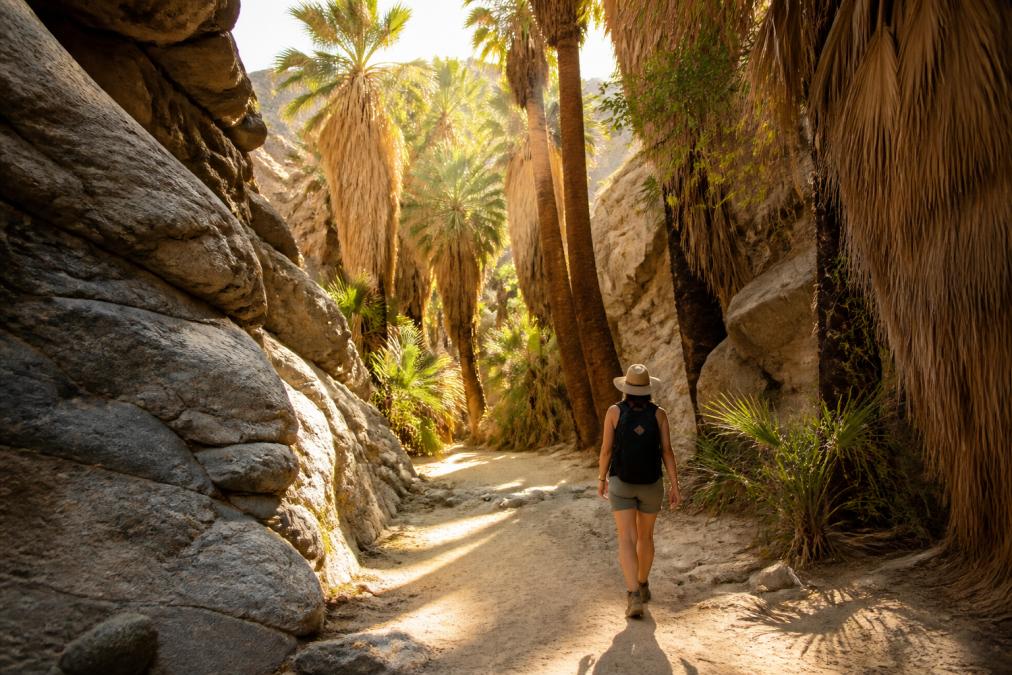
Andreas Canyon and Palm Canyon Trails
Andreas Canyon Trail is a 1.0-mile loop that ranks as one of the most accessible and visually rewarding easy hiking trails in the system. The trail follows a seasonal stream through a dense grove of fan palms, with rock formations pressing close on both sides.
Palm Canyon Trail is the longer, more ambitious option. The full out-and-back extends up to 15 miles, but most visitors hike the first 2-3 miles to the main palm oasis and turn around. The elevation gain is gradual but cumulative over longer distances.
According to the Agua Caliente Band of Cahuilla Indians official tribal website, the Indian Canyons area has been home to the Cahuilla people for thousands of years, and the cultural heritage embedded in these trails is as significant as the scenery itself.
Both trails share the same entrance on South Palm Canyon Drive. The entrance fee applies to both (see the Permits and Fees section below). The area is open from 8:00 a.m. to 5:00 p.m. daily, with seasonal closures during summer months when extreme heat makes desert hiking hazardous.
Palm Canyon’s first mile is crowded and photogenic. Miles two through four are where the trail earns its reputation. If you have the water and the time, keep walking.
Palm Springs Aerial Tramway Hiking and Mountain Trails
Palm Springs Aerial Tramway hiking is a completely different category from canyon hiking. The tram rises from the desert floor at 2,643 feet to Mountain Station at 8,516 feet in about 10 minutes. The temperature difference at the top typically runs 30-40 degrees cooler than the valley floor.
Moderate and Challenging Trails Above the Tram
The trail network in Mount San Jacinto State Park, accessible from the tram’s upper station, offers some of the most dramatic wilderness area hiking in Southern California. The Desert View Trail is a 1.5-mile loop that stays accessible for most fitness levels and delivers panoramic views across the Coachella Valley.
For hikers seeking a genuine challenge, San Jacinto Peak sits at 10,834 feet and requires a permit. The round trip from Mountain Station covers approximately 11 miles with significant elevation gain. Most hikers allow a full day for this summit attempt.
The Long Valley Trail and the Round Valley Loop are solid moderate difficulty options that provide altitude exposure and sweeping views without the full commitment of a summit push. These loop trails are well-marked and well-maintained, though snow can linger on north-facing slopes well into April.
According to California State Parks’ Mount San Jacinto State Park information, wilderness permits are required for overnight camping and are strongly recommended for the San Jacinto Peak day hike. Day-use permits are available at the ranger station near the tram’s upper station.
Permits, Entrance Fees, and Parking Availability
Permits and entrance fees for Palm Springs hiking vary by location, and getting this wrong means turning around at a trailhead.
Indian Canyons: The Agua Caliente Band of Cahuilla Indians charges an entrance fee for access to all five canyons, including Andreas Canyon, Palm Canyon, Murray Canyon, Maynard Mine Canyon, and Fern Canyon. Fees apply to adults and children separately, with reduced rates for tribal members and seniors. Check the official tribal website for current pricing before you go.
Tahquitz Canyon: This canyon charges a separate entrance fee, also managed by the Agua Caliente tribe. The fee includes access to ranger-led tours, which run several times daily. Tahquitz Canyon is closed during summer months, typically from June through September, due to extreme heat and flash flood risk.
Palm Springs Aerial Tramway: The tram charges a round-trip fare for the ride itself. This fee is separate from any state park fees. Parking at the Valley Station is free. The tram runs daily except for maintenance days, which are typically announced on the official tram website.
Mount San Jacinto State Park Wilderness Permits: Day-use wilderness permits are free but required. They can be picked up at the ranger station at Mountain Station. Overnight permits require advance reservation through the California State Park reservation system.
Tahquitz Canyon closes completely in summer and does not offer refunds for visitors who arrive during closure periods. Check the official calendar before building your itinerary around this trail.
Parking availability is the practical bottleneck at most trailheads. The Indian Canyons parking lot fills by 9:00 a.m. on winter weekends. Arriving before 8:00 a.m. solves this problem at every location.
How Much Water to Bring on a Hike in Palm Springs
The standard recommendation for desert hiking is a minimum of one liter of water per hour of active hiking. Heat exhaustion is the most common trail emergency in the Coachella Valley, and it develops faster than most hikers expect.
For a 2-hour hike like Murray Canyon or the Tahquitz Canyon Loop, carry at least 2 liters per person. For longer hikes like the full Palm Canyon Trail or any route above the tram, 3-4 liters is appropriate. Children and older adults should carry more, not less.
What to Pack for Desert Hiking Beyond Water
Desert hiking gear requirements go beyond water. Sun protection is non-negotiable: a wide-brim hat, UPF-rated clothing, and sunscreen with SPF 30 or higher are baseline requirements.
A practical desert day hike kit includes:
- Water: minimum 1 liter per hour of hiking
- Sun protection: hat, sunscreen, UPF shirt
- Navigation: downloaded offline trail map via AllTrails or Gaia GPS
- First aid: a compact kit like the Adventure Medical Kits Ultralight/Watertight .7
- Footwear: trail shoes with grip suited to loose rocky terrain
- Snacks: calorie-dense, heat-stable options (nuts, bars, dried fruit)
- Emergency: a whistle and a charged phone with offline maps downloaded
According to the National Park Service’s desert safety guidelines, most desert hiking emergencies are preventable and trace back to inadequate water, poor timing, and underestimating heat exposure. Starting hikes at dawn and finishing before noon eliminates most heat-related risk on trails below the tram.
Best Time of Year to Hike and Real-Time Trail Conditions
The best time of year to hike in Palm Springs is November through March, when daytime temperatures in the canyons typically range from the mid-50s to the low 70s Fahrenheit. This window aligns with peak tourist season for good reason: the desert is genuinely pleasant, the light is extraordinary, and the native flora is at its most varied.
April and October are shoulder months. Morning hikes are still comfortable, but afternoon temperatures can climb into the 90s, making early starts essential. May through September is when desert hiking shifts from recreational to risky for canyon-level trails.
Above the tram, summer is the preferred season for San Jacinto Peak and the surrounding wilderness area, when cool temperatures make high-altitude hiking comfortable. Winter brings snow and ice to the upper trails, requiring microspikes and cold-weather experience.
Real-time trail conditions are essential. Seasonal closures, flash flood damage, and trail maintenance can affect access with little notice. The most reliable sources for current conditions:
- AllTrails community reviews, updated by hikers within hours of a visit
- The Agua Caliente tribal website for Indian Canyons closures
- California State Parks for Mount San Jacinto conditions
- The Palm Springs Aerial Tramway’s official site for tram operation status
Flash flood risk is real in the canyons during monsoon season (July through September) and after heavy winter rains. Check weather forecasts for the full watershed, not just the immediate area.
Public transit note: The SunBus system operated by Sunline Transit Agency provides service along Palm Canyon Drive, with stops connecting to the Indian Canyons entrance area. Check current schedules directly with Sunline, as routes are updated periodically.
Photography, Scenic Overlooks, and Post-Hike Amenities
Palm Springs trails offer some of the most photogenic terrain in the American Southwest.
Best photography locations:
- Murray Canyon: The palm grove at the canyon’s midpoint, best shot in early morning when light filters through the fronds at a low angle.
- Andreas Canyon: The rock formations immediately adjacent to the stream crossing, most saturated in the hour after sunrise.
- Desert View Trail (above the tram): Panoramic views looking southwest across the Coachella Valley are best captured in late afternoon.
- Tahquitz Canyon Waterfall: The falls photograph best in winter and early spring when flow is strongest.
For photographers, the Indian Canyons system rewards very early arrival. The gates open at 8:00 a.m., and the first 30 minutes offer the best combination of soft light and minimal foot traffic.
Post-hike recovery and amenities are well-developed in Palm Springs. Downtown Palm Springs is 10-15 minutes from most trailheads, offering dining, spa services, and hotel pools. The Spa Resort Casino, operated by the Agua Caliente Band, offers mineral pool access that functions as a natural post-hike recovery option.
For hikers planning a full day in the canyons, the Indian Canyons Trading Post near the entrance sells water, snacks, and basic supplies.
Visitor Center for Palm Desert & Palm Springs maintains up-to-date listings of dining options, spa amenities, and local events near the trailheads. The Leave No Trace Center for Outdoor Ethics trail guidelines provides the definitive framework for minimizing impact on desert ecosystems.
Planning the best hiking trails in Palm Springs doesn’t require guesswork if you have reliable, current information. Visitor Center for Palm Desert & Palm Springs consolidates that information in one place, with curated local coverage of the Coachella Valley that goes beyond basic trail listings. From up-to-date local news and dining recommendations to event schedules and accommodation options, the platform is built for visitors who want to spend their time hiking, not researching. Subscribe to stay current on trail conditions, seasonal events, and the best the desert has to offer.
Frequently Asked Questions
What are the best easy hikes in Palm Springs?
Murray Canyon Trail and the Tahquitz Canyon loop are two of the most popular easy hiking trails in Palm Springs. Both are kid-friendly, well-marked, and offer impressive desert scenery without demanding elevation gain. Murray Canyon features a seasonal waterfall and native fan palms, while Tahquitz Canyon is known for its 60-foot waterfall and Cahuilla cultural heritage. Entrance fees apply at both locations, so check current rates before you go.
Are Palm Springs hiking trails free?
Not all of them. Indian Canyons and Tahquitz Canyon charge entrance fees, which help fund trail maintenance and preserve the Agua Caliente Band of Cahuilla Indians’ tribal lands. The Palm Springs Aerial Tramway requires a separate tram ticket to access the mountain station trails. Some city-managed trailheads have free parking and no admission fee. Always verify current fees on the managing agency’s official website before your visit, as pricing can change seasonally.
What is the best time of year to hike in Palm Springs?
October through April is the prime season for desert hiking in Palm Springs. Daytime temperatures are comfortable, typically ranging from the 60s to low 80s°F, making day hikes genuinely enjoyable. Summer months bring extreme heat, often exceeding 110°F on valley floor trails, which creates serious heat exhaustion risk. If you hike in summer, start before 7 a.m. and stick to higher-elevation routes like the Aerial Tramway trails where temperatures are significantly cooler.
How much water should I bring for a hike in Palm Springs?
A standard recommendation for desert hiking in an arid climate like Palm Springs is at least half a liter of water per hour of activity. On a two-hour moderate trail, that means bringing a minimum of one liter, though carrying two liters is a safer choice given the heat. On longer or more challenging trails with significant elevation gain, bring even more. A hydration pack like the Osprey Skarab 30, which includes a 2.5-liter reservoir, makes staying hydrated on the trail much easier.
Are dogs allowed on hiking trails in Palm Springs?
Dog policies vary by trail. Dogs are generally not permitted inside Indian Canyons or Tahquitz Canyon, which are managed by the Agua Caliente Band of Cahuilla Indians. Some city and county-managed trails do allow leashed dogs. Hot pavement and rocky terrain can injure paw pads, and heat poses serious risks to pets. Always check the specific trail’s rules before bringing your dog, and carry extra water for them if permitted.
What is the most famous hike in Palm Springs?
Palm Canyon Trail inside Indian Canyons is widely regarded as the most iconic palm springs hiking experience. It runs through the world’s largest native California fan palm oasis, offering stunning geological features, native flora, and panoramic views. The trail is accessible as an out-and-back or loop trail, with options for both casual walkers and those seeking a longer day hike. Entrance fees apply, and the canyon is managed by the Agua Caliente Band of Cahuilla Indians.
———-
Links to all the greater Palm Springs area Hotels and Resort and Palm Springs area Vacation Rental Homes
———–
This PalmDesert.com article was written using GrandRanker Services and edited by Tech.readywriter@gmail.com