
Table of Contents
- Why Hidden Waterfall Hikes Near Palm Desert Are Worth the Trek
- When Water Actually Flows: Seasonal Timing for Desert Waterfalls
- 5 Hidden Waterfall Hikes Near Palm Desert You Can Reach This Season
- What Makes These the Best Hiking Trails in Coachella Valley
- Desert Hiking Safety Tips: Flash Floods, Heat, and Hydration
- Permits, Parking, and Trailhead Access: What to Know Before You Go
- Conclusion: Plan Your Waterfall Hike and Stay in the Desert
- Frequently Asked Questions
Last Updated: September 5, 2026
Why Hidden Waterfall Hikes Near Palm Desert Are Worth the Trek
Most people picture the Coachella Valley as endless sun and sand, which makes the idea of a waterfall feel almost contradictory. Yet tucked into the surrounding mountains, seasonal waterfalls appear after winter rains, transforming arid rock into lush, shaded pockets of green. For hikers, these hidden waterfall hikes near Palm Desert offer a rare chance to see the desert in its most vibrant state.
The secret to a successful trip is timing and preparation. A waterfall hike here is a seasonal experience, not a year-round guarantee.
When Water Actually Flows: Seasonal Timing for Desert Waterfalls
These waterfalls are fed by winter rainfall and snowmelt, not permanent springs. The window for reliable flow typically runs from late winter through early spring, peaking between February and April. By late May, most falls slow to a trickle or dry up completely.
A common mistake is showing up in summer expecting the postcard scene. Instead, check recent rainfall patterns and call the managing agency before you go.
How to Check Real-Time Flow Before You Go
Most published guides are static, but water conditions change week to week. Here is how to get a real-time picture before you commit.
1. Check the Rain Gauges, Not Just the Forecast
The waterfalls depend on rain that fell upstream in the San Jacinto and Santa Rosa Mountains. The National Weather Service maintains publicly accessible precipitation data for the region. Look at accumulated rainfall for the past 7 and 30 days at stations near the canyon watersheds, not just the forecast for Palm Desert itself.
2. Call the Managing Agency Directly
A phone call beats any website. The ranger stations for the Agua Caliente Band of Cahuilla Indians (which manages Tahquitz, Andreas, Palm, and Murray Canyons) and the Bureau of Land Management (which oversees Pushawalla Canyon) can tell you whether water is currently running. Ask: “Is the waterfall flowing, or is it just a damp seep?”
3. Use Recent Trip Reports as a Proxy
Hikers often post current conditions on trail forums and social media within days of visiting. Search for the specific canyon name plus “waterfall” or “flow” and filter by the past week.
4. Read the Sky: The 72-Hour Rule
The best flow occurs within 72 hours after a significant rain event, provided the skies have cleared. If rain is actively falling or forecast within 24 hours, do not enter a narrow canyon.
:::warning Flash Flood Awareness
Water flow is a double-edged sword. The same rain that creates the waterfalls can create deadly flash floods. Always check the National Weather Service flash flood watch status for the Coachella Valley before entering any canyon, and never hike if rain is in the forecast.
:::
5 Hidden Waterfall Hikes Near Palm Desert You Can Reach This Season
These five trails are the most reliable bets for seeing water, ranging from easy, family-friendly strolls to moderate treks with real elevation gain.
1. Tahquitz Canyon: The Classic Desert Oasis
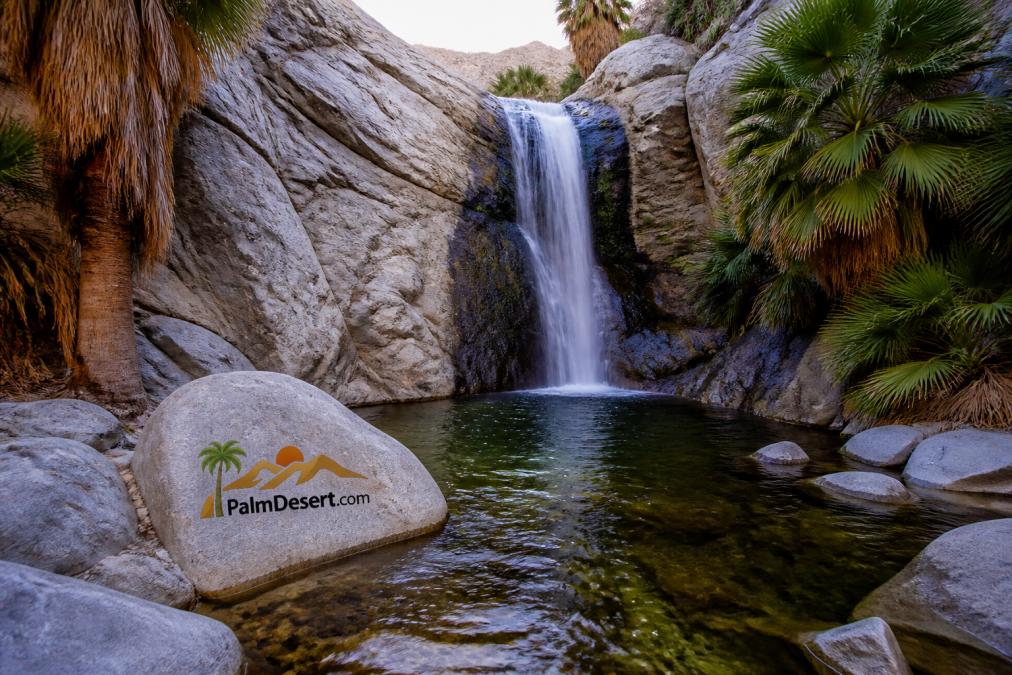
This is the most accessible and popular choice for a reason. The trail follows a shaded canyon lined with native flora, leading to a 60-foot seasonal waterfall that pools in a rocky basin.
Tahquitz Canyon hiking guide essentials: arrive early, as the parking lot fills quickly on weekends. The trail is well-maintained, and the visitor center provides context on the area’s cultural history. Expect two to three hours round trip, and bring plenty of water even on cool days.
2. Andreas Canyon: A Shaded Canyon Loop
Andreas Canyon offers a shorter, easier loop perfect for families. The trail meanders through one of the largest stands of California fan palms in the world, creating a shaded microclimate that feels degrees cooler than the surrounding desert.
The loop is only about a mile, making it one of the best hiking trails in Coachella Valley for a quick escape. Wildlife spotting is excellent, with bighorn sheep occasionally visible on the rocky slopes.
Book Palm Desert Hotels Here →
3. Palm Canyon: The Longest Stretch of Native Flora
For those wanting a longer trek, Palm Canyon delivers. This trail descends into a vast canyon floor filled with thousands of palm trees, following a seasonal stream that can flow for over a mile.
This moderate hike is less crowded than Tahquitz, offering a more solitary experience. Bring trekking poles for the rocky sections, and budget a full half-day to explore the canyon’s length.
4. Murray Canyon: The Quiet Swimming Hole Alternative
Murray Canyon is the hidden gem for those seeking solitude. Accessed from the same trailhead as Andreas, this longer hike follows a wide, sandy path before narrowing into a shaded canyon.
The swimming hole is a true highlight, but check water levels before planning a splash. The hike is moderately easy with minimal elevation gain, making it accessible to most walkers.
5. Pushawalla Canyon: A Geologic Slot Experience
Pushawalla offers something different: a narrow slot canyon carved into sandstone, creating a dramatic geologic experience. Water flow here is less predictable, but after heavy rains, small waterfalls and reflective pools appear between the towering walls.
This is an adventure for the more experienced hiker. The trailhead is remote and the path is not always clearly marked, so download a map beforehand. Check for flash flood risk before entering this tight space.
What Makes These the Best Hiking Trails in Coachella Valley
The Coachella Valley offers hundreds of miles of trails, but these five stand out because they combine scenery with a tangible reward: water.
What most guides miss is the variety: the accessible classic in Tahquitz, the family-friendly loop in Andreas, the endurance test in Palm Canyon, the solitude of Murray, and the geological wonder of Pushawalla.
Desert Hiking Safety Tips: Flash Floods, Heat, and Hydration
Desert hiking safety tips start with one hard rule: never enter a narrow canyon when rain is in the forecast. Flash floods can occur miles away and rush down the canyon with little warning.
The desert heat is another serious factor. Hike early in the morning and finish by noon, as afternoon temperatures can be brutal even in spring. Carry at least one liter of water per hour of hiking, wear sun protection, and let someone know your planned route.
Permits, Parking, and Trailhead Access: What to Know Before You Go
Access rules vary by trail, so a little research saves frustration. Tahquitz Canyon is managed by the local tribal authority and charges an entry fee, while Andreas and Murray Canyons are part of a different management area with its own parking pass requirements. Always check current requirements on the official managing agency’s website before heading out.
Parking lots fill early on weekends and holidays, so arrive before 8 a.m. for the best chance at a spot. The trailheads are within the greater Palm Springs area, and drives from Palm Desert are straightforward.
Trailhead-by-Trailhead Access Breakdown
Tahquitz Canyon
The trailhead is at the Tahquitz Canyon Visitor Center on the edge of Palm Springs with a dedicated, paved parking lot. This lot is the smallest of the major canyon lots and fills by 8:30 a.m. on weekends from February through April. Arrive early or plan for a weekday visit.
Andreas Canyon and Murray Canyon
Both trails share the same access point within the Indian Canyons. The parking area is larger than Tahquitz’s but still fills on peak weekends. A key detail: the gate opens at 8 a.m., so plan your arrival for just before then to secure parking and hit the trail with the coolest temperatures.
Palm Canyon
Palm Canyon also departs from the Indian Canyons complex but uses a separate trailhead further down the access road. Because this is a longer hike, the lot turns over more slowly, hikers are gone for four to six hours, so spots do not open up quickly.
Pushawalla Canyon
Book Palm Desert Hotels Here →
Pushawalla is the outlier. The trailhead is on a graded dirt road that requires a high-clearance vehicle, especially after any rain. There is no formal parking lot, just a wide spot off the road. A standard sedan can make it in dry conditions, but do not attempt the road after wet weather.
Getting There Without a Rental Car: The Underserved Option
Most guides assume you have a car, but a significant share of Coachella Valley visitors are staying in Palm Desert hotels or vacation rentals without one.
Public Transit: Limited but Not Impossible
SunLine Transit Agency operates the local bus network. Route 111 runs between Palm Desert and Palm Springs, but the nearest stops are still a significant distance from the canyon trailheads, leaving a 2- to 3-mile walk on roads without continuous sidewalks.
Ridesharing: The Practical Middle Ground
Rideshare services operate throughout the valley and are the most practical car-free option. A ride from central Palm Desert to the Indian Canyons trailhead typically takes 25 to 35 minutes. The key advantage: you can be dropped off without worrying about parking. The key disadvantage: cell service in the canyons can be unreliable, so pre-arrange your pickup time before you lose signal.
Rideshare + Transit Hybrid
A cost-effective strategy is to take SunLine Route 111 from Palm Desert toward Palm Springs, then use a rideshare for the final leg to the trailhead. This cuts the rideshare distance roughly in half.
:::tip The 8 a.m. Gate Strategy
If you are relying on rideshare, time your drop-off for 7:45 a.m. at the Indian Canyons gate. You will be first in line when the gate opens, giving you prime trail conditions and avoiding the parking scramble entirely.
:::
The Bottom Line on Access
If you have a car, arrive early and you will be fine. If you do not, a rideshare is your best bet, just plan the return trip before you lose cell coverage.
Conclusion: Plan Your Waterfall Hike and Stay in the Desert
Chasing hidden waterfall hikes near Palm Desert is one of the most rewarding ways to experience the region’s natural beauty, but it requires timing, preparation, and a flexible mindset.
After a day on the trail, you will want a comfortable place to rest and recover. If you’re planning an upcoming trip, feel free to browse our directory of Palm Springs and Palm Desert hotels and resorts. https://palmdesert.com/hotels/
If you prefer extra privacy and a private pool? You can browse Palm Springs and Palm Desert vacation rental homes for your stay. https://palmdesert.com/vacation-rentals-2/
Plan ahead, hike smart, and enjoy the hidden wonders of the Coachella Valley.
Frequently Asked Questions
Are there waterfalls near Palm Desert that flow year-round?
Most waterfall hikes near Palm Desert flow seasonally. The strongest water typically appears from January through April, following winter rain and snowmelt. Tahquitz Canyon often holds water longer into spring, but by late summer many falls slow to a trickle or dry completely. Check the current flow status before heading out, and time your visit for the cooler months to catch the best views.
Do I need a permit to hike to Tahquitz Canyon?
Yes. Tahquitz Canyon sits within the Agua Caliente Band of Cahuilla Indians reservation, so you need a tribal hiking permit and must pay the entry fee at the visitor center before starting the trail. Rangers staff the trailhead during operating hours, and the proceeds support trail maintenance and cultural preservation. Arrive early, especially on weekends, since the parking lot fills quickly.
Are these hidden waterfall hikes near Palm Desert family-friendly?
Several are. Tahquitz Canyon offers a well-maintained 2-mile round-trip route with a moderate elevation gain, and the visitor center provides context for kids. Andreas Canyon’s 1-mile loop is even easier, making it a strong choice for younger hikers. Save Murray Canyon and Pushawalla Canyon for older children and experienced teens, since those trails have rougher terrain and less reliable shade.
What should I pack for a desert waterfall hike?
Pack more water than you think you need, at least one liter per hour of hiking, plus electrolyte tablets. Wear closed-toe hiking shoes with good traction, since canyon floors stay damp and slippery near water. Bring sun protection, including a hat and sunscreen, even in winter. Check the weather forecast for flash flood risk before you go, and carry a small daypack with snacks and a basic first-aid kit.
