Table of Contents
- Start With the Rules: Vacation Rental Event Policies in Palm Desert
- Your Private Estate Event Planning Checklist, Step by Step
- Hiring Event Vendors for Private Homes: Catering, Valet, and More
- Noise, Parking, and Keeping the Peace With Neighbors
- Insurance, Liability, and Protecting the Property
- Timing Your Event Around Peak Season in the Coachella Valley
- Why Palm Desert Vacation Estates Reward Careful Planners
- Frequently Asked Questions
Last Updated: October 2, 2026
Start With the Rules: Vacation Rental Event Policies in Palm Desert
The first rule of hosting events at Palm Desert vacation estates is simple: the rental agreement decides what you can do, not your guest list. Many hosts assume a large private home means a free hand. It rarely does. Short-term rental rules in the Coachella Valley have tightened in recent years, and code enforcement teams do respond to complaints.
Reading Your Rental Agreement Before You Book
A vacation rental event policy is the section of your rental agreement that states whether gatherings are allowed, how many people may attend, and what fees or deposits apply. Read it before you pay a deposit, not after.
Look for these clauses:
- Maximum occupancy, day and night
- Whether events are banned outright
- Guest conduct and quiet hours
- Security deposit and damage terms
- Parking limits
If the listing is silent on events, ask the property manager in writing. A written yes protects you. A verbal maybe does not.
Occupancy Limits, Curfews, and Good Neighbor Policies
Occupancy limits exist for safety and for neighborhood peace. A good neighbor policy typically caps overnight guests separately from daytime visitors, sets quiet hours, and requires renters to respect property lines.
Most estates also enforce a curfew for outdoor noise. Music that carries past the property line at night is the single most common trigger for a noise violation call.
Booking an estate that sleeps twelve and then inviting forty people is the fastest route to a fine, a shutdown, and a lost security deposit. Match your guest count to the contract before you send invitations.
Your Private Estate Event Planning Checklist, Step by Step
This private estate event planning checklist keeps the legal side and the logistics side moving together. Work through it in order, and confirm each item in writing.
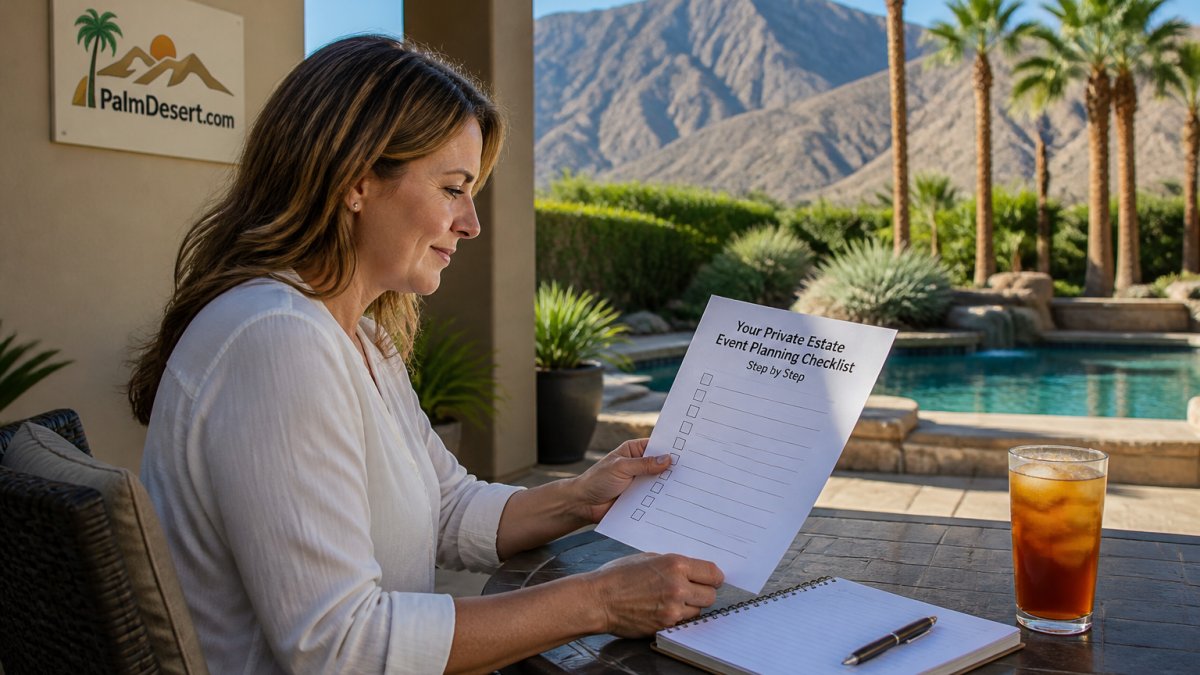
- Confirm the event is allowed in your rental agreement
- Check local permit and zoning requirements for the address
- Set a guest count under the occupancy limit
- Draft a parking and traffic plan
- Notify neighbors if the contract or city requires it
- Book vendors and collect their insurance certificates
- Confirm liability coverage for the event
- Agree on setup, curfew, and cleanup times
- Plan post-event cleanup and damage checks
- Keep a copy of every approval on site
Permits, Zoning, and Code Enforcement Basics
Permits, zoning, and code enforcement rules vary by city and by property. A home in a residential zone may allow a private gathering but not a commercial event.
Check three things:
- Does the address sit in residential zoning?
- Does the city require a permit for gatherings over a set size?
- Are there limits on tents, amplified sound, or catering trucks?
Rules change, so confirm current requirements with the city before you book vendors. Keep every approval on site during the event.
Hiring Event Vendors for Private Homes: Catering, Valet, and More
Hiring event vendors for a private home means asking commercial operators to work in a residential space. A caterer who runs weddings at a hotel ballroom faces a different job at an estate: no commercial kitchen, no loading dock, no designated vendor parking, and neighbors on three sides.
What to ask every vendor before you book
Run the same five questions past catering, valet, rentals, sound, lighting, and security:
- Have you worked a residential address before? If not, walk them through the site in person. Vendors who only know commercial venues routinely underestimate noise carry, parking, and cleanup time.
- Can you provide a certificate of insurance? Ask for general liability and, where they serve or pour, liquor liability. Request that the certificate name the property owner or manager as an additional insured for the event date.
- What is your power draw? Estates often have limited outdoor circuits. Ask for amperage needs and whether they bring a generator. Generators raise their own noise and placement questions.
- What are your delivery and strike windows? Residential streets cannot absorb a tractor-trailer at dinnertime. Set windows that avoid school pickup hours and quiet hours.
- Who is your on-site lead? Get a name and a mobile number. You want one person who can make decisions on site, not a call center.
Catering at an estate
Confirm whether the vendor can work with the kitchen the estate provides or needs a full field kitchen. Ask how they handle grease, gray water, and trash, residential collection cannot absorb commercial volume, so arrange haul-away in advance. If alcohol is served, confirm who holds the license and who carries liquor liability.
Valet and parking vendors
A valet plan is often the difference between a smooth arrival and a parking complaint. Ask the vendor to produce a written plan showing:
- Where cars stage on arrival and departure
- How many attendants will be on site and where they stand
- How they will keep driveways, fire lanes, and mailboxes clear
- What happens if a guest refuses to hand over keys
Give the plan to the property manager before the event. If the street is narrow or the neighborhood has no overnight parking, ask the valet to stack cars on site instead of on the street.
Rentals, sound, and lighting
Agree on delivery windows, setup footprints, and power needs in writing. Tents, stages, and dance floors need to be placed so they do not block egress or sit over irrigation lines. Sound vendors should know the music cutoff time and the direction speakers must face. Lighting vendors should know whether the estate has exterior circuits or whether they need to bring their own power.
Build a one-page vendor sheet with each vendor’s on-site lead, insurance status, arrival window, power needs, and strike time. Keep a copy at the door and one with the property manager. When something goes sideways at 9 p.m., that sheet is what you reach for.
Security and on-site personnel
For larger gatherings, a licensed security presence does two things: it gives you a trained person to handle access control and noise, and it signals to neighbors that the event is managed. Ask the security vendor how they handle a guest who will not leave, and confirm they will not act as parking attendants unless that is in their scope.
The residential premium
Expect vendors to charge more for a residential job than for a commercial one. Setup and strike take longer, parking is tighter, and there is no back-of-house to hide in. Budget for that premium rather than discovering it when a vendor adds a residential surcharge to the final invoice.
Vet vendors for residential experience, not just for their portfolio. The vendor who has never worked a private estate is the one most likely to trigger the noise complaint, block the driveway, or leave the trash behind.
Noise, Parking, and Keeping the Peace With Neighbors
Neighbor complaints drive most enforcement action at short-term rental events, so treat them as a planning problem, not a personality problem. The hosts who avoid fines are not the ones with the quietest parties, they are the ones who told the neighbors what was coming and gave them a way to be heard before they called anyone.
The neighbor notification, done properly
A short note delivered a week ahead does more than a sign on the door. Include:
Book Hotels with Exclusive Discounted Rates Now →
- The date and the start and end times
- A one-line description of the event (a family reunion, a birthday dinner)
- The name and mobile number of the on-site contact, not the property manager’s office line
- A line inviting them to call or text that number first if anything is bothering them
- A note that music will stop at a stated time
Deliver it in person if you can. A knock on the door and a thirty-second conversation buys more goodwill than a printed flyer. If the estate sits next to a full-time resident who works early, ask what time they go to bed and set your music cutoff accordingly.
A sample neighbor note
Hi, I’m hosting a small family gathering at the house on Saturday from 4 to 10 p.m. Music will stop at 9:30. If anything is bothering you, please text me at the number below and I’ll take care of it right away.
Keep it short. The point is to give them a name and a number, not to explain your life story.
Sound: the mechanics that actually work
- Face speakers inward, toward the house, not toward the property line
- Set a hard music cutoff and put one person in charge of enforcing it, not the host, who will be distracted
- Walk the property line at the start of the event and again at peak volume. What sounds fine on the patio can be loud at the fence
- Skip amplified sound entirely for daytime gatherings if the neighborhood is tight. A playlist on a portable speaker is harder to complain about than a DJ setup
- If the estate has a pool, expect sound to carry further across water. Test it before guests arrive
Parking: the plan that prevents the complaint
Parking is the second-most-common trigger. A written plan should cover:
- Where guests park (on-site, valet, or a designated lot)
- How many cars the driveway and street can absorb without blocking anyone
- Who directs arrivals and how they are identified
- What happens if a guest blocks a driveway or a mailbox
Give the plan to the property manager and, if the neighborhood is tight, include a line in the neighbor note about where cars will be. Neighbors who know cars are coming are less likely to call about them.
If a complaint comes in
Respond fast and lower the noise. A quick fix often ends the issue. Ignoring it usually does not, and a second call is what turns a warning into a citation. If a neighbor texts or knocks:
- Acknowledge it and thank them for coming to you first
- Lower the volume or move the gathering inside immediately
- Follow up the next day with a short apology and, if appropriate, a small gesture
Document everything
Keep the neighbor note, the parking plan, the music cutoff time, and any complaint and response in one folder. If code enforcement does visit, a documented good-neighbor effort is the difference between a warning and a fine.
A single ignored complaint can escalate fast. Enforcement teams respond to repeat calls, and the second visit is rarely a warning. Handle the first one like it is the last one.
Insurance, Liability, and Protecting the Property
Liability insurance is not optional when you host an event at a private estate. Standard renters’ policies often exclude commercial gatherings, so read the fine print.
Cover these bases:
- Confirm the owner’s policy covers events, or ask what you must add
- Require vendors to carry their own coverage
- Document the property’s condition before and after
- Agree on a security deposit and damage process in writing
Walk the property with the manager at check-in. Photograph existing damage. This protects you from being charged for something you did not cause.
Timing Your Event Around Peak Season in the Coachella Valley
Timing decides how hard your event will be to run. Peak season brings major regional events, high demand, and tighter rules.
Book early. Vendors, valet, and catering fill up first.
Off-season dates are easier. You get more vendor choice, more flexibility on setup times, and often a calmer neighborhood.
Why Palm Desert Vacation Estates Reward Careful Planners
Careful planners get the estate, the vendors, and the neighbors on the same page before the first guest arrives. That is what keeps an event legal, quiet, and memorable for the right reasons.
The Visitor Center for Palm Desert helps you plan the whole trip, not just the party. Browse our vacation rental homes for a private pool and extra space, or check desert events to time your gathering around the season. Our travel planning tools pull local rules, venues, and logistics into one place, so nothing gets missed.
Frequently Asked Questions
What permits are required for hosting events at private vacation rentals?
It depends on your city and the size of your gathering. In many Coachella Valley jurisdictions, small private gatherings at a Palm Desert vacation estate may not need a permit, but larger events or anything with amplified sound, catering, or valet services often require a temporary use permit or special event permit. Check with the city planning or code enforcement office before booking vendors. Your rental agreement may also require written owner approval, and some HOAs add their own layer of rules.
How do I ensure my event complies with local noise ordinances?
Start by confirming the curfew and decibel limits that apply to your property’s zone. Most desert-area ordinances restrict amplified sound after a set evening hour, and a noise violation can trigger a fine or shut down your event. Keep speakers angled away from property lines, hire a sound professional who can monitor levels, and set a hard end time in your vendor contracts. Telling neighbors in advance about your schedule also reduces the chance they call code enforcement instead of you.
What should be included in an event contract for a vacation rental?
A solid contract names the exact event date and hours, the maximum guest count, and the areas of the property that are off limits. Add clauses for security deposit terms, property damage responsibility, vendor insurance requirements, and cleanup expectations. Include a noise curfew and a parking plan so everyone knows the rules. If the owner requires onsite personnel during the event, spell out who that is and what they are responsible for. Get everything in writing before you pay any deposit.
How do I choose the right vacation estate for a private event?
Match the property to your guest count and event style before you fall in love with photos. Confirm the occupancy limit, whether events are allowed at all, and how much parking the driveway and street can absorb. Check the distance to neighbors, since a home on a large lot reduces noise complaints. Ask about outdoor power, restroom capacity, and shade for daytime gatherings. Read recent reviews for mentions of noise issues or strict rules, then visit in person if you can.
Hosting an event at a private estate takes more planning than booking a venue, because you carry the compliance work yourself. Visitor Center for Palm Desert & Palm Springs makes that easier with curated vacation rentals, up-to-date local event listings, and trip planning resources built for the Coachella Valley. Start your planning with us and host with confidence.