Table of Contents
- Comparing Palm Desert Neighborhoods for Long Term Stays
- Walkable Neighborhoods Near Shopping and Dining
- Luxury Golf Course Communities for Extended Stays
- Finding Long Term Vacation Rentals in Palm Desert
- Seasonal Rental Tips for Palm Desert Stays
- HOA Dues and Rental Regulations: What Long Term Visitors Should Know
- Long Term Stay Logistics: Remote Work, Car-Free Living, and Seasonal Climate
- Frequently Asked Questions
Last Updated: October 2, 2026
Comparing Palm Desert Neighborhoods for Long Term Stays
Choosing the best neighborhoods for long term Palm Desert stays comes down to three trade-offs: walkability versus quiet, golf-course living versus everyday convenience, and tourist energy versus residential calm. This guide breaks down each area by lifestyle, so you can match a neighborhood to how you actually want to spend a month or a season.
Long term palm desert stays reward renters who think beyond the weekend.
Walkable Neighborhoods Near Shopping and Dining
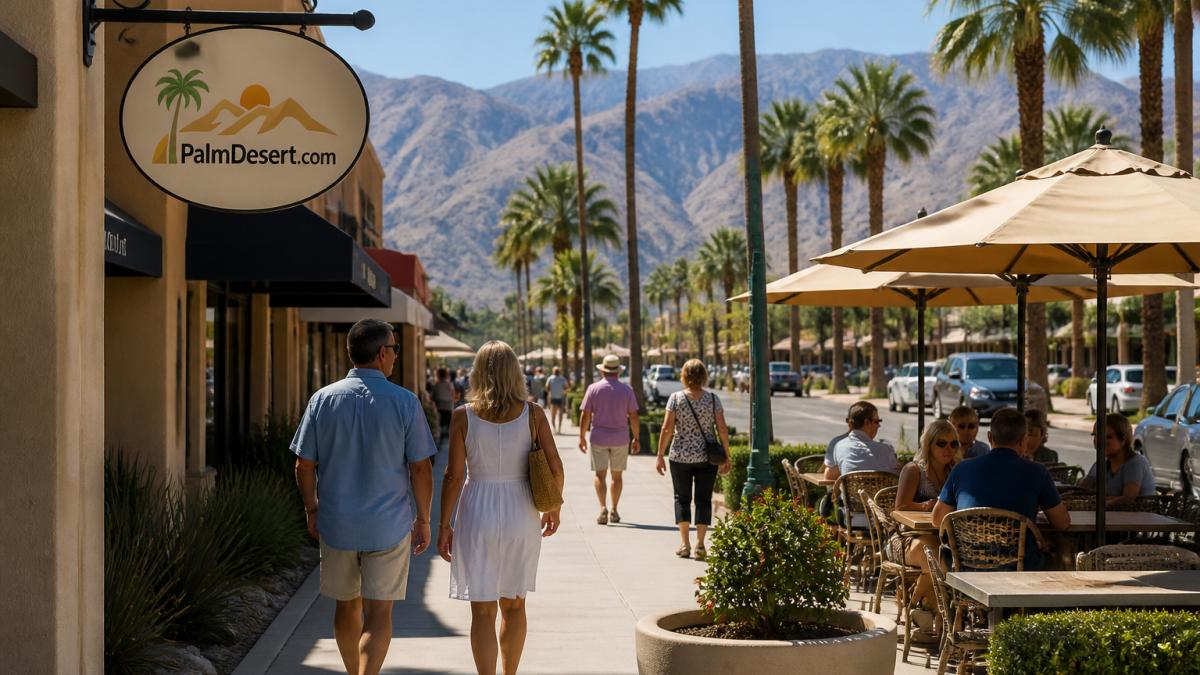
The most walkable long term areas cluster around El Paseo and the retail corridors of Highway 111, where shopping, dining, and services sit within a few blocks. For anyone staying a month or longer without a car, this is the zone that works.
- Best for: Car-free visitors, couples, anyone who wants dining and shopping on foot
- Watch out for: Peak-season traffic and higher short-term rental density
- Walkability: Highest in the city, with groceries and pharmacies nearby
Luxury Golf Course Communities for Extended Stays
Golf course communities deliver the classic desert-living experience: gated streets, manicured fairways, and scenic views of the Santa Rosa Mountains. These luxury enclaves suit extended stays where privacy and quiet matter more than proximity to nightlife.
- Best for: Retirees, golfers, snowbirds seeking a quiet residential neighborhood
- Watch out for: HOA rules that restrict short-term and seasonal rentals
- Amenities: Private pools, clubhouses, tennis and pickleball courts
Finding Long Term Vacation Rentals in Palm Desert
When you inquire about a monthly rental, ask the property manager two questions upfront: whether the owner accepts a 30-day lease and whether utilities are included. Those two answers save the most back-and-forth.
For a curated look at private homes with pools, browse the Palm Desert vacation rental homes directory to compare options by neighborhood.
Seasonal Rental Tips for Palm Desert Stays
Seasonal rental tips palm desert visitors rely on come down to timing and flexibility. Demand peaks from January through April, when snowbirds and event crowds fill the valley, so booking early matters most in those months.
- Book peak-season stays several months ahead
- Confirm the lease length the owner requires
- Ask how utilities and pool service are handled
- Check whether the community allows rentals at all
HOA Dues and Rental Regulations: What Long Term Visitors Should Know
HOA dues and rental regulations shape where you can legally stay for an extended period. In planned and gated communities across the valley, the homeowners association, not the city, sets the rules that decide whether a 30-day, 60-day, or seasonal lease is even permitted. Renters rarely pay dues directly, since the owner covers them, but those dues and the association’s governing documents dictate what any landlord can legally offer you.
The three rules that actually block long stays
Most rental rejections for extended stays trace back to one of three governing-document provisions:
- Minimum lease term. Many associations require a minimum of 30 days, and a smaller set push that to 60 or 90 days. A 30-day minimum is friendly to long-stay renters; a 90-day minimum quietly rules out anything shorter than a full season.
- Rental frequency caps. Some communities limit how many times per year a home may be leased, or how many homes in the association may be rented at once. This is why a home that rented fine last season may be unavailable this one.
- Occupancy and vehicle limits. Rules on how many people may occupy a home and how many vehicles may park overnight can disqualify a group booking even when the lease term is fine.
How to verify a community’s policy before you book
A common pattern among long-stay renters is to ask for the rental policy in writing before any deposit changes hands. The practical sequence:
- Ask the owner or property manager for the community name and the association’s rental provision, not a summary, the actual clause.
- Confirm the minimum lease term in writing, and confirm your intended stay length clears it with margin.
- Ask whether the association requires a rental application, background check, or move-in fee paid to the HOA itself, separate from anything the owner charges.
- Ask whether the home’s rental status is currently in good standing, since a suspended rental privilege can void a signed lease.
Skipping the HOA rental check is the most common mistake long-term visitors make. A booking can fall through if the community prohibits leases under a certain length, leaving you scrambling for housing after you’ve already arrived. Get the clause in writing before you commit.
Why high-dues communities often suit long stays better
There is a counterintuitive trade-off here: communities with higher dues and tighter rental caps tend to be the ones that permit only longer leases. That structure filters out weekend turnover, which is exactly what a 30-day-plus renter wants, quieter streets, stable neighbors, and less competition from short-term bookings. If your stay is a full month or more, a restrictive community is often an advantage rather than an obstacle.
Where the rules live
Rental provisions sit in the association’s CC&Rs (Covenants, Conditions, and Restrictions) and in any separate rental policy the board has adopted. Owners and managers should be able to point you to the specific section. If they cannot, treat that as a signal to verify independently before signing anything.
Book Hotels with Exclusive Discounted Rates Now →
Long Term Stay Logistics: Remote Work, Car-Free Living, and Seasonal Climate
This is the section most guides skip, and it is the one that decides whether a month-long stay feels easy or exhausting. Short-term visitors optimize for a weekend; long-stay renters have to solve for internet reliability, transportation, groceries, and heat, every day, for weeks.
Remote work infrastructure
If you are working remotely for the duration of your stay, treat connectivity as a booking criterion, not an afterthought. A common pattern among long-stay remote workers is to confirm three things before signing:
- The internet plan, not just the presence of Wi-Fi. Ask the owner for the provider and the advertised speed tier. Cable and fiber plans in the valley generally support video calls and large file transfers; older DSL connections in some outlying pockets do not.
- A backup option. A mobile hotspot or a phone plan with generous tethering data covers the occasional outage without derailing a workday.
- A workspace that is not the kitchen table. A dedicated desk and a door that closes matter more over 30 days than over three.
Car-free feasibility, honestly assessed
A car makes desert living easier. Attractions, trails, and casinos spread across the valley, and most residential enclaves assume you drive. But a car-free long stay is genuinely workable if you base yourself in a walkable district near the main shopping corridors, where dining, groceries, and services sit within a few blocks.
How the seasons reshape neighborhood choice
Climate should guide your neighborhood choice as much as walkability or amenities.
- Summer (roughly June through September). Daytime heat is intense, and activity shifts to early mornings and evenings. Shaded streets, mature trees, and a home with a pool or strong air conditioning matter more than location alone. Neighborhoods with tree canopy and north-facing patios hold up better than exposed new builds.
- Winter (roughly December through February). Mild days and cool nights make this the peak season for golf, hiking, and outdoor recreation, and the most competitive window for rentals. Book early.
- Shoulder seasons (late fall and early spring). These balance comfortable weather with better availability, and they are the sweet spot for renters who can flex their dates.
The 30-day-plus checklist
Before you commit to a long stay, confirm:
- Internet provider and speed tier, in writing
- Whether utilities and pool service are included or billed separately
- Grocery and pharmacy access within a reasonable distance of the home
- Parking arrangements, including any HOA limits on overnight vehicles
- The community’s minimum lease term and rental policy
| Neighborhood Type | Best For | Car Needed? | Peak-Season Availability |
|---|---|---|---|
| Walkable near El Paseo | Car-free stays, dining access, remote work | No | Limited |
| Golf course community | Quiet, privacy, retirees | Yes | Very limited |
| Residential enclave | Families, long leases | Yes | Moderate |
| Tourist hub | Nightlife, events | Optional | Tight |
For help matching a neighborhood to your dates, the Visitor Center for Palm Desert & Palm Springs keeps updated listings of Palm Desert and Coachella Valley Exclusive Discounted Rates Hotels and Resorts alongside its vacation rental directory.
Frequently Asked Questions
What are the best neighborhoods in Palm Desert for long-term visitors?
The best neighborhoods for long term stays depend on your priorities. Walkable areas near El Paseo suit those who want dining and shopping on foot. Golf course communities offer amenities and scenic views. Quiet residential enclaves provide a community atmosphere away from tourist hubs. Consider proximity to outdoor recreation, walkability, and whether you prefer a gated community or an open neighborhood when choosing.
How does the lifestyle differ between North and South Palm Desert?
South Palm Desert tends to be more residential and quieter, with gated communities and golf course living. North Palm Desert has more walkable access to shopping, dining districts, and entertainment. Your choice depends on whether you want a peaceful enclave or easy access to amenities during your long term stay.
What should I look for in a long term vacation rental in Palm Desert?
Look for a monthly lease option, reliable connectivity for remote work, and proximity to outdoor recreation. Check whether the property has HOA dues that affect your stay and confirm rental regulations. Amenities like a private pool, scenic views, and walkable access to dining add value. Seasonal rental tips include booking early for peak season and verifying off-season rates.
What is the best time of year for a long term stay in the desert?
Peak season runs from January through April when the weather is mildest, but demand and occupancy rates are highest. Off-season summer months bring extreme heat but lower rates and more availability. Many long term visitors prefer October through December or May for a balance of comfortable climate and better value.
Planning a long stay in the desert means juggling lease terms, HOA rules, walkability, and climate all at once. The Visitor Center for Palm Desert & Palm Springs simplifies that process with a curated guide to local hotels, vacation rentals, dining, and regional events, plus up-to-date local news and a weekly newsletter. Get started with the Visitor Center for Palm Desert & Palm Springs and find the neighborhood that fits your stay.