
Table of Contents
- Where Is Palm Desert California? Geography and Location
- Things to Do in Palm Desert: Golf, Hiking, and Desert Adventure
- Palm Desert Vacation Rentals and Five-Star Resorts
- Climate and Weather: What to Expect Each Season
- Living in Palm Desert: Community, Cost of Living, and Daily Life
- Seasonal Events and Sustainable Tourism in the Coachella Valley
- Conclusion: Plan Your Palm Desert Visit or Move
- Frequently Asked Questions
Last Updated: September 18, 2026
Where Is Palm Desert California? Geography and Location
Palm Desert California is a city in Riverside County, set in the Coachella Valley between the Santa Rosa Mountains and the Little San Bernardino range. This guide from the Visitor Center for Palm Desert covers the geography, seasons, and practical details you need before you book anything.
Getting There and Getting Around
Most visitors fly into the regional airport, about 15 miles from the center of town. Interstate 10 runs along the northern edge of the valley.
Things to Do in Palm Desert: Golf, Hiking, and Desert Adventure
Golf, hiking, and desert adventure anchor most itineraries, but the quality of a trip here depends on matching the activity to the season and to who is traveling. The valley’s sun-soaked climate means outdoor activities run year-round, with tee times and trail starts shifting earlier as temperatures climb.
World-Class Golf and Recreation
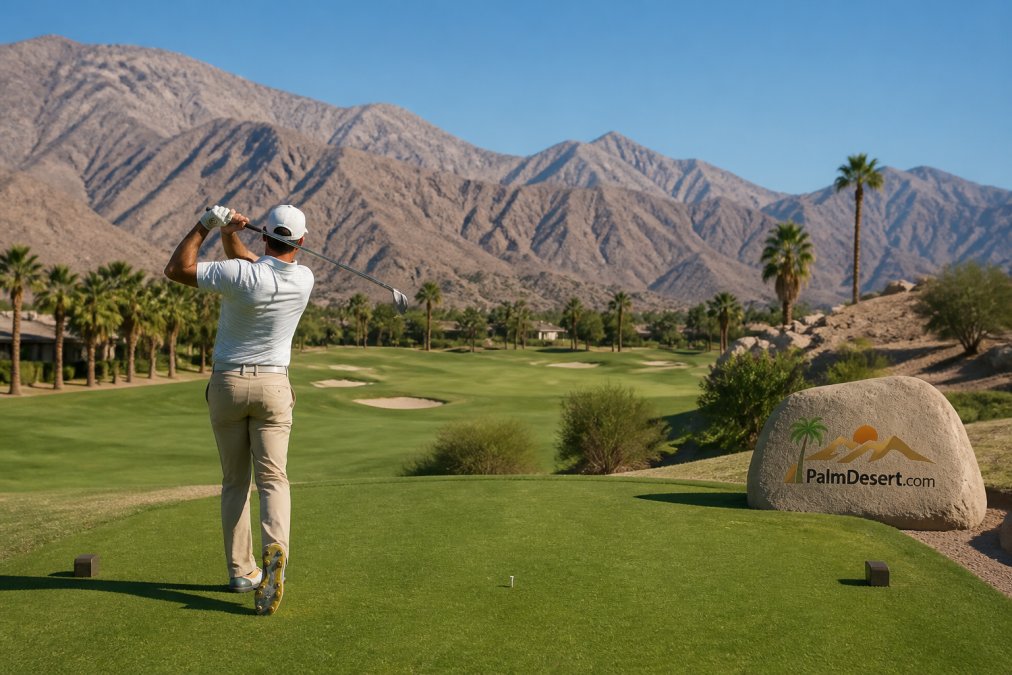
World-class golf is the valley’s signature draw, and the city carries a dense concentration of courses within a short drive. The Coachella Valley as a whole is home to well over 100 golf courses, and the Desert Classic, a long-running PGA Tour event now played at PGA West in nearby La Quinta, is the region’s best-known tournament week.
Hidden Gems and Local-Only Spots
The spots locals guard closest are rarely the ones in glossy brochures. Smaller trailheads, quiet neighborhood parks, and early-morning coffee counters away from the main strips reward anyone willing to skip the obvious.
A few patterns worth knowing:
- The Living Desert Zoo and Gardens sits on the city’s south edge and pairs a zoo with botanical gardens and a large model-train exhibit, a strong half-day option for mixed-age groups and one of the few attractions that works in shoulder-season heat.
- The McCallum Theatre anchors the city’s performing-arts calendar, with touring Broadway shows, music, and comedy running mainly through the winter and spring season.
- El Paseo is the city’s main shopping and gallery street, and the first Thursday evening of the month often brings an art walk with galleries open late.
- The Bump and Grind Trail is a short, steep climb into the foothills with valley views; it is popular enough that parking fills early on winter weekends.
Ask locally about trail conditions before you set out. Desert trails can be washed out after winter rains, and signage at smaller trailheads is not always current.
Best For: Matching the Activity to the Traveler
Competitors list attractions; the more useful move is to sort them by who they suit.
| Traveler | Strongest Fit | Why |
|---|---|---|
| Golfers | Resort course clusters and PGA West | Density of courses within a short drive |
| Families | The Living Desert, Civic Center Park, Aquatic Center | Shaded, structured, and heat-manageable |
| Couples | El Paseo galleries, McCallum Theatre, spa resorts | Walkable evenings, indoor backup for heat |
| Hikers | Foothill trails and nearby state park land | Real elevation gain close to town |
| Retirees and snowbirds | Golf, tennis, pickleball, arts calendar | Full winter-season programming |
A Month-by-Month Sense of the Calendar
Most guides skip this, and it is the single most useful planning tool for the region.
- January-March: Peak season. Golf tournaments, arts performances, and the best daytime hiking weather. Book lodging earliest here.
- April-May: Warm but manageable. Wildflower blooms follow wet winters, and rates ease after the winter rush.
- June-August: Intense heat. Outdoor plans belong before mid-morning; pools, spas, and indoor attractions carry the afternoon.
- September-October: Cooling trend. Courses overseed and some restrict play; hiking becomes pleasant again.
- November-December: Season ramps up. Holiday events, cooler golf conditions, and the start of the snowbird arrival.
The best itinerary here is built around the clock, not just the calendar: early mornings for anything outdoors, afternoons for shade, water, or air conditioning.
Palm Desert Vacation Rentals and Five-Star Resorts
Palm Desert vacation rentals and five-star resorts cover both ends of the spectrum, and the choice usually comes down to trip length and how much privacy you want. Resorts cluster around the golf corridors and shopping districts. Vacation rentals spread into residential neighborhoods, which suits longer stays and groups.
| Stay Type | Best For | Typical Setup | Watch For |
|---|---|---|---|
| Resort | Long weekends, first visits | On-site dining, pools, spa | Resort fees and parking charges |
| Vacation rental | Groups, longer stays | Private pool, full kitchen | Minimum-night rules in peak season |
| Boutique property | Couples | Smaller footprint, walkable | Limited on-site amenities |
Rate calendars move fast during event weekends. Waiting until a month out often means fewer options and less flexibility on check-in dates, not just higher rates.
Climate and Weather: What to Expect Each Season
The desert climate splits the year into two distinct travel seasons. Winter brings mild days and cool nights, which is why seasonal travel peaks between roughly November and April. Summer pushes daytime temperatures high enough that outdoor plans belong in the early morning.
- Winter: Mild days, cold nights, peak visitor season
- Spring: Warm days, wildflowers, strong golf conditions
- Summer: Intense heat, early-morning activity, lower crowds
- Fall: Cooling trend, good hiking, events resume
Living in Palm Desert: Community, Cost of Living, and Daily Life
Living in Palm Desert appeals to retirees, remote workers, and families who want recreation within reach of daily errands. The community is built around public amenities: parks, senior centers, libraries, and a steady calendar of local government and community events.
Cost of Living: Where the Money Actually Goes
Cost of living runs above the national average, driven mainly by housing. The mechanism is straightforward: the valley’s housing stock is weighted toward second homes and resort-adjacent properties, which lifts both purchase prices and long-term rents relative to inland areas of the same state.
Book Hotels with Exclusive Discounted Rates Now →
The categories that surprise new residents most:
- Housing: The dominant line item. Expect the gap versus the national average to be widest here.
- Utilities: Desert logic applies. Summer cooling bills far outpace winter heating, and the swing between a July and a January bill is large enough to plan around.
- Water: Landscaping drives usage. Properties with turf-heavy yards pay noticeably more than those with desert-adapted planting.
- Transportation: Lower than average in most cases, because distances are short and a single car covers most households.
- Groceries and dining: Broadly in line with the state, with a premium in resort-corridor restaurants.
Snowbirds, Digital Nomads, and Remote Work
Snowbirds typically arrive for the winter months and leave before summer. That rhythm shapes everything from restaurant hours to fitness class schedules, and it’s worth understanding before you commit to a long stay. A few visible effects:
- Some restaurants and services run reduced hours or close entirely in the deep summer.
- Fitness classes, golf leagues, and club programming peak between roughly November and April.
- Rental demand and short-term rates spike in the same window, which affects anyone trying to sign a winter lease.
What Daily Life Actually Looks Like
A typical winter day for a resident here: an early walk or round of golf, errands by car before midday, an afternoon indoors or by a pool, and an evening out at a restaurant or a performance. In summer, the same day compresses, everything outdoors happens before about 9 a.m., and the afternoon belongs to air conditioning.
Neighborhood Character
Broadly, the city splits into a few zones, each with a different feel:
- Golf-corridor communities: Gated, amenity-rich, quiet, and oriented around club life.
- El Paseo and central areas: Walkable to shopping and dining, more foot traffic, closer to events.
- Outlying residential pockets: Larger lots, more privacy, longer drives to errands.
The valley rewards people who plan around the seasons rather than against them. Winter is for golf and events, summer is for early starts and indoor afternoons, and the same logic applies whether you are visiting for a week or moving for good.
Seasonal Events and Sustainable Tourism in the Coachella Valley
Seasonal events drive much of the region’s tourism calendar, from arts and music weekends to golf tournaments and cultural festivals. Checking a current events listing before you book avoids the double problem of sold-out hotels and crowded restaurants.
Sustainable tourism is gaining ground here. Visitors can reduce impact by:
- Refilling water bottles at refill stations instead of buying plastic
- Staying on marked trails to protect desert plant life
- Choosing rentals with water-wise landscaping
- Supporting local businesses rather than chains
Conclusion: Plan Your Palm Desert Visit or Move
The hardest part of a Palm Desert trip is timing: peak season fills fast, and summer demands a different daily rhythm than most visitors expect.
Frequently Asked Questions
Is Palm Desert a good place to live?
Palm Desert attracts retirees, remote workers, and families who want sunshine, golf, and a walkable entertainment district. The city has a population of about 51,000 and serves as a cultural hub for the Coachella Valley. Summers are hot, with highs above 100°F, so many residents escape in July and August. Housing ranges from resort condos to gated communities, and the area offers hospitals, shopping, and public amenities. Snowbirds often rent first before buying.
What is Palm Desert famous for?
Palm Desert is known for world-class golf, upscale shopping along El Paseo, and five-star resorts. It hosts the McCallum Theatre and the Living Desert Zoo and Gardens, a top attraction in the Coachella Valley. The city sits in Riverside County and draws visitors for tennis, pickleball, hiking trails, and the BNP Paribas Open. Its oasis setting against the Santa Rosa Mountains makes it a year-round destination for recreation and relaxation.
What are the top things to do in Palm Desert?
Top things to do in Palm Desert include golfing at one of dozens of courses, hiking in the Santa Rosa and San Jacinto Mountains National Monument, and exploring the Living Desert Zoo and Gardens. El Paseo offers upscale shopping and dining, while the McCallum Theatre hosts Broadway shows and concerts. Families enjoy the Children’s Discovery Museum, and outdoor enthusiasts can try pickleball, tennis, or off-road adventures in the surrounding desert.
How do I find Palm Desert vacation rentals?
Palm Desert vacation rentals range from condos near El Paseo to private homes with pools in gated communities. Book early for peak season, January through April, when snowbirds and event crowds fill the valley. Look for rentals licensed by the city, and confirm amenities like pool heating and parking. For extra privacy, a private pool home works well for families or groups. Check current availability and rates through the visitor center’s vacation rental directory.
