
Table of Contents
- Step 1: Decide What Type of Desert Tour Fits Your Interests
- Step 2: Choose Between Self-Guided and Guided Tour Options
- Step 3: How to Choose a Reputable Tour Company
- Step 4: Best Time of Year for Desert Tours
- Step 5: Compare Pricing and Book Your Curated Tour
- Step 6: Confirm Your Booking and Prepare for Your Excursion
- Conclusion
Last Updated: August 13, 2026
Booking a curated desert tour can feel overwhelming with countless options and operators to choose from. At the Visitor Center for Palm Desert & Palm Springs, we help visitors navigate the desert landscape and find tours matching their interests, budget, and physical abilities.
This guide walks you through the six-step process of booking curated desert tours, from identifying your preferred experience through confirming your reservation. Whether you’re drawn to mid-century modern architecture, geological formations, culinary adventures, or cultural heritage, you’ll learn how to evaluate operators, understand pricing, and prepare for an unforgettable excursion. 🏜️
Step 1: Decide What Type of Desert Tour Fits Your Interests
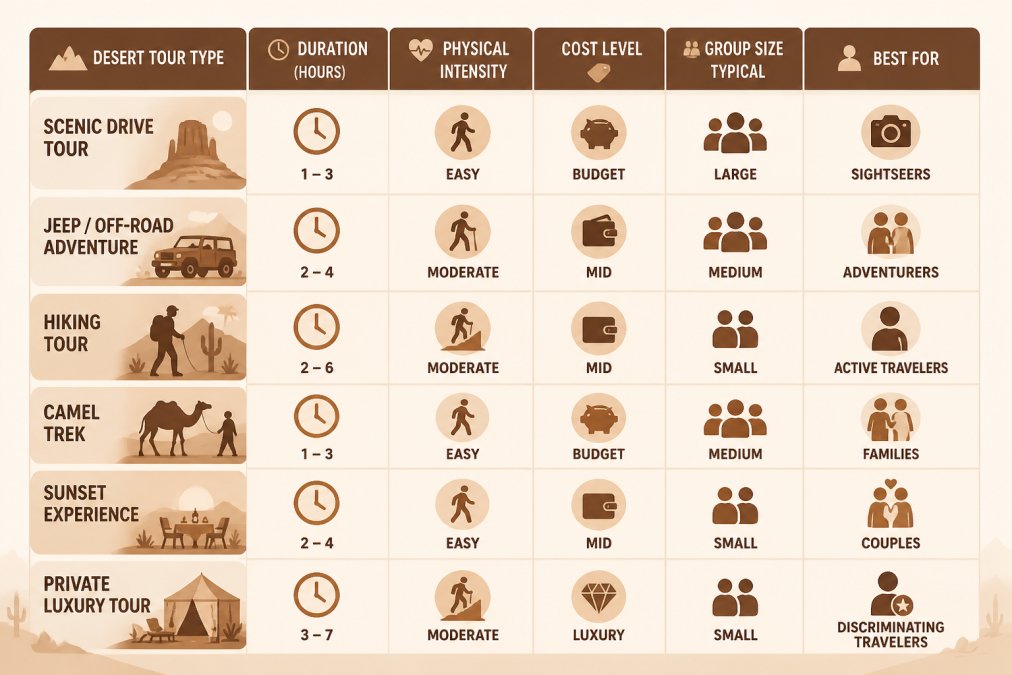
The first critical decision is determining which tour type aligns with your passions and comfort level.
Mid-Century Modern Architecture Tours
Mid-century modern architecture defines the region’s character. These docent-led excursions showcase iconic buildings designed between the 1940s and 1970s, featuring clean lines, innovative materials, and seamless indoor-outdoor living. A typical walk covers 8-12 notable structures, lasting 2-3 hours on flat terrain, making them accessible for most fitness levels. Guides provide historical context about architects, original residents, and design significance.
Book architecture tours in early morning (7-8 AM) to avoid afternoon heat and capture better light for photography. Morning temperatures are typically 15-20 degrees cooler than midday highs.
Off-Road Desert Excursions and Geological Adventures
Off-road excursions deliver adventure combined with geological education. Four-wheel-drive vehicles navigate slot canyons and remote landscapes, with guides explaining the region’s geological history and tectonic activity. Tours range from moderate to strenuous, lasting 3-5 hours. Most operators provide helmets, safety gear, and liability briefings.
Off-road tours in summer (June-August) present serious heat-related risks. Temperatures exceed 110°F, dehydration occurs rapidly, and vehicle air conditioning may struggle. Avoid booking during peak summer unless the operator provides extensive shade stops and cold water supply.
Historical Walking Tours and Cultural Heritage
Historical walking tours blend storytelling with sightseeing, exploring Native American heritage, early settlement history, and the region’s cultural significance. These docent-led experiences last 2-3 hours, covering 1-2 miles on flat terrain. Guides share archival photographs and historical facts that bring the landscape to life.
Culinary and Food Tasting Tours
Culinary-focused tours combine sightseeing with gastronomic experiences. Sommelier-curated wine tastings and farm-to-table dining highlight the region’s culinary scene. These experiences typically last 3-4 hours and include visits to 3-5 venues where guests sample regional specialties and learn about local food culture. These tours tend to be pricier due to included meals and beverages.
Nature and Hiking Adventures
Nature-focused tours emphasize outdoor exploration, wildlife observation, and desert ecology. Guided hikes range from easy walks on maintained trails to challenging backcountry treks, lasting 1-7 hours. Guides provide field guides, binoculars, and detailed knowledge about local flora, fauna, and ecological systems.
Art and Mural Walks
Art-focused tours explore the region’s vibrant street art scene, gallery districts, and public art installations. These walking tours cover 1-3 miles through downtown areas, lasting 2-3 hours and may include artist talks or studio visits.
Step 2: Choose Between Self-Guided and Guided Tour Options
Once you’ve identified your tour type, decide between self-guided independence and guided expertise.
Self-Guided Tours: Flexibility and Independence
Self-guided tours give you complete control over your itinerary, pace, and focus. Many options include printed guides, smartphone apps, or audio content providing historical facts and geological information. They’re typically the most budget-friendly option and work well for independent travelers and photographers. However, they require more planning and troubleshooting logistics independently.
Verify that your chosen resource was recently updated and includes current directions, facility hours, and safety alerts. Self-drive options work particularly well for the desert landscape, where scenic routes are well-marked and accessible by standard vehicles.
Guided Tours: Local Expertise and Immersive Experience
Guided tours connect you with local experts who provide context and insights that transform casual sightseeing into immersive education. Skilled guides answer questions, adapt itineraries based on group interests, and manage logistics. They possess deep knowledge about local history, cultural significance, and architectural details that enhance every stop.
Guided tours suit travelers who value expertise, prefer structured experiences, and want to maximize learning. They work particularly well for visitors unfamiliar with the region who benefit from expert navigation and insider recommendations.
The choice between self-guided and guided tours hinges on three factors: your familiarity with the region (guides help newcomers), your learning preference (guides provide context; self-guided offers independence), and your budget (guides add cost but provide value through expertise).
Private vs. Group Tour Experiences
Private tours serve you and your companions exclusively, with customized itineraries. Group tours combine multiple parties (typically 6-20 people) sharing a single guide and itinerary.
Private tours offer personalized attention, flexible scheduling, and focus on your specific interests. They command premium pricing but deliver concentrated value for travelers with specific needs or specialized interests. Group tours provide social interaction, cost efficiency, and shared discovery. Smaller groups (6-8 people) allow more personalized attention, while larger groups (15-20 people) reduce per-person costs.
Step 3: How to Choose a Reputable Tour Company
Selecting a trustworthy operator is essential for safety, quality, and value.
Verify Credentials and Local Expertise
Start by verifying that the tour company maintains proper business licensing, insurance, and permits. For outdoor adventure tours, verify that guides hold current certifications in wilderness first aid or relevant outdoor credentials.
Local expertise matters tremendously. Operators with deep roots in the community typically deliver richer context and more authentic experiences. Ask how long the company has operated locally, whether guides are permanent staff, and whether the operator participates in local cultural organizations or conservation initiatives.
Research the operator’s safety record. Ask directly about incident history, safety protocols, and emergency procedures. Reputable operators maintain detailed safety procedures, conduct regular equipment maintenance, and train guides in risk management.
Check Reviews and Visitor Feedback
Read recent reviews on multiple platforms to identify patterns. Pay attention to reviews from travelers with similar interests and physical abilities. Recent reviews (within the last 6-12 months) are more reliable than older feedback.
Watch for specific praise about guide knowledge, group management, safety practices, and logistics. Detailed accounts reveal operator quality better than generic ratings. Look for operators with consistently positive reviews that demonstrate sustainable quality systems.
Contact tour operators directly and ask for references from recent visitors. Legitimate companies are typically happy to connect you with past customers who can speak to their experience firsthand.
Accessibility and Mobility Considerations
Desert tours vary dramatically in physical demands. Before booking, honestly assess your mobility, stamina, and any physical limitations. Reputable operators provide detailed descriptions of terrain difficulty, walking distance, elevation changes, and required physical capabilities.
Ask specific questions: How much walking is involved? Are there stairs or uneven terrain? Can participants rest frequently? Are there shade structures or water stations? Do guides accommodate slower paces?
For visitors with mobility challenges, inquire about ADA accommodations. Some tours offer wheelchair-accessible routes, seating accommodations, or modified itineraries. Operators that proactively discuss accessibility demonstrate genuine commitment to inclusive tourism.
Weather significantly impacts physical demands. Discuss weather-related modifications with operators before booking.
Step 4: Best Time of Year for Desert Tours
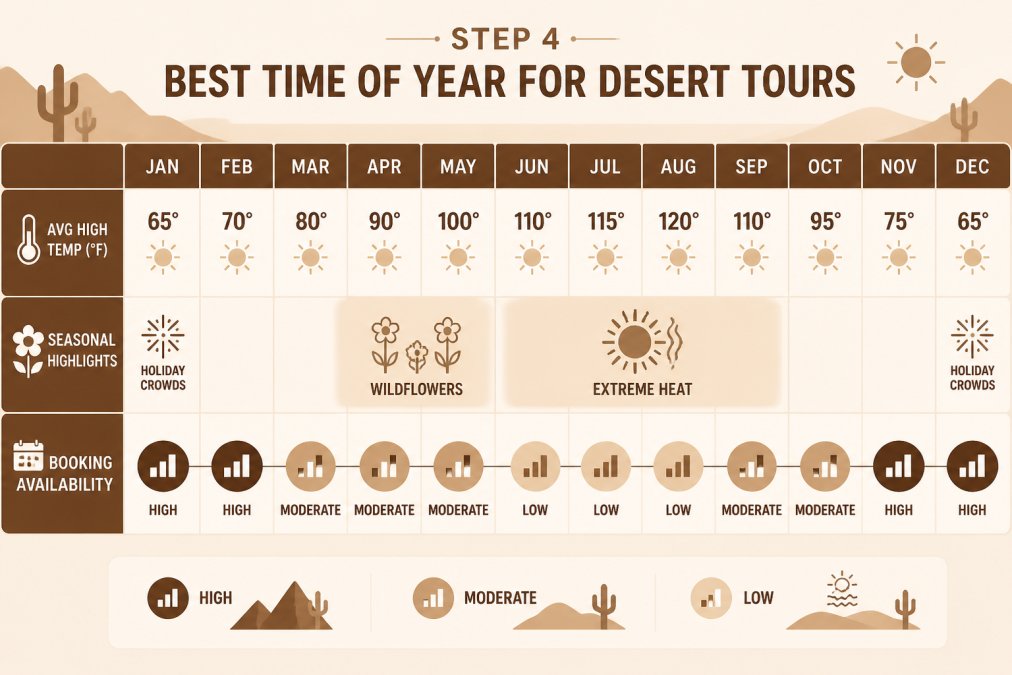
Timing dramatically affects your desert tour experience. Temperature, seasonal highlights, and booking availability vary throughout the year.
Weather-Specific Planning
Desert temperatures fluctuate dramatically by season. Winter months (November-March) feature mild daytime temperatures (65-75°F), making outdoor exploration comfortable. Spring (April-May) brings warming temperatures (80-95°F) but remains pleasant. Summer (June-August) reaches extreme heat (110-120°F), making outdoor tours physically demanding and potentially dangerous. Fall (September-October) transitions to moderate temperatures.
For outdoor adventure tours, winter and early spring represent ideal conditions. Summer heat makes extended outdoor activities risky; if you must visit during summer, choose early-morning tours or indoor-focused experiences.
Rainfall is minimal year-round, but winter occasionally brings brief storms. Spring winds can be strong. These patterns are predictable enough that tour operators adjust schedules seasonally.
Seasonal Highlights and Booking Availability
Winter season (November-March) represents peak tourism with the most favorable weather. Tour availability is highest, but popular tours book weeks in advance. Expect larger group sizes and busier venues.
Spring (April-May) offers pleasant weather, fewer crowds than peak winter, and good tour availability. Wildflower blooms in April-May add natural beauty to hiking and nature tours.
Summer (June-August) sees reduced tourism due to extreme heat. Many tours operate on limited schedules. Tour availability increases dramatically, and pricing drops significantly. However, physical demands are extreme.
Fall (September-October) transitions from summer quiet to winter busy season. Late September through October brings increasingly pleasant temperatures with moderate tour availability.
Step 5: Compare Pricing and Book Your Curated Tour
Understanding pricing structures and comparing options ensures you get genuine value.
Budget-Friendly vs. Luxury Tiering
Tour pricing typically ranges across three tiers. Budget options emphasize value and accessibility, often featuring group tours and standard itineraries. Mid-range tours balance quality and cost, offering knowledgeable guides and smaller groups. Luxury tours provide exclusive access, private guides, and specialized expertise.
Budget tours work well for travelers prioritizing cost efficiency. Mid-range tours represent the sweet spot for most travelers, offering quality guides and curated content without premium pricing. Luxury tours justify higher costs through exclusivity and personalization.
Compare pricing across multiple operators for similar tour types. Significant price variations often reflect differences in guide expertise, group size, and operator reputation rather than inherent tour quality.
Understanding Tour Itineraries and Duration
Tour duration ranges from 1-2 hour quick experiences to full-day (6-8 hour) deep dives. Longer tours aren’t automatically better; they depend on your interests and stamina.
Review itineraries carefully. Quality itineraries include specific stops, estimated time at each location, and what’s included. Detailed itineraries reveal operator professionalism and help you assess whether the experience matches your interests.
Ask what’s included versus what’s extra. Some tours include meals, beverages, and entrance fees; others charge separately. Understanding total cost prevents surprises.
Sustainable and Eco-Conscious Tourism Options
Growing numbers of tour operators emphasize sustainable practices, minimizing environmental impact and supporting local communities. Eco-conscious tours often feature smaller group sizes and focus on education about desert ecosystems.
Sustainable operators typically limit group sizes, use fuel-efficient vehicles, partner with conservation organizations, educate visitors about desert ecology, and support local guides and businesses.
If sustainability matters to you, ask operators directly about their environmental practices. Legitimate eco-conscious operators discuss these practices openly and provide concrete examples.
Step 6: Confirm Your Booking and Prepare for Your Excursion
Once you’ve selected your tour and operator, confirm details and prepare for a great experience.
Most operators require advance booking, often 1-4 weeks ahead for popular tours. Booking directly through the operator’s website or phone typically offers the most control. Confirm all details: exact date, start time, meeting location, what to bring, and cancellation policies. Request written confirmation via email.
Clarify logistics: Is transportation included? Where do you meet and park? What should you wear and bring (water, sunscreen, camera, sturdy shoes)? Are there bathroom facilities? What’s the cancellation policy if weather impacts the tour?
Prepare physically by getting adequate sleep, eating a proper breakfast, and staying hydrated. Wear appropriate clothing for weather conditions and tour activity. Arrive early to allow time for parking and settling in before the tour starts.
Booking a curated desert tour transforms a visit to the Coachella Valley from passive sightseeing into active discovery. By identifying your interests, understanding your preferences for guided versus self-guided experiences, selecting a reputable operator, and timing your visit strategically, you’ll create an experience matching your expectations and budget.
The Visitor Center for Palm Desert & Palm Springs maintains current information about tour operators, seasonal conditions, and visitor recommendations to help you plan your desert adventure. Whether you’re seeking architectural education, outdoor adventure, culinary experiences, or cultural immersion, the region offers curated tours designed for every interest and ability level.
Ready to explore? Browse our Vacation Rental Homes to find the perfect home base for your desert tour adventure. Whether you’re planning a quick weekend getaway or an extended stay, we’ll help you find accommodations that complement your curated tour experience and maximize your time in this remarkable desert landscape.
Frequently Asked Questions
What should I look for when booking a private desert tour?
Prioritize tour companies with verified credentials, docent-led experiences, and transparent itinerary planning. Ask about group size, tour duration, and what’s included. Check recent visitor feedback on accessibility features, and confirm the company carries proper insurance. Request details on their vehicle type, route options, and how they handle weather changes. Private tours should offer flexibility to customize your route based on your interests, whether that’s geological formations, mid-century modern sites, or cultural heritage.
How far in advance should I book curated excursions?
Book 2-4 weeks ahead for most standard guided tours and group experiences. Popular sommelier-curated food tours, private charters, and specialized architecture walks often fill quickly during peak season and may require 4-8 weeks’ notice. Off-season bookings can often be made with less lead time. Check booking availability directly with tour operators, as seasonal highlights and special itineraries vary. Last-minute openings sometimes appear, but planning ahead ensures you secure your preferred date and tour type.
Are there self-guided options for exploring the desert?
Yes. Self-drive scenic routes through slot canyons and desert landscapes are widely available, and many cultural heritage sites offer self-guided walking tours with printed or digital visitor guides. Numerous art walks and architecture routes can be explored independently. Self-guided options provide flexibility and lower costs, but lack the local expertise and curated narratives that docent-led tours offer. Consider combining self-guided exploration with one guided excursion to balance independence with immersive experience and historical facts from experienced guides.
How do I know if a tour company is reputable?
Look for established local expertise, verified customer reviews, and transparent communication about tour logistics and pricing. Reputable companies display credentials, offer clear cancellation policies, and provide detailed itinerary information upfront. Check whether they’re recommended by local tourism boards and visitor centers. Ask about their experience with accessibility accommodations if needed. Read recent feedback specifically about tour quality, guide knowledge, and whether the experience matched the description. Avoid operators with vague itineraries or pressure to book without providing detailed information.
Hotels, Resorts and Vacation Home Booking
If you’re planning an upcoming trip, feel free to browse our directory of Palm Springs and Palm Desert hotels and resorts.
If you prefer extra privacy and a private pool? You can browse Palm Springs and Palm Desert vacation rental homes for your stay.
This article was written using GrandRanker and edited by Collins Omaghe.