Table of Contents
- Why Palm Desert is a Hiker’s Paradise
- Best Time to Hike in Palm Desert
- Quick Trail Comparison Table
- Easy Hikes in Palm Desert for Beginners
- Moderate Trails with Scenic Views
- Strenuous Desert Hikes for Experienced Hikers
- Dog-Friendly Hiking Trails in Palm Desert
- Hiking Safety Tips for Desert Conditions
Last Updated: August 7, 2026
Why Palm Desert is a Hiker’s Paradise
Palm Desert sits at the heart of the Coachella Valley, surrounded by dramatic desert landscapes offering some of Southern California’s most rewarding hiking experiences. The region combines accessible trails for beginners with challenging routes for experienced hikers, all set against stunning geological formations, native flora, and panoramic desert vistas. Whether you’re visiting for a weekend or settling in for the season, the best hiking trails in Palm Desert deliver everything from shaded canyon walks to exposed ridge hikes with breathtaking views.
The desert ecosystem here is uniquely fragile and beautiful; understanding how to hike responsibly ensures these landscapes remain pristine for future visitors.
Most trails in Palm Desert are best experienced between October and April. Summer temperatures regularly exceed 110°F, making midday hiking dangerous even for experienced desert hikers.
Best Time to Hike in Palm Desert
The hiking season in Palm Desert runs from October through April, when daytime temperatures range from the 60s to low 80s. Peak hiking months are November through March, when wildflower blooms (particularly in March and April) add color to the landscape and trail conditions are optimal. Early morning starts remain important year-round; trails are cooler, less crowded, and you’ll complete your hike before midday heat peaks.
Summer hiking (May through September) is not recommended for most trails. Temperatures above 100°F, combined with limited shade and scarce water sources, create genuine safety risks. A few shaded canyon trails remain accessible during summer months, but even these require extreme caution and early starts before 7 AM.
Quick Trail Comparison Table
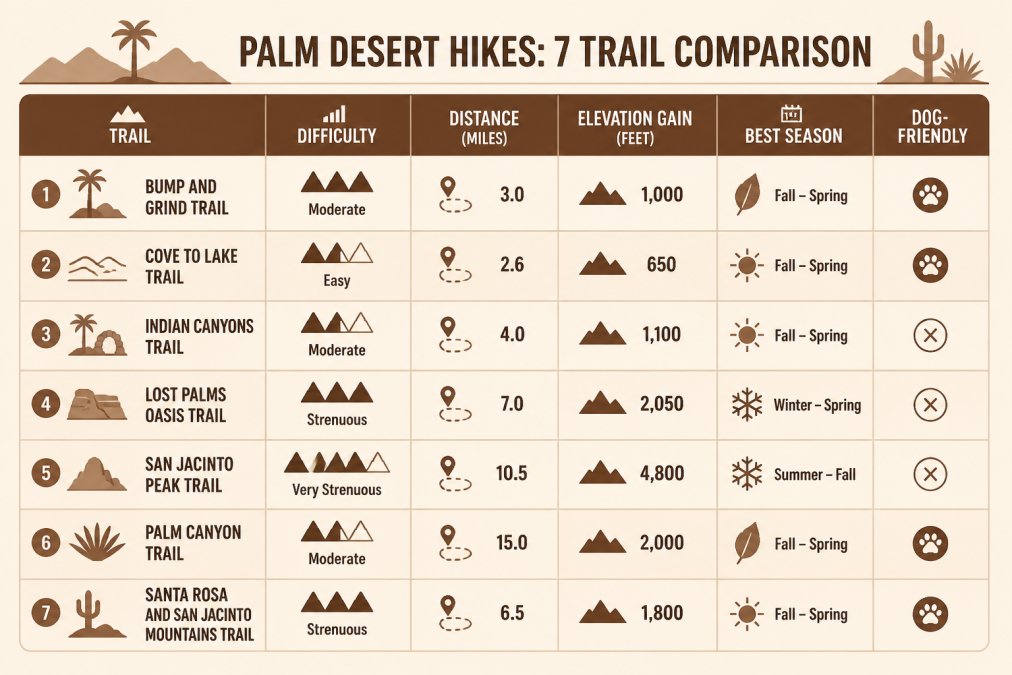
| Trail Name | Difficulty | Distance | Elevation Gain | Best Season | Dog-Friendly |
|---|---|---|---|---|---|
| Borrego Palm Canyon | Easy | 3 miles round-trip | 500 ft | Oct-Apr | Yes |
| Pushawalla Canyon | Easy | 2.5 miles round-trip | 300 ft | Oct-Apr | Yes |
| Tahquitz Canyon Waterfall | Moderate | 2.5 miles round-trip | 400 ft | Oct-Apr | No |
| Barker Dam | Moderate | 1.4 miles round-trip | 150 ft | Oct-Apr | Yes |
| San Jacinto Peak | Strenuous | 5.5 miles round-trip | 2,300 ft | Oct-Apr | No |
| Ladder Canyon | Strenuous | 3 miles round-trip | 800 ft | Oct-Apr | No |
| Magnesia Spring | Easy | 2 miles round-trip | 250 ft | Oct-Apr | Yes |
Easy Hikes in Palm Desert for Beginners
Easy trails in Palm Desert are ideal for families, casual walkers, and anyone new to desert hiking. These routes feature minimal elevation gain, clear trail markers, and manageable distances completable in 1-2 hours. Even easy trails demand sun protection, adequate water, and awareness of heat exposure.
1. Borrego Palm Canyon Trail
Borrego Palm Canyon delivers the best combination of accessibility and desert beauty for beginners. This 3-mile round-trip follows a sandy wash through a native palm oasis, ending at a seasonal waterfall framed by towering canyon walls. The trail gains only 500 feet of elevation over gentle terrain and provides natural shade during much of the hike, reducing sun exposure compared to open-desert trails. Most hikers complete the route in 2-2.5 hours.
The trailhead sits within Borrego Valley State Park, roughly 45 minutes northeast of Palm Desert. Dogs are welcome on-leash. Water availability is seasonal; the palm-fed stream typically flows October through May but may dry by late spring. Bring your own water regardless, and check conditions before heading out.
2. Pushawalla Canyon Trail
Pushawalla Canyon offers a shorter alternative for beginners seeking quick desert immersion. This 2.5-mile round-trip follows a narrow canyon with high walls providing shade for much of the route. Elevation gain is minimal (around 300 feet), and the trail features a small waterfall and natural pools during wetter months. The canyon’s tight topology creates an intimate hiking experience, and the route is dog-friendly.
Parking is available at the Pushawalla Canyon trailhead off Highway 74, about 20 minutes from downtown Palm Desert. The trail is well-marked but rocky underfoot, so sturdy hiking boots are recommended. Expect to spend 1.5-2 hours on this route.
Both Borrego Palm Canyon and Pushawalla Canyon offer water sources during the hiking season, making them ideal for beginners learning to manage hydration on longer routes.
Moderate Trails with Scenic Views
Moderate trails in Palm Desert require steady elevation gain and typically involve 2-3 hours of hiking. These routes suit hikers with some experience who are comfortable with sustained climbs and exposed terrain. Scenic vistas improve dramatically at moderate difficulty levels.
3. Tahquitz Canyon Waterfall Trail
Tahquitz Canyon Waterfall is the region’s most iconic moderate hike. The 2.5-mile round-trip climbs 400 feet through a narrow canyon to reach a 60-foot waterfall that flows year-round. The trail passes through a riparian zone with native palms, willows, and cottonwoods, creating an oasis within the arid landscape.
The canyon holds cultural and spiritual significance for the Agua Caliente Band of Cahuilla Indians, whose ancestors inhabited the region for centuries. The tribe manages the trail and enforces a day-use-only policy. Dogs are not permitted. The trail is well-maintained and heavily trafficked, meaning clear signage and established switchbacks. Start early to secure parking and avoid midday heat.
4. Barker Dam Trail
Barker Dam offers a short, moderate hike with minimal elevation gain but maximum scenic payoff. This 1.4-mile round-trip climbs just 150 feet to reach a historic dam and viewpoint overlooking a broad valley. The trail is dog-friendly and can be completed in 45 minutes to an hour, making it ideal for hikers with limited time.
From the dam’s vantage point, you’ll see across the valley floor toward distant mountain ranges, capturing the scale and beauty of the Coachella Valley landscape. The trail is relatively shaded by desert standards, with scattered creosote bushes and Joshua trees providing intermittent shelter. Hiking boots with good traction are recommended.
Barker Dam trailhead is accessible from Highway 74, roughly 30 minutes from Palm Desert. This hike is perfect for families and casual hikers seeking genuine desert scenery without committing to a full day of hiking.
Strenuous Desert Hikes for Experienced Hikers
Strenuous trails demand sustained elevation gain, exposure to full sun, and route-finding skills. These hikes typically require 3-5 hours and involve significant cardiovascular effort. Proper preparation, including early starts, ample water, and weather awareness, is non-negotiable.
5. San Jacinto Peak via Palm Springs Aerial Tramway
San Jacinto Peak represents the ultimate desert-to-alpine experience accessible from Palm Desert. Rather than hiking the full elevation gain from the valley floor, most hikers use the Palm Springs Aerial Tramway to reach the 8,516-foot midpoint, then hike 5.5 miles round-trip to the 10,834-foot summit.
This approach gains 2,300 feet over the final push to the peak, with dramatic views expanding as you climb. The landscape transitions from desert scrub to pine forest to alpine meadow. On clear days, visibility extends across the entire Coachella Valley and beyond. The hike is exposed but well-marked, with switchbacks managing steep terrain. Trekking poles reduce impact on the knees during descent.
Dogs are not permitted on the tramway or summit trail. Start early to catch the best visibility and avoid afternoon cloud cover that frequently obscures the summit by midday.
San Jacinto Peak experiences sudden weather changes. Temperature drops 3-4°F per 1,000 feet of elevation gain. Bring a jacket even on warm valley days; summit conditions can be 20-30°F cooler with wind chill.
6. Ladder Canyon Trail
Ladder Canyon delivers technical scrambling and genuine adventure for experienced hikers. This 3-mile round-trip involves rock scrambling, narrow passages, and sections where you’ll use your hands to navigate steep rock faces. Elevation gain is 800 feet, concentrated in short, intense pitches rather than steady climbing.
The canyon’s geology is spectacular, with colorful rock layers telling a story of ancient geological processes. You’ll encounter natural obstacles requiring problem-solving and route-finding. Ladder Canyon is not dog-friendly due to the technical nature. The trail is lightly trafficked, so GPS or detailed route knowledge is essential.
The trailhead is accessed via Highway 74, roughly 40 minutes from Palm Desert. Parking is limited and informal. Start very early and bring sturdy hiking boots with excellent grip and trekking poles for balance on scrambles.
Dog-Friendly Hiking Trails in Palm Desert
Several trails listed above welcome dogs on-leash. Dogs overheat faster than humans, require more frequent water breaks, and can stress wildlife. Responsible dog hiking means understanding your pet’s fitness level and the specific demands of desert terrain.
7. Magnesia Spring Trail
Magnesia Spring is the best dog-friendly option for a quick, easy hike with genuine desert character. This 2-mile round-trip climbs 250 feet through open desert to reach a natural spring and small pool. The trail is well-marked, lightly trafficked, and offers shade from scattered desert trees.
Dogs thrive on this route. The spring provides a water source for refilling pet bowls, and the relatively short distance means minimal heat exposure. The terrain is rocky but not technical. The trailhead is accessed from Highway 74, about 25 minutes from Palm Desert. Bring extra water for your dog; desert hiking depletes fluids faster than casual walking, and dehydration can lead to heat exhaustion in pets. Watch for signs of fatigue: excessive panting, lagging behind, or reluctance to continue are signals to turn back.
Magnesia Spring is ideal for visitors with dogs who want a genuine desert experience without overcommitting to a strenuous route.
Hiking Safety Tips for Desert Conditions
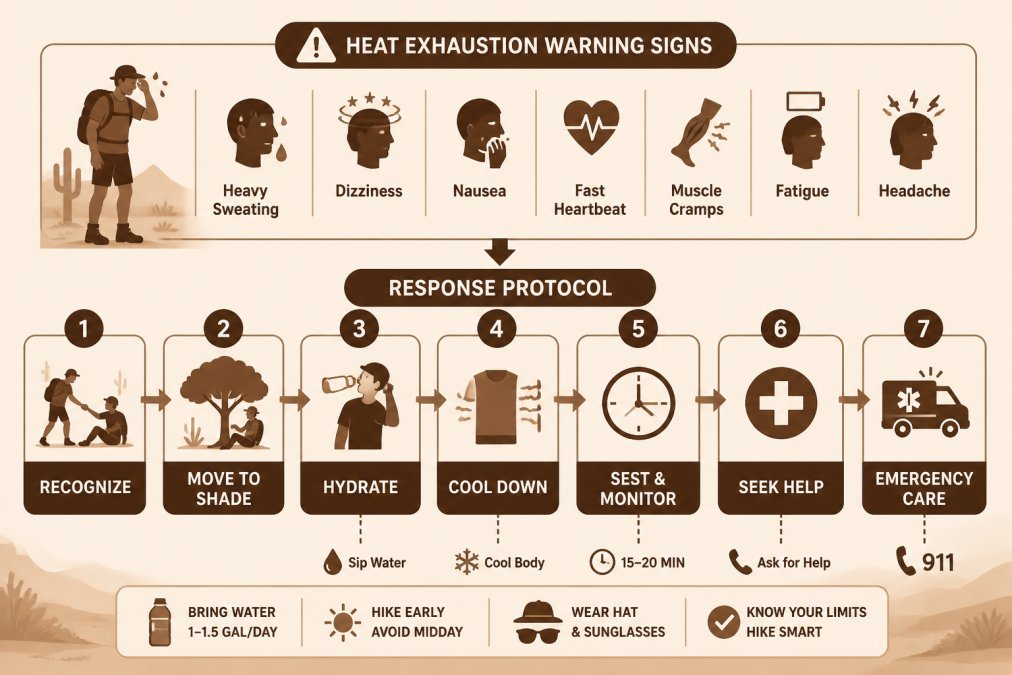
Desert hiking demands respect for an unforgiving environment. The combination of intense sun, low humidity, sparse water sources, and extreme temperature swings creates genuine hazards.
Hydration is the single most critical factor. Desert air dries sweat before you feel it, creating a false sense of hydration. Drink water consistently throughout your hike; don’t wait until you’re thirsty. Consume at least 1 liter per hour of hiking in warm conditions. For longer routes, consider hydration bladders like the Osprey Hydraulics 3L Reservoir or CamelBak Crux 3L Reservoir, which make frequent water intake easier than fumbling with bottles.
Sun protection is non-negotiable. Sunscreen alone is insufficient. Wear a wide-brimmed hat, long sleeves, and consider a UPF 50+ sun hoodie like the WindRider Helios, which blocks approximately 98% of UV rays while providing breathability.
Start early. Hike in early morning when temperatures are coolest and visibility is clearest. Most hikers should complete their route by early afternoon, before peak heat. Starting at dawn gives you a 2-3 hour buffer if something goes wrong.
Know the signs of heat exhaustion. Dizziness, nausea, excessive fatigue, or cessation of sweating are emergency signals. If you experience these symptoms, stop immediately, find shade, and drink water. Heat exhaustion can progress to heat stroke within minutes. Turn back at the first sign of trouble.
Wear proper footwear. Desert terrain is rocky and can be sharp. Hiking boots with ankle support and thick soles protect against rocks, cactus spines, and twists.
Bring a map and know your route. Cell service is unreliable in the desert. Carry a physical map or download offline maps before you leave. The AllTrails app provides offline maps and detailed route information for most trails in the region. For more technical navigation, Gaia GPS offers excellent topographic maps and route planning.
Travel with a partner. Solo hiking in the desert increases risk. If something goes wrong, a companion can provide assistance or seek help. At minimum, tell someone your planned route and expected return time.
Check weather and trail conditions. Desert weather can change rapidly. Afternoon thunderstorms can cause flash flooding in canyons. Check forecasts before you go. Local resources like the Coachella Valley Hiking Club provide current trail conditions and organized group hikes with experienced leaders.
Respect wildlife and leave no trace. Stay on marked trails to avoid damaging vegetation. Pack out all trash, including biodegradable items. Never approach wildlife; rattlesnakes, coyotes, and bighorn sheep deserve space.
Consider guided hikes. If you’re new to desert hiking, guided experiences like those offered by Red Jeep Tours by Desert Adventures combine education with safety. Expert guides provide geological and cultural context while managing group dynamics and safety protocols.
For hikers in the Palm Desert area seeking community and organized outings, the Coachella Valley Hiking Club offers free and low-cost group hikes led by experienced volunteers. Most events run October through April, with some summer options for early-morning canyon hikes.
The best hiking trails in Palm Desert offer something for every fitness level and interest. Whether you’re seeking an easy family outing, a moderate scenic loop, or a strenuous alpine adventure, the Coachella Valley delivers world-class desert hiking within a compact region.
Planning your trip? For visitors planning an extended stay, explore our Vacation Rental Homes to find the perfect desert retreat. Whether you’re booking a weekend escape or settling in for the season, our accommodations throughout the Coachella Valley complement your hiking adventures perfectly.
Frequently Asked Questions
What are the best hiking trails in Palm Desert for beginners?
Borrego Palm Canyon and Pushawalla Canyon are ideal for beginners. Both feature well-maintained paths with manageable elevation gain under 500 feet and clear trail markers. Borrego Palm Canyon rewards hikers with a seasonal waterfall, while Pushawalla offers scenic canyon views. Both are accessible from convenient trailheads with parking available year-round.
What is the best time of year to go hiking in Palm Desert?
October through April is prime hiking season when daytime temperatures range from 70-85°F, making conditions comfortable for extended outdoor activity. Late fall and early spring offer the most stable weather. Summer hiking is possible but requires early morning starts before 6 AM, as temperatures regularly exceed 110°F. Avoid midday hiking June through September due to extreme desert heat.
Are dogs allowed on hiking trails in Palm Desert?
Many trails in Palm Desert permit dogs, including Magnesia Spring Trail and several routes in the Indian Canyons. However, restrictions vary by location and season. Dogs must stay leashed on most trails and are prohibited in certain wilderness areas during nesting season. Always check specific trailhead regulations and carry extra water for your pet, as desert conditions dehydrate animals quickly.
What should I pack for a desert hike in Palm Desert?
Essential items include at least 2-3 liters of water per person, sun protection (hat, sunglasses, UPF 50+ shirt), electrolyte-rich snacks, a fully charged phone, and a headlamp. Trekking poles reduce joint stress on descents. Wear moisture-wicking layers and closed-toe hiking boots with good ankle support. Bring a basic first aid kit and know the trailhead location before departing.
Are there any free hiking trails near Palm Desert?
Yes, several excellent trails are free to access, including Borrego Palm Canyon, Pushawalla Canyon, and Magnesia Spring Trail. Some trails in the Indian Canyons charge a small day-use fee (typically $5-12 per vehicle). BLM lands and national forest areas offer free access. Check with local visitor centers or the Coachella Valley Hiking Club for current trailhead information and any seasonal closures.
This article was written using GrandRanker and edited by Collins Omaghe