Visitor Center for Palm Desert & Palm Springs

Author name: Collins Omaghe

The McCallum Theatre entrance in Palm Desert

The McCallum Theatre: All-Time Best Kept Secrets

If you’ve ever spent a night out in Palm Desert, you already know the desert has its own special kind of magic once the sun goes down. But if you want to experience the absolute heart and soul of the Coachella Valley’s arts scene, there’s really only one place you need to go: the McCallum Theatre. Tucked right into the center of town, the McCallum isn’t just a building with a stage—it’s the place where our whole community comes together to share an incredible night out. Whether you’re showing up for a big, show-stopping Broadway tour, sitting back for a world-class jazz set, or bringing the family to root for local neighbors in a talent showcase, stepping into the lobby just feels special. It’s warm, it’s welcoming, and it proves you don’t need to drive all the way to Los Angeles to get top-tier, world-class entertainment. So, if you’ve been looking for your next great night out—or just want to discover what makes our local culture tick—stick around. Let’s take a look at why the McCallum Theatre is an absolute must-visit, and why we’re so lucky to have it right here in our back yard. History and Legacy Before the McCallum Theatre opened its doors, local theater lovers had to make the long drive to Los Angeles just to catch top-tier touring shows or world-class concerts. But back in 1973, a passionate group of desert residents—organized as the “Friends of the Cultural Center”—decided it was time to change that. They shared a bold dream: build a state-of-the-art performing arts center right here in our own backyard. Turning that dream into reality took over a decade of dedication, community support, and some major star power. Iconic figures stepped up to champion the cause, including former President Gerald Ford, who helped lead the fundraising effort, and legendary entertainer Bob Hope. By the time construction wrapped up in January 1988, the theater was officially named after the McCallum family—one of Palm Springs’ most influential pioneering families—to honor the deep local roots that built it. Opening night in January 1988 was nothing short of historic. Described by local writers as the “party of the decade,” the star-studded gala was hosted by Lucille Ball as an all-star tribute to Bob Hope. Sitting in the audience were former President Ford, President Ronald Reagan, and a who’s-who of desert cultural leaders. On stage, piano virtuoso Van Cliburn inaugurated the theater’s new Steinway, Alvin Ailey dancers took the stage, and Sarah Brightman sang a preview from The Phantom of the Opera a full month before it ever premiered on Broadway! Since that unforgettable debut, the McCallum has grown into a powerhouse. It consistently ranks as one of the top ticket-selling venues of its size in the country, attracting world-renowned artists who love performing in such a warm, intimate space. More than three decades later, that initial grassroots vision still shines bright: bringing world-class culture home to the Coachella Valley while keeping community at the heart of everything it does.   Theatre Architecture and Venue Features From the moment you arrive, the McCallum Theatre makes a striking first impression. Set against a backdrop of desert palm trees and framed by a peaceful reflection pond and dancing fountain at the Houston Plaza entrance, the building blends classic desert elegance with modern performing arts design. What makes the venue so special for concertgoers is its scale. With a cozy capacity of 1,127 seats, the auditorium strikes a sweet spot that big city arenas just can’t match: Unbeatable Sightlines: Because the hall is designed with a gentle sweep rather than towering, distant nosebleeds, there truly isn’t a bad seat in the house. Even from the back of the balcony, you feel remarkably close to the action. Warm, Crystal-Clear Sound: The auditorium was engineered specifically for acoustics. Whether it’s a quiet acoustic guitar solo, a full symphony orchestra, or a belting Broadway vocalist, the sound carries clearly without feeling overwhelming or muffled. Intimate Atmosphere: Performers constantly comment on how much they love playing the McCallum because they can actually see and connect with the audience, creating an energetic, back-and-forth connection during every show. Every detail inside the lobby and hall is designed to make your night seamless and comfortable. Wide aisles, plush seating, accessible entrance ramps, and easy access to refreshments mean you spend less time fighting crowds and more time relaxing with friends before the lights dim. Season Programming and Entertainment No matter what kind of music, storytelling, or live entertainment gets you excited, the McCallum’s seasonal calendar always delivers. The theater puts together a packed annual schedule that spans almost every genre imaginable, bringing world-class talent to Palm Desert month after month. Here’s a taste of what you can expect when browsing a typical McCallum season: Broadway Hits & Legends: You don’t need a flight to New York to catch top-tier musical theater. The McCallum brings direct national Broadway tours straight to the desert—featuring fan favorites and high-energy hits like & Juliet, The Wiz, and Mamma Mia!, alongside headlining solo concerts from Broadway royalty like Patti LuPone, Audra McDonald, and Idina Menzel. Concerts Across Every Genre: Music lovers are spoiled for choice. One night you might be listening to virtuosic classical performances from legends like Lang Lang or Joshua Bell, and the next you’re settling in for smooth jazz with Chris Botti, iconic pop from the Indigo Girls, or energetic Latin sets from groups like Ozomatli. Dance & Movement: The theater regularly hosts premier national and international dance troupes—from the groundbreaking Alonzo King LINES Ballet to vibrant cultural showcases like Ballet Hispánico and the annual Palm Desert Choreography Festival. Comedy & Spoken Word: If you’re in the mood for a good laugh or an inspiring story, the lineup always features top-tier stand-up comedians (think Rita Rudner and Tom Papa) alongside fascinating lecture series and speaker events. Whether you’re looking for a romantic date night, a fun outing with friends, or a memorable family tradition, there’s always something on the marquee

The McCallum Theatre: All-Time Best Kept Secrets Read More »

Palm Springs Surf Club Adventure

The Palm Springs Surf Club: The New Legendary Water Park

Have you ever caught an ocean wave in the middle of the desert while looking at palm trees and massive mountain peaks? If that sounds like a fever dream, you haven’t been to The Palm Springs Surf Club yet. Built on the grounds of the old Wet ‘n’ Wild water park, this 21-acre oasis took the classic desert getaway and completely turned it on its head. It’s a place where world-class wave technology meets a vintage Palm Springs day club. The best part? You don’t even need to touch a surfboard to have an incredible time here. Whether you’re looking to catch your very first wave, float down a lazy river with a craft cocktail in hand, or kick back in a private cabana with your favorite people, this place has a spot saved for you. Let’s dive into everything you need to know about the desert’s coolest playground—and why you’re seriously missing out if you haven’t dropped by yet! The Main Attraction: The Surfloch Wave Pool If you’ve ever tried surfing in the ocean, you know the drill: you paddle out, fight the current, wait 20 minutes for a set, and maybe get a few seconds on a wave before it closes out. The wave pool at The Palm Springs Surf Club throws all that hassle out the window. Powered by Surfloch Pneumatic technology, this pool uses high-powered air pressure to punch out pristine, ocean-quality waves on demand. It sends out up to 450 waves an hour, meaning you get more wave time in a single 60-minute session than most surfers get in an entire week at the beach! The beauty of this setup is that the waves are totally customizable. The crew can adjust the height, shape, and speed of the water at the press of a button to match whoever is in the pool. Here is how the waves break down by skill level: Waikiki (Beginners): Soft, slow-peeling whitewater and gentle waist-high waves. It’s the ultimate zero-stress setting for popping up on a longboard for the first time with coaches right by your side. Intermediate A-Frames: Chest-high peaks that split into a left and a right wave. Perfect for practicing your turns, building speed, and working on your stance without getting crushed. Advanced A-Frames & Point Walls: Punchy, head-high walls designed for fast maneuvers, air sections, and slick carving. The Slab (Experts & Pros): Heavy, thick, overhead barrels that spit. Reserved for private bookings and advanced sessions, this wave throws out genuine tubes for surfers looking to get barrelled in the desert. Whether you’re brand new to a surfboard or have been riding for years, you get predictable, glass-smooth water every single time—all framed by towering palm trees and desert mountain peaks. What Non-Surfers Search About Here’s the secret most people miss: you don’t have to set foot on a surfboard to enjoy a full day at The Palm Springs Surf Club. In fact, thousands of non-surfers drop in every month just to soak up the high-energy day club scene and kick back in the sun. If you’re wondering what the resort side looks like, here is what everyone is searching for before they go: Day Passes: Your Ticket to the Oasis You don’t need a surf booking to enter. Buying a standard Club Day Pass unlocks general access to the entire resort grounds. It gives you entry to the main lounge pools, sun beds, outdoor showers, and dining venues, making it one of the best pool day deals in the Coachella Valley. Waterpark Attractions for Total Chill (or Thrills) Beyond the main ocean wave lagoon, the venue holds onto its historic roots with upgraded water park features: The Lazy River: Grab a tube and float along a winding river that meanders through the property—perfect for drifting with a cold drink. Waterslides: If you want a quick surge of adrenaline between lounge sessions, the park features high-speed slides for a fast splashdown. Splash Pads & Lounge Pools: Dedicated splash zones keep younger kids entertained, while the expansive lounge pool offers plenty of space to swim and socialize. Cabana Culture & VIP Daybeds If you want to level up your day, renting a private cabana or island daybed is where the luxury kicks in: Front-Row Wave Viewing: Cabanas lined right along the edge of the wave lagoon let you watch surfers get barreled while you relax in the shade. VIP Amenities: Cabanas come outfitted with plush sectional seating, built-in cooling misters, flat-screen TVs, and even private plunge pools. Dedicated Service: Skip the lines entirely with personal servers bringing craft cocktails, fresh snacks, and ice-cold towels straight to your loungers. Whether you’re working on your tan, floating down the lazy river, or cheering on the surfers from a shaded couch, the resort side delivers pure Palm Springs relaxation. Food, Drinks, and Nightlife A day at the surf club isn’t complete without incredible food and a cold drink, and this place goes way beyond standard theme park snacks. The culinary program is designed like a high-end coastal resort, serving up fresh, flavor-packed dishes that hit the spot after a long session in the sun. Here is where you’ll be refueling and kicking back: The Restaurant at PSSC For a sit-down meal with unbeatable views, head to The Restaurant. Designed with an open-air indoor-outdoor layout, you can dine while looking straight out over the wave lagoon and the San Jacinto Mountains. The Vibe: Elevated yet completely casual—swimsuits and cover-ups are totally welcome during the day, while evenings turn into a stylish desert lounge setting. The Food: Think fresh California-inspired coastal cuisine. The menu features everything from fresh ceviche and tuna tartar to short rib barbacoa, smash burgers, and crisp, farm-to-table salads. No Ticket Needed: Here’s a quick local tip—The Restaurant is open to the public! You don’t need a resort or surf pass just to drop in for dinner or weekend brunch. Drifters & The Island Bar When you’re in the middle of a pool day and don’t want to

The Palm Springs Surf Club: The New Legendary Water Park Read More »

Sunrise Hot Air Balloon Flight

Sunrise Hot Air Balloon Flight: How to Plan Your Adventure

Click Here for Your Sunrise Hot Air Balloon Flight Booking If you are planning a trip to Palm Springs, you probably already have lounging by the pool, grabbing great food, and admiring the palm trees on your itinerary. But if you want an experience you will actually talk about for years, set your alarm early and head up into the sky to Sunrise Hot Air Balloon Flight. There is nothing quite like floating high above the Coachella Valley right as the sun comes up. As the morning light hits the San Jacinto Mountains, the entire desert lights up below you. It is quiet, surprisingly smooth, and easily one of the coolest ways to see Southern California. I know early wake-up calls on vacation can be a tough sell, but trust me—this one is 100% worth it. To help you plan, this guide breaks down everything you need to know about taking a sunrise flight with Palm Springs Balloons. We will cover how the morning works from start to finish, what you should pack, and why this quick morning trip deserves a spot right at the top of your Palm Springs bucket list. Practical Logistics & Flight Overview Planning a balloon ride is surprisingly straightforward, but because these flights depend entirely on the morning weather, knowing the ground rules ahead of time makes for a smooth, stress-free morning. Here is a quick snapshot of what you need to know before booking your flight with Palm Springs Balloons: Details What to Expect Meeting Location 78752 CA-111, La Quinta, CA 92253 (A quick 20-to-25-minute drive from downtown Palm Springs). Start Time Early morning check-in, typically between 4:30 AM and 5:30 AM (varies slightly depending on the sunrise time). Time Airborne 45 to 60 minutes in the basket. Total Experience Plan for about 2.5 to 3 hours total, including ground transport, setup, flight time, and the post-landing celebration. Flight Season Daily sunrise flights run seasonally from November through May, when desert weather conditions are optimal. Group Size Small-group shared baskets hold 10 passengers max, giving everyone an unobstructed edge-of-the-basket view. Included Extras Shuttle van transport to/from the launch site, plus a post-flight champagne/mimosa toast (with non-alcoholic juices and sodas available). Average Pricing Shared flights start at ~$300 per person; private basket options for couples or groups run higher. Quick Tips Before You Book Book early in your trip: Always schedule your flight for the first or second morning of your stay in Palm Springs. If morning winds force a raincheck, you will still have a buffer day or two to reschedule. Keep your morning open: While the flight itself is an hour, do not plan high-stress breakfasts or early morning tee times immediately after. Give yourself a relaxed buffer so you can enjoy the post-flight champagne toast without rushing. Step-by-Step Experience Breakdown If you have never been in a hot air balloon before, you might wonder how the morning actually flows. From the moment you pull up to the meeting spot to the final champagne glass, the whole process is surprisingly smooth and relaxed. Here is what your morning looks like from start to finish. 1.Phase 1: Pre-Dawn Check-In & Shuttle Ride: Meeting up and heading to the launch field. Your morning starts at the designated meeting hub in La Quinta, well before the sun comes up. After checking in with the team and meeting your pilot, you will jump into an air-conditioned passenger van. Because balloons drift with the wind, the pilot picks the exact launch field that morning based on wind direction. The short van ride to the site is a great time to wake up, chat with fellow riders, and get a quick safety briefing. 2.Phase 2: The Inflation Spectacle:Watching the balloon come to life. When you arrive at the launch field, the crew goes straight to work. First, they lay out the massive fabric envelope across the grass or desert floor and use large industrial fans to blow cold air inside. Once the balloon is filled out, the pilot fires up the propane burners. Watching the flame light up the dark field and seeing the gigantic balloon stand straight up is an awesome photo op, so keep your phone ready. 3.Phase 3: The Sunrise Flight:45 to 60 minutes floating above the valley. Climbing into the basket is easy, and before you even realize you’ve left the ground, you are floating. Unlike helicopters or airplanes, there is no sudden engine roar or stomach-drop feeling—just a smooth, gentle rise. As the sun climbs over the horizon, you get 360-degree views of the San Jacinto and Santa Rosa Mountains, sprawling polo fields, golf courses, and the desert floor stretching out below. Your pilot will move the balloon to different altitudes to catch light wind currents and guide your path over the valley. 4.Phase 4: Smooth Landing & Champagne Toast:Wrapping up with an 18th-century tradition. Your pilot will bring the basket down for a soft landing in an open field, where the ground crew will be waiting to help everyone out. Once you are back on solid ground, you’ll join in on a traditional hot air ballooning custom: a complimentary champagne or mimosa toast (or juice/soda if you prefer). After celebrating a great flight and snapping a few group pictures, the crew loads everyone back into the van for a quick ride to your car. Why Dawn? The Science & Microclimate Advantage You might be wondering why you have to wake up at 4:30 AM on a vacation day just to catch a balloon flight. It is not just about catching a pretty sunrise for your social media feed—there is actual science behind why early morning is the safest, smoothest, and best time to fly. The Desert Atmosphere at Work Calm Air & Thermal Stability: As the sun heats up the desert floor during the day, the ground warms the air directly above it. That warm air rises quickly in uneven columns called thermals, creating invisible bumps and turbulent gusts. At dawn, the

Sunrise Hot Air Balloon Flight: How to Plan Your Adventure Read More »

The Nest Coachella Valley

What Really Happens Inside The Nest? Find Out Now

Stepping into The Nest on any given evening is like stumbling upon a secret that everyone in the Coachella Valley already knows. Since 1965, this Indian Wells landmark has quietly redefined what a desert night out looks like. It is one of the few places on earth where you can start your evening cutting into a pristine filet mignon alongside quiet jazz and end it shoulder-to-shoulder on a packed dance floor moving to classic hits. Part fine-dining establishment, part high-energy lounge, and entirely unpretentious, The Nest remains the undisputed crown jewel of Greater Palm Springs nightlife. The History & Hidden Lore To understand why The Nest holds such a mythical status in the desert, you have to look at its six-decade footprint. Founded in 1965, the restaurant opened its doors during the golden era of Palm Springs—a time when Rat Pack glamour, mid-century modern architecture, and desert escape culture were reshaping the region. While hundreds of trendy dining concepts have come and gone across the valley over the years, The Nest survived by doubling down on classic hospitality and an atmosphere that refuses to take itself too seriously. Over the decades, the venue evolved from a local watering hole into a mandatory stop for visiting icons, professional athletes, and entertainment industry elites. During the annual BNP Paribas Open at the Indian Wells Tennis Garden, the restaurant transforms into the unofficial off-court headquarters for tennis royalty, media figures, and international fans. Yet, despite its brush with fame, the real magic of The Nest’s lore is its fiercely loyal local base. It’s a place where snowbirds who have frequented the bar for 30 years share booth space with twenty-somethings discovering the venue for the first time. The walls don’t just carry history; they hold decades of late-night stories, celebrated milestones, and the persistent, electric pulse of a desert tradition that never went out of style. The Hostess Who Bought the Building: Dodi Henry’s Story At the core of every great desert institution is a personality that holds the room together, and for The Nest, that heart and soul belongs to owner Dodi Henry. Long before she held the keys to the building, Dodi was a familiar, welcoming face to anyone walking through the front doors—starting her journey at the restaurant as a young hostess in the mid-1980s. Her path to ownership wasn’t immediate, but it was forged in the fire of Coachella Valley hospitality. Over the next two decades, Dodi built an ironclad reputation in local fine dining, taking on leadership roles across the valley—most notably managing the nearby Arnold Palmer’s Restaurant. Through every high-profile role, she honed an intuitive understanding of what local diners and traveling jet-setters actually wanted: genuine warm service, zero pretension, and an atmosphere that makes every guest feel like an insider. When the opportunity arose to acquire The Nest from its original owners, the story came full circle. Rather than ripping out the classic wood accents or trying to reinvent a winning formula into a sanitized corporate lounge, Dodi leaned into the venue’s eccentric character. She preserved the intimate lighting, protected the late-night live music tradition, and maintained the high standards of the kitchen. Today, her presence is the secret glue of the operation; she still walks the floor, greets long-time regulars by name, and ensures that the restaurant’s legendary charm remains intact for a new generation. The Experience: From Dinner to Dance Floor The real magic trick of The Nest is its daily metamorphosis—a shift in frequency that happens so seamlessly you almost miss the moment the room transforms. Around 5:00 PM, the dining room operates like a quintessential fine-dining establishment. Low lighting, soft jazz standards, white tablecloths, and the clinking of martini glasses set a polished, intimate tone. It’s warm, refined, and undeniably classic. Then, around 8:00 PM, the energy changes. As the kitchen wraps up prime dinner service, the live musician steps up to the keys, the house lights dim just a fraction more, and the floor space between the bar and the dining booths quietly disappears. Without warning, an elegant restaurant morphs into one of the most electric, shoulder-to-shoulder dance floors in Southern California. What makes this scene legendary isn’t just the music—it’s the crowd. You’ll see 25-year-old festival-goers dancing right next to 70-year-old golf regulars, all belting out the lyrics to classic rock hits, Motown jams, and timeless pop anthems. There is zero velvet-rope posturing or nightlife cynicism here; it is pure, unadulterated joy, backed by stiff cocktails and a crowd that came specifically to celebrate life.   The Menu: Steaks, Seafood, and Stiff Drinks While the late-night energy grabs the headlines, the kitchen and bar are what keep locals returning week after week. The Nest’s culinary philosophy bypasses fleeting food trends in favor of timeless, unapologetic comfort executed with high-end precision. Culinary Staples From the Land: The kitchen shines with prime cuts, led by the Petit Filet Mignon—tender, charred to perfection, and served alongside classic steakhouse sides. From the Sea: Seafood lovers flock to the Seared Rare Ahi Tuna, perfectly crusted and paired with vibrant citrus and soy accents, as well as classic pan-roasted salmon. Crowd Favorites: Table shares center around rich starters like their famous Baked Spinach & Artichoke Dip, piping hot escargot, and classic crisp Caesar salads. The Cocktail Culture The bar program matches the kitchen’s commitment to classic quality. You won’t find overly complicated mixology foam or 15-minute preparation times here; instead, the bartenders pour generous, ice-cold classic cocktails. The signature martinis—shaken until ice crystals float on top—are legendary across the valley, while their pour of Cabernet and classic Old Fashioneds are built to fuel long conversations and late-night dancing. Insider Tips & Operational Details To make the most of a night at The Nest, a little tactical planning goes a long way. Because the venue bridges fine dining and high-energy nightlife, navigating the crowd requires knowing the lay of the land before you pull into the parking lot. Insider Tips for First-Timers Book Reservations Early: The

What Really Happens Inside The Nest? Find Out Now Read More »

Rock'N Avenue

Rock’N Avenue: Palm Desert’s Shocking New Nightlife Hotspot

Everyone seems to be talking about Rock’N Avenue lately. The question has been: Is El Paseo finally getting a nightlife scene? If you’ve ever walked down El Paseo, you know it’s the place to go for stunning fashion, gorgeous art galleries, and incredible upscale dining. But let’s be honest—once the sun goes down and dinner wraps up, finding a lively spot to keep the night going in Palm Desert hasn’t always been easy. That’s all about to change with Rock’N Avenue! Founded by local nightlife entrepreneur Patrick Masur, Rock’N Avenue is bringing a fresh, high-energy spark to the desert. Think of it as the ultimate mashup: the electric vibe of a live rock venue paired with the sleek, welcoming comfort of an upscale lounge. Whether you’re a long-time local looking for a fun night out, a tourist staying in the valley, or a music lover who misses the golden eras of rock, this place was built for you. Grab a handcrafted cocktail, settle in with great friends, and get ready to experience Palm Desert’s newest late-night hot spot. At a Glance: Everything You Need to Know Where to Find It: 73-730 El Paseo, Suite C, Palm Desert, CA The Vibe: High-energy rock bar meets cozy, stylish lounge The Music: The absolute best rock and dance hits from the 70s, 80s, and 90s When It Opens: Late 2026 Why You’ll Love It: Top-shelf craft cocktails, amazing throwback tunes, custom soundproofing for great audio, and a warm, inviting social scene The Concept: Nostalgia, Music & Vibe Think of Rock’N Avenue as your ultimate musical time machine. It’s built on a super simple, fun idea: creating an inviting spot where you can kick back, celebrate the best eras of music, and enjoy a polished night out without any snobbery. Instead of a dark, packed club or a noisy sports bar, you get a warm, high-energy lounge crafted specifically for people who love real instruments, legendary hooks, and iconic throwbacks. The Music: Three Golden Decades The heart and soul of the venue comes down to the soundtrack. Rock’N Avenue skips the modern over-edited radio tracks and focuses entirely on the greatest hits of the 70s, 80s, and 90s: The 70s: Feel-good classic rock, soulful grooves, and legendary guitar anthems. The 80s: Big synth-pop, high-energy hair metal, and arena classics that everyone knows the words to. The 90s: Raw alternative, grunge, and late-decade pop-punk hits that bring back instant memories. The Vibe & Atmosphere Everything inside is tailored to help you let your hair down while still feeling like you’re out at a premier El Paseo spot: Cozy Meets Electric: Picture plush lounge seating paired with vibrant lighting and a central bar where it’s easy to strike up a conversation. Crystal-Clear Audio: Thanks to specialized acoustic design and sound-deafening wall treatments, the music sounds crisp and rich inside without blowing your ears out. You can actually dance and hold a conversation with your friends. Upscale Casual Tone: An entry dress code keeps the crowd looking sharp while keeping things approachable—no flip-flops or beat-up tees, just comfortable, stylish night-out wear. Craft Drinks & Late-Night Bites A great night of music needs great drinks to match: Signature Cocktails: Fun, handcrafted drinks themed around rock history, mixed up with fresh ingredients and top-shelf spirits. Cold Brews & Wine: A curated tap list featuring local craft beers, along with fantastic wines for early-evening sipping. The Perfect Final Stop: It’s designed to be the ultimate destination after having dinner nearby—the place where you say, “Let’s grab one more drink and listen to a couple more songs.” Location & Visitor Essentials Planning your visit is as easy as it gets! Whether you’re coming in for a quick drink after a great meal or planning a whole evening out with friends, here is everything you need to know about getting to Rock’N Avenue and enjoying your night. Address: 73-730 El Paseo, Suite C, Palm Desert, CA 92260. The Neighborhood: Right in the middle of El Paseo’s world-famous shopping and dining street, surrounded by gorgeous palm trees, cozy outdoor patios, and incredible local art galleries. Easy to Walk: Since it’s located in such a pedestrian-friendly area, you can easily walk over right after finishing dinner at any of the nearby restaurants. Stress-Free Parking & Transportation Nobody likes searching forever for a parking space, so you’ll love how easy it is to park nearby: Street Parking: Plenty of free parking spots right along El Paseo. Lots Behind the Shops: Free public parking lots located directly behind the building blocks if you want an extra-quick walk to the entrance. Rideshare Friendly: Easy drop-off and pick-up zones for Uber and Lyft right out front so you can enjoy your drinks responsibly. Who Is It Perfect For? Music & Nostalgia Fans: Anyone who misses real guitars, classic rock hooks, and legendary hits from the 70s, 80s, and 90s. After-Dinner Crowds: Guests looking for a stylish spot to grab another drink and keep the night going after dining nearby. Desert Tourists & Festival Visitors: A welcoming night spot for weekend visitors, vacationers, and festival crowds looking for authentic local fun. Quick Tips for Your Visit To make sure everyone has an amazing experience, keep these helpful house guidelines in mind: Dress for a Sharp Night Out: Stick to an “upscale casual” look—leave the flip-flops, graphic logo tees, torn jeans, and backward hats at home. Great Sound, Comfortable Volume: State-of-the-art acoustic wall insulation means the music stays crisp inside without disturbing the street outside, giving you a top-tier listening experience. The Road to Approval: Standards & City Guidelines Opening a high-energy rock bar along El Paseo—a luxury destination famous for upscale boutiques, art galleries, and quiet early-evening dining—naturally brought out plenty of community discussion. While local music fans and night owls were thrilled about bringing some new life to the desert’s late-night scene, neighboring business owners wanted to make sure the street stayed clean, safe, and peaceful. To make sure everyone won, owner Patrick Masur worked closely with

Rock’N Avenue: Palm Desert’s Shocking New Nightlife Hotspot Read More »

Desert Spa Month in September

The Ultimate Guide to Greater Palm Springs Spa Month

September typically signals the bittersweet end of summer across the country. However, it marks the arrival of the year’s most anticipated wellness event in the heart of Southern California’s Coachella Valley. Welcome to the ultimate guide to Greater Palm Springs Spa Month. It’s a month-long celebration running every year from September 1 through September 30 in honor of National Self-Care Month. Imagine trading the lingering late-summer heat for the cool, eucalyptus-scented sanctuary of a world-class wellness retreat. During this exclusive 30-day window, the region’s nine distinct cities—from the bustling downtown energy of Palm Springs to the ultra-luxurious enclaves of Indian Wells, La Quinta, and the mineral-rich aquifers of Desert Hot Springs—transform into an accessible wellness paradise. The area’s most prestigious luxury resort spas, boutique day spas, and historic hot spring bathhouses open their doors, offering exclusive discounted packages, bespoke signature treatments, and highly sought-after resort day passes that are normally priced well out of reach. For wellness seekers, this is the ultimate opportunity to bridge the gap between high-end pampering and everyday accessibility. Greater Palm Springs Spa Month offers an insider’s pass to experience the profound benefits of ancient geothermal mineral waters, cutting-edge therapies, and five-star resort amenities at a fraction of peak-season costs—inviting both locals and visitors to slow down, recharge, and invest deeply in their well-being. What Makes Spa Month So Special? What sets Greater Palm Springs Spa Month apart isn’t just a slight price markdown—it is the rare, complete unlatching of the gates to one of North America’s most elite wellness destinations. During peak winter and spring seasons, the Coachella Valley’s premier sanctuaries cater almost exclusively to jet-setting hotel guests, with treatment menus commanding steep, five-star prices and day access strictly limited. In September, that dynamic completely flips, democratizing high-end desert luxury for everyday travelers, drive-market visitors, and valley locals alike. Unrivaled Value on World-Class Treatments: Luxury resort menus that usually feature $250+ service price tags shift into promotional tiers ($99 to $160). These aren’t stripped-down express offerings; they are full 50-to-80-minute signature massages, advanced hydrafacials, and deep-tissue body polishes designed to deliver complete physical restoration. The “All-Access” Resort Privilege: Perhaps the most compelling secret of Spa Month is that booking a single discounted treatment or day pass serves as an all-access key. You trade a modest entry price for a full day of five-star resort living—lounging alongside sparkling saltwater pools, unspooling in eucalyptus steam rooms, clearing your lungs in dry saunas, and soaking in private co-ed hydrotherapy whirlpools under the desert palms. Locally Sourced Desert Botanicals: Spas lean into regional terroir during September, curating bespoke treatment menus infused with natural desert remedies. Think body scrubs crafted from crushed Medjool dates, aromatic body wraps using wild desert sage and sweet citrus, and deeply detoxifying masks mixed with local volcanic clay—allowing your skin to absorb the native, healing remedies of the valley floor. Why People Go People visit Greater Palm Springs during Spa Month because the region has been famous for rest and renewal for nearly a century. Long before modern resorts existed, people traveled to the Coachella Valley to soak in its natural, warm mineral spring water. Today, that same peaceful desert setting draws visitors who want to unplug from busy routines and recharge their energy. Furthermore, September brings a quiet, laid-back vibe to the valley. Unlike the busy winter and spring seasons, the crowds are small, making it much easier to find calm, unhurried time at top-tier properties. Drive-market visitors from Los Angeles, San Diego, and Phoenix—as well as local residents—take full advantage of this peaceful window to enjoy a luxury getaway without paying high overnight hotel rates. Top Benefits of Attending Attending Spa Month delivers noticeable, positive changes for both your body and mind. It turns a simple day trip or weekend escape into a deep, healthy reset. Physical Healing and Muscle Relief Soaking in natural hot spring mineral water (found in spots like Desert Hot Springs and downtown Palm Springs) helps soothe sore muscles, relieve joint stiffness, and calm inflammation. Pairing a thermal soak with a targeted deep-tissue massage gives your body a much-needed break from physical stress. Skin Hydration and Summer Repair Late-summer heat and sun exposure can leave your skin dry and tired. Custom hydrafacials, antioxidant berry wraps, and gentle body polishes strip away dead skin cells and lock in deep moisture, leaving your skin soft, clear, and glowing. A Complete Nervous System Reset Beyond basic relaxation, Spa Month focuses heavily on mental well-being. Participating locations offer specialized therapies like floating sound baths, red-light therapy, and quiet salt lounge sessions designed to lower stress levels, clear mental clutter, and help you sleep better. Affordable Access to Luxury In addition to health perks, Spa Month offers incredible value. You get to enjoy five-star resort amenities—like sparkling saltwater pools, eucalyptus steam rooms, and private cabanas—for a small fraction of the standard price. Which Spas Are Participating? In addition to large resort properties, local boutique studios and historic bathhouses across all nine Coachella Valley cities participate in Spa Month. You can explore options ranging from famous thermal hot springs to luxury resort gardens. Spa / Resort Name Location Standout Features & Highlights The Spa at Séc-he Downtown Palm Springs Ancient hot mineral spring water, private bathhouse suites, and state-of-the-art wellness technology. Spa La Quinta La Quinta Resort & Club Quiet desert courtyards, custom botanical treatments, and outdoor garden bath rituals. Spa Esmeralda Grand Hyatt Indian Wells Co-ed outdoor spa gardens, relaxing Jacuzzis, and private cabana rentals. Azure Palm Hot Springs Desert Hot Springs Fresh mineral water soaking pools, outdoor saunas, and floating sound bath events. The Spring Resort & Spa Desert Hot Springs Natural mineral spring pools, intimate boutique atmosphere, and targeted relaxation massages. Spa Rosa Tommy Bahama Miramonte Resort Olive grove backdrop, custom body scrubs, and poolside relaxation in Indian Wells. The Ritz-Carlton Spa Rancho Mirage Cliffside desert views, holistic body treatments, and outdoor sound baths under the stars. Spa at Desert Springs JW Marriott Palm Desert A massive 38,000-square-foot facility featuring saltwater

The Ultimate Guide to Greater Palm Springs Spa Month Read More »

Coachella Valley Firebirds

Coachella Valley Firebirds: What Every Fan Needs to Know

The Coachella Valley Firebirds have rapidly transformed the Greater Palm Springs area into one of the most vibrant sports hubs in Southern California. As the primary AHL affiliate of the Seattle Kraken, this high-powered professional ice hockey franchise brought fast-paced, world-class sports entertainment to the desert when they made their debut in December 2022. Playing out of the state-of-the-art Acrisure Arena in Thousand Palms, the Firebirds captured the region’s heart almost instantly. The team set a high bar right out of the gate, securing Western Conference titles and earning back-to-back appearances in the Calder Cup Finals during their first two seasons. Whether you are a dedicated hockey fan tracking top NHL prospects or a local resident looking for premier live events in the Coachella Valley, understanding the team’s roots, culture, and game-day experience is essential for taking in a home game. Affiliation & League The Coachella Valley Firebirds operate as the top-tier primary development affiliate for the Seattle Kraken in the National Hockey League (NHL). Functioning as the 32nd franchise in the American Hockey League (AHL), the Firebirds compete directly within the Pacific Division of the AHL’s Western Conference. This affiliation serves as a direct talent pipeline to Seattle. Top draft picks, developing prospects, and depth call-ups spend their seasons in Thousand Palms refining their skills under NHL-level management before making the leap to the Pacific Northwest. The organizational alignment ensures that system plays, coaching philosophies, and player development strategies mirror those of the Kraken, creating a seamless transition whenever players are recalled to the big leagues. Venue & Location The Coachella Valley Firebirds play their home games at Acrisure Arena, a state-of-the-art multi-purpose venue with an 11,000-seat capacity designed specifically for hockey and major entertainment. Address: 75702 Varner Road, Thousand Palms, CA 92276 Geographic Placement: Positioned in Thousand Palms directly off Interstate 10 (between Cook Street and Washington Street), making it centrally accessible to fans coming from Palm Springs, Palm Desert, La Quinta, Rancho Mirage, and Indio. Training Center: Adjacent to the main arena sits the Berger Foundation Iceplex, a 36,000-square-foot facility featuring an NHL-sized rink that serves as the Firebirds’ official practice venue while offering public skating and youth hockey programs to the local community. Arena Policies (Know Before You Go) Attending a Coachella Valley Firebirds game requires a bit of pre-game planning to ensure a smooth, hassle-free entry into Acrisure Arena: Clear Bag Policy: Acrisure Arena strictly enforces a clear bag policy. Approved bags include clear plastic, vinyl, or PVC bags not exceeding $14” \times 14” \times 6”$. Small clutch purses or wallets no larger than $4.5” \times 6.5”$ are also permitted. Backpacks, large purses, and non-clear totes are prohibited. Cashless Venue: The entire facility—including concession stands, merchandise stores (the Firebirds Team Shop), and ticketing—oprates on a 100% cashless system. Acceptable payment methods include major credit/debit cards, Apple Pay, and Google Pay. Parking Passes: Parking at Acrisure Arena is dynamic and cashless. Fans are strongly encouraged to pre-purchase parking passes online through ParkWhiz prior to arrival to secure a spot and speed up lot entry. Mobile Ticketing: All game tickets are digital and managed via mobile devices. Because cellular service near the arena entrances can become congested close to puck drop, fans should download tickets to their phone’s mobile wallet before reaching the venue. Doors Open: Arena doors typically open 60 to 90 minutes prior to game time, giving fans plenty of opportunity to watch warmups, grab food, and browse team merchandise. Tickets & Schedule Navigating tickets and timing for Coachella Valley Firebirds games is straightforward whether you’re planning a single family outing or following the entire campaign: Official Ticket Outlets: Primary single-game tickets, full season memberships, and partial ticket packages are sold through Ticketmaster (the official ticketing partner of Acrisure Arena) or via the official Firebirds mobile app. Group discounts are also available for parties of 10 or more. Season Timeline: The AHL regular season runs from mid-October through mid-April, featuring a 72-game schedule (36 home games at Acrisure Arena). Playoffs (Calder Cup Playoffs) follow immediately after, extending into May and June for deep runs. Promotional & Theme Nights: The Firebirds host over a dozen popular theme nights each season, frequently featuring stadium giveaways, special jerseys, and fan activations. Highlights include: Día de los Muertos Night Teddy Bear Toss (where fans throw stuffed animals onto the ice after the team’s first goal) New Year’s Eve Game Pride Night Paws on the Ice / Military Appreciation Nights Roster & Call-ups As the top development partner for the Seattle Kraken, the Coachella Valley Firebirds roster is a fluid combination of high-ceiling NHL prospects, veteran AHL leaders, and entry-level talent. Seattle Kraken Pipeline: The primary purpose of the roster is to prepare top draft picks and emerging stars for the NHL stage. Fans in the Coachella Valley get a front-row seat to future Seattle stars before they make their major league debuts. Call-up Dynamics: Player movement between Thousand Palms and Seattle happens frequently throughout the 72-game season. Injuries, hot streaks, or tactical roster management in the NHL can result in emergency or standard call-ups, where a Firebirds player is summoned to join the Kraken on short notice. Coaching & Management: The team operates under the direction of General Manager Troy Bodie and Head Coach Derek Laxdal, who work closely with Seattle’s front office to execute identical tactical systems and maintain high-performance training standards across both organizations. Veteran Leadership: To complement young prospects, the roster features experienced AHL veterans who provide stabilizing leadership, mentorship, and depth during high-stakes Pacific Division matchups and Calder Cup Playoff runs. Mascot & Team Culture The Coachella Valley Firebirds have created a distinct, passionate hockey culture in the Southern California desert, bridging professional sports entertainment with deep local community integration: Official Mascot (“Fuego”): The heart of the team’s fan experience is Fuego, a vibrant, orange-and-red mythical desert bird. Fuego is a staple at home games at Acrisure Arena, performing on-ice skits, rallying crowds, and visiting local schools, children’s hospitals, and civic events throughout the

Coachella Valley Firebirds: What Every Fan Needs to Know Read More »

6 Hacks About Coachella Festival

The Ultimate Coachella Festival: 6 Hacks You Didn’t Know

Every spring, the quiet desert landscape of Indio, California transforms into the epicenter of global pop culture as the Coachella Valley Music and Arts Festival takes over the iconic Empire Polo Club. What started as a modest two-day indie gathering in 1999 has evolved into a bucket-list phenomenon that draws over 250,000 attendees across two consecutive three-day weekends. Navigating Coachella requires more than just showing up; it is an immersive, high-energy event where world-class musical performances, monumental art installations, and trendsetting fashion intersect. Whether you are a first-time festivalgoer researching Coachella tips for beginners or a seasoned veteran searching for what to expect at Coachella, understanding the lay of the land is essential. From tracking down the elusive lineup release to surviving the relentless desert heat, this guide breaks down everything you need to know about the music festival that sets the standard for live entertainment worldwide. What Is the Festival Really About? At its core, Coachella is much more than a three-day concert; it is a global cultural engine where live music, fine art, digital influencer trends, and fashion converge. While casual observers see viral social media posts, the actual Coachella experience is an immersive ecosystem built around four distinct pillars: Curated Curation Over Chart Dominance: Unlike festivals that rely solely on top-40 radio hits, Coachella’s identity was built on booking genre-defying acts, rare band reunions, and underground electronic producers right before they explode into mainstream stardom. It is a place where hip-hop icons, indie rockers, pop royalty, and global artists share equal footing across multiple massive stages. Large-Scale Immersive Art: The phrase “Music and Arts” in the festival’s title is not an afterthought. The grounds are dominated by towering, original Coachella art installations—from multi-story architectural sculptures to surreal, interactive light displays—that transform the desert polo fields into a temporary outdoor museum. The Desert Escape Culture: Located against the dramatic backdrop of the Santa Rosa Mountains, the setting provides a surreal sense of escapism. The environment encourages non-stop exploration, whether that means catching a secret set in the air-conditioned Yuma Tent, lounging on the polo grass at sunset, or exploring pop-up food villages featuring culinary creations from top LA chefs. A Cultural Microcosm: Ultimately, Coachella serves as an annual temperature check for pop culture. It is where visual fashion trends are tested, music history moments are made (like historic surprise guest cameos and groundbreaking headliner performances), and half a million fans gather to share a singular, collective moment. Lineup & Schedule The heartbeat of Coachella relies entirely on its roster of artists and the logistical art of timing their performances. Anticipation builds for months before the gates ever open, driving heavy online search volume around how, when, and where to catch your favorite acts. Lineup Release Timeline: Goldenvoice typically drops the official Coachella lineup in early January (or late autumn in special release cycles). Searches spike exponentially during this window as fans scrub the poster to identify the headliners, sub-headliners, and genre-specific stage takeovers. Decoding the Schedule & Set Conflicts: Detailed daily schedules and exact set times are kept secret until just a few days before Weekend 1. Once released, attendees face the inevitable “set conflicts”—where two must-see artists perform at the exact same time across different stages. Strategic planning becomes crucial to map out walking routes between the main Coachella Stage, Outdoor Theatre, Sahara Tent, and the Yuma Tent. The Official Coachella App: Essential for navigating the festival grounds, the Coachella app is the primary tool for building personalized schedules, receiving real-time push notifications about unscheduled guest appearances, and managing wristband activation. Surprise Sets & Secret Guests: Beyond the official roster, Coachella is famous for surprise cameos—from unexpected guest singers popping up during headlining sets to unannounced DJ performances in the Do LaB or Heineken House stages. Tickets & Logistics Securing passes and planning entry into the Empire Polo Club is often the most stressful part of the festival experience. High demand, strict purchasing windows, and complex transportation options mean attendees must plan months in advance. Pass Types & Cost Structure: Coachella pass pricing varies depending on tier releases and chosen inclusions: General Admission (GA): Grants access to all three days of the festival, venue grounds, and standard food/craft beverage areas. Passes generally range from $549 to $649 depending on tier level and chosen weekend. GA + Shuttle Combo: Includes standard 3-day venue access along with unlimited rides on the official Valley Shuttle system. Typically priced between $679 and $779. VIP Passes: Ranging from $1,199 to $1,399, VIP grants access to dedicated entry lanes, air-conditioned restrooms, shaded seating, and exclusive food/beverage gardens near the main stages (though it does not offer special front-of-stage viewing access). On-Sale Windows & Payment Plans: Goldenvoice runs a Coachella presale during the June prior to the festival, allowing fans to lock in passes with flexible monthly payment plans starting at $49 down. The main general sale takes place in January following the official lineup drop. Wristband Activation & Rules: Festival passes arrive as RFID-chipped wristbands in early spring. Attendees must activate their specific wristband via the official mobile app prior to arrival, as passes are non-transferable once applied to a wristband. No Single-Day Passes: A universal policy that catches first-timers off guard: Coachella single-day passes do not exist. All official ticket sales are exclusively for 3-day admission. Accommodations & Travel Finding a place to stay and securing reliable transportation around the Coachella Valley are critical factors that can make or break your festival weekend. Because over 100,000 visitors descend upon the desert each weekend, lodging and transit must be booked as far in advance as possible. On-Site Festival Camping: For many, camping is the ultimate Coachella experience, offering continuous energy and immediate proximity to the venue gates without commuting. Car Camping: The most popular and budget-friendly option. Attendees park a single vehicle in a designated 10×30 spot and pitch tents directly behind or above it. Preferred Car Camping: Guarantees a spot in the closest lots to the festival entrance, regardless of what

The Ultimate Coachella Festival: 6 Hacks You Didn’t Know Read More »

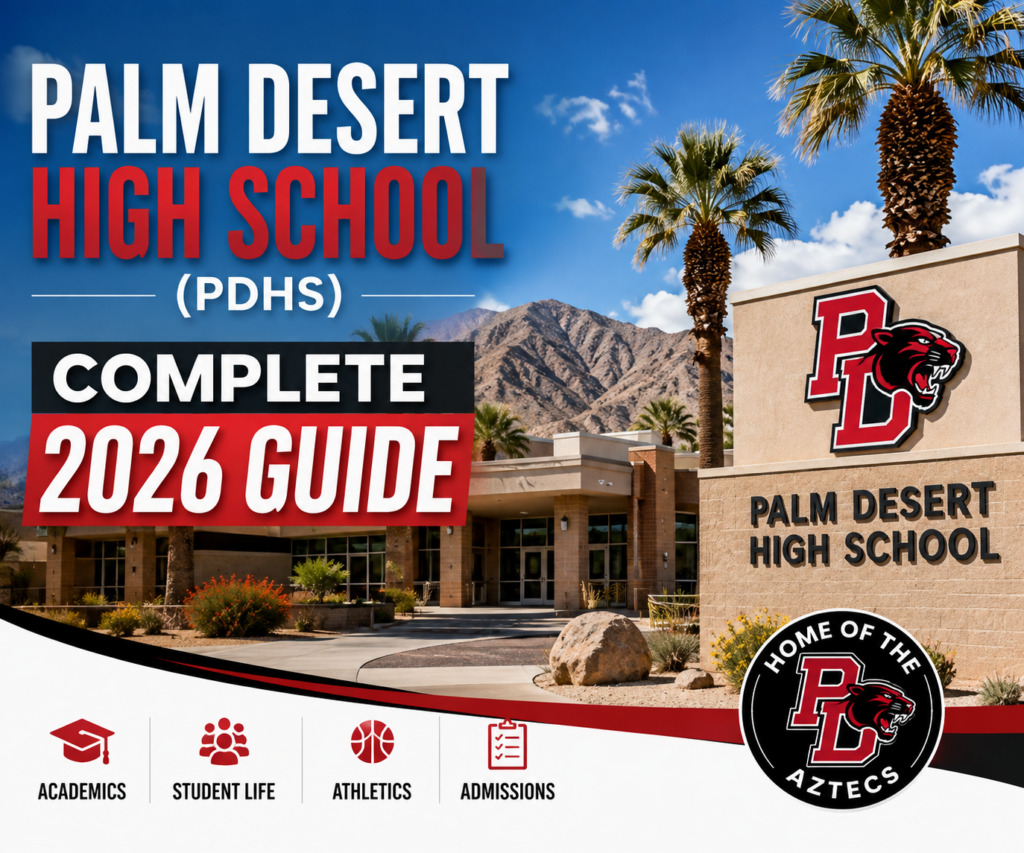
Palm Desert High School (PDHS)

Palm Desert High School (PDHS) Complete 2026 Guide

Palm Desert High School (PDHS) is situated in the central heart of Palm Desert, California, within the Coachella Valley. It sits just south of the main commercial corridors of the desert, placing it close to residential neighborhoods, higher education campuses, and primary transit routes. Street Address & Geographic Coordinates Address: 74910 Aztec Road, Palm Desert, CA 92260 Cross Streets: Located just east of Cook Street and south of Fred Waring Drive, two of the Coachella Valley’s primary thoroughfares. Neighborhood Context & Surroundings Educational Hub: PDHS is located just south of the College of the Desert (COD) main campus and the CSU San Bernardino Palm Desert Campus, creating an educational corridor along Cook Street that makes dual-enrollment opportunities physically accessible for upperclassmen. Civic & Cultural Amenities: The campus is minutes away from civic facilities, including the Palm Desert Civic Center Park, the Palm Desert City Library, and the McCallum Theatre. Residential Setting: The surrounding area consists primarily of single-family residential subdivisions, gated communities, and local parks, making it central for students commuting from Palm Desert, Rancho Mirage, and northern Indian Wells. Campus Accessibility & Commute Traffic Patterns: Because Cook Street and Fred Waring Drive serve as major arterial roads for the entire mid-valley, drop-off and pick-up hours bring significant traffic density around Aztec Road and Hovley Lane. Public Transit: The SunLine Transit Agency services the nearby arterial corridors, connecting the campus directly with surrounding desert cities. Modern Campus Rebuild The physical campus underwent a complete, multi-million-dollar modernization and reconstruction project. The original 1986 facilities were replaced with updated, state-of-the-art classroom buildings, upgraded athletic complexes, a modernized library, and a large multi-purpose gymnasium designed to support the school’s large student population. Academic quality and performance Palm Desert High School (PDHS) maintains a reputation as one of the flagship academic institutions within the Desert Sands Unified School District (DSUSD) and across the greater Coachella Valley. Key Academic Metrics & Recognition State & National Rankings: PDHS consistently ranks among the top public high schools in Riverside County and the upper tier of California high schools in publications such as U.S. News & World Report and Niche. California Distinguished School: The campus has earned designation as a California Distinguished School and a California Gold Ribbon School, reflecting strong standardized testing outcomes, high graduation rates, and closed achievement gaps. Graduation Rate & College Readiness: The school maintains a graduation rate well above 95%, with a high proportion of graduates completing the California State University (CSU) and University of California (UC) “A-G” subject requirements necessary for four-year university admission. Advanced Placement (AP) & Rigor PDHS offers a robust college-preparatory curriculum featuring more than 30 Advanced Placement courses spanning STEM, humanities, languages, and fine arts. AP Capstone Diploma Program: PDHS is an authorized AP Capstone school, allowing students to take AP Seminar and AP Research. Students who score 3 or higher on both courses, plus four additional AP exams, earn the AP Capstone Diploma—a distinction valued by university admissions committees. High Exam Participation: A large segment of the student body participates in AP coursework, with exam pass rates historically exceeding both state and national averages. Dual Enrollment & College Pathways Capitalizing on its proximity to local higher education institutions, PDHS offers articulated college-level coursework directly to high school students: College of the Desert (COD) Dual Enrollment: Through partnerships with COD, students can take transferable college-level courses on the PDHS campus or online, earning both high school credits and college credits tuition-free. CSU & UC Alignment: Academic counseling emphasizes early pathway tracking to ensure students meet UC/CSU eligibility requirements by their senior year. CTE Academies & Specialized Pathways Beyond standard college prep, PDHS integrates Career Technical Education (CTE) pathways that bridge academic theory with industry skills: Pathway / Academy Focus Areas Key Outcomes Health Academy / Medical Industry Medical terminology, anatomy, sports medicine, healthcare ethics Hands-on lab work and preparation for post-secondary healthcare degrees Engineering & Architecture Drafting, CAD design, robotics, structural engineering fundamentals Project-based learning aligned with STEM university majors Digital Arts & Media Production Broadcast journalism (Aztec TV), graphic design, digital film production Real-world studio operation and portfolio development Programs at Palm Desert High School Palm Desert High School (PDHS) offers a comprehensive array of specialized academic pathways, technical academies, and extracurricular programs designed to prepare students for both four-year universities and direct entry into competitive career sectors. Special Academic Pathways & Academies PDHS structures several of its career-focused programs around California Partnership Academies and Career Technical Education (CTE) multi-year sequences: Health Careers Academy: A structured three-year cohort program (“school-within-a-school”) focused on patient care, medical technology, and sports medicine. Using Project Lead The Way (PLTW) biomedical curriculum, upperclassmen gain clinical skills, medical terminology, and complete internships with local healthcare providers and medical offices. Engineering Pathway: Grounded in PLTW STEM standards, this pathway covers mechanical and structural engineering, CAD drafting, digital electronics, and robotics. Courses meet UC/CSU laboratory science requirements and emphasize hands-on design challenges. AVID (Advancement Via Individual Determination): Designed to support first-generation college-bound students, AVID provides structured tutorial sessions, organizational skills training, college visits, and assistance with financial aid applications throughout all four years. Aztec Arts Academy & Visual/Media Arts PDHS houses a prominent visual and performing arts department, organized under the Aztec Arts Academy banner: Branch / Pathway Core Focus Key Student Outputs Film & Broadcasting Digital cinematography, audio production, and broadcast journalism. Producing Aztec TV (the daily student broadcast) and student film portfolios. Theatre Arts Acting, stagecraft, set construction, lighting, and sound direction. Mainstage seasonal theatrical productions and competitive drama showcases. Dance & Performing Arts Technical training across jazz, hip-hop, contemporary, and ballet choreography. Seasonal dance concerts and performances at school-wide events. Instrumental & Vocal Music Marching band, jazz ensemble, orchestra, and concert choir. Halftime shows, regional festival evaluations, and community performances. Military Science & Cadet Corps California Cadet Corps (CACC): Operated through the National Guard, this program provides leadership development, military drill and ceremonies, physical fitness training, and citizenship education. Students earn elective or physical education credits while advancing in cadet rank.

Palm Desert High School (PDHS) Complete 2026 Guide Read More »

8 Amazing Water Parks to Visit on Vacation in the Coachella Valley

8 Amazing Water Parks in the Coachella Valley

If you’ve spent any time in the Coachella Valley when the weather warms up, you already know the heat is no joke. By midday, the sun is beaming down, and the only sensible option is finding a cold body of water as fast as possible. The good news is that Greater Palm Springs goes way beyond standard hotel pools. Whether you’re traveling with kids who need to burn off energy on giant slides, looking to catch an actual wave in the middle of the desert, or just wanting to kick back with a drink and float down a lazy river, the valley has plenty of awesome spots to dive into. Here is a down-to-earth breakdown of 8 amazing water parks to visit on vacation in the Coachella Valley, which also include surf clubs and splash-worthy resorts around the area. This article is complete with insider tips and quick answers to the questions you’ll likely have before booking. Splashtopia If you’re vacationing with kids, Splashtopia at the Omni Rancho Las Palmas Resort in Rancho Mirage is pretty much paradise. It’s custom-built for families who want a full water park experience without having to leave their resort grounds. Between the two 100-foot waterslides, a sprawling play zone with water cannons, and a sandy beach entry where little ones can build sandcastles, it easily keeps everyone entertained for hours. If you’re looking for relaxation, you can grab a tube and drift along the 425-foot lazy river while taking in views of the surrounding mountains and palm trees. Pro Tip Splashtopia is strictly for resort guests and day-pass holders, so seating around the lazy river fills up fast on hot weekends. Head down right when it opens in the morning to snag prime lounge chairs in the shade near the main pool entry. FAQ Do you need to stay at the Omni Rancho Las Palmas to access Splashtopia? Not necessarily! While it’s primarily an amenity for overnight resort guests, day passes are often available for purchase via ResortPass depending on seasonal occupancy. HyTides Located at the Grand Hyatt Indian Wells Resort & Villas, HyTides Plunge is currently the largest resort water feature in the entire Coachella Valley. It’s got a energetic, upscale feel that caters really well to slightly older kids and teens alongside younger ones. The headliner here is a pair of 30-foot-tall, 220-foot-long dueling speed slides where riders can race each other down to the splash pool below. Once the adrenaline wears off, you can grab an inner tube and float the 450-foot lazy river, while toddlers stick to the dedicated “Lil Vista” slide and interactive splash pad. Pro Tip Height restrictions are enforced pretty strictly here—riders need to be at least 48 inches tall for the main dueling slides and 42 inches for the Lil Vista slide. Measure your kiddos before you promise them a trip down the big slides so there are no tearful surprises at the tower entrance! FAQ Can non-hotel guests visit HyTides? Yes! While access is included for overnight resort guests, non-guests can purchase day passes or rent daybeds/cabanas via ResortPass depending on seasonal availability. Palm Springs Surf Club Sitting on the site of the former Wet ‘n’ Wild in Palm Springs, the Palm Springs Surf Club completely reimagined what a desert water park can be. It’s equal parts high-tech surf break and upscale, trendy beach club. At the center of it all is a state-of-the-art wave lagoon engineered to pump out perfectly shaped ocean waves for everyone from beginner longboarders to seasoned pros. If you aren’t looking to catch a wave, there’s still plenty to do: you can float down the lazy river, take a spin down their speed slides, or chill in a lounge chair with a craft cocktail while watching the surfers do their thing. Pro Tip Surf sessions at the wave pool are booked separately from standard park entry passes and fill up quickly. If you actually want to get in the water and surf, book your wave slot online weeks in advance—don’t count on showing up and grabbing a spot at the gate! FAQ Do you have to be an experienced surfer to visit? Not at all! You don’t even have to get in the wave lagoon. The park offers general admission tickets for access to the lazy river, slides, splash pads, and lounge area, plus beginner-friendly surf lessons if you want to try it out for the first time. DSRT Surf Located adjacent to the Desert Willow Golf Resort in Palm Desert, DSRT Surf is the newest heavy hitter in the Coachella Valley’s surf park lineup. Tucked right between two championship golf courses, this 5.5-acre lagoon uses Wavegarden Cove technology to generate up to 1,000 ocean-quality waves per hour. The massive footprint allows multiple wave zones to run at the same time—meaning advanced surfers can carve up steep barrels on the outer reef while beginners practice popping up on soft, rolling whitewash in the shallow bays. Aside from the main surf lagoon, the resort layout includes a leisure pool, pickleball courts, and a three-pool viewing deck complete with cabanas, a full bar, and a restaurant. Pro Tip If you’re traveling with family members who aren’t interested in riding waves, look into grabbing a spectator pass or cabana rental on the viewing deck. They’ll get full access to the leisure pool, food, and drinks while maintaining front-row seats to watch all the action in the lagoon. FAQ How does a massive surf pool work in a desert environment without wasting water? DSRT Surf utilizes a “Turf for Surf” sustainability model. The development offset its water usage by converting tens of acres of nearby golf course turf into drought-tolerant landscaping, saving more water annually than the surf lagoon actually consumes. Palm Desert Aquatic Center If you want a fun, water-filled day with the family without paying high resort fees, the Palm Desert Aquatic Center is an absolute gem. Spanning nearly eight acres right in Civic Center Park, this modern, spotlessly clean facility

8 Amazing Water Parks in the Coachella Valley Read More »

Scroll to Top