
Last Updated: November 20, 2026
Quick Summary
Finding winter community activities in the desert starts with the recreation district activity guide, which lists recurring programs like fitness classes, youth sports, senior socials, and guided outdoor recreation in one place. Layer in seasonal events and confirm each listing on the organizer’s own page before you go.
- Check the current activity guide edition, since schedules can change mid-season.
- Block fixed annual anchors early, then leave room for events announced four to eight weeks out.
- Recurring weekly programs are the backbone of a winter routine and the easiest place to start.
- Confirm registration deadlines, indoor or outdoor staging, parking, and accessibility before committing a weekend.
- Verify listings on the organizer’s own page, because third-party roundups drift out of date fastest.
Table of Contents
- Why Winter Is the Best Time to Join Desert Community Activities
- Your Desert Recreation District Activity Guide for Winter
- Winter Events in Palm Desert: What to Put on Your Calendar
- Coachella Valley Community Activities for Every Age and Ability
- Outdoor Recreation and Nature Walks in the Winter Desert
- Arts, Crafts, and Creative Community Programs
- How to Find and Verify Current Winter Community Activities
- Desert-Specific Winter Safety and Accessibility Tips
- Plan Your Winter Community Calendar with Local Resources
- Frequently Asked Questions
Why Winter Is the Best Time to Join Desert Community Activities
Winter is the season when the desert opens up. Daytime temperatures settle into the comfortable range, trails that bake in summer become walkable again, and the Coachella Valley fills with seasonal residents eager to meet their neighbors. At Visitor Center for Palm Desert & Palm Springs, we have provided information for residents and visitors for over 30 years, and the moment the heat breaks, winter community activities become one of the easiest ways for newcomers to feel at home.
Finding winter community activities in desert settings is easier than most people expect, but it rewards a little preparation. The trick is knowing where the recurring programs live, which events return every season, and how to check that a listing is current before you drive out. Below, we walk through the recreation district guide, the seasonal calendar, and the practical habits that separate a well-planned winter from a scattered one.
Here is the core insight most guides miss: winter community life in the desert is not a single event series you can bookmark. It is a patchwork of parks programs, library workshops, art fairs, and guided walks, each run by a different organization with its own schedule. Learn the patchwork, and the season fills itself.
Your Desert Recreation District Activity Guide for Winter
Start with the recreation district. A Desert Recreation District activity guide is the single most useful document for anyone planning a winter calendar, because it lists recurring programs in one place: fitness classes, youth sports, senior socials, and guided outdoor recreation.
Recreation districts often publish a seasonal guide online and in print. Look for three things:
- Registration dates. Popular classes fill quickly once snowbirds land, so note when sign-ups open.
- Age and ability groupings. Programs are usually split into children’s activities, adult fitness, and senior-friendly sessions.
- Location and frequency. A class that meets weekly at a nearby park beats a one-time event across the valley.
A common mistake is treating the guide as a static list. Schedules can change mid-season, so check the current edition rather than a screenshot someone shared last year.
Winter Events in Palm Desert: What to Put on Your Calendar
Seasonal events anchor the winter social calendar, and the local lineup rewards anyone who plans a few weeks ahead. Holiday lights, festive gatherings, art fairs, and community celebrations cluster between late fall and early spring, when the weather cooperates with outdoor staging. The problem with most event roundups is that they describe the vibe and skip the logistics. This section does the opposite: it shows you how the winter calendar is actually structured, what kinds of events recur, and how to pin down the details that decide whether you go.
Build the calendar in three layers
The smart approach is to stack your season rather than chase a single list.
- Fixed annual anchors. These are the events that land on or near the same weekend every year, tree lightings, holiday parades, New Year’s gatherings, and seasonal art walks. Because the timing is predictable, you can block the weekend now and confirm the details later.
- Announced-late events. Art fairs, pop-up markets, craft festivals, and concert series often publish dates only four to eight weeks out. Leave room in your calendar for these instead of filling every weekend in advance.
- Recurring weekly programming. Farmers markets, guided walks, library workshops, and park programs run on a repeating schedule. These are the backbone of a winter routine and the easiest place to start.
A common pattern is that newcomers over-book the fixed anchors and then have nothing to do on ordinary weekends. The recurring layer is what actually fills a season.
What typically shows up on a winter calendar
Across the valley, winter event programming tends to fall into a handful of recognizable categories. Knowing the categories helps you search for the right thing instead of scrolling a generic feed.
| Event Category | Typical Timing | What to Confirm Before You Go |
|---|---|---|
| Holiday lights and tree lightings | Late November through early January | Start time, whether tickets are required, parking |
| Art fairs and studio tours | January through March | Venue, whether it is indoors or outdoors, entry policy |
| Community festivals and parades | December through February | Route, road closures, seating and shade |
| Concert and performance series | Throughout winter | Reservation requirements, doors-open time |
| Pop-up markets and craft fairs | Announced 4-8 weeks out | Vendor lineup, cash vs. card, accessibility |
The logistics that decide the outing
Event listings rarely tell you the things that actually shape the day. Before committing a weekend, confirm:
- Reservation vs. drop-in. Some community events are open to all; others require advance registration that closes when capacity fills. A registered event with a closed window is not a maybe, it is a no.
- Indoor or outdoor staging. Winter afternoons are mild, but evenings cool fast. An outdoor evening event needs a jacket and a plan for the walk back to the car.
- Parking and arrival buffer. Popular events concentrate traffic into a short window. Arriving early is cheaper than circling.
- Accessibility. Ask about paved paths, seating, restrooms, and whether the venue has step-free entry. A quick call settles it faster than a website.
- What to bring. Water, layers, sun protection, and a charged phone cover most winter outings.
Watch out: event listings age badly. A flyer from last winter may show the same venue and the same weekend, but the organizer may have moved or cancelled. Verify on the organizer’s own page before you drive out.
Where to look first
Start with the organizer, not the aggregator. City parks and recreation departments, the local visitor and convention bureau, libraries, art organizations, and faith communities each publish their own winter schedules, and those primary sources update first. Third-party roundups are useful for discovery but drift out of date fastest.
For a broad, dated list of what is happening across the valley, our Desert Events calendar is a practical starting point before you commit weekends. Treat it as a discovery layer, then confirm each event at the source.
A realistic winter calendar
A workable season looks like this: two or three fixed anchors blocked early, one recurring weekly program you attend without thinking about it, and a standing habit of checking new listings every couple of weeks for the announced-late events. That structure gives you something to do every week without turning event planning into a second job.
Coachella Valley Community Activities for Every Age and Ability
Not every activity suits every household, and the valley’s community programs are broader than most visitors realize. Coachella Valley community activities range from toddler story hours to senior walking groups, with plenty of middle ground for mixed-age families and visitors with mobility considerations. Most guides stop at a list of categories. The more useful question is how to match a specific person, a shy seven-year-old, a visiting grandparent, a wheelchair user, a teenager who does not want to be there, to a program that will actually work.
Sort by who is going, not by what sounds fun
A practical way to sort the options:
| Age or Ability Group | Typical Program Type | Where to Look | What to Ask |
|---|---|---|---|
| Young children | Story hours, crafts, junior ranger programs | Libraries, parks departments | Age range, caregiver requirement, drop-in or registered |
| Teens | Sports leagues, volunteer orientation, teen advisory groups | Recreation districts, nonprofits | Whether prior sign-up is required, season length |
| Adults | Fitness classes, art workshops, guided hikes | Recreation guides, community centers | Skill level, equipment provided, class size |
| Seniors | Social clubs, gentle walks, card groups | Senior centers, faith communities | Time of day, seating, transportation options |
| Limited mobility | Accessible paths, indoor classes, seated crafts | Ask venues directly about access | Paved routes, step-free entry, restrooms, seating |
| Mixed-age families | Festivals, markets, drop-in crafts | Parks departments, libraries | Whether one adult can supervise several ages |
The inclusion details that decide participation
The last two rows matter more than they get credit for. Many desert venues sit on flat, paved ground and welcome wheelchairs and walkers, but not all do. A quick phone call settles it faster than a website. Ask specifically about step-free entry, accessible restrooms, and whether seating is available along the route, not just whether the venue is “accessible.”
For older adults, the deciding factor is often time of day and transportation, not the activity itself. A morning walking group that meets near a bus stop is more usable than an afternoon class across the valley. For families with mixed ages, drop-in formats beat registered programs, because one adult can supervise several children without committing to a full season.
The social-connection angle most guides skip
Here is the part that separates a list of activities from a real community calendar: the format matters as much as the topic. A one-time festival is fun, but a recurring weekly class puts you in the same room with the same people for months, which is how newcomers actually build friendships. If the goal is to meet residents rather than simply fill an afternoon, prioritize programs that repeat.
A few formats are especially good for someone attending alone:
- Recurring classes with a fixed roster, where faces become familiar.
- Volunteer orientations, which attract people who want to be involved and tend to be welcoming to newcomers.
- Guided group walks, where conversation happens naturally and no one expects you to arrive with a friend.
- Drop-in craft and game sessions, which are low-pressure and forgiving of a late arrival.
A common pattern is that people sign up for a single big event, enjoy it, and then have nothing on the calendar the following week. The recurring program is what converts a good afternoon into a social routine.
Budget and access considerations
Community programming spans a wide range. Many library workshops, park programs, and guided walks are free or low-cost, while registered classes and ticketed events carry a fee. Rather than assume, check the organizer’s page for the registration policy and whether materials are included. If cost is a constraint, the free tier is larger than most people expect: libraries, parks departments, and volunteer organizations carry much of the recurring programming.
Watch out: a program listed as free may still require advance registration, and a program listed as open may fill up. Confirm both the cost and the registration window before you plan around it.
Match the person, then the program
The reliable method is to start with the person who is going, note their constraints, age, mobility, budget, comfort attending alone, and then search the organizer’s schedule for a format that fits. That beats scrolling a generic activity list and hoping something works.
Outdoor Recreation and Nature Walks in the Winter Desert
Winter is prime time for outdoor recreation in the desert, and nature walks are the easiest entry point. Guided hikes and ranger-led walks run throughout the cool months, pairing local flora and fauna knowledge with manageable distances. Readers who want a bookable option can explore guided desert nature walks in Palm Springs.
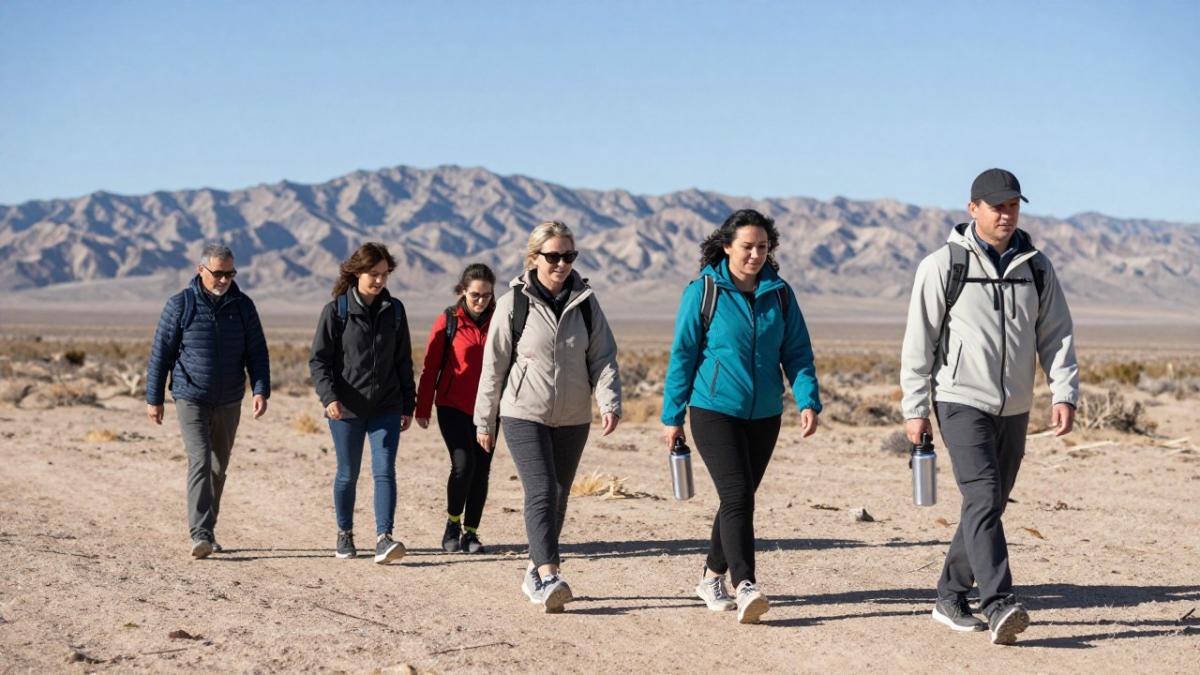
For more on attractions across the area, see our Desert Attractions page. For the self-directed, trailheads across the valley offer marked routes, though trail conditions change with winter weather and should be checked before setting out.
Carry more water than you think you need, even on a mild day.
Arts, Crafts, and Creative Community Programs
Creative programming runs all winter, and it is one of the quietest ways to meet people. Libraries, community centers, and art organizations host winter crafts sessions, open studio hours, and art fairs that welcome beginners and experienced makers alike.
For a free, concrete example of local creative life, our write-up on the “Diverse Dimensions” art show at College of the Desert covers a contemporary exhibition on the Palm Desert campus, the kind of low-cost outing that fits neatly into a winter afternoon.
What most guides miss is that these programs double as social infrastructure. A weekly ceramics class puts you in the same room with the same people for months, which is how newcomers actually build friendships. One-time events are fun; recurring classes are where connection happens.
How to Find and Verify Current Winter Community Activities
Verification is the step most people skip, and it is the one that saves an afternoon. A simple routine keeps your calendar accurate:
- Check the source date. A listing without a recent update is a guess, not a fact.
- Confirm on the organizer’s own page. Third-party roundups drift out of date fastest.
- Call or check social channels for same-week changes. Weather and holidays move things.
- Note registration deadlines. Drop-in events are forgiving; registered programs are not.
- Ask about accessibility and parking before you commit.
This is where an information source earns its keep. At Visitor Center for Palm Desert & Palm Springs, we keep our listings current because outdated information can lead to confusion for visitors. Our team lives in Palm Desert and stays up on most of what is happening across the Coachella Valley.
Desert-Specific Winter Safety and Accessibility Tips
Winter weather is gentler, not harmless. Desert conditions still demand respect, and a few habits help keep a day outdoors comfortable.
- Hydrate steadily. Dry air masks how much water you lose.
- Layer clothing. Mornings and evenings run cool even when midday is mild.
- Watch for heat illness on warm afternoons (the CDC). Our guide to preventing heat exhaustion during winter desert activities explains the warning signs in plain terms.
- Tell someone your route on longer walks and carry a charged phone.
- Check accessibility before booking. Ask venues about paved paths, seating, and restrooms.
None of this is complicated. It is the difference between a casual outing and an emergency.
Plan Your Winter Community Calendar with Local Resources
A winter calendar built from verified sources beats a pile of bookmarks every time. Start with the recreation district guide, layer in seasonal events, and confirm each listing close to the date.
For a broader roundup to fill the gaps, our guide to the best things to do in winter across the desert covers the seasonal highlights worth planning around. Between that and our weekly updates, you have enough to build a season, not just a weekend.
Winter in the desert rewards the prepared. The programs are there, the weather cooperates, and the only real obstacle is scattered or outdated information. Visitor Center for Palm Desert & Palm Springs provides an AI-powered guide to the Coachella Valley, curated local news and event listings, and a centralized resource for activities, dining, and accommodations. Get started with Visitor Center for Palm Desert & Palm Springs and build a winter calendar you can actually trust.
Frequently Asked Questions
What are some fun winter community activities in the desert?
Winter in the Coachella Valley brings guided hikes, nature walks, arts and crafts fairs, holiday lights displays, and outdoor recreation programs. Many local recreation centers offer fitness classes, pickleball, and volunteer orientations. You can also find seasonal events like art fairs, wellness retreats, and family activities such as junior ranger programs. Check the Desert Recreation District activity guide and local event calendars to confirm dates and registration details before you go.
How do I find the Desert Recreation District activity guide?
The Desert Recreation District publishes its activity guide online and at community centers throughout the Coachella Valley. Search for the district’s official website, then look for the current seasonal guide, which lists classes, sports leagues, and special events. You can also call or visit a local recreation center to pick up a printed copy. Always verify that the guide you are viewing is the most recent version, since schedules change seasonally.
What should I check before attending a winter community event?
Confirm the date, time, and location on the organizer’s official page or social media, as winter events can shift due to weather or scheduling. Check whether registration is required and if there are age or ability restrictions. Review parking and accessibility information, and dress in layers because desert temperatures swing widely between day and night. If the event is outdoors, bring water and sun protection even in winter.
Where can I find Coachella Valley community activities for newcomers?
Start with the Desert Recreation District activity guide and local library bulletin boards, which list recurring classes and social groups. City parks and recreation departments post seasonal schedules online. For a curated overview, the Visitor Center for Palm Desert & Palm Springs offers a [Desert Events](https://palmdesert.com/desert-events/) page to help newcomers find current Coachella Valley activities.