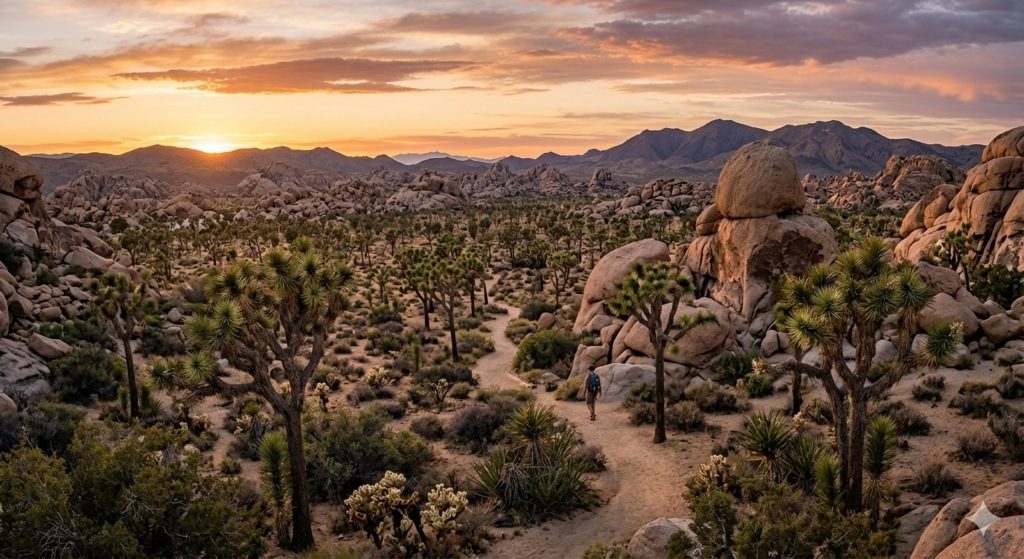
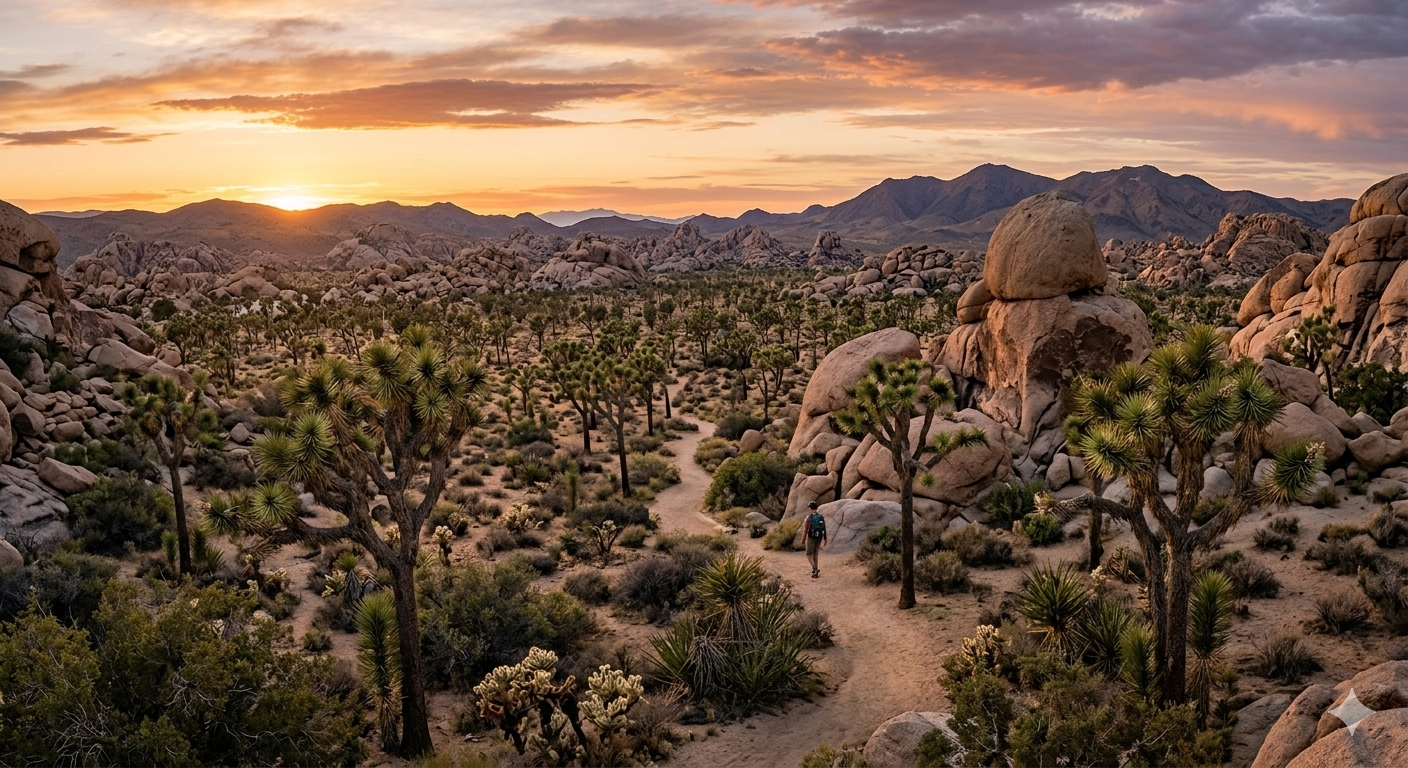
There is a specific kind of silence that you only find in the high desert. It isn’t the absence of sound, but rather a deep, resonant hum that vibrates through the sand and the ancient monzogranite boulders. To visit Joshua Tree National Park is to step into a landscape that feels like another planet, yet somehow feels like coming home to something primal and essential.
Located at the intersection of two distinct desert ecosystems, the Mojave and the Colorado, this park is more than just a collection of unusual trees. It is a living, breathing testament to resilience and the quiet beauty of the American Southwest.
The Magic of the Mojave and Colorado Deserts
The true heartbeat of Joshua Tree National Park lies in its diversity. In the eastern part of the park, the Colorado Desert sits at a lower elevation, characterized by sprawling stands of creosote bushes and the “teddy bear” cholla cactus which, despite the name, is not for hugging.
As you move west and climb in elevation, you enter the Mojave. This is where the park’s namesake, the Yucca brevifolia, stands tall. These aren’t actually trees, but a type of monocot in the agave family. With their twisted branches reaching toward the sky, they look like desert prophets frozen in time.
Exploring the Iconic Boulder Formations
For many, the draw of Joshua Tree National Park is the rock climbing and hiking. The massive rock piles, such as those found at Hidden Valley or Skull Rock, were formed over millions of years as groundwater eroded underground granite. Today, they serve as a playground for adventurers and a sanctuary for those looking to get lost in thought.
Whether you are an experienced climber or just someone who enjoys a gentle scramble, the rocks offer a unique perspective on the desert. From the top of a boulder, you can see the vastness of the Coachella Valley stretching out toward the horizon, reminding you of just how small and yet connected we all are.
Connecting with the Night Sky
One of the most vital parts of the park’s heartbeat happens after the sun goes down. Because it is far removed from the light pollution of major cities like Los Angeles, Joshua Tree National Park is an International Dark Sky Park.
When the stars come out, the desert transforms. The Milky Way becomes visible to the naked eye, stretching across the sky like a river of light. It is a humbling reminder of the universe’s scale. Sitting by a campfire under this canopy of stars, you truly feel the pulse of the earth.
A Journey of Conservation and Respect
As we join the heartbeat of this landscape, we must also be its heartbeat’s protectors. The desert is a fragile environment. To keep Joshua Tree National Park thriving for future generations, it is essential to follow “Leave No Trace” principles. Stay on the trails, pack out what you pack in, and respect the wildlife, from the desert tortoise to the elusive bighorn sheep.
When you visit, don’t just rush through the viewpoints. Park the car, take a deep breath of the pinyon-scented air, and listen. You’ll hear it, the heartbeat of the desert calling you to stay just a little bit longer.