

Last Updated: November 4, 2026
Quick Summary
The best oven baked pizza in Palm Desert depends on the oven and crust you want, since a brick or wood-fired oven gives a charred, chewy edge while a deck oven gives a crisp, sturdy base. Start by choosing the style, then narrow your list by budget and whether you plan to dine in or take out.
- Ask each restaurant which oven it uses, since that changes the crust more than the menu label.
- Brick and wood-fired ovens produce a blistered, chewy crust, while deck ovens bake evenly and hold heavy toppings.
- Compare cost per slice rather than sticker price, since a large pie often wins on value.
- Thin crust and deck-baked pies hold their texture better for takeout than delicate wood-fired pies.
- Confirm current hours, specials and menu prices by calling ahead before you visit.
Table of Contents
- What Oven Baked Pizza Means in Palm Desert
- Wood-Fired Pizza in Palm Desert: What to Look For
- Price-to-Value: Comparing Pies, Sizes and Specials
- Best Pizza in Palm Desert That Delivers or Offers Takeout
- Bill’s Pizza Palm Desert Menu: Pies, Sides and Ordering
- Dietary Needs: Vegetarian, Gluten-Conscious and Kid-Friendly Choices
- Best Time to Visit for Dinner, Lunch and Happy Hour
- Choosing Your Oven Baked Pizza Stop for Tonight
- Frequently Asked Questions
What Oven Baked Pizza Means in Palm Desert
Oven baked pizza is a broad term, and in Palm Desert it covers everything from thin, cracker-crisp rounds to thick, pillowy pies pulled from a brick oven. Searching for the best oven baked pizza spots in Palm Desert means deciding which style you want before you decide where to eat. Most visitors get better results when they start with the crust and work outward.
The phrase matters because the oven shapes everything else. A pizza cooked at very high heat for a short time comes out blistered and chewy. A pizza cooked at a lower temperature for longer tends to be crisp and evenly browned. Both can be excellent, but they are different meals.
Visitors often ask whether a restaurant that bakes in an oven is the same as one that uses a wood fire. It is not always. Some kitchens use gas or electric ovens designed to mimic high heat. Others burn real wood. Ask the server which oven they use, since that answer tells you a great deal about the final texture.
Wood-Fired Pizza in Palm Desert: What to Look For
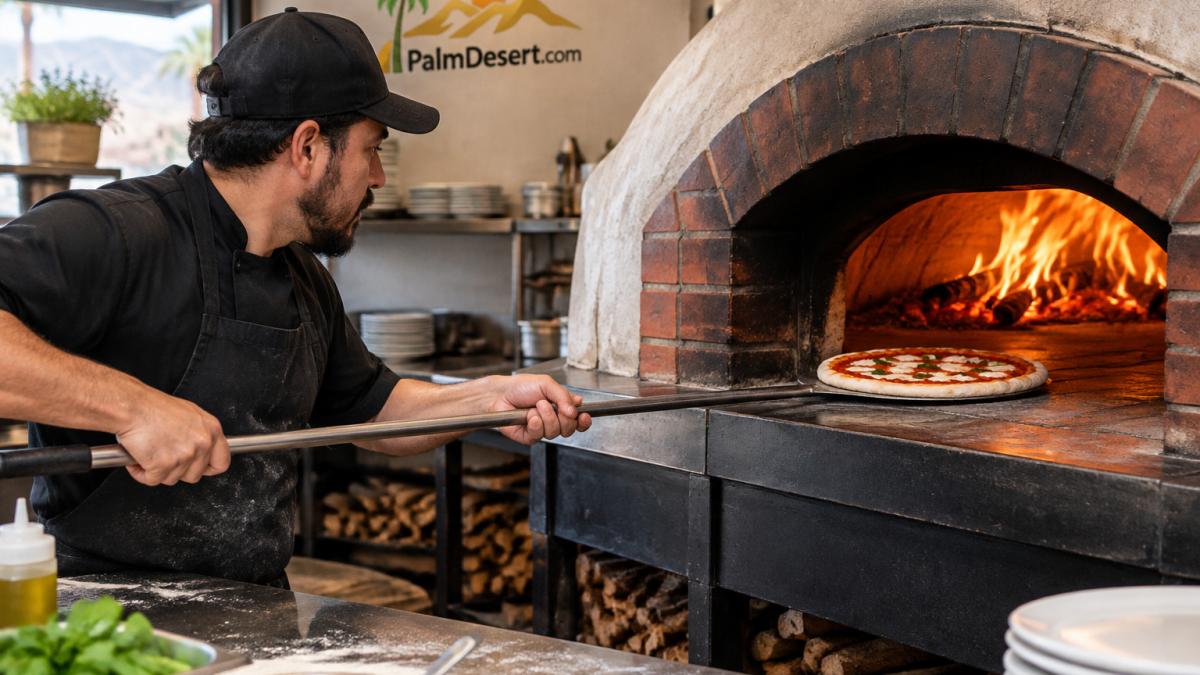
Wood-fired pizza usually means a dome-shaped oven that reaches very high temperatures. The result is a fast bake with a charred edge, soft center, and a smoky finish. When you are scanning menus, look for words like “wood-fired” or “brick oven,” but also check whether the kitchen describes its process in any detail.
A good sign is a menu that names its dough, sauce, and cheese sources. A vague menu does not always mean poor quality, but detail usually signals attention to the craft.
Watch out: a wood-fired pie can arrive with a black, almost burnt rim. That char is normal for the style. If you prefer a softer edge, mention it when you order.
!A pizza cook sliding a fresh pie into a glowing brick oven in a casual restaurant kitchen
Oven Types and How They Change the Crust
Each oven type creates a distinct crust. Brick and wood-fired ovens give you blistering, leopard-spotted edges and a chewy interior. Deck ovens, common in many casual restaurants, bake more evenly and produce a sturdier base that holds toppings well. Conveyor ovens are fast and consistent, which suits takeout and high-volume kitchens, though the crust often comes out less distinctive.
If you want a crust with personality, the brick oven is usually the best choice. If you want reliability and a crisp base for heavy toppings, a deck oven may suit you better. Neither is objectively superior. The right choice depends on what you value.
Crust Styles Compared: Thin, Hand-Tossed and Neapolitan
Thin crust is rolled or stretched very flat, so it bakes quickly and stays crisp. It suits lighter toppings and people who want a snackable slice. Hand-tossed crust is thicker and more elastic, with a chewier bite and a slightly puffed rim. It holds more toppings and feels more substantial. Choosing between a crisp, snackable slice and a chewier, more substantial one starts with knowing what authentic thin crust should feel like.
Neapolitan-style pizza is a specific tradition: a soft, thin center, a puffed and charred edge, and a short bake in a very hot oven. It is often delicate enough that a fork and knife feel natural. If you are ordering it for the first time, expect a softer middle than you may be used to.
Price-to-Value: Comparing Pies, Sizes and Specials
The useful comparison for oven baked pizza is cost per slice and cost per person, not the sticker price on the menu.
Book Hotels with Exclusive Discounted Rates HERE →
The Three Price Tiers You Will See
Oven baked pizza spots are often sorted by price tier using the conventional $, $$, and $$$ shorthand:
- $ (budget): counter-service slice shops and takeout-focused kitchens. Expect thin crust, limited signature pies, and the best cost-per-slice math when you buy a whole large pie rather than slices.
- $$ (mid-range): full-service casual restaurants with deck ovens, hand-tossed crusts, and a broader topping list. This is where most family dinners land, and where lunch specials and happy-hour pricing do the most work.
- $$$ (premium): wood-fired and Neapolitan-style kitchens with named dough, sauce, and cheese sources. You are paying for craft and oven type, not volume, so cost per slice is highest here.
Cost Per Slice Beats Sticker Price
A large pie is often cut into several slices. Divide the menu price by the slice count and you get a number you can compare across restaurants regardless of size naming, which varies wildly from one kitchen to the next. A shared large pie almost always wins on cost per slice, but only if the crust is sturdy enough to survive ten minutes on the table. A delicate, high-moisture wood-fired pie is a poor candidate for sharing slowly, because the center softens before the last slice is gone.
Watch out: signature pies with several premium toppings are often priced lower than building the same combination from an a-la-carte topping list. Price the signature version first, then compare.
Where Specials Actually Save Money
Lunch service and happy hour can carry different deals than dinner, so confirm whether the pizza itself is included before you plan a meal around a special.
Toppings, Sizes, and the Value Trap
Ask whether a restaurant prices toppings individually or includes them in signature builds, and check how a half-and-half pie is charged.
Pricing depends on the restaurant, the current menu, and the toppings you choose, so confirm each spot’s menu before you go. The goal is not the lowest number on the page; it is the most pizza, at the texture you want, for the money.
The table below sums up how the three price tiers differ, so you can compare cost per slice at a glance.
| Tier | Typical setting | What you get |
|---|---|---|
| $ (budget) | Counter-service slice shops and takeout kitchens | Thin crust, limited signature pies, best cost per slice on whole pies |
| $$ (mid-range) | Full-service casual restaurants | Deck ovens, hand-tossed crust, broader topping list, lunch and happy-hour deals |
| $$$ (premium) | Wood-fired and Neapolitan-style kitchens | Named dough, sauce and cheese sources, highest cost per slice |
Best Pizza in Palm Desert That Delivers or Offers Takeout
If you are not dining in, delivery and takeout change the equation. Oven baked pizza starts to soften within minutes of leaving the oven, so a short delivery radius matters. Ask how far the restaurant delivers and whether it offers curbside or in-store pickup, which often preserves the crust better.
Our recommendation for takeout is to choose a thin crust or a deck-baked pie. These hold their texture longer than a delicate, high-moisture pie. Save the wood-fired Neapolitan style for dining in, where it arrives at the table at its best.
Bill’s Pizza Palm Desert Menu: Pies, Sides and Ordering
Bill’s Pizza is a name that shows up often in local pizza searches, and the menu at a Bill’s location typically follows a classic American pizza-house structure: build-your-own pies in multiple sizes, a roster of signature combinations, and a supporting cast of wings, salads, garlic knots, and sandwiches. To compare it with other chains, see our California Pizza Kitchen guide with menu picks and competitor comparisons. Because menus, sizes, and sides change over time, confirm the current lineup directly with the location before you order.
What to Expect on the Menu
The core of a Bill’s-style menu is the build-your-own pie, offered in small, medium, and large sizes with a standard crust and a list of traditional toppings. Signature pies usually cluster around familiar profiles: a meat-heavy combination, a vegetarian garden pie, a white pie with ricotta and garlic, and a spicy option with peppers and sausage. Sides tend to include bone-in and boneless wings, mozzarella sticks, garlic bread, and a house or Caesar salad, which is what makes these menus work for families and groups.
Oven Type and Crust
Ask which oven the kitchen uses, because it changes the pie. A deck oven produces an even bake and a sturdy base that holds heavy toppings and travels well for takeout. A conveyor oven is fast and consistent, which suits high-volume evenings but yields a less distinctive crust. If the location runs a brick or wood-fired oven, expect a blistered edge and a chewier bite, and plan to eat in rather than take out.
How to Order Well
Watch out: topping pricing varies by location, and some charge per topping while others bundle them into signature builds. Price the signature version before you build the same combination yourself.
Takeout and Delivery Notes
Thin crust and deck-baked pies hold their texture longer than a delicate, high-moisture wood-fired pie, so they are the better takeout choice. Ask how far the location delivers and whether curbside pickup is available, since both preserve crust quality better than a long drive. If you are dining in, the wood-fired or brick-oven pie is worth ordering at the table where it arrives at its best.
Book Hotels with Exclusive Discounted Rates HERE →
Dietary Needs: Vegetarian, Gluten-Conscious and Kid-Friendly Choices
Ask whether the sauce or dough at any restaurant contains animal products, since house recipes can differ.
Gluten-conscious diners should ask about crust options and preparation, since shared ovens and prep surfaces can allow cross-contact.
For families, thin crust with simple toppings often appeals to younger eaters. Large shared pies and a few side dishes keep the table calm while everyone eats.
Best Time to Visit for Dinner, Lunch and Happy Hour
Calling ahead is the simplest way to confirm current hours and specials before you visit.
Choosing Your Oven Baked Pizza Stop for Tonight
Start with the style you want: a charred, chewy brick-oven pie, a crisp deck-baked pie, or a simple thin crust. Then narrow your list by budget, whether you plan to dine in or take out, and who is eating with you.
For a quick decision, pick the oven type first, the crust second, and the price last. That order usually leads to a pizza you will remember. If you are still deciding on a place to stay while you explore the valley, you can browse our directory of Palm Desert Hotels and Resorts for a home base close to the restaurants you want to try, or consider Vacation Rental Homes if you prefer extra privacy and a private pool.
Frequently Asked Questions
What makes oven baked pizza different in Palm Desert?
Oven type and crust style matter more than the label. Brick and wood-fired ovens produce a charred, chewy crust, while deck ovens produce a crisp, evenly baked base.
Is wood-fired pizza always better?
No. It suits some tastes better than others. If you prefer a sturdy base for heavy toppings, a deck-baked pie may serve you better.
Can I order oven baked pizza for takeout?
Yes, most restaurants offer takeout. Thin crust and deck-baked pies hold their texture better than delicate, high-moisture styles.
Frequently Asked Questions
What is the best oven baked pizza in Palm Desert?
The best choice depends on what you want from the crust. Wood-fired and brick-oven spots tend to produce a charred, blistered edge with a chewy center, while standard deck-oven kitchens produce a more even, crisp base. Compare recent online reviews, check whether the restaurant makes its dough in-house, and look at how the menu describes its oven. Visiting during a quieter weekday lunch lets you see the pizza come out of the oven before you order a full pie.
Which Palm Desert pizza spots serve wood-fired pizza?
Wood-fired pizza is usually identified by the menu language and the oven itself, which is often visible from the dining room. Restaurants that describe a brick oven, wood-fired pies or a Neapolitan-style crust are the most likely matches. Because menus change, confirm the oven type directly with the restaurant by phone or on its website before you plan a visit around a specific pie.
Which Palm Desert pizza restaurants offer delivery or takeout?
Delivery and takeout availability varies by restaurant and can change with season and staffing. Check each restaurant’s website or ordering platform for current hours and service areas. Takeout is often the easiest way to enjoy an oven baked pie at a hotel or rental, and ordering ahead during peak dinner hours helps avoid long waits. Pricing depends on pie size, toppings and any delivery fees, so review the current menu before you order.
How can I tell whether a pizza restaurant uses a wood-fired oven?
Look for a dedicated oven in the dining area or open kitchen, a menu that names the oven style, and pies that show dark, blistered spots on the crust. Ask staff what the oven is fueled by and how long a pie typically bakes. A restaurant that is proud of its oven will usually explain it readily. If you have dietary restrictions, ask about dough ingredients and shared prep surfaces as well.


