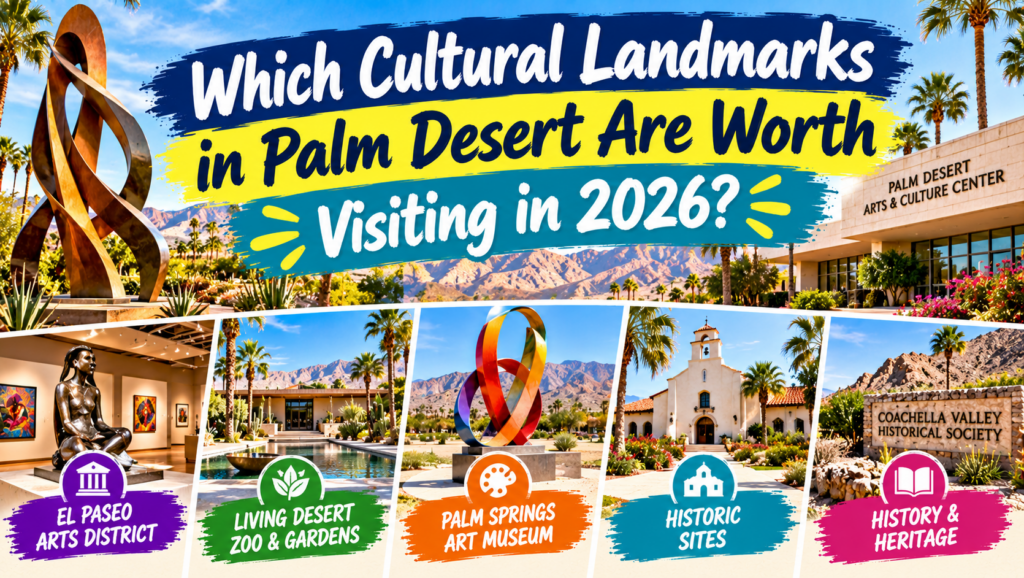
Last Updated: October 29, 2026
Quick Summary
Palm Desert offers a strong mix of cultural landmarks that visitors can explore in one relaxed trip, from Sunnylands Center and Gardens to galleries, Cahuilla heritage sites and mid-century modern architecture. The valley’s arts and history pair well with a desert stay. Confirm current hours before each visit.
- Sunnylands Center and Gardens combines art, history and landscaped gardens.
- Palm Desert’s galleries are concentrated enough to cover in one unhurried day.
- Cahuilla heritage sites should be visited with respect and through interpretive resources.
- Mid-century modern architecture tours cover iconic homes and design highlights.
- Confirm opening hours, admission, parking and reservations before you go.
Table of Contents
- Top 10 Must-See Cultural Landmarks in Palm Desert
- How We Selected These Cultural Landmarks
- Palm Desert Art and Museums Worth Your Time
- Palm Desert Historic Sites and Indigenous Heritage
- Palm Desert Architecture and Public Art
- Practical Visit Details for Each Landmark
- A Palm Desert Cultural Itinerary by Time and Interest
- Planning Your Visit to Palm Desert’s Cultural Landmarks
- Frequently Asked Questions
Palm Desert has more cultural landmarks than most visitors expect. From galleries and museums to Cahuilla heritage sites and mid-century architecture, the Coachella Valley offers a rich mix of arts and history. This guide from Visitor Center for Palm Desert & Palm Springs covers the top 10 must-see cultural landmarks in Palm Desert and explains what makes each one worth your time, so you can plan a trip around the best of the valley’s cultural landmarks palm desert offers.
Many visitors plan a desert trip around golf, pools and hiking. Cultural stops often get overlooked, even though they give a trip more depth. A single afternoon at a museum or a short walk past historic buildings can change how you see the valley.
Top 10 Must-See Cultural Landmarks in Palm Desert
Here are the ten landmarks we recommend, listed in no particular ranking order:
- Sunnylands Center and Gardens: Art, history and landscaped gardens shaped by the same vision.
- Palm Desert art galleries: A cluster of working galleries worth a relaxed browse.
- Historic Cahuilla sites: Places that carry the valley’s Indigenous story.
- Mid-century modern architecture: Homes and buildings that reflect the region’s design era.
- Public art installations: Sculptures and murals found around town.
- Local performing arts venues: Theater and live performance spaces.
- Heritage buildings and historic districts: Structures that trace the town’s growth.
- Community cultural events venues: Halls and centers hosting seasonal programs.
- Desert botanical and garden spaces: Cultivated landscapes with native plants.
- Local history collections: Exhibits that explain how the valley developed.
How We Selected These Cultural Landmarks
We focused on places tied to arts, history, architecture and heritage, and kept the list limited to Palm Desert. Broader attractions like hiking trails and shopping districts fall outside this list. Each landmark had to offer something a visitor can see, visit or learn from in person.
Palm Desert Art and Museums Worth Your Time
The art scene here is more relaxed than in larger cities, and it is concentrated enough that you can cover the core of the cultural landmarks palm desert has to offer in a single unhurried day. Beyond the museums, you can explore local galleries for a relaxed browse. What follows are the named venues worth building an afternoon around, all within Palm Desert proper.
Book Hotels with Exclusive Discounted Rates HERE →
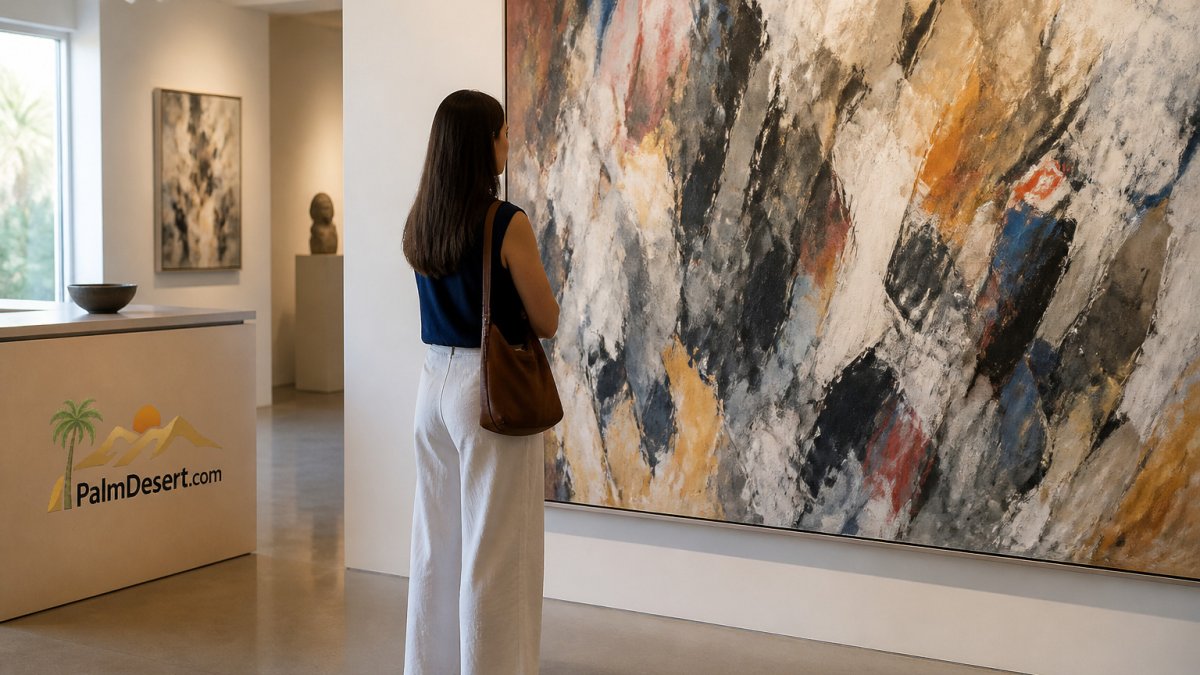
Sunnylands Center and Gardens is a well-known cultural stop in Palm Desert. Check the venue directly for current exhibitions, garden access and tour options before you go. You can also see the art, history and gardens it offers before you plan your visit.
Most venues shift to reduced summer hours when the heat peaks. Confirm current hours and any reservation requirements the morning of your visit rather than relying on a printed guide.
Palm Desert Historic Sites and Indigenous Heritage
The Coachella Valley has been home to the Cahuilla people for a very long time, and their presence predates every resort, golf course, and gallery in the valley. Visiting with respect, and with a willingness to learn rather than to consume, is the right posture. For background on the region’s past, read the local history guide for Palm Desert and the Coachella Valley.
Cahuilla Cultural Context
The Cahuilla maintained deep knowledge of desert water sources, plants, and seasonal movement, moving across the valley in response to heat and water rather than staying fixed in one spot. That pattern is why the valley’s palm oases and canyon mouths matter culturally, not just scenically. When you see a stand of native fan palms, you are looking at a place that was a known resource, not an accident of landscaping.
A respectful way to engage is through interpretive resources rather than through trespass. Look for signage and guided programming at public heritage sites, and treat any site with visible cultural materials as a place to observe from a distance. Do not remove artifacts, and do not assume an unmarked site is open to visitors.
Historic Buildings and Heritage Districts
Palm Desert’s built heritage is younger than its Indigenous history. Walking or driving through older parts of town gives a quick sense of how the built environment developed over time.
The strongest cultural stop on this list is not a single building. It is the sequence: Cahuilla water and plant knowledge first, then the mid-century built environment that came after. Seeing them in order changes how the rest of the valley reads.
Palm Desert Architecture and Public Art
Mid-century modern design is part of the valley’s architectural history, and many buildings reflect that style. If you want a guided look, you can book mid-century modern architecture tours that cover iconic homes and design highlights.
Practical Visit Details for Each Landmark
Before you go, confirm current details for each stop:
Book Hotels with Exclusive Discounted Rates HERE →
- Opening hours, which often shift seasonally
- Admission costs, which vary by venue and are not listed here
- Parking and accessibility options
- Whether guided tours or reservations are required
Visiting in the cooler months, roughly late fall through spring, makes walking between landmarks far more comfortable.
A Palm Desert Cultural Itinerary by Time and Interest
Slow weekend, mixed interests: Spread one or two landmarks across each day, leaving time for meals and rest.
Planning Your Visit to Palm Desert’s Cultural Landmarks
Cultural landmarks work best when you pace them. Pick two or three stops a day, check current hours, and leave room for spontaneous discoveries. If you are looking for a place to stay while you explore, you can browse our directory of Palm Desert hotels and resorts at https://palmdesert.com/hotels/, or consider a home base with more privacy through our Palm Desert vacation rental homes at https://palmdesert.com/vacation-rentals-2/.
Frequently Asked Questions
What are some of the top attractions in Palm Desert?
Palm Desert’s top attractions center on its arts venues, historic and Indigenous heritage sites, and well-kept public spaces. Visitors often combine a museum or gallery visit with a stroll through the city’s architecture and a stop at a local garden or park. The landmarks in this guide are a practical starting point, and current opening hours, admission details and event schedules are best confirmed directly with each venue before you go.
Which cultural landmarks should visitors see in Palm Desert?
Visitors interested in culture should prioritize the art museums and galleries, the historic sites that tell the story of the area, and the architecturally notable buildings and public art installations. Including a site connected to Cahuilla history adds important context to the region’s past. Choosing two or three landmarks per half-day keeps the pace comfortable and leaves time to enjoy each one properly.
Where can you explore art and local history in Palm Desert?
Art and local history are both well represented in Palm Desert, and many visitors find that a museum visit pairs naturally with a walk past historic buildings and public art. Because hours and exhibitions change, check the latest information with each venue or the Visitor Center before planning a route. Arriving earlier in the day usually means fewer visitors at smaller galleries.
How can you plan a day around Palm Desert’s cultural attractions?
A good cultural day starts with a morning museum or gallery visit, when crowds are lighter and the temperature is more comfortable. Break up the afternoon with a walk past architectural landmarks and public art, then finish with a performing arts event or a relaxed dinner if one is scheduled. Grouping landmarks by location reduces driving time and makes it easier to fit more into one day.