
Last Updated: November 23, 2026
Quick Summary
For a first class, choose a gentle or all-levels session at a neighborhood studio, since these move slowly and offer modifications. Many palm desert yoga studios accept drop-in visitors, so you can try a class without committing to a membership. Save hot and power yoga for after the basic poses feel familiar.
- Gentle yoga is the safest first class, with slow movement and more time in seated and supported poses.
- Confirm that an all-levels class truly offers modifications for newcomers before booking it.
- Single drop-ins suit short visits, while class packs only save money if they expire after your stay.
- Arrive 10 to 15 minutes early and bring a water bottle, a small towel and comfortable clothing.
- Tell the instructor about any injury or limitation before class so they can suggest alternatives.
Table of Contents
- Why Beginners Need a Different Kind of Yoga Studio Guide
- How We Chose These Palm Desert Yoga Studios
- Quick Comparison of Palm Desert Yoga Studios for Beginners
- Beginner Yoga Classes Palm Desert Studios Offer
- Hot Yoga Palm Desert: Who It Suits and Who Should Skip It
- Outdoor Yoga Palm Desert Options for First-Timers
- Drop-In Access, Schedules and Booking for Visitors
- What to Bring and Expect at Your First Class
- Booking Your First Beginner Class in Palm Desert
- Frequently Asked Questions
Why Beginners Need a Different Kind of Yoga Studio Guide
Choosing a yoga studio as a beginner is harder than it looks. Most studio listings describe every class in the same glowing language, which tells you very little about whether a first session will feel welcoming or intimidating. This guide is built to help newcomers find a studio that fits their experience level, budget and schedule in the Palm Desert area.
Yoga studios in the Palm Desert area range from small neighborhood rooms to larger wellness centers. Some focus on gentle, slow-paced sessions. Others run fast, heated classes that suit people who already have a practice. A beginner who walks into the wrong room may leave discouraged and never return, so the first decision matters.
This guide keeps the focus on beginners. We look at the class styles that suit new students, what drop-in access looks like for visitors, and what to expect at a first session. Where a detail depends on the current schedule or price, we say so and point you to the studio directly.
How We Chose These Palm Desert Yoga Studios
A useful starting test is whether a person with no yoga experience would feel comfortable in a given room. Look for studios that clearly offer beginner, gentle or all-levels classes and describe their class styles in plain terms.
We also considered access. A studio that only sells long memberships is a poor fit for a visitor staying a week. Drop-in options, single-class rates and introductory offers all count in a studio’s favor for a first-time student.
Where a studio does not publish a price, this guide says so rather than estimating one. Pricing and schedules change, so confirm current details with each studio before you book.
Quick Comparison of Palm Desert Yoga Studios for Beginners
The table below summarizes how the main studio types compare for a first-time student. Use it as a starting point, then check each studio’s current schedule and pricing before you book.
| Studio Type | Best For | Typical Class Styles | Drop-In Access |
|---|---|---|---|
| Neighborhood studio | Regular weekly practice | Gentle, slow flow | Often available |
| Wellness center | Combined yoga and therapy | Gentle, meditation, sound bath | Varies by center |
| Heated studio | Experienced practitioners | Hot yoga, power yoga | Usually limited for beginners |
| Outdoor or seasonal program | Visitors and warm-weather sessions | Gentle flow, outdoor yoga | Check schedule |
For a first class, a gentle or all-levels session in a neighborhood studio is usually the safest choice. Heated and power classes can come later, once you know your body’s limits.
Beginner Yoga Classes Palm Desert Studios Offer
Most studios in the area describe their classes with a few recurring labels, but the labels are not standardized. Two studios can both call a class “all levels” and mean very different things. The skill for a beginner is not memorizing the labels but knowing what each one usually signals and how to confirm it before you book.
What the common labels actually mean
- Gentle yoga. Slow movement, longer holds, and a strong focus on breath. This is the safest first class for someone new to the practice or returning after a long break. Expect more time in seated and supported poses and more instruction on where to put your hands and feet.
- Slow flow. Poses linked with movement at a relaxed pace. It suits a beginner who wants a bit more activity than a gentle class but is not ready for a fast sequence. The pace is the variable to ask about, since “slow” is relative.
- All levels. A catch-all label that can mean anything from a genuinely mixed class with modifications offered to a faster class that simply does not turn beginners away. Ask the front desk how the instructor adjusts for newcomers before you treat this label as beginner-friendly.
- Power yoga and hot yoga. Higher intensity, more strength and stamina, and in the heated case a room well above a standard studio temperature. These are better as a later step than a first class.
- Iyengar yoga. Focused on alignment and props such as blocks and straps. It can be an excellent beginner choice because the props make poses easier to hold correctly and the instruction tends to be precise, though the pace may feel slower than a flow class.
What a first beginner class usually looks like
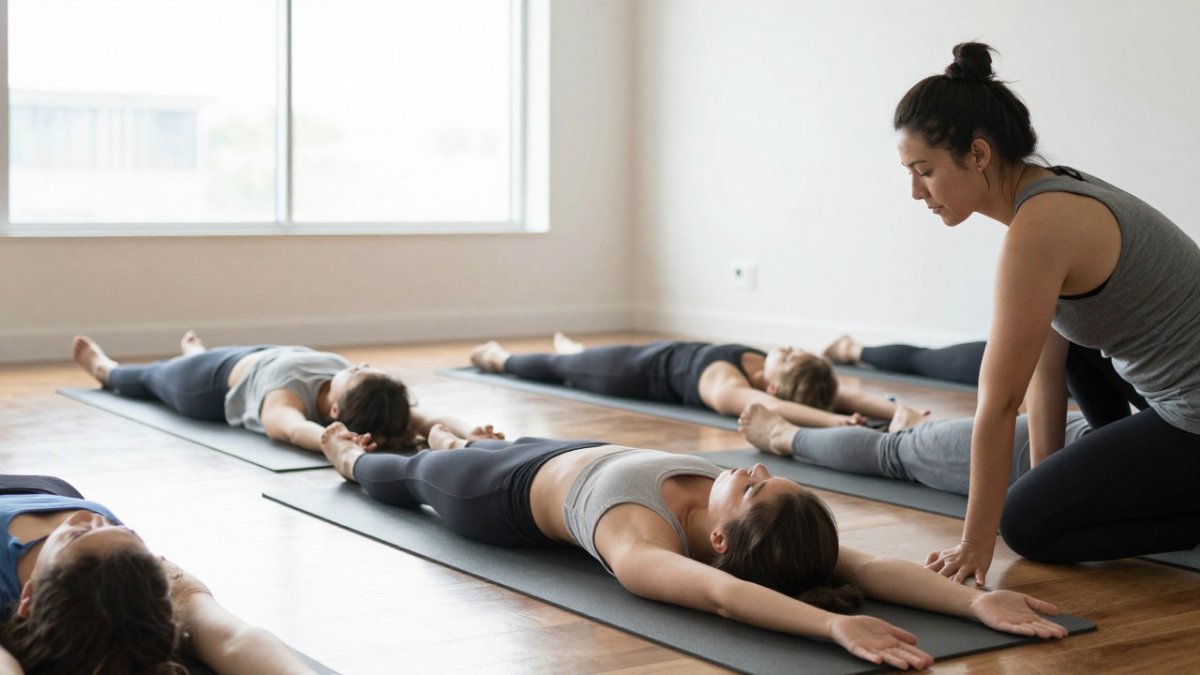
A typical beginner or gentle session opens with breathing and a warm-up, moves through standing and seated poses with options for each, and closes with a rest period. The instructor usually demonstrates poses and offers modifications, and you are not expected to match the deepest version of any shape. Tell the instructor before class about an injury or limitation so they can suggest alternatives. Most people feel some muscle soreness afterward, especially after a long break from activity; gentle stretching and water usually help, and sharp or persistent pain is a reason to stop and consult a healthcare provider.
How to pick your first class
Start with a gentle or beginner-labeled class at a time of day when you are not rushed. Confirm two things with the studio: whether the class is truly designed for first-timers, and whether props and mats are provided or need to be brought. If you are choosing between a gentle class and an all-levels class, the gentle class is the lower-risk first step. Save power and heated classes until the basic poses feel familiar, which many students reach after a few months of regular practice.
Watch out: An “all levels” label is not a guarantee of beginner suitability. Ask how the instructor modifies poses for newcomers rather than assuming the label means the class is easy.
Hot Yoga Palm Desert: Who It Suits and Who Should Skip It
Hot yoga is one of the most searched styles in the area, and it is also one of the most misunderstood by beginners. Heated rooms raise the temperature well above a standard studio, and the practice is physically intense even for experienced students.
Hot yoga suits people who already have a steady practice, who handle heat well, and who want a demanding workout. It can also suit someone who has taken gentle classes for a while and wants a new challenge.
Hot yoga is a poor first choice for anyone who is new to exercise, has heart or blood pressure concerns, or is pregnant. Anyone with a medical condition should speak with a doctor before attempting a heated class. Bring a water bottle, arrive hydrated, and be prepared to leave the room if you feel dizzy or unwell.
A practical middle path is to try a gentle class first, then move to a heated session once the basic poses feel familiar. Many students make this shift within a few months of regular practice.
Outdoor Yoga Palm Desert Options for First-Timers
Outdoor yoga is a popular option in the Coachella Valley, especially during the cooler months. Sessions held outside or on shaded patios can feel relaxed and less formal than a studio room, which helps some beginners feel at ease.
Timing matters a great deal in the desert. Morning sessions are generally more comfortable than midday classes, when the sun and heat can be intense. Check whether a class is held in shade, whether water is provided, and whether the session is canceled in high wind or extreme heat.
Bring a mat, water, sunscreen and a hat. Wear light, breathable clothing. If a class is outdoors, ask the instructor whether there is a backup plan for bad weather, so you are not caught off guard.
Outdoor sessions are often a good way for visitors to try yoga without committing to a studio membership. Confirm the schedule and location before you go, since outdoor offerings can change with the season.
Drop-In Access, Schedules and Booking for Visitors
Visitors and seasonal residents usually want to attend a class without signing a long membership. Most studios in the area allow drop-ins, but the way a studio structures access matters more than the headline rate. Before you book, ask four questions: what a single drop-in costs, whether a first-time introductory offer exists, how long a class pack stays valid, and whether a membership carries an enrollment fee or a cancellation notice period.
The three ways studios sell access
Most studios price access in one of three forms, and each behaves differently for a short stay.
- Single drop-in. The most flexible option and the easiest to compare across studios. You pay once, attend once, and owe nothing after. It is usually the highest per-class rate, but for a one- or two-class visit it is often the cheapest total spend because you are not prepaying for sessions you will not use.
- Class pack. A bundle of a set number of classes sold at a lower per-class rate than a drop-in. The catch is expiration: packs commonly expire within a set window, and an unused class is usually forfeited. If you are in the area for a week and plan to attend three or four times, a small pack can beat drop-ins, but only if the expiration window covers your stay.
- Monthly membership. The lowest per-class rate on paper, but only if you attend often enough to use it. Memberships typically bill monthly and may require advance notice to cancel, which makes them a poor fit for a short visit unless the studio offers a short-term or visitor pass.
How to compare affordability honestly
The advertised drop-in rate is not the whole story. To judge real cost, divide the total you would pay by the number of classes you will actually attend. A pack that costs more up front but lowers the per-class rate is only a saving if you use every class before it expires. Ask whether the studio charges an enrollment or registration fee on top of a membership, and whether mat rental, towel service or props are included or billed separately.
A common pattern is that the cheapest per-class rate belongs to the option with the most commitment and the most expiration risk. For a first-time visitor, the practical move is to start with a single drop-in or a small pack, confirm the expiration date in writing, and only upgrade to a membership once you know you will return.
Watch out: A class pack that expires before your stay ends turns a lower per-class rate into a loss. Confirm the expiration window and whether unused classes can be transferred or extended before you pay.
Schedules and booking
Class schedules shift by season, and popular early-morning and weekend sessions fill first. Some studios require online booking and close walk-in spots once a class is full; others accept drop-ins at the door. Ask about the cancellation policy at the same time you book, since many studios charge for late cancellations or no-shows even on a drop-in. If you are planning several sessions, book the first one in advance and confirm the rest once you have seen how the schedule fits your trip.
What to Bring and Expect at Your First Class
A first class is less intimidating when you know what to expect. Arrive 10 to 15 minutes early to check in, find your spot, and ask the instructor any questions before the session begins.
Bring a yoga mat if the studio does not provide one, along with a water bottle and a small towel. Wear comfortable clothing that lets you move freely. Many studios also rent mats or sell basic supplies at the front desk.
Expect the instructor to explain the basic poses and offer modifications. Beginners are not expected to match the poses shown in photos or to hold positions for long periods. Tell the instructor if you have an injury or a physical limitation, and rest whenever you need to.
Most people feel some muscle soreness after a first class, especially if they have been inactive. Gentle stretching and plenty of water usually help. If pain is sharp or persistent, stop and consult a healthcare provider.
Watch out: Do not push into deep stretches on your first day. Students who force their bodies early often feel sore for several days and lose motivation before the practice has a chance to help.
Booking Your First Beginner Class in Palm Desert
Booking your first class is simpler when you follow a clear order. Start by deciding how long you will be in the area and how often you want to practice. A short stay calls for a drop-in or small class pack, while a longer stay may justify a membership.
Next, shortlist two or three studios that offer beginner or gentle classes at times that fit your schedule. Visit each studio’s website, check current pricing and drop-in terms, and note any introductory offers. Call or message the studio if anything is unclear.
Finally, book the class in advance if possible, arrive early, and tell the instructor it is your first session. After one or two classes, you will have a clearer sense of which studio suits you best.
For more on planning your visit, you can explore Palm Desert vacation rental homes if you want a private space for stretching between classes, or browse Palm Desert hotels and resorts to find accommodation near your chosen studio. Our Palm Desert blog also covers local wellness news and seasonal activities you may enjoy.
Palm Desert Yoga Studios for Beginners: Frequently Asked Questions
Which yoga class is best for a complete beginner?
A gentle or all-levels class is the best first choice. These sessions move slowly, explain the basic poses, and offer modifications, so newcomers can learn without feeling rushed or overwhelmed.
Can visitors attend a yoga class without a membership?
Many studios accept drop-in visitors. Check the studio’s current drop-in rate and whether an introductory offer applies, since availability and pricing vary.
Is hot yoga safe for beginners?
Hot yoga is physically demanding and is generally better suited to people with an existing practice. Beginners with heart or blood pressure concerns, or who are pregnant, should consult a doctor first.
What should I bring to my first yoga class?
Bring a water bottle, a small towel and comfortable clothing. Bring a mat unless the studio provides one. Arriving 10 to 15 minutes early gives you time to check in and ask questions.
Frequently Asked Questions
Do Palm Desert yoga studios offer drop-in classes?
Many Palm Desert yoga studios accept drop-in students, which is useful for visitors who want a single class rather than a membership. Drop-in availability, per-class pricing and class schedules change, so check each studio’s current website or call ahead before you plan your visit. Booking a spot in advance is often recommended for popular beginner and gentle classes, especially during the busy winter season when visitors and seasonal residents fill more sessions.
What should a beginner expect at a first yoga class?
A first class usually starts with an introduction to basic poses and breathing, and the instructor will often show modifications so you can work at your own pace. Beginner and gentle classes are designed for new students, so you do not need prior experience. Arrive a few minutes early, tell the instructor you are new, and feel free to rest in child’s pose whenever you need to. Most students leave feeling more comfortable after one or two sessions.
What should I bring to my first yoga class?
Bring comfortable clothing you can move in, a water bottle and a small towel, since desert studios can feel warm even when the air conditioning is running. Many studios rent or sell mats, but check beforehand whether you need to bring your own. Wear grip socks if the studio requires them, and bring photo identification and payment for a drop-in fee. Arriving rested and hydrated helps you get the most out of your first session.
Which yoga styles are easiest for beginners?
Gentle yoga and slow flow classes are generally the easiest starting points because they move at a relaxed pace and focus on alignment and breath. Iyengar yoga also suits beginners since it emphasizes precise poses held for longer periods, with props for support. Hot yoga and power yoga are more demanding, so newer students may prefer to build a foundation in a gentler class first. Look for classes labeled beginner-friendly or all levels when choosing.