
Last Updated: November 5, 2026
Quick Summary
Palm Desert Food & Wine returns March 18-21, 2027, a four-day culinary showcase in the Coachella Valley. The festival features grand tastings, wine pairings and cooking demonstrations, with a roster of top chefs. Check official channels for the final schedule before booking.
- The festival runs over a long weekend, from March 18 to March 21, 2027.
- Choose two or three anchor experiences per day rather than trying to sample everything.
- Chef cooking demonstrations are often limited in size and fill quickly.
- Check ticket information early, since popular sessions can sell out well ahead of the event.
- Ask vendors directly about allergens and shared cooking surfaces at each booth.
Table of Contents
- Palm Desert Food & Wine Dates: March 18-21, 2027
- What the Palm Desert Food & Wine Festival Offers Visitors
- Palm Desert Food & Wine Chefs and Culinary Talent
- Palm Desert Food & Wine Schedule: Events and Daily Programming
- Grand Tastings, Wine Pairings and Cooking Demonstrations
- Food Vendors, Dietary Needs and Inclusivity at the Festival
- A Practical First-Time Attendee Itinerary
- Getting to Palm Desert and Planning Your Stay
- Book Your Palm Desert Food & Wine Stay Before the Festival Sells Out
- Frequently Asked Questions
Palm Desert Food & Wine Dates: March 18-21, 2027
Palm Desert Food & Wine returns March 18-21, 2027, bringing a four-day culinary showcase to the Coachella Valley. This guide helps food and wine lovers plan the trip around the events that matter most to them.
The festival runs over a long weekend, which gives visitors room to combine tastings, chef demonstrations and special dinners without rushing. Because dates and programming can change between editions, check the official festival channels for the final schedule before you book. Use the schedule below as a planning frame, not a confirmed program.
What the Palm Desert Food & Wine Festival Offers Visitors
The festival is built around the experience of eating and drinking well in a desert setting. Visitors can expect a mix of grand tasting events, premium wine tastings, cooking demonstrations and food vendors representing local restaurants.
Many first-time attendees underestimate how much ground the event covers. Plan to choose two or three anchor experiences per day rather than trying to sample everything. A focused day, with one sit-down tasting and one hands-on session, tends to be more enjoyable than a packed one.
Our team at Visitor Center for Palm Desert & Palm Springs recommends pairing festival days with a stay in the area so that you can get back to your room easily after evening events.
Palm Desert Food & Wine Chefs and Culinary Talent
The festival is promoted as bringing a roster of the nation’s top chefs. The chef roster is announced closer to the event, so watch the official site for names and session times.
When you review the lineup, look for chefs leading cooking demonstrations, since these sessions are often limited in size and fill quickly. Chef appearances at grand tastings tend to be more social and open to a wider crowd.
For a broader view of the local dining scene, our Palm Desert Restaurants and Dining Guide covers the restaurants you can visit between festival sessions.
Palm Desert Food & Wine Schedule: Events and Daily Programming
The daily programming typically spreads events across morning, afternoon and evening sessions. Morning hours often suit cooking demonstrations and wine education, while evenings are reserved for grand tastings and special dinners.
Build your schedule around the events you cannot miss, then fill gaps with lighter options. Check ticket information early, because popular sessions can sell out well ahead of the event dates.
If you are interested in the broader event calendar, Palm Desert Food and Wine Festival Tips and Guide offers more planning detail and helpful background on the festival.
Grand Tastings, Wine Pairings and Cooking Demonstrations
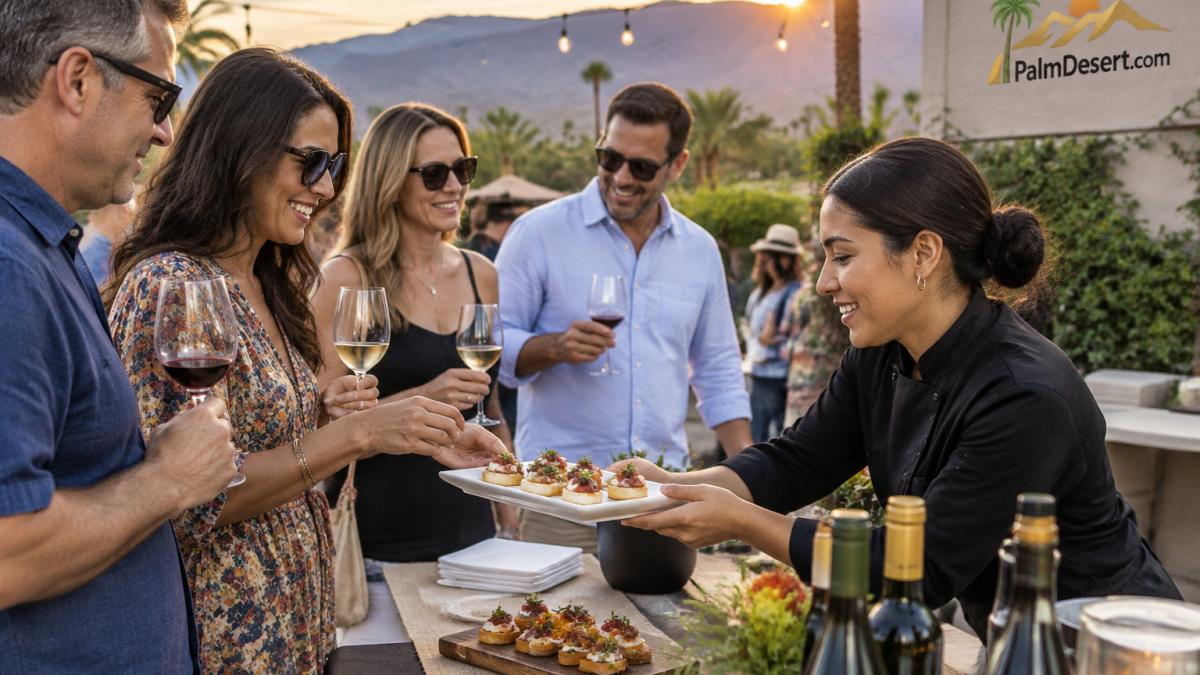
Grand tastings are the social centerpiece of the festival. Guests move between tables sampling small plates and pours, which makes them a good way to discover new restaurants and wineries.
Book Hotels with Exclusive Discounted Rates HERE →
Wine pairings and cooking demonstrations offer a more structured experience. Pairing sessions show how specific wines complement particular dishes, while demonstrations let you watch chefs work and ask questions about technique.
A common mistake is buying the most expensive pairing package without checking what it includes. Compare what each session offers before you commit.
Food Vendors, Dietary Needs and Inclusivity at the Festival
Vendors at the festival are part of the event’s food offering, and small-plate formats make it easier to sample across many booths. The practical challenge is that ingredient information is rarely posted at every table, so plan how you will gather it.
Before the event. Check the official festival site and vendor list once it is published, usually closer to the dates. Look for any published allergen or dietary notes, and email organizers with specific questions rather than general ones. A useful message names your restriction, asks which vendors have confirmed options, and asks whether ingredient lists will be available on site. Keep the reply; it is your reference if a booth is unsure.
At each booth. Ask the person plating, not the line staff, when possible. Useful questions: Does this dish contain wheat, dairy, egg, nuts or shellfish? Is it cooked on the same surface as items containing them? Is the sauce made in-house or brought in? For vegetarian and vegan needs, ask whether stocks, sauces and garnishes are meat- or dairy-based, since those are the most common hidden ingredients in small plates.
Nonalcoholic options. Ask the organizers whether the event offers nonalcoholic pours or a water station, and confirm whether nonalcoholic beverages are included in a tasting ticket or sold separately.
Confirmed versus pending. Treat published vendor lists and organizer replies as confirmed. Treat anything you hear at a booth as that vendor’s statement for that day. Menus can change between sessions, so re-ask if you return to a booth on a later day.
Accessibility and sensory considerations. Temporary event layouts vary by year, so confirm accessible routes, seating and restroom locations with organizers in advance.
Responsible tasting. Eat before you drink, alternate water between pours, and use the event’s transportation or a designated driver. Know how you are getting back before the session starts.
Watch out: assuming a dish is gluten-free because it looks like a salad or a rice plate is the most common mistake; sauces, dressings and shared cooking surfaces are where restrictions usually get missed.
Use this quick reference to plan questions for vendors and organizers before you go.
| Stage | What to do | Timing |
|---|---|---|
| Before the event | Check the official site and vendor list | Once published, closer to the dates |
| Before the event | Email organizers with specific dietary questions | Before the event |
| At each booth | Ask the person plating about allergens and shared surfaces | At each booth, each visit |
| Nonalcoholic options | Ask whether pours or a water station are included | Before buying tickets |
| Confirmed information | Treat published lists and organizer replies as confirmed | Re-ask on later days |
| Accessibility | Confirm routes, seating and restrooms with organizers | Before the event |
A Practical First-Time Attendee Itinerary
A first visit goes better when you treat the weekend as a paced schedule rather than a checklist. The structure below assumes the four-day window of March 18-21, 2027 and can be compressed into two days if you arrive late.
Day 1, Arrival and orientation. Check in and walk the venue footprint so you know where the main event areas and restrooms sit relative to each other. Keep the evening light, and avoid booking back-to-back sessions on arrival day.
Day 2, One demonstration, one structured tasting. Pair a demonstration with an afternoon wine session, then leave the evening open. Two anchor events in a day is a realistic ceiling once you factor in walking, lines and shade breaks.
Book Hotels with Exclusive Discounted Rates HERE →
Day 3, Grand tasting as the centerpiece. Eat a real breakfast and a light lunch before an evening grand tasting. Alternate water between pours, and pick a meeting point with your group in case cell service gets congested.
Day 4, Return to favorites and a flexible close. Use the final day to revisit two or three vendors you liked rather than chasing new ones.
Logistics that catch first-timers. Desert afternoons in March can run warm, so plan indoor or shaded blocks for the hottest hours and carry water. If you have mobility needs, contact organizers in advance about accessible seating, drop-off points and restroom locations, since temporary event layouts change year to year.
Pacing rules that hold up. Book no more than one seated tasting and one demonstration per day, and leave time between ticketed sessions. Skip the final evening event if you have an early flight the next morning.
Watch out: buying a top-tier package before you have compared session inclusions often means paying for events that overlap on the schedule, so read the session times before you commit.
Getting to Palm Desert and Planning Your Stay
Palm Desert is accessible by car, and Palm Springs International Airport serves the valley for air travelers. Book accommodation early, since demand rises sharply during festival weekends.
Hotels and vacation rentals both work well. Hotels offer convenience for evening events, while a vacation rental with a private pool suits groups or visitors who want more space. Explore our Palm Desert hotels and resorts directory or browse Palm Desert vacation rental homes to compare options.
Book Your Palm Desert Food & Wine Stay Before the Festival Sells Out
Festival weekends fill quickly, so reserve your room and any priority tickets as soon as dates are confirmed. Visitor Center for Palm Desert & Palm Springs offers planning resources to help you compare hotels, rentals and events in one place.
Get started with Visitor Center for Palm Desert & Palm Springs and plan a Palm Desert Food & Wine trip with confidence, from dining reservations to event listings.
Frequently Asked Questions
When is Palm Desert Food & Wine 2027?
Palm Desert Food & Wine is scheduled for March 18-21, 2027, a four-day festival held in Palm Desert. Those dates are set for the 2027 edition, so check the official event pages before you book travel, since schedules and ticketing details are typically confirmed closer to the event. Visitors planning a long weekend should arrange lodging early, because March is a busy period in the Coachella Valley.
Which chefs are featured at Palm Desert Food & Wine 2027?
The festival is promoted as bringing a roster of the nation’s top chefs, . Chef lineups are often announced in stages, so review the official festival announcements for the confirmed roster. Attendees who follow chef sessions closely can plan their day around demonstrations and grand tasting events.
Where does Palm Desert Food & Wine take place?
The festival takes place in Palm Desert, in the Greater Palm Springs area of Southern California’s Coachella Valley. The official event pages list current venue details.
How should I plan a visit to Palm Desert Food & Wine?
Start by confirming the March 18-21, 2027 dates and reviewing the event schedule, then pick the tastings, chef demonstrations and wine pairings you most want to attend. Book accommodations early, arrange transportation, and check ticket information on the official site. Plan for warm daytime temperatures typical of the desert in March, and pace your tastings so the four-day event stays enjoyable.