
Last Updated: November 17, 2026
Quick Summary
Palm Desert event planning resources in 2026 center on venues, planners, caterers, rentals, city calendars, permits, and heat contingencies. Start with date and budget 9-12 months out, then lock your venue 8-10 months ahead with a heat backup clause. Peak season runs late fall through spring, so summer dates offer more availability but demand shade and indoor backups.
- Book your venue 8-10 months out and confirm a guaranteed indoor backup in the contract.
- Peak season runs late fall through spring; summer dates bring more availability but need misting and shade.
- Ask every venue for seated capacity in your exact layout, load-in windows, and vendor restrictions.
- Order tents and cooling units early in peak season, since they are the first items to run short.
- Build a written weather plan with temperature, wind, and dust thresholds naming who decides each action.
Table of Contents
- Your 2026 Guide to Palm Desert Event Planning Resources
- The 2026 Event Planning Calendar: Key Deadlines and Seasonal Timing
- Venues and Event Spaces: Comparing Capacity, Setting, and Amenities
- Party and Event Planning Services: What to Expect
- Wedding and Ceremony Planning Resources
- Catering and Food Service Options for Every Guest List
- Party Rentals and Event Equipment: A Resource Comparison
- Local Vendor Directories and Event Planner Networks
- City-Hosted Special Events and Community Calendars
- Permits, Noise Rules, and Public-Space Requirements
- Heat, Wind, and Contingency Planning for Desert Events
- Accessibility, Transportation, and Guest Logistics
- Sustainable and Low-Waste Event Planning in the Desert
- Start Your 2026 Event Planning with Local Resources
- Frequently Asked Questions
Your 2026 Guide to Palm Desert Event Planning Resources
Event planning in the desert rewards preparation more than almost any other kind of gathering.
This guide from Visitor Center for Palm Desert & Palm Springs pulls together the categories that actually decide whether an event succeeds: venues, planners, caterers, rental suppliers, city calendars, permit rules, and heat contingencies.
Below, we walk through each category in the order you will need it, with a 2026 planning calendar, a venue comparison, and a rental comparison table you can use as a working checklist. This one shows you how the pieces fit together, and where the desert changes the rules.
The 2026 Event Planning Calendar: Key Deadlines and Seasonal Timing
Timing is the first decision, and it drives every other one. In the desert, the month you choose shapes your venue options, your guest comfort, and how much contingency planning you need.
Work backward from your event date using this calendar:
| Planning Phase | When to Start | What to Lock In |
|---|---|---|
| Set date and budget | 9-12 months out | Season, indoor vs. outdoor, guest count |
| Book venue | 8-10 months out | Contract, deposit, rain/heat backup clause |
| Hire planner and caterer | 6-8 months out | Menu direction, service style, staffing |
| Reserve rentals and entertainment | 4-6 months out | Tents, tables, staging, sound |
| Send invitations | 10-12 weeks out | RSVP deadline, lodging guidance |
| Permits and vendor confirmations | 6-8 weeks out | Any city approvals, insurance certificates |
| Final walkthrough | 1-2 weeks out | Layout, load-in times, contingency plan |
Peak season runs roughly from late fall through spring, when daytime temperatures are comfortable and outdoor events are at their best. For a deeper look at what is happening month by month, our guide to finding updated Palm Desert events in 2026 is a useful anchor when you are picking dates.
Venues and Event Spaces: Comparing Capacity, Setting, and Amenities
Venue choice is where most budgets are won or lost. The right space reduces what you need to rent, while the wrong one adds cost in tents, cooling, and transportation.
Start by matching your guest count and format to a venue type rather than a specific property. A 60-guest dinner and a 300-guest reception need different things: intimacy versus parking, shade versus square footage.
A Venue Comparison Framework by Type
Use this framework to compare venue categories side by side before you tour anything. The trade-offs are consistent across the market, so the table tells you where each type will cost you in rentals, staffing, or logistics.
| Venue Type | Typical Fit | What It Usually Includes | What You Usually Add | Main Desert Trade-Off |
|---|---|---|---|---|
| Resort ballroom or meeting space | Corporate meetings, galas, large receptions | Climate control, kitchen, AV, parking, restrooms | Decor, some staging, entertainment | Lowest weather risk, highest minimums and least flexibility on outside vendors |
| Resort outdoor lawn or terrace | Receptions, ceremonies, cocktail hours | Setting, some shade structures, service staff | Tents, cooling, power, sound | Strong backdrop but heat and wind exposure; confirm indoor backup in the contract |
| Private estate or vacation rental | Multi-day celebrations, smaller weddings | Residential kitchen, pool, privacy, parking | Everything: rentals, power, restrooms, staffing | Privacy and flexibility, but noise rules, occupancy limits, and neighbor concerns apply |
| Community and civic facilities | Budget-conscious gatherings, meetings, community events | Rooms, tables and chairs, basic kitchen, parking | Decor, AV, linens, service staff | Practical and central, but booking windows are competitive and decor rules are stricter |
| Open desert or park space | Ceremonies, photo-driven events | Setting only | Everything, including restrooms, power, shade, and permits | Most dramatic setting, most permitting and contingency work |
| Restaurant buyout or private dining room | Rehearsal dinners, small receptions, corporate dinners | Kitchen, staff, tableware, climate control | Florals, AV, extended beverage service | Simple logistics, but capacity caps and buyout terms limit customization |
Outdoor Venues and Desert Settings
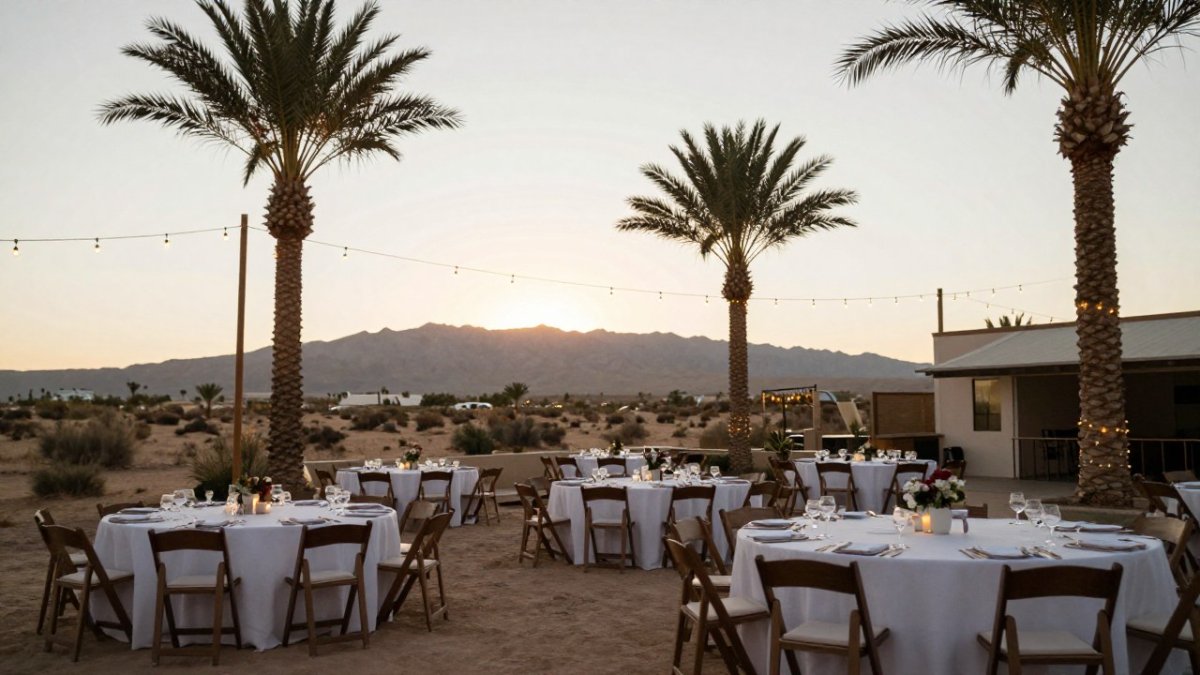
Outdoor spaces deliver the setting people come to the desert for: mountain backdrops, open sky, and long golden evenings. They also carry the most risk. Confirm shade coverage, power access, and wind exposure before you sign. A venue that looks perfect at 5 p.m. can be brutal at 2 p.m. in the warmer months.
When you tour an outdoor space, walk the perimeter at the same hour your event will run and note where shade falls. Ask whether the venue has a written wind policy, whether staking is allowed or ballast is required, and where generators can be placed without creating a noise problem for neighbors.
Indoor and Conference Facilities
Indoor and conference facilities solve heat, wind, and sound in one move. For business events, prioritize meeting-room capacity, audiovisual support, and proximity to lodging so attendees are not driving between sessions. For social events, look at whether the indoor space can absorb your full guest list if weather turns.
Ask how the facility handles room turns, whether AV is in-house or contracted, and what the ceiling height and rigging rules are if you plan staging or lighting.
Questions That Separate Comparable Venues
Once two venues look similar on paper, these questions decide between them:
- What is the seated capacity for my exact layout, including dance floor and buffet lines?
- Is there a guaranteed indoor backup, and what notice is required to trigger it?
- What are the load-in and load-out windows, and are they staffed?
- Are there vendor restrictions, exclusive catering, or preferred-vendor lists?
- What insurance certificates are required from me and from my vendors?
- How is parking managed, and is there a shuttle drop-off point?
- What are the noise limits and quiet hours that apply to the space?
If you are weighing a private estate for a multi-day celebration, our tips on hosting events at Palm Desert vacation estates cover the practical side of using a rental property as a venue.
Party and Event Planning Services: What to Expect
A good planner saves you from the mistakes you cannot see coming. Full-service event planning generally covers design, vendor sourcing, budget management, timeline building, and on-site coordination on the day itself.
When you interview a planner, ask whether they have worked your specific venue before, and whether they carry liability insurance. Ask what happens if a vendor cancels, and get the answer in the contract.
Wedding and Ceremony Planning Resources
Wedding planning in the desert splits into three decisions: the ceremony setting, the reception venue, and the guest experience between them. Many couples choose a mountaintop or open-air ceremony and a separate reception space, which means transportation becomes part of the plan.
Build your wedding resource list around these categories:
- Ceremony and reception venues with indoor backup space
- Officiants and coordinators who have worked desert locations
- Floral design that survives heat, which usually means choosing flowers that hold up rather than delicate blooms
- Photography timed around golden hour and afternoon heat
- Lodging blocks for out-of-town guests
For a desert wedding, the single most useful planning habit is a written weather plan. A clear weather threshold also helps keep backup decisions consistent across the rest of the day, so an outdoor event planning checklist can bring those contingencies into the same plan.
Catering and Food Service Options for Every Guest List
Catering in the desert has to solve two problems at once: feeding your guests well and keeping food safe in warm conditions. Service style drives both. Plated dinners keep food temperature-controlled and require more staff.
When you compare caterers, ask about staffing ratios, whether they provide their own serving equipment, and how they handle dietary needs across a full guest list. Confirm who supplies linens, china, and glassware, since that overlaps with your rental order.
For menu inspiration, our Palm Desert restaurants and dining guide covers more than 50 local spots, many of which can inform a catering direction or serve as a rehearsal dinner option.
Party Rentals and Event Equipment: A Resource Comparison
Rentals are where desert events quietly get expensive, because heat and wind add items you would not need elsewhere. Use this comparison to plan your order by category.
| Category | What to Reserve | Desert-Specific Consideration |
|---|---|---|
| Tents and shade | Frame tents, shade sails, umbrellas | Wind rating and anchoring method |
| Seating and tables | Chairs, rounds, linens | Shade for seating during daylight hours |
| Cooling | Misters, fans, portable cooling units | Power source and placement |
| Power | Generators, distribution, cabling | Backup for entertainment and cooling |
| Staging and sound | Dance floor, stage, PA system | Heat effects on equipment |
| Lighting | String lights, uplighting | Evening events and photo quality |
Order early in peak season, because tents and cooling units are the first items to run short. Ask every rental company about delivery windows, setup and teardown labor, and whether they charge for same-day pickup. Confirm who is responsible for anchoring tents and whether the venue has restrictions on staking.
Local Vendor Directories and Event Planner Networks
A vendor directory is only as good as its update date. Outdated contact information and vendors who have closed or changed ownership are a common problem in this field.
Use directories to build a shortlist, then verify each vendor directly: confirm availability, ask for a current certificate of insurance, and check recent work. Local planner networks are the other underused resource.
At Visitor Center for Palm Desert & Palm Springs, our team lives in Palm Desert and stays up on most of what is happening in the Coachella Valley.
City-Hosted Special Events and Community Calendars
Community events can carry a lot of your program for free. City-hosted special events, arts events, and weekly gatherings give out-of-town guests something to do around your main event, and they can inspire themes for your own.
Check community and chamber event calendars before you finalize dates, since a major festival weekend affects lodging availability, traffic, and vendor schedules.
Our events hub is the fastest way to browse what is coming up in the desert, and it is worth a look before you commit to a date.
Permits, Noise Rules, and Public-Space Requirements
Permits and rules are the least glamorous part of event planning and the one most likely to derail a day. Requirements vary by venue type, guest count, and whether you are using public space, so confirm directly with the city and the venue rather than assuming. The sequence matters: which approvals gate the others, and what you need in hand before you can even apply.
How the Approval Chain Usually Works
Permitting is a chain, not a checklist. Each link depends on the one before it, and skipping a step can cause last-minute problems.
- Confirm the venue’s own requirements first. The property’s event contract and rules determine whether you need city approvals at all, and which ones. Get this in writing before you apply for anything.
- Identify the jurisdiction. A resort, a private estate, a community facility, and a park or open desert space can fall under different authorities. Confirm which department handles special events, temporary structures, and amplified sound for your specific location.
- Secure insurance before applying. Approving bodies may require a certificate of insurance, with limits set by the approving body. Vendors may also need their own certificates on file.
- Apply for the structural and sound approvals. Tents over a certain size, staging, and amplified sound typically trigger separate reviews, sometimes from different departments, including fire review for temporary structures.
- Submit the site plan and load-in schedule. Approvals usually require a layout showing exits, tent placement, power, restrooms, and load-in times. A clear site plan speeds review more than any other document.
- Collect final sign-offs and keep copies on site. Carry printed approvals, insurance certificates, and vendor contacts to the event. Inspectors can ask for them on the day.
Noise, Sound, and Quiet Hours
Noise rules are the most common source of neighbor complaints and the most common reason an event gets shut down early. Amplified sound is usually regulated separately from general noise, with limits that vary by zoning district and time of day.
Settle these before you book entertainment:
- What are the noise limits and quiet hours that apply to this location?
- Is amplified sound allowed outdoors, and until what hour?
- Are there stricter limits on weekends or during certain seasons?
- Who measures compliance, and what happens if a limit is exceeded?
- Does the venue require sound to be pointed in a specific direction or capped at a set level?
A practical habit is to brief your DJ or band on the venue’s limits in writing and to designate one person to monitor sound levels through the evening.
Public Parks, Streets, and Open Space
Using public space adds a layer of approvals that private venues do not require. Park use, street closures, and open desert space each have their own process, and each typically requires a site plan, insurance, and a cleanup plan.
Questions to settle early:
- Does the venue require a permit for tents, staging, or amplified sound?
- Are there restrictions on using public parks or open desert space?
- Is a street closure or traffic control plan required, and who approves it?
- Are there limits on the number of attendees before a larger permit is triggered?
- What restroom, trash, and cleanup requirements apply?
- Does the fire authority require a review for temporary structures?
Watch out: assuming a vendor has pulled the permit is the most common cause of a last-minute problem. Assign one named person to own every approval, confirm each one in writing, and keep the confirmation with your event file rather than in a vendor’s inbox.
Building Your Permit File
Keep one folder, digital or physical, that holds every approval, certificate, and site plan. Include the venue contract, insurance certificates for you and each vendor, structural and sound approvals, the site plan, the load-in schedule, and the name and number of the person who owns each item. On event day, that folder is the difference between a smooth inspection and a stalled setup.
Heat, Wind, and Contingency Planning for Desert Events
Weather planning is not optional in the desert, and it is the area where the best-planned events separate themselves. Heat affects guests, staff, food, and equipment. Wind affects tents, linens, signage, and sound.
Build a written contingency plan with three triggers: a temperature threshold, a wind threshold, and a visibility or dust threshold. For each, name the action, who decides, and who communicates it to guests and vendors. For outdoor summer events, schedule around the hottest hours, provide shade and water stations, and brief staff on heat illness signs. Our guide to staying safe hiking in desert heat covers hydration and heat illness in more depth, and the same principles apply to event staff and guests.
Watch out: anchoring a tent without confirming the venue’s staking rules and the manufacturer’s wind rating can turn a gusty afternoon into a safety incident. Confirm both before setup day.
Accessibility, Transportation, and Guest Logistics
Guest logistics decide whether people remember your event fondly or remember the parking. Start with accessibility: step-free routes, accessible restrooms, seating for guests who cannot stand for long, and shade along walkways.
Transportation needs a plan when your ceremony and reception are in different locations. Shuttles reduce parking pressure and keep guests together, but they need a pickup schedule and a clear last-call time.
Send guests a short logistics note with the address, parking or shuttle details, dress guidance for the desert, and what to bring for outdoor portions of the day.
Sustainable and Low-Waste Event Planning in the Desert
Low-waste planning fits the desert well, because the same choices that reduce waste often reduce heat risk. Reusable water stations keep guests hydrated and cut plastic bottle waste. Shade structures and potted plants can be rented rather than bought. Digital invitations and programs reduce paper, and locally sourced menus cut transport.
A few practical moves:
- Choose rental over purchase for decor and tableware
- Set up clearly labeled recycling and compost stations
- Donate leftover food where food-safety rules allow, and plan portions to reduce surplus
- Choose florals that can be repotted or donated after the event
Water conservation deserves a mention for any outdoor event. Work with your venue on refill stations and avoid water-intensive decor in a region where every drop counts.
Start Your 2026 Event Planning with Local Resources
The difference between a stressful event and a smooth one usually comes down to how early you locked in the pieces that matter: date, venue, backup plan, and the vendors who know the desert.
At Visitor Center for Palm Desert & Palm Springs, we are an information source, and there are no fees for using our service. Our AI-powered guide covers the Coachella Valley, from hotels and resorts and vacation rental homes to desert events and travel planning.
Get started with Visitor Center for Palm Desert & Palm Springs and plan your 2026 event with local resources you can verify.
Ready to build your event around real, current local information? Start with our events calendar, compare lodging, and lock in your dates with confidence.
Frequently Asked Questions
What resources are available for event planners in Palm Desert?
Palm Desert offers a range of event planning resources including city-hosted community calendars, local vendor directories, venue guides, and regional event listings. The city’s special events office provides permit information and public-space rules. Local chambers of commerce and visitor centers maintain directories of caterers, rental companies, and planners. For 2026, consolidated online guides that combine venue comparisons, vendor lists, and seasonal timing advice are the most efficient starting point for both residents and visitors.
What events are happening in Palm Desert in 2026?
Palm Desert’s 2026 event calendar includes city-hosted special events, arts and cultural festivals, community gatherings, and seasonal celebrations. The city publishes an official event calendar online, and local chambers of commerce and visitor centers maintain community event listings. Major annual events often cluster in the cooler months from October through April. Check the city’s official calendar and local visitor resources for exact dates, as schedules are updated throughout the year.
What should you consider when planning an outdoor event in Palm Desert?
Outdoor events in Palm Desert require planning around heat, wind, and seasonal timing. Summer temperatures can be extreme, so outdoor events are best scheduled from October through April. Wind is a common afternoon factor, so secure tents, signage, and decor. Always have a contingency plan for indoor backup space. Also confirm noise ordinances, permit requirements, and accessibility for guests. Booking venues and rentals well in advance is essential during peak season.
How far in advance should you plan an event in Palm Desert?
For peak-season events from October through April, start planning at least six to nine months in advance to secure venues, caterers, and rentals. Weddings and large events during high season often book a year ahead. Off-season events from May through September may require less lead time, but summer heat limits outdoor options. Always confirm vendor availability early, and build in buffer time for permits and contingency planning.
Where can you find Palm Desert event calendars for 2026?
Palm Desert event calendars for 2026 are available through the city’s official website, local chambers of commerce, and regional visitor centers. Community event listings often include arts events, city-hosted special events, and weekly activities. Visitor centers maintain curated calendars that combine city events with local vendor and venue information. For the most current schedules, check multiple sources and confirm dates directly with organizers as the year progresses.


