
Last Updated: October 29, 2026
Quick Summary
The best indoor play areas for kids in Palm Desert are spaces that stay comfortable during the hot desert afternoons and suit different ages. Options range from toddler and crawler zones to active climbing spaces, mixed-age family play areas, and structured activity centers. Choose one by matching the venue’s age range, equipment, and visit length to your kids and schedule.
- Toddler zones work best when they are gated off from bigger kids and have soft surfacing.
- Ask whether grip socks are required before you visit any play floor.
- Active school-age kids need two to three hours in spaces with climbing walls and open floors.
- For mixed-age siblings, look for a separate entrance to the big structure and a shared middle floor.
- Pack water and sunscreen, since the walk from a cooled play floor to the parking lot is hot.
Table of Contents
- Why Indoor Play Matters in Palm Desert’s Heat
- How We Selected the 5 Best Indoor Play Areas for Kids in Palm Desert
- Indoor Activities for Kids in Palm Desert at a Glance
- Play Area 1: Best for Toddlers and Crawlers
- Play Area 2: Best for Active School-Age Kids
- Play Area 3: Best for Mixed-Age Families
- Toddler Activities in Palm Desert Beyond the Play Area
- What to Check Before You Visit With Kids
- Planning Your Indoor Play Day in Palm Desert
- Frequently Asked Questions
Why Indoor Play Matters in Palm Desert’s Heat
Summer days in the desert can be very hot, and that changes how families spend their days. Many visiting parents find that outdoor playgrounds are hard to use during the hottest hours. Indoor play areas become the practical answer for toddlers and school-age kids alike.
Families often ask where kids can burn off energy when the heat makes the pool and park unappealing. The answer is a short list of indoor spaces that work for different ages and temperaments.
Indoor play also serves a second purpose. It gives adults a break in a climate-controlled setting while children stay busy. That combination is often what makes a multi-day trip feel manageable rather than exhausting.
How We Selected the 5 Best Indoor Play Areas for Kids in Palm Desert
Families can compare indoor play options by age range, the variety of equipment and activities offered, and how well each space suits a visit’s length. Current hours and admission details can change, so confirm them before you go. Selecting the right bounce house options ensures that children remain engaged and safe throughout their playtime regardless of the specific facility chosen.
Indoor Activities for Kids in Palm Desert at a Glance
Families planning a visit often want a quick way to compare options. The table below summarizes who each type of space suits best.
| Play Area Type | Best For | Typical Visit Length | Good for Hot Days |
|---|---|---|---|
| Toddler and crawler zone | Ages 0-4 | 1 to 2 hours | Yes |
| Active climbing and movement space | Ages 5-12 | 2 to 3 hours | Yes |
| Mixed-age family play space | Multiple ages | 2 to 3 hours | Yes |
| Structured activity center | Ages 3-10 | Half day | Yes |
| Family entertainment venue | All ages | Half day | Yes |
Use this as a starting point, then match it to your kids’ ages and your schedule.
Play Area 1: Best for Toddlers and Crawlers
For the youngest children, the right space is defined less by square footage than by three things: a dedicated crawler zone separated from bigger kids, soft surfacing with no hard edges at toddler height, and sightlines that let a parent see the whole zone from a seated position. When you call ahead, ask specifically whether the toddler area is fenced or gated off from the main play floor. A space that mixes crawlers and 8-year-olds in one open room is a different experience than one with a physical divider.
Book Hotels with Exclusive Discounted Rates HERE →
When you visit an indoor play venue, ask whether the toddler area is gated and whether staff monitor the entrance during busy sessions.
What to confirm before you go
- Age bands. Many venues split at walking age, so a crawler and a confident walker may be routed to different zones. Confirm the cutoff before you promise a toddler the big slide.
- Sock policy. Ask whether grip socks are required for kids and adults on the play floor, and bring your own if so.
- Supervision model. Some spaces require a parent within arm’s reach at all times; others allow parents to sit at the perimeter. Know which one you are walking into.
- Session length. Ask whether admission is timed or open-ended, since shorter sessions can suit toddlers better.
- Restroom and changing setup. A changing table inside the play area saves a walk through a parking lot in afternoon heat.
Timing a toddler visit around the heat
A shorter visit often works best with toddlers. Consider an early session of the day, when crowds may be thinner, and plan the drive back before the hottest part of the afternoon. Keep a change of clothes and a water bottle in the car; the transition from a cooled play floor to a hot parking lot is the part toddlers handle worst.
If your toddler needs a quieter option than a climbing floor, look for story times, art tables, and sensory play sessions at local libraries and community centers. Pair a short play session with a nap and a pool break rather than stacking two activities back to back.
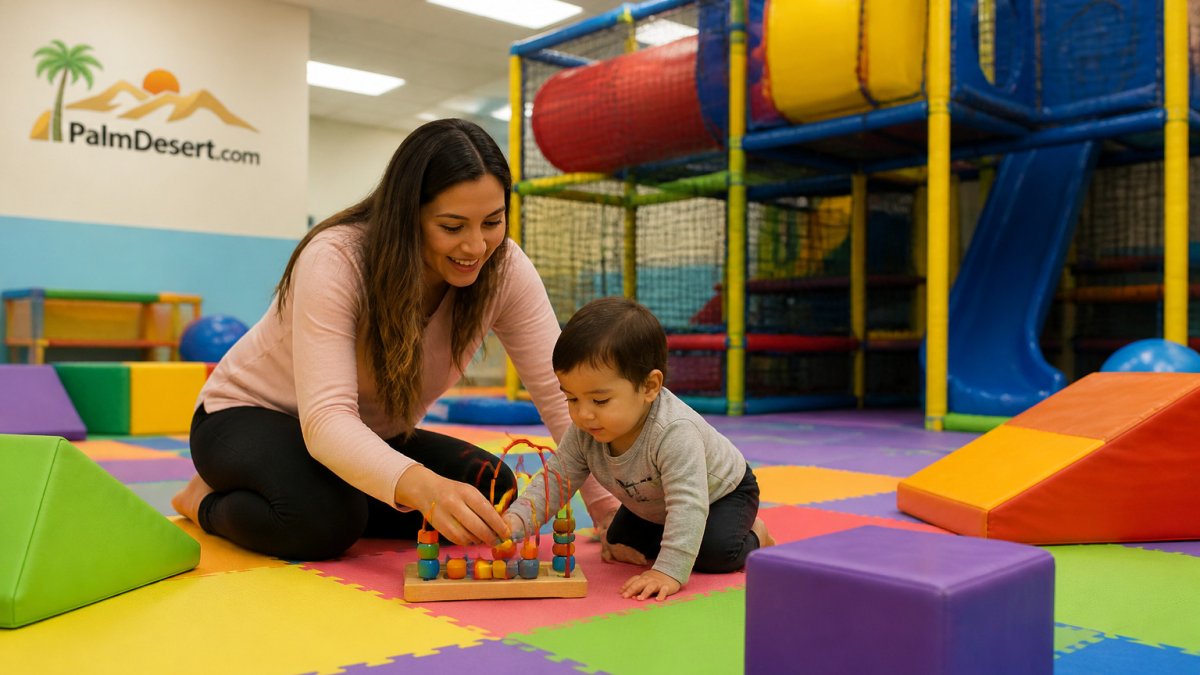
Call the venue the morning of your visit and ask two questions: is the toddler zone gated, and is grip socks required? Those two answers decide whether the outing works for a crawler.
Play Area 2: Best for Active School-Age Kids
School-age children usually need space to climb, jump, and run. Look for play areas with climbing walls, obstacle courses, and open floor space. These venues help children who have been cooped up in a car or hotel room all day burn off energy.
Plan for a longer visit of two to three hours. Active spaces are most enjoyable when children have time to settle into the activities rather than rushing from one thing to the next. Parents can usually relax on nearby benches while keeping an eye on the action.
Play Area 3: Best for Mixed-Age Families
Mixed-age play can be challenging, because a 3-year-old and a 9-year-old often need different things from a room. When you evaluate a space, look for a layout that separates younger and older children while keeping a shared area where siblings can reunite.
How good mixed-age spaces are built
- Separate entrances to the big structure. If the only way into the climbing frame runs through the toddler area, older kids will barrel through the little ones all afternoon.
- Age or height rules. Confirm any minimum age or height requirements for tall slides and climbing walls before you buy admission for a child near the line.
- A shared middle ground. Look for a central floor with blocks, ride-on toys, or a small court where a 4-year-old and a 10-year-old can play together without either one being bored or overwhelmed.
- Seating with sightlines to both zones. Parents of mixed-age kids spend the visit moving between areas, so bench placement matters more than it does for a single-age group.
The trade-offs to plan around
A mixed-age space can mean a longer visit, because kids rotate between zones at their own pace. Popular structures may have lines on busy afternoons, so arriving early can help you sequence the day.
Another trade-off is supervision. In a mixed-age room, you cannot be within arm’s reach of both children at once. Many families pair up, with one adult stationed at the toddler gate and the other following the older child, or choose a venue with staffed supervision at the big structure so the older child can climb while a parent stays with the younger one.
Beyond a single play floor
If your kids’ ages are far apart, a family entertainment venue offering a range of activities may suit you better than a single play space.
For mixed-age siblings, judge a venue by its layout, not its size. A gated toddler zone, a separately entered big structure, and a shared middle floor will do more for your afternoon than extra square footage.
Toddler Activities in Palm Desert Beyond the Play Area
Not every toddler wants a climbing structure. Some families prefer quieter options such as story times, art tables, and sensory activities.
Book Hotels with Exclusive Discounted Rates HERE →
What to Check Before You Visit With Kids
Before heading out, check a few practical details. Confirm current opening hours with each venue, and ask about age limits, sock requirements, and whether reservations are needed for timed sessions.
Desert trips add a few considerations. Pack water and snacks for the drive, and plan around the hottest hours of the day when you travel between venues. Sunscreen and hats still matter when you move from an indoor space to a parking lot in the afternoon sun (the CDC).
Planning Your Indoor Play Day in Palm Desert
A good indoor play day balances energy levels. Start with the youngest child’s nap schedule, then build the rest of the day around it. A morning session at an active venue followed by lunch and a rest break often works well.
If you’re still deciding where to sleep, you can browse Vacation Rental Homes for extra space after a busy day of play. For current events and seasonal happenings, check the Visitor Center’s event listings and blog.
Indoor play areas make the Palm Desert heat far more manageable for families. With a little planning around ages, timing, and practical details, you can give your kids a full day of fun while keeping everyone comfortable.
Frequently Asked Questions
Where can kids play indoors in Palm Desert?
Families visiting Palm Desert often look for indoor play options during the hottest months, when outdoor play is hard to manage. Check each venue’s current hours, age guidelines and admission before you go, since these change by season and date. The Visitor Center’s Desert Events and Desert Attractions pages list current options and help you compare what each place offers for toddlers and older children.
Are there indoor play areas in Palm Desert for toddlers?
Some indoor play spaces serve toddlers, so confirm age guidelines before visiting. Look for separate areas for younger children and staff supervision.
What should parents check before visiting an indoor play area?
Confirm the venue’s opening hours, age range, sock requirements and any reservation or time-slot rules. Ask about food policies and whether adults must stay on site. Check the venue’s website or call ahead, since details can change. Bringing spare socks and a water bottle makes the visit easier, and planning a return time keeps the day on track.
How can families plan an indoor play day in Palm Desert?
Pick one indoor play area as the anchor, then add a second activity nearby so the day has a clear rhythm. Schedule play for the late morning or late afternoon, and build in a lunch break. Use the Visitor Center’s travel planning resources and current listings to plan before you leave.